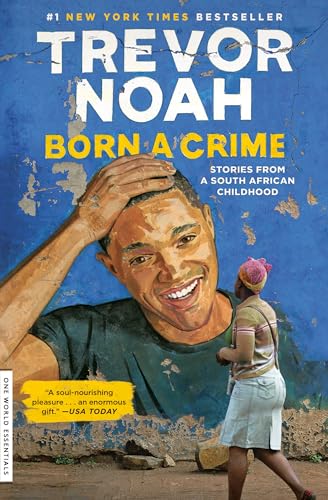
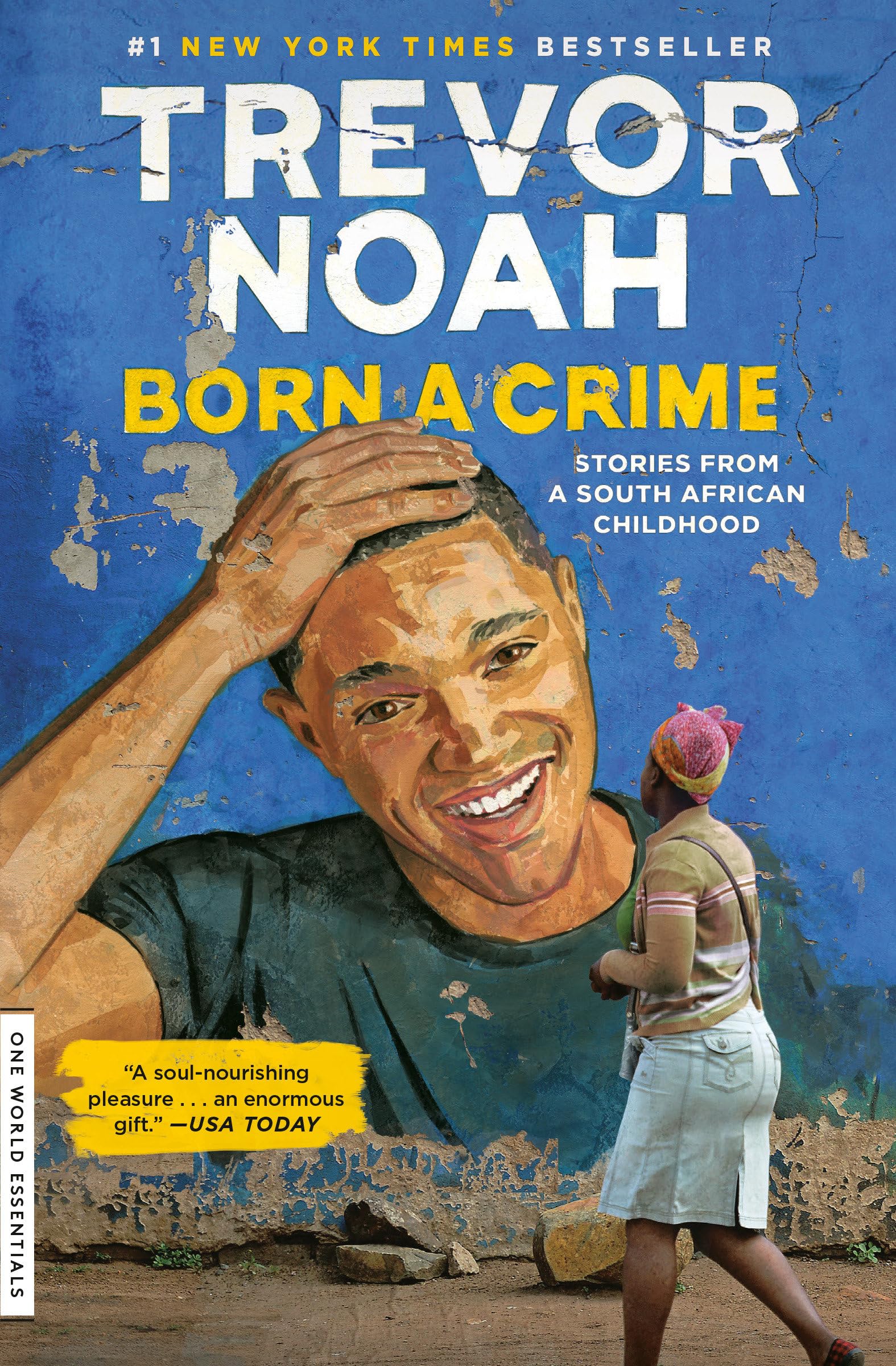
Born a Crime: Stories from a South African Childhood (One World Essentials) [Noah, Trevor] on desertcart.com. *FREE* shipping on qualifying offers. Born a Crime: Stories from a South African Childhood (One World Essentials) Review: A tribute to Noah’s Mother, and when God is your health insurance - Where to begin? This book is a very powerful tribute to Noah’s Mother. As far as how he became a comedian, it is not described in this book. There is one little blurb mentioning he was starting to tour some in England, but not a word about how he got started in comedy, or anything about the process. It’s more about his life and adventures when he was young, and his relationship with his Mother. He draws readers very quickly into the book by talking about his Mother taking him to church, and yes, he does it with delightful humor. He starts with: “My childhood involved church, or some form of church, at least four nights a week.” Later, he says: “Jubilant church was mixed church. Analytical church was white church. And passionate, cathartic church, that was black church. It doesn’t take long to find out his Mother is very devout. She was a very strong lady who had her wild days when she was younger, but later she wanted something deeper and more profound in her life, so she turned to God. There’s a feistiness to her that you can’t help but respect. Noah describes Apartheid as Apart hate, and how different tribes were used to turn against each other. The fact that there are so many backgrounds and languages is very interesting. Tribes such as Zulu, Xhosa, Sotho, Tswana, Vende, Tsonga, etc. On you-tube, you can watch Noah’s Grandmother saying to Noah, “you was born a crime,” the title of this book. In South Africa, it was against the law for people of different races to have children together. Noah describes all the problems this caused in his life, and the difficulty and awkwardness of being colored. He has some pretty profound and interesting comments in his book, such as: “I soon learned that the quickest way to bridge the race gap was through language.” This comment in “The Cheese Boys” chapter really gave me pause for his insight: “The hood made me realize that crime succeeds because crime does the one thing the government doesn’t do: crime cares. Crime is grassroots. Crime looks for the young kids who need support and a lifting hand. Crime offers internship programs and summer jobs and opportunities for advancement. Crime gets involved in the community. Crime doesn’t discriminate.” Noah’s Mother, and the rest of the family suffered physical abuse from her husband Abel. She said to Noah: “Pray for Abel,” she’d say. “Because he doesn’t hate us. He hates himself.” Noah later mentions “Growing up in a home of abuse, you struggle with the notion that you can love a person you hate, or hate a person you love.” I will not expound on the rest of the story. There is a lot of fun and interesting stories that Trevor talks about growing up, and the outcome for his Mother and Noah, you just need to read. I did find it disturbing that not only does South Africa have a racial problem, but misogyny as well. It seems to go hand in hand. Currently America seems to be having an uptick of racism and misogyny as well. I do not know if South Africa still has as many problems, but I am guessing they still do. It’s a great book to read. Most people will enjoy his book. This book is rated 5 star with over 7,000 reviews. Pretty impressive! Review: Life Lessons - I remember the first time I saw Trevor Noah sitting behind the desk of the Daily Show. He was replacing Jon Stewart. Where did they get this guy from? I thought. It wasn't long before I became a fan of his wit and humor. The Daily Show was in good hands. As much as I would have liked to have read about his rise through the comedy ranks and onto American television, this memoir covers his growing up in South Africa. We'll have to wait for his second memoir to catch up on his more recent escapades. For most of the book, I listened to the audiobook, which Trevor Noah narrates. The few times I read from the Kindle, I heard Trevor's voice. This is one book where the audiobook is the best way to enjoy this funny and heartfelt memoir. I don't think anyone else could have pulled it off as well as he did. One advantage of having Trevor as the narrator is that you get to hear him imitate the many characters in the book. It's like having Trevor sitting next to you in a bar and listening to him tell you his stories firsthand. I can't remember when I laughed so hard from a book. I know I caused a few stares at the gym as I listened in my earbuds. Because it's a memoir and not a stand-up routine, Trevor has time to set up each story. He carefully creates each character, describing their background and then mimicking their voice. He paints a picture that's easy to see. The story of him taking a crap in the kitchen and his blind grandmother sensing, or smelling that something wasn't right, had me laughing out loud. I can still hear his voice as he was tasked with having to say a prayer to rid the house of whatever demon had left a turd in the trash. Trevor owes a lot to his mom. She was the one constant in his life, a teacher, caregiver, and disciplinarian. Later in the book, Trevor talks about his brother Andrew, who had a different father. He describes how his mom treated Andrew differently and didn't spank him as much as she did him. When Trevor confronts his mom about this disparity in corporal punishment, his mom claims that Andrew is small and thin and Trevor has an ass made for whippings. As funny as the book is, it is also poignant and philosophical. Trevor talks about his short stint in jail after being arrested for car theft. He talks about how some parents, including his mom, would insist that their sons or daughters face the consequences of their misdeeds and not offer to help them in their time of need. While there may be a time for such tough love, Trevor explains that by not helping them, they risk setting their children up for a lifetime of difficulty. The book contains many lessons about racism and culture. Trevor, who grew up in South Africa during Apartheid, has the background to speak authoritatively about these subjects. But he does it through humor. I look forward to hearing more from Trevor Noah. In the meantime, listen to the audiobook.


| Best Sellers Rank | #1,079 in Books ( See Top 100 in Books ) #1 in Humor Essays (Books) #5 in Black & African American Biographies #69 in Memoirs (Books) |
| Customer Reviews | 4.7 4.7 out of 5 stars (111,411) |
| Dimensions | 5.38 x 0.65 x 8.06 inches |
| Edition | Reprint |
| ISBN-10 | 0399588191 |
| ISBN-13 | 978-0399588198 |
| Item Weight | 2.31 pounds |
| Language | English |
| Part of series | One World Essentials |
| Print length | 304 pages |
| Publication date | February 12, 2019 |
| Publisher | One World |
S**R
A tribute to Noah’s Mother, and when God is your health insurance
Where to begin? This book is a very powerful tribute to Noah’s Mother. As far as how he became a comedian, it is not described in this book. There is one little blurb mentioning he was starting to tour some in England, but not a word about how he got started in comedy, or anything about the process. It’s more about his life and adventures when he was young, and his relationship with his Mother. He draws readers very quickly into the book by talking about his Mother taking him to church, and yes, he does it with delightful humor. He starts with: “My childhood involved church, or some form of church, at least four nights a week.” Later, he says: “Jubilant church was mixed church. Analytical church was white church. And passionate, cathartic church, that was black church. It doesn’t take long to find out his Mother is very devout. She was a very strong lady who had her wild days when she was younger, but later she wanted something deeper and more profound in her life, so she turned to God. There’s a feistiness to her that you can’t help but respect. Noah describes Apartheid as Apart hate, and how different tribes were used to turn against each other. The fact that there are so many backgrounds and languages is very interesting. Tribes such as Zulu, Xhosa, Sotho, Tswana, Vende, Tsonga, etc. On you-tube, you can watch Noah’s Grandmother saying to Noah, “you was born a crime,” the title of this book. In South Africa, it was against the law for people of different races to have children together. Noah describes all the problems this caused in his life, and the difficulty and awkwardness of being colored. He has some pretty profound and interesting comments in his book, such as: “I soon learned that the quickest way to bridge the race gap was through language.” This comment in “The Cheese Boys” chapter really gave me pause for his insight: “The hood made me realize that crime succeeds because crime does the one thing the government doesn’t do: crime cares. Crime is grassroots. Crime looks for the young kids who need support and a lifting hand. Crime offers internship programs and summer jobs and opportunities for advancement. Crime gets involved in the community. Crime doesn’t discriminate.” Noah’s Mother, and the rest of the family suffered physical abuse from her husband Abel. She said to Noah: “Pray for Abel,” she’d say. “Because he doesn’t hate us. He hates himself.” Noah later mentions “Growing up in a home of abuse, you struggle with the notion that you can love a person you hate, or hate a person you love.” I will not expound on the rest of the story. There is a lot of fun and interesting stories that Trevor talks about growing up, and the outcome for his Mother and Noah, you just need to read. I did find it disturbing that not only does South Africa have a racial problem, but misogyny as well. It seems to go hand in hand. Currently America seems to be having an uptick of racism and misogyny as well. I do not know if South Africa still has as many problems, but I am guessing they still do. It’s a great book to read. Most people will enjoy his book. This book is rated 5 star with over 7,000 reviews. Pretty impressive!
E**I
Life Lessons
I remember the first time I saw Trevor Noah sitting behind the desk of the Daily Show. He was replacing Jon Stewart. Where did they get this guy from? I thought. It wasn't long before I became a fan of his wit and humor. The Daily Show was in good hands. As much as I would have liked to have read about his rise through the comedy ranks and onto American television, this memoir covers his growing up in South Africa. We'll have to wait for his second memoir to catch up on his more recent escapades. For most of the book, I listened to the audiobook, which Trevor Noah narrates. The few times I read from the Kindle, I heard Trevor's voice. This is one book where the audiobook is the best way to enjoy this funny and heartfelt memoir. I don't think anyone else could have pulled it off as well as he did. One advantage of having Trevor as the narrator is that you get to hear him imitate the many characters in the book. It's like having Trevor sitting next to you in a bar and listening to him tell you his stories firsthand. I can't remember when I laughed so hard from a book. I know I caused a few stares at the gym as I listened in my earbuds. Because it's a memoir and not a stand-up routine, Trevor has time to set up each story. He carefully creates each character, describing their background and then mimicking their voice. He paints a picture that's easy to see. The story of him taking a crap in the kitchen and his blind grandmother sensing, or smelling that something wasn't right, had me laughing out loud. I can still hear his voice as he was tasked with having to say a prayer to rid the house of whatever demon had left a turd in the trash. Trevor owes a lot to his mom. She was the one constant in his life, a teacher, caregiver, and disciplinarian. Later in the book, Trevor talks about his brother Andrew, who had a different father. He describes how his mom treated Andrew differently and didn't spank him as much as she did him. When Trevor confronts his mom about this disparity in corporal punishment, his mom claims that Andrew is small and thin and Trevor has an ass made for whippings. As funny as the book is, it is also poignant and philosophical. Trevor talks about his short stint in jail after being arrested for car theft. He talks about how some parents, including his mom, would insist that their sons or daughters face the consequences of their misdeeds and not offer to help them in their time of need. While there may be a time for such tough love, Trevor explains that by not helping them, they risk setting their children up for a lifetime of difficulty. The book contains many lessons about racism and culture. Trevor, who grew up in South Africa during Apartheid, has the background to speak authoritatively about these subjects. But he does it through humor. I look forward to hearing more from Trevor Noah. In the meantime, listen to the audiobook.
J**Z
Deep and Powerful Autobiography!
This is a deep and powerful autobiography by Trevor Noah that is hard to put down. Throughout the book, Trevor engrosses you in great yet gory details about Apartheid in South Africa - an institutionalized racist system built to breed in hatred, divide and conquer. There is a constant theme of race and color as a mixed South African which defined much of his life, the beautiful bond with his mother from him being thrown out of moving car to her being shot, ghastly living and sanitary conditions amongst others. Written with such humor and emotion, I cannot recommend this read enough. It's just that good. Only glitches I had was the ending was a bit rushed as I wished there was more meat into how he made it from systemic racism to becoming a powerful voice. Also, I'd have loved to have more context on the impact of Nelson Mandela taking charge of the country flipping apartheid. History in textbooks tell you facts. Books like these tell you stories - humanly fascinating stories. One of the shocking lines best summing up Apartheid is... "The government came up with things like the pencil test. If you were applying to be white, the pencil went into your hair. If it fell out, you were white. If it stayed in, you were colored. You were what the government said you were..
L**K
Trevor has provided us with an extremely entertaining, but also informative book on life in South Africa, especially while he was growing up. I highly recommend it.
K**O
Trevor knows how to depict sad situations with comedy. Most of the stories told really resonate with the typical African society. Values are instilled in children at an early age. Trevor did you finally meet Zaheera again?
J**Y
I just devoured this book. Funny, moving, interesting. An amusing biography, beautifully written, with a sense of humour typical of the comedian Trevor is. Also, I didn't know much of the reality before, during and after Apartheid and this book reveals a lot about it from the point of view of the oppressed. But it is also a story about what true education is, about the importance of freedom and Independence. It's a hymn to life and motherhood
K**E
Captivating memoir that seamlessly weaves humor and heart, offering a poignant glimpse into the complexities of growing up in post-apartheid South Africa. Noah's storytelling is both witty and insightful, creating a narrative that is not only entertaining but also thought-provoking. His ability to navigate serious subjects with humor makes this book a delightful and enlightening read, leaving readers with a deep appreciation for resilience and the power of laughter in the face of adversity. Noah's unique perspective and storytelling prowess make "Born a Crime" a must-read that resonates long after the last page is turned.
A**A
This book engages the reader heads on, just as Trevor Noah does as the host of the popular “The Daily Show” on Comedy Central in the US. Trevor Noah was born in the apartheid regime and grew up during the transition years of South Africa to a rainbow nation as we know it today. The stories in the book are of his childhood and early youth. From the stories one gets an insight into the practical working of the apartheid and how it affected the life of people who did not ‘belong’, like Trevor Noah who was born to a Xhosa mother and a Swiss German Father. Through his stories he brings out how colour and language became tools of separating people during the apartheid. Noah also shows through amusing and enterprising personal anecdotes how these very tools could be used to overcome the very barriers of apartheid set to create. The stories Trevor Noah tells of his life are intense, colourful and humorous. At times he comes out smartly at times he is the silent accomplice who watches his friends get caught. There are many situations he unwittingly gets into and some because he cannot resist the temptation of his mischievous mind. At times he reminds of Tom Sawyer. Even though he had to struggle with poverty and suffer due to his mixed colour he comes across with clarity and humor. His writing is direct and peppered with nuggets of wit and turn of phrase. The bond between feisty Noah and his independent and self made mother is the most forceful aspect in almost all stories. Despite his mother’s discipline and severity; his angst and rebelliousness the two share an enduring and touching relationship. The book is a collection of stories not a chronological biography, at times the switch between childhood and youth can be confusing and also leads to some repetition. However, it gives the author more liberty in bringing out various facets of his life of a mixed child in apartheid ridden South Africa. It would have been fascinating to know how of Trevor Noah's journey to US and the successful position he is in today. Maybe, that is for another book. For now we have this readable, lovely and humorous book.
Trustpilot
1 week ago
2 weeks ago