Some deliveries may take a little longer than usual due to regional shipping conditions.

DOWNLOAD THE APP


Customer Services
Copyright © 2025 Desertcart Holdings Limited
DOWNLOAD THE APP
Full description not available
D**S
Excellent First Volume
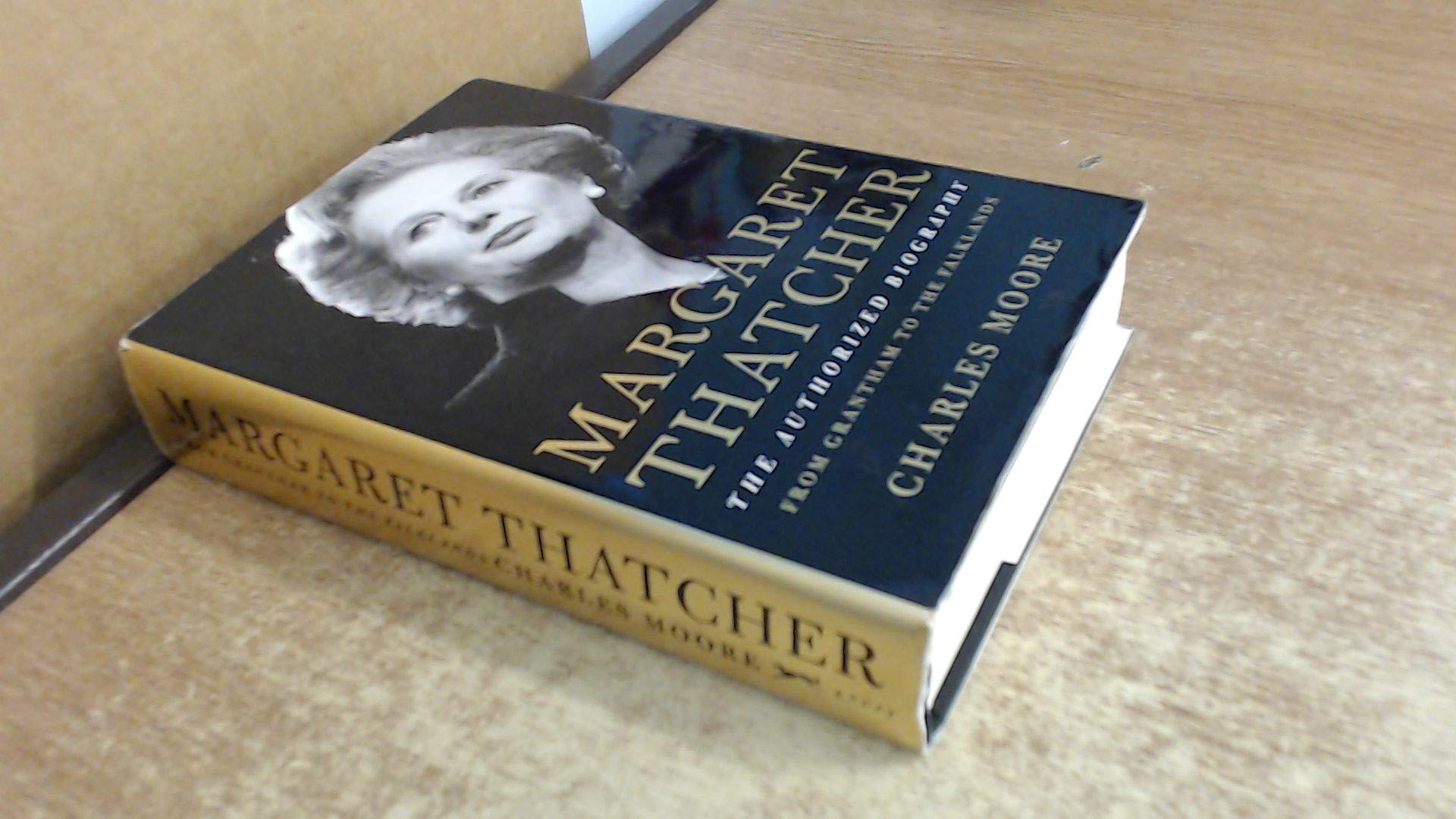
Margaret Thatcher was an amazing political leader. In her own lifetime she was both admired and reviled by many. Even on the occasion of her death the responses could be quite loud. Margaret Thatcher: From Grantham to the Falklands is the first volume in a two volume biography of the Iron Lady by author Charles Moore. Moore spent many years working on this project. Lady Thatcher gave him access to her own material and encouraged others to talk to him. The only stipulation was that the book be published after her death. Moore is quite thorough in his work. He covers Thatcher's life in great detail. He also covers her personality. This is not an attempt to canonize the subject. Thatcher is shown to be stubborn, difficult, and at times even a bit abusive of her colleagues. Moore points out her many weaknesses as well as her strengths. The overall image is not flattering, but it does show a very human Thatcher, something that we do not see very often when she is portrayed.Thatcher's father made a great impression on her early life. He was a storekeeper and a lay Methodist minister. Many of her strongest beliefs were instilled by her father at a early age. This included a strong work ethic and a strong desire to help those in need. For all of her critics claim to the contrary her greatest desire was always to look after the working men and women in England. Whenever she looked at a bill she tended to look at it like a housewife examining an item on the family budget. She disliked inflation because she felt that it wiped out the hard earned savings of industrious workers. She fought hard to sell off government owned housing to the people who lived in the housing.Moore tells us a lot about her early life. Thatcher was always very closed about her personal life, always referring to discuss policy more than her own past. Moore shows that Denis was not the first man that she dated, something that she always claimed. We see that she was often so focused on her own life and career that she at times neglected other members of her family like her sister and her parents. We also see Margaret the snappy dresser. It is sometimes hard to remember that great people that we see in middle age were once teenagers. Thatcher loved to shop for clothes and had a particular passion for hats. From the time she was young she seemed to be destined to break down barrier. In the "old boy" world of education and politics she took second place to no one. Moore recounts the story of a headmaster congratulating the young Margaret on her luck at winning a prize in school. She responded that it wasn't luck, she had worked hard for the award.Early on in politics she was added to the Shadow Cabinet in a traditional "woman's position." She worked through that and soon showed the boys how to run a government. Neither the Labour leadership nor the Conservative leadership ever knew what to do with this upstart middle class woman who didn't seem to know her place in the system.Readers not familiar with the British system of government (where the Prime Minister and the Cabinet are all elected members of Parliament) it will seem amazing that from the beginning Thatcher had to fight not only with the opposing Labour party, but with members of her own cabinet. Many in her cabinet considered her as nothing more than a fluke and wanted to remove her from power so that they would be able to resume the game of politics as normal. That was not to happen. At least not for a long time.This book is very detailed and has extensive notes and sources. In fact if there is any criticism it would be that it is too detailed. For a person who loves the minutiae of policy making this book would be wonderful. For those looking for a general biography they may find it to be a little cumbersome in the shear amount of detail given. One other observation. Most Americans know very little about the English education system or the English system of government. This book is written by an English author who assumes that everyone understands these topics. Perhaps a glossary or an appendix explaining these systems would have been useful in the American edition.These slight criticisms aside the book is well written and fascinating. If you want to learn about one of the most important and fascinating political figures of the twentieth century then pick up this book.
J**W
Taking the baton from William Manchester
Is the reviewer reviewing the book or the person. Whatever your personal view of Margaret Roberts (and she didn't create ambivalence) or her premiership, this book and part 2 to follow is outstanding scholarship, hence five stars. Years in the making by the editor of the Daily Telegraph, Charles Moore, the surprising - he was never really a Thatcher fanboy - but inspired choice to be Thatcher's official biographer. What is achieved here challenges the Gold Standard (excuse the 1925 inspired pun) of political biographies, William Manchester's two volumes on Churchill.As official biographer Moore spoke to the Thatcher family, including her reclusive elder sister Muriel. Muriel passed on never before seen letters written to her from Margaret when she was a young woman at Oxford and beyond. These letters provide a fascinating insight into the mind of the young Margaret and are the highlight of the early chapters here. In these Ms Roberts seems to be selling herlife to her sister and seeking her approval as younger sisters do. She also comes across as both ambitious and incredibly frugal with money, as befitted her lack of monetary independence. Whilst her sisterly confessions of fashion strategy (how she splashed out on that skirt but it's worth it because she can wear it many times) might seem trivial, they provide insight into Margaret's strategic way of thinking. What it seems she learned from her fastidious, hard-working father was always to make considered, strategic choices.Moore also consulted thousands of documents from places such as the UN, IMF, English-Speaking Union, Library of Congress, Churchill College (containing the Thatcher papers), Conservative Party Archives and many many others. He visited many of the key places in Thatcher's history. The list of the hundreds of important political figures interviewed reads like a who's who of British and American politics of the last thirty years.Returning to that colossus of biography William Manchester I wrote this in my review of Manchester's MacArthur a few years ago: "the genius of Manchester is that one could read this and come away loving or completely loathing MacArthur". The same is true here of Moore and Thatcher. He gets out of the way and doesn't seek to offer his own modern psychobabble-speculation on Margaret's motives, feelings, relations with her mother and all that. He just tries to let the facts, the interviews, the letters, the primary people's own recollections tell the story. This makes for great reading as during this book my own opinion of Thatcher tossed around like a frigate in story waters. Admiration - sure. She got things done. She made some great, tough decisions and toughed things out. She acquired a team of loyal servants around her. But I have frustration and annoyance too. She was perhaps a narrow-minded Little Englander thrust into a job that none of the men around her had the balls to do, leading the Conservative Party in 1975 at the peak of trade union power in the UK. One of the harshest but most prescient criticisms is that she was a bourgeios, in its original condescending meaning of narrow, petty, climbing and unglorious. That she wasn't somehow broad enough for the job. But her tenacious old-fashioned patriotism made her appealing to many, especially after the "leadership" of Britain shown by Wilson, Heath and Callaghan before her. Loyal men worked for her and saw her as a glorious Joan of Arc swinging her sword at the demons of Labour, the left, the unions, the EU, the argies. Her ability to attract and maintain beta males to her cause, despite her appalling treatment of them, is one of the most striking aspects of the book. Since the alpha male of the Conservative party in the late 60s and early 70s, Enoch Powell, was sidelined because of his infamous Rivers of Blood speech, Thatcher became the alpha. "Gentlemen, let us join the ladies" she famously said after one war cabinet meeting. She challenged and humiliated those who opposed her, such as the 'wets' in her own cabinet. She was a classic bully and this led to her own downfall, to Geoffrey Howe's wife writing the speech for him which ended her Premiership. But we are getting ahead here. This book covers everything from childhood, university, marriage, early political career up to the end of the Falklands, the battle for real estate in the South Atlantic thousands of miles from London which perhaps saved her Premiership in the early 1980s from its hugely unpopular economic policies. The Falklands conflict and its bizarre insignificant significance, its glorious pettiness revealed to the British public that they had a leader for the first time since Churchill, someone who was willing to do dangerous stupid things with their lives for the sake of national glory or pride. As Manchester details, Churchill insisted in WW1 on the Dardanelles navy attack on Turkey (a failed navy operation that turned into an even more disastrous military one) instead of a small landing in Syria that could have required no more that 20,000 men. I have no doubt that if Thatcher had been looking at the casualty list for Gallipoli she would send in another regiment or five.
J**X
Lots of detail
Margaret Thatcher was clearly one of the most important Political figures of modern Britain and her influence is still present. For anyone who wants a detailed study of MT this is clearly one of the best books available, and it is the first of three volumes. Lots and lots of minute detail which at times was difficult to wade through, but overall an informative read. The chapters on the falklands war were especially enjoyable.
A**I
Simplesmente Thatcher
Obrigatório para todo conservador que se preze.
D**R
Heavy reading & recommended only if a hardcore Thatcher fan.
Extremely detail-oriented but written in a bland fashion. Found myself skimming pages & shelved it before i was done.
A**R
Großartige Biographie
Dieses Buch ist sicherlich kein kurzer Überblick in das Leben und Wirken von Margaret Thatcher, sondern der erste Teil der offiziellen und sehr ausführlichen Biographie. Eine so polarisierende Figur wie Thatcher kann man sicherlich unterschiedlich bewerten, aber ihre nachhaltige Wirkung auf Großbritannien und Europa die bis heute reicht, kann man kaum abstreiten. Dieses Buch liest sich wunderschön. Man wird geradezu mitgerissen, wenn man die Stationen der Jugend sieht. In diesem Teil sehen wir noch wenig vom Wirken sondern viel mehr vom Werden der Margaret Thatcher. Dieses Buch ist ein absolutes Muss für Anhänger der politischen Strömung die ihren Namen trägt, aber auch für diejenigen, die nur an ihrer Person interessiert sind, auch für diejenigen die an der Faszination begreifen wollen. Eine beeindruckende Frau und eine wunderschöne Biographie.
A**L
A thoroughly good read
My son gave this to his father for Father's Day and he has been enjoying reading it. It is well written and gives you a very good view on her life.
I**E
la Lady di Ferro finalmente "analizzata" e raccontata come merita !
E' la prima parte della biografia autorizzata dell'ex Primo Ministro britannico, frutto di un ventennio di lavoro e pubblicata solo ora e dietro espressa richiesta dell'interessata.Il libro si avvale dell'accesso diretto a documenti riservati provenienti dall'archivio della statista e di innumerevoli interviste e dichiarazioni esclusive rilasciate da innumerevoli colleghi, alleati ed avversari, e costituisce un esaustivo ritratto della figlia di un droghiere di periferia che, armata del proprio bagaglio di idee liberiste ed anticomuniste, riesce dapprima a diventare ministro della Pubblica Istruzione nel governo di Ted Heath (1970-74), poi, in seguito alla sconfitta elettorale di quest'ultimo, a diventare capo del partito Conservatore nel 1975 e dopo alcuni anni Primo Ministro del Regno Unito con un programma elettorale allora considerato eretico non solo dall'estabilishment della sinistra laburista, ma anche da diversi settori del proprio partito: tagli alla spesa pubblica, lotta all'inflazione, limitazione ai poteri (allora molto vasti) dei sindacati, esaltazione dell'individuo e delle sue possibilità contrapposte all'immobilismo e all'assistenzialismo dello stato, privatizzazione delle aziende pubbliche in perenne perdita.Il volume si chiude con la vittoria nella guerra delle Falklands, preludio alla trionfale rielezione del 1983.Consigliato a tutti gli appassionati di storia del Regno Unito, non necessariamente fans della signora Thatcher in quanto l'autore, pur non nascondendo la propria ammirazione per il Primo Ministro, tratta con estrema obiettività le vicende narrate.A quando il secondo volume? Spero presto.
Trustpilot
1 week ago
2 weeks ago