
DOWNLOAD THE APP


Customer Services
Copyright © 2025 Desertcart Holdings Limited
DOWNLOAD THE APP

🌌 Unlock the night sky like a pro—your cosmic adventure starts here!
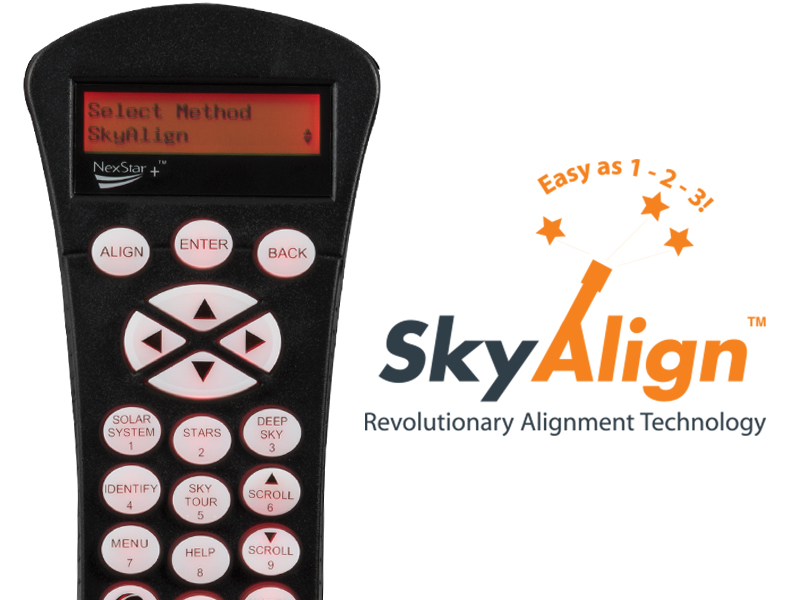
The Celestron NexStar 8SE is a premium 8-inch Schmidt-Cassegrain telescope featuring advanced StarBright XLT coatings and a computerized GoTo mount with a 40,000+ object database. Its patented SkyAlign technology enables quick, intuitive setup by aligning on any three bright celestial objects. Lightweight and portable at just 24 pounds, it offers detailed views of planets, the Moon, and deep-sky objects. Compatible with a wide range of Celestron accessories, it’s designed to grow with your astronomy skills. Includes a 2-year warranty and US-based technical support.




| ASIN | B000GUFOC8 |
| Brand | Celestron |
| Built-In Media | 25mm eyepiece, Accessory Tray, NexStar+ Hand Control, Optical tube, Single Fork Arm Mount and Tripod, Star Diagonal, Star Pointer Finderscope |
| Coating | StarBright XLT |
| Compatible Devices | Laptop, Desktop, Smartphone, GPS Device |
| Customer Reviews | 4.3 out of 5 stars 2,469 Reviews |
| Dawes Limit | 0.57 Arc Sec |
| Exit Pupil Diameter | 4.06 Millimeters |
| Eye Piece Lens Description | 25mm eyepiece |
| Field Of View | 0.75 Degrees |
| Finderscope | StarPointer™ red dot finderscope (includes 51632 with CR2032 battery) |
| Focal Length Description | 2032 millimeters |
| Focus Type | Manual Focus |
| Global Trade Identification Number | 00050234110693 |
| Item Dimensions D x W x H | 32"D x 34"W x 52"H |
| Item Weight | 10.88 Kilograms |
| Manufacturer | Celestron |
| Model Name | NexStar 8SE Computerized Telescope |
| Mount | Computerized Altitude-Azimuth Single Fork Arm Mount |
| Number of Batteries | 1 Lithium Metal batteries required. (included) |
| Objective Lens Diameter | 203 Millimeters |
| Optical Tube Length | 432 Millimeters |
| Optical-Tube Length | 432 Millimeters |
| Power Source | 8-AA batteries, 12v AC adapter, or any of Celestron’s PowerTank external power sources – none of which are included. |
| Telescope Mount Description | Computerized Altitude-Azimuth Single Fork Arm Mount |
| UPC | 050234110693 |
| Unit Count | 1.0 Count |
| Warranty Description | 2 Years |
| Zoom Ratio | 16 |
J**L
Wonderful scope for the amateur astronomer that requires portability
I have owned several scopes over the years: a Meade ETX-90, an Orion 6" DOB, and a Zhumell 10" DOB (which I returned - read on). When I recently renewed my passion for astronomy earlier this year (2010), I started pulling out my little ETX-90 on a regular basis. Unfortunately, the aperture size and long focal length really limited my viewing to Saturn. I decided it was time to go for something with a bit more power. I bought the 10" DOB I mentioned above. It wasn't passed than the third trip outside, precariously carrying the OTA (Optical Tube Assembly) while "butting" the door open and avoiding hitting my dining room table, that I decided I needed to return that monstrosity for something more portable (by the way, it was a wonderful scope! If you can store it where moving it isn't a problem, it'll do the job!). Enter the Celestron NexStar 6SE. When the scope arrived, I opened the box and pulled out the parts. Having watched the instructional video on how to assemble the item earlier in the day, I didn't even need to look at the directions to get it put together. The tripod was solid and had little play. The OTA was easy to "drop" onto the pins on the tripod, and then I only needed to lock down the three knobbed screws to mount the scope completely. I did need to align the viewfinder, which was easy enough by lining up on Venus. I had forgotten how much I liked the GOTO system (my old ETX-90's mount had long ago stopped functioning). For the 6SE, I used the NexStar alignment method on my first attempt, which simply required 3 bright objects in the sky - I did not need to know what the objects were (you will, however, have to enter some other info like your latitude and longitude, time zone, date and time. Your latitude and longitude is easily found online). It was now time for the first viewing. I selected my old standby, Saturn. The scope slewed very quickly to the object, even going back and forth a bit to account for any play in the gears. When I looked through the low powered eye piece (25mm), Saturn was just left of center (likely my fault on the initial alignment). I then manually centered the planet and replaced my eye piece with a higher powered piece - a 9mm lens. All I can say is wow. I live a few miles from the Pittsburgh International Airport, so light pollution is a real problem for me. But, Saturn came in as crisp as I have ever seen it, and 4 of her moons were very easily discernible. However, planetary viewing isn't so difficult with even the most basic scope. I decided to try a few more difficult targets. I could see that The Big Dipper was out, so I typed in M51 - The Whirlpool Galaxy. After a few quick moments of slewing, I took to the eyepiece again (back to the 25mm, btw), and there were two "eyes" looking at me (M51 is actually two galaxies). Of course with bad seeing conditions and a 6" scope, I could not make out any of the "arms" of the galaxy, but I could easily see the telltale fuzzy eyes. I was quite surprised I was able to resolve them that easily with the smaller aperture on this scope! I don't remember my old 6" DOB having that easy of a time, but maybe that was due to the GOTO capability of this item. Next, I turned my attention to M81 and M82, two other galaxies very close to The Dipper. They came in great, with M82 showing off its profile nicely even with my (relatively) bad seeing conditions. Finally, I hit M3, which is a brilliant globular star cluster. The cluster was a wonderful view in this scope. Switching to a higher power eye piece caused many stars to shimmer in and out of view - it was jaw dropping. Anyway, I wanted to point out that, if you need a portable scope that is capable of showing you some wonderful astronomical sights, this scope fits the bill. Although another reviewer is right in that the stock eye pieces aren't incredible (nor are any other stock pieces!), you would certainly be happy with this scope for the occasional "quick" viewing session. Heck, put a few additional dollars (well, a few hundred!) down for some better eye pieces, and you'll be thrilled for years to come! One final note: due to the design of the Schmidt Cassegrain scope, you are almost required to buy a dew shield, unless you live in Phoenix or some other really dry area. Here in the northeast, my scope fogged up very quickly. I was able to build a temporary dew shield with some black construction paper that worked fine, but that's no long term solution. Astronomy is certainly not a cheap hobby! Overall, I am very pleased with this scope. And, unless you are more than casually into this hobby, I think you will be, too.
W**T
Buy the scope, but you may want to invest in a power supply and a better finder scope
I love this scope. It deserves 5 stars, but I would knock one-half star off if I could for the following two reasons: 1. No power supply. You have to buy 8 AA alkaline batteries to use it at all, and they don't last more than a few nights of viewing, depending on how much you move the scope around, and how long you have it powered up. At this price, Celestron should include a power supply, whether it is a wall wart or something like a lithium power pack (good units that they do sell separately), even if doing so adds another $20-80 to the sale price. The scope moves more slowly (but not terribly slow), and the hand control backlight is dimmer, when running on the internal batteries. You'll likely be back on Amazon again soon after you take delivery, looking for something better than the internal battery setup. My advice is to avoid buying a wall wart unless you have long extension cords or AC outlets very near your intended viewing spot. Instead, spend a few more dollars on a portable lithium battery supply from Celestron or a third party, and you'll have plenty of power and mobility, too. The scope has an external power socket-- the common 5.5mm by 2.1mm bayonet, and it does not need exactly 12 volts DC. It apparently tolerates 11-14.5 volts or maybe a bit more. You can also buy a Celestron cigarette lighter plug, so it should be compatible with standard automotive battery power. In my case, I bought this compact lithium pack and I'm very happy with it: https://www.amazon.com/gp/product/B07YRZYLKV/ 2. The "Star Pointer" spotting device included with this telescope is OK-ish, but as time passes, you may want to consider an optical finder with some small level of magnification and possibly crosshairs. I'm planning to do this in the near future after my credit card cools off. I'm not a big fan of the Star Pointer. Some people like it, others have said it's not aligning with the main scope for them. I spent more time fumbling with mine than I did with the rest of the scope. Some of the fumbles were my fault, though. There are a few YouTube videos that show possible solutions if you can't get your Star Pointer and your telescope to agree with each other. The idea is to add a small shim, like thin cardboard or even a US dime, under the back of the dovetail bracket. Just loosen the two screws and slip the shim under the back, then re-tighten the screws that hold the finder dovetail in place. It gives some extra tilt inward and downward towards the telescope body. If you can't center the image and it feels like you need to move the red dot down and to the left of the end of travel, you might try this. Celestron has made a very good, solid telescope with super optics. I'm a big fan of the hand control and its built-in ability to help you find great stuff in the sky. It's first-rate. It's especially good for novice astronomers, in my opinion, and saves a lot of time that would otherwise be spent searching for things when you're new to the hobby. If you don't mind some advice: PLEASE, if this is your first telescope, don't buy a bunch of extra eyepieces, filters or Barlows just yet. Enjoy the included 25mm eyepiece first. It has plenty of magnification without being too much--and too much is what a lot of newbies (myself included) end up with. If you buy eyepieces that give you greater magnification, you'll only be frustrated until you get to know your way around. If anything, you'll get a lot of use out of an eyepiece that even widens your field of view more (lower magnification), like a 32-40mm eyepiece, or even a focal reducer. I have the Celestron f6.3 focal reducer/corrector, and I couldn't be happier with it. As a last thought, get one of Celestron's inexpensive, but surprisingly good 7 X 50 binoculars. At 7 times magnification, they are great for viewing the constellations and helping you decide what part of the sky to point your telescope at next! I'm happy I got both. The telescope and the binoculars each add their own level of joy to the night's experience. Even in a suburban environment with lights all around us, I'm still blown away by how many stars I can see with the binoculars compared to my unaided eyes. And of course, the telescope just makes everything that much closer and brighter.
I**N
Great Telescope !
When I was a kid in the late 60's, my folks got me a Tasco telescope, had a lot of fun with it. In 2007 I got a Bushnell reflector telescope as a gift. Both telescopes were the lower end of the quality window but still enjoyed using them. I finally decided to upgrade for several reasons. Neither telescope would track an object through the night, after about a minute in the eyepiece, the object would be out of view and a readjustment was necessary. Finding anything in the sky was a pain as I had to rely on my knowledge of where to point the telescopes. The Bushnell came with a sort of 'guide' to help, and it did, but it was just mainly in the general direction to point the scope. And then the lenses that came with both the telescopes were cheap and hard to focus. These telescopes were very beginner based models. After looking around on the web, the Celestron telescope was often mentioned in the top 10 or so of quality scopes to purchase for the price, and the Nexstar SE series was getting very good reviews. After much deliberation and a cut in price of over $200 one day, I ordered the Celestron NexStar 8 SE. I also ordered the X-Cel LX 25mm, 9mm, and 5mm eyepieces to go with it, it comes with a lower quality 25mm Plossl lens. I also got an X-Cel 2x Barlow lens and a zoom lens from Celestron, the zoom works okay but is not in the same league as an X-Cel, and a Celestron StarSense Automatic Alignment device to help in locating celestial bodies. Also got the AC Adapter as the reviewers everywhere said don't rely on the 8 AA batteries to run the device as they die quickly. Of course the day it arrived it was cloudy for three nights, which gave me a chance to really review and read the instructions. It was delivered safely and fast, the telescope was in a box, in another box, and then another box in foam, so no problems there. If I had any issues, it was with the assembly instructions, they never actually show you how to put the orange tube on the fork, which IMO was the most important part. After looking at the pictures in the manual and checking Youtube vids, I was able to figure it out (I had it on upside down and backwards). Otherwise no problems. Once I had a clear sky I took it outside at dusk and set it up, just lined up the index points and aimed the scope at the horizon, leveled it by eye and took off. I did use the StarSense Auto Alignment unit to calculate the position and within about 7 minutes was enjoying the sights of Jupiter and the Moon like I had never seen them before. Saturn is still below the horizon, but I can imagine it will be a sight to see also. The telescope is definitely worth it, the X-Cel lenses are a must, so clear and great views and focus ability. The zoom lens was actually used the most as I could capture an object in the sky and then zoom in and out easily, and the zoom lens has a rubber eyepiece so you can still wear glasses if you want. The absolute best part was being able to use the handheld remote and tell it to find something, a star, galaxy, planet and then it slews right to it. The first time it was a little off because of user inexperience, so I doubled down and researched it, actually called Celestron and talked to a live person and then the second time was ready. You do need to keep a few things in mind. Try to insert the EXACT time into the controller ( I used my iPhone, I just set it for the next minute at 00 seconds, and then wait for the second hand to hit the 12 and then hit enter on the controller, perfect), be sure to set the time correctly, UTC 24 hour time (i.e. 9PM is 2100), make sure you have the correct time zone and daylight savings time set correctly. Also try to set the correct location as close to where you are setting up, again I used an app on my iPhone to give the correct longitude and latitude coordinates. You have to enter the degrees and not the decimal coordinates, also make sure to get the north/south and east/west location right. Then you have to align the scope to find out your best calibration, take your time, it is definitely worth it. I used the StarSense Auto Alignment method, so your calibrations may be a different set of instructions. After the final alignment (which took all of about 5 minutes), I told the hand controller to find a star and it slewed right to it, in the absolute center of the eyepiece and then tracked it for as long as I had it on there. Fantastic, it was doing everything it was advertised, I am very happy with this purchase. It is a heavy telescope, I have to have help to move it safely in and out of the house, you may be able to move it by yourself, or take the tube and fork off the tripod and reassemble in your viewing location. Only con I can see is the hand controller is a bit hard to see at night, just a little dim, I remedied that with a small flashlight with a red lens to keep down the light pollution, but I found you can control brightness and contrast on the controller so problem solved. Very glad I finally have an almost pro (IMO) telescope. After I see an object I can tell my wife to look at it and she was amazed at the improvement over the Bushnell scope, and since it tracks the object, no need for a readjustment every 45 seconds... Great value for the money, great construction, I called Celestron for help and was talking to an expert in two minutes who knew exactly what I was talking about, would recommend this telescope to anyone who wants to experience astronomy.
S**I
A Portable, Easy-to-use Solution for Visual Astronomy and Short-Exposure Astrophotography
There are over four hundred reviews here for this telescope, so I won't cover all of the technical details already discussed; instead, I'll hit on some of the things I still had questions about before buying the Nexstar 8SE. One of the hard things about choosing a telescope is knowing how you want to use it. Whether you want to look at planets (which are super bright) or deep space objects (which are super dim) affects your choice. A scope with tons of magnification from a long focal length may be great for Saturn but have too much zoom for things like the Andromeda Galaxy. Portability is also a factor. Can you carry the entire assembled scope out on to the deck yourself each night, or do you need to spend an hour lugging it out piecemeal, assembling, leveling, and aligning it? Once it's set up, how easy is it to find objects? If you want to look at Jupiter and the Moon - piece of cake...but what about objects too faint to see with your naked eye? Do you have the time and skill to read star charts under a red light, hunting-and-pecking across the night sky searching for dim fuzzies? Lastly, do you want to take photos of your view? If you want exposures of more than a few seconds, does your mount have a way to compensate for the Earth's rotation to prevent your stars from blurring to streaks? If you're taking pictures of big things, like a nebula, will you have to make a mosaic because your scope has too much magnification to fit it all in frame? I thought about all of these, and chose the Nexstar 8SE. It is a great scope and fairly easy to use (although not as easy as Celestron's "no knowledge of the night sky needed" slogan suggests). Here's how it fares for my selection criteria: Portability: If hours of free time are needed between setup and gazing, the scope will be relegated to weekend use only. That may not seem bad, but consider that out of those weekends, it'll further be whittled down to ones with clear nights. So, if I don't want a scope I can use only once or twice a month, I need something portable. The 8SE weighs 33 lbs fully assembled (and can easily be separated into three lighter components). So, imagine picking up a 16 lb bowling bowl in each hand and walking out onto the deck. If you think you could do that, you can carry the 8SE out. I leave mine fully assembled and just carry it out myself whenever there are clear skies. It takes two minutes. If it's too heavy, there are three thumb-tightened knobs that quickly separate the tripod from the mount and tube, splitting the weight in half. Type of Astronomy: The 8SE has a 2000 mm focal length and 8" aperture. 2000 mm is two meters (6.5 feet!) so you'd expect the tube to be at least 6.5 feet long unless it can bend space and time. Turns out, it does - well, not literally - but it's a Schmidt-Cassegrain telescope so it uses both reflectors and refractors to double-up the light path, resulting in a very short, fat tube that is highly portable. It's a great "best of both worlds" solution. High focal length (which translates to magnification) for planetary and lunar views and wide aperture (which translates to brightness and detail) for views of dim objects like galaxies. For me, it's perfect. I can bounce around the night sky seeing all of the planets and everything in the Messier catalog (globular clusters, nebula, and galaxies). The 8SE comes with a diagonal and a single 1.25" 25mm Plossl eyepiece that is one of my favorite eyepieces for this scope. With it, you will clearly see a small Saturn with its rings and shadows, or the disc of Jupiter with small cloud bands and its four largest moons. Deep-sky objects will be faint, dim cotton balls. Of course, you can increase the magnification by buying additional eyepieces or increase the contrast of DSOs with filters. I have a small refractor scope that uses 1.25" eyepieces and filters, and all of them are interchangeable with the 8SE. Astrophotography: I think it surprised me that most of those awesome astrophotography pics we've seen that look like Hubble telescope photos are taken with cameras or sensors attached to small refractor scopes. They're all taken on equatorial mounts that are polar aligned, rotating like clockwork to compensate for the Earth's rotation. The default 8SE cannot do this. It has an alt-az mount, not an EQ. Although it will track an object and keep it centered, it's just not able to rotate in the direction that the sky does. As a result, the object will spin in place over time, and all the neighboring stars will orbit it, leaving streaks. You can purchase an EQ wedge that tilts the entire mount onto a polar axis but to be honest for the price and added weight of the 15 lb wedge you could just get a Sky Watcher mount and tripod and plop a DSLR with a decent lens on it, taking some nice wide-field long-exposure photos. That being said, short-exposure photography works great on the 8SE. A cheap t-adapter lets me attach my DSLR directly to the back of the scope. I can manage fifteen-second exposures without star trails. I took the attached photo of the Hercules Cluster this way (by the way - for reference - the Hercules cluster does not look like this to your eye in the scope. In the scope, it is a milky cotton ball). So, can you throw a couple of thousand dollars to convert the 8SE into a long-exposure astrophotography scope? Sure - but I would suggest instead using that money to buy a separate, dedicated mount and tripod for DSLR photography. Ease of Finding Objects: First, you can just use the keypad arrows to slew the scope wherever you want without bothering to align it. Line up a star or planet in the red dot finder and just have a look; however, if you want the telescope to find and track it, you'll have to align it. There are four ways to do this: 1) 3-object auto-align: center the scope on any three bright stars or planets and the controller will plate-solve to figure out what they are. You don't even need to know or tell it their names; however, every time I tried this, it failed. 2) 2-star auto-align: center the scope on one star and tell the controller what it is, then it picks the second star and you center it. Works sometimes, but the scope has no way of knowing if its chosen star is obstructed (by trees, neighbor's houses). 3) 2-star manual align: You pick two stars, tell the controller their names, and center them. Always works for me. 4) 1-star manual align: Same as two-star, but less accurate. 5) I know I said there were only four options, but a fifth option is to buy the somewhat-expensive Star Sense accessory, which is a camera that will do all of this for you. I find that the two-star align is accurate for the part of the sky you chose when picking alignment stars, but quickly loses accuracy when you swing to distant parts of the sky. Fortunately, you can pick new alignment stars on-the-fly, so I typically align to the southern sky, see everything I want, then realign to the northern sky. When the alignment is accurate, it's really great for finding deep space objects. I can look at a dozen DSOs in thirty minutes, where I could look at only two or three if doing it manually. The single review-star I deducted is due to the somewhat endless frustration I have with the GoTo alignment process, and that in general I haven't been able to just align the scope to the sky, but have to realign to portions of the sky as I look in different areas. One other complaint is that the 8SE's controller has been upgraded over time (to have a mini-USB connection instead of RS-232), but the telescope's manual was not updated. The manual still has photos and instructions only for the old controller, including keypad buttons which are in different locations or have different names. So, I think the 8SE hits the Venn-diagram sweet-spot intersection of portability, aperture, and focal length for me, and I'm happy with my purchase and recommend it to others searching for that same intersection. Edit: After six months of use, I'm very happy with this purchase. I've bought many accessories, including the Starsense camera (which you'll appreciate on January nights when the telescope sets itself up while you're inside drinking tea), a 2" Luminos eyepiece and diagonal, and a f/6.3 focal reducer. Out of those, the focal reducer was the cheapest but had the most impact. Believe it or not, it's possible to have too much magnification and being able to halve the scope's focal length with the twist of a lens is great. I've added a photo of the Orion Nebula and Hagrid's Dragon I took with the focal reducer. I highly recommend it as a first accessory.
C**R
A very nice scope
I bought the 6SE through Amazon and also bought the Celestron lense/filter collection and the AC adapter. Everything arrived on time and intact, despite UPS's best attempts to damage the telescope box. Kudos to Celestron for their packaging. Collimation was perfect right out of the box and didn't need adjustment. I've used the scope on virtually every clear night for the last month and am very impressed. Sky Align is a breeze. The only times it has failed I either forgot to enter the correct date or time. After that it is a matter of finding 3 bright objects in the night sky and centering them in your eyepiece. HINT: I use the 27mm eyepiece to initially find each object (after using the finder scope) and then add the 2X Barlow to more accurately center the object. I usually pick some star in the Big Dipper, Capella, and for the time being Jupiter as my alignment objects. Works every time I input the right info. There is a bit of a learning curve so don't expect the unit to bend to your will until you've learned the system. The 'Identify' feature is great for a newbie astronomer like me: Point at the object and NextStar tells you what it is. I've spent a lot of time viewing Jupiter and images of it and the 4 visible moons are clear and crisp using the provided 27mm eyepiece as well as the 9mm and 15mm eyepieces I purchased separately, all 3 alone and with the 2X Barlow. Tracking is not all that accurate unless you sync to the object (in the 'Align' menu. Then it is much better. A list of Strengths and Weaknesses as I see it: Strengths: 1. The price and low cost of accessories. 2. The clear images. 3. Ease of setup and alignment. 4. Portability of the SC design. Weakness: 1. The provided level is junk. I use a 4" builders bull's eye level for much better accuracy. 2. You must remove the telescope from the tripod for leveling. Leveling with the scope attached to the tripod produces an error of approximately 1.5 degrees. In that respect it would have been nice if Celestron built an accurate level rather than the logo into the base. 3. The AC adapter turns with the scope so it is possible to unplug it or entwine your tripod during a night's viewing. If you unplug you lose your alignment, so always have batteries installed even if you use the AC adapter. A nice future upgrade would be to install the plug for the adapter in the non moving part of the base. It merely requires 2 contacts on 2 spiral tracks between the movable and stationary parts of the base. 4. Unless you use the Sync option, alignment seems to deteriorate over the course of a couple of hours. I am careful with the initial alignment as detailed above so I do not think that is the problem, rather something in the software. This is evidenced over the course of an evening by slewing back to an object (Jupiter in my case) using the GOTO Planet on the keypad. Over a period of time each return is farther to the left of center and lower in the field of view. 5. Keeps me outside on cold nights exploring the skies rather than inside by the fire. Still a 5-star product I am very happy with.
S**0
Very disappointed and feel cheated. Uses old technology in a shiny package.
First off, there is nothing easy about using the Celestron Nextar 8. It's complex, frustrating, and fails to deliver on Celestron's marketing promises. For example, the hand controller functions like it was designed and built in 1988. It has a cheap LED display and tedious, needlessly complex & un-intuitive menu operations. One must endure a labyrinth of menus just to set it up. Inconceivably, the controller loses its time setting every time you shut it off. That's just amazingly poor design. They do occasionally update the goto controller firmware, but pray that you don't have to ever do this. Celestron's process is out of the stone age. It requires an antiquated RS-232 cable (think 1970's and 80s cables) to update its firmware. Hello Celestron Engineers - USB has been the primary way to connect to computers since 1996 - it's long past time to adopt it). Celestron also gives the middle finger to Apple customers...apparently they don't want them as customers at all. If you use a Macintosh but need to update your firmware you are out of luck. Same deal for Linux users. Next issue: doing the star alignment should be easy, but it is definitely NOT. Even the customers who like the product admit that it takes a lot of very careful precision to successfully align. The tiniest errors with leveling your mount, entering the time, or lining up the stars in your eyepiece and you'll be stuck in "failed to align" hell. Be prepared to go through the alignment routine many times just to get started, then to repeat the procedure after you frustratingly lose alignment. When I realized I was spending more time aligning than looking at stars I gave up using the go-to feature. Now I just use the direction arrows to manually find objects. My own eye coupled with a handy app on my iPhone is far more effective than Celestron's ineffective go-to software. It's not that hard and kinda fun, but now I am stuck with this expensive go-to mount that is useless that taunts me every time I try to use it with how much money I wasted. The most frustrating part, though, is that once you think the telescope finally IS aligned it actually ISN'T. After alignment I've been able to get it to correctly point to a database object or two, but ask it to move to a third object and you can just forget it...unless you want to go through the 10 minutes of re-leveling and re-aligninging. In my opinion the mount, controller, and software are all junk. The optics are great...when you can get them pointed at the object you want to see. Buyer beware: This is a complex product, apparently built on an old hardware and software technology platform, that is frustrating and disappointing to use. Think about how amazing a go-to telescope would be if Apple or Google designed one. Celestron's product is the opposite of what you just imagined. They can and should do better.
L**S
Very nice scope!!!
Just recieve this yesterday upgrading from a 30 year old Celestron 8 manual configuration. Its a learning curve for me. Not crazy about the red dot alignment finder, prefer the finders scope with cross hairs. I do like the wifi acessory, but took a bit to get everything working but its fine now. Does need the auto focus, but that will come later. All and all its a very nice scope. Not cheap, but has so many possibilities and add ons are expenisve. Also updating the firmware and software still need to be done. Lots of little details like wifi should have come with this scope and not a 130 dollar add on. The free software for my tablet is amazing to say the least. The weight isn’t bad, but a good case for travel and storage is next on the list. All and all just a very nice Telescope.
B**R
Excellent Scope
It shipped fast and got it in perfect condition, set it up and everything is working as it should. Beautiful scope and very nice quality, tripod is very sturdy and did some terrestrial views to align the Red dot finder. You will need to do the finder mod where you take a strip of notebook cardboard and slip it under the back of the finder base so you can adjust the finder red dot properly, there's a video of this on Ytube. I will update again upon using it at first light. All electronics are working as they should so far. Only Con on this has been mentioned is the 8 AA batteries, definitely recommend the TalentCell 6000 MAH Lithium ion battery for this, Model : YB1206000-USB ( here on Amazon) and a 6 foot 5.5 X 1.2 barrel connector (both ends) cable Positive in the middle It may be a bit long probably a 3 foot cable would work but you need it a little long as it moves you don't want it pulling on the cable, and this depends on where you place the battery. This will give you hours of usage from what I have read. Came with a very nice quick start guide and full manual and separate quick reference guide for the hand controller. So far very pleased with this purchase. I have been in astronomy now for 25 years and this is my first GoTo scope. I feel this would be no problem for a beginner to learn and use, it's not complicated and the 8" aperture is definitely the way to go if you can afford it. Lot's of videos on YTube to help or forums like Cloudy Nights. UPDATE: Got to use it last night, Awesome scope, SkyAlign worked very well, I used Google Earth to get my exact coordinates, I live in the country and entered them in on the Custom site entry. I used the TalentCell 6000mah power supply, I used it for about two hours and had 4 led's on the power supply left out of 5. Very happy with this scope, beautiful image and it was also perfectly collimated. I also purchased the GSO SCT Dielectric 99% 2" diagonal for it, it also came with the 1 1/4" reducer highly recommend if you want to use 2" eyepieces! No problems with the extra weight, just make sure you move the scope as far forward as it will go to clear the diagonal from hitting the mount, had about 1/4" clearance for views at Zenith. The bigger diagonal also moves the eyepiece up and back from the rear of the tube so your head will no longer bump the tube when viewing, it also gave a bit brighter and sharper view due to the higher quality mirror. Thank you Amazon for carrying this and shipping it to me so fast!!!!!
Trustpilot
3 weeks ago
3 weeks ago