Desert Online General Trading LLC
Dubai, United Arab Emirates
Desert Online General Trading LLC
Dubai, United Arab Emirates

Full description not available
J**E
Comprehensive yet highly readable. A necessary and highly useful update.
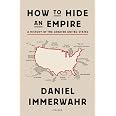
I'm a professor at the University of California San Diego and I'm assigning this for a graduate class. No other book out there has the level of breadth on the history of US imperialism that this work provides. Even though it packs 400 pages of text (which might seem like a turnoff for non-academic readers), "How to Hide an Empire" is highly readable given Immerwhar's skills as a writer. Also, its length is part of what makes it awesome because it gives it the right amount of detail and scope.I could not disagree more with the person who gave this book one star. Take it from me: I've taught hundreds of college students who graduate among the best in their high school classes and they know close to nothing about the history of US settler colonialism, overseas imperialism, or US interventionism around the world. If you give University of California college students a quiz on where the US' overseas territories are, most who take it will fail (trust me, I've done it). And this is not their fault. Instead, it's a product of the US education system that fails to give students a nuanced and geographically comprehensive understanding of the oversized effect that their country has around our planet.Alleging that US imperialism in its long evolution (which this book deciphers with poignancy) has had no bearing on the destinies of its once conquered populations is as fallacious as saying that the US is to blame for every single thing that happens in Native American communities, or in the Philippines, Puerto Rico, Guam, American Samoa, etc. Not everything that happens in these locations and among these populations is directly connected to US expansionism, but a great deal is.A case in point is Puerto Rico's current fiscal and economic crisis. The island's political class share part of the blame for Puerto Rico's present rut. A lot of it is also due to unnatural (i.e. "natural" but human-exacerbated) disasters such as Hurricane María. However, there is no denying that the evolution of Puerto Rico's territorial status has generated a host of adverse economic conditions that US states (including an island state such as Hawaii) do not have to contend with. An association with the US has undoubtedly raised the floor of material conditions in these places, but it has also imposed an unjust glass ceiling that most people around the US either do not know about or continue to ignore.To add to those unfair economic limitations, there are political injustices regarding the lack of representation in Congress, and in the case of Am. Samoa, their lack of US citizenship. The fact that the populations in the overseas territories can't make up their mind about what status they prefer is: a) understandable given the way they have been mistreated by the US government, and b) irrelevant because what really matters is what Congress decides to do with the US' far-flung colonies, and there is no indication that Congress wants to either fully annex them or let them go because neither would be convenient to the 50 states and the political parties that run them. Instead, the status quo of modern colonial indeterminacy is what works best for the most potent political and economic groups in the US mainland. WouldThis book is about much more than that though. It's also a history of how and why the United States got to control so much of what happens around the world without creating additional formal colonies like the "territories" that exist in this legal limbo. Part of its goal is to show how precisely how US imperialism has been made to be more cost-effective and also more invisible.Read Immerwhar's book, and don't listen to the apologists of US imperialism which is still an active force that contradicts the US' professed values and that needs to be actively dismantled. Their attempts at discrediting this important reflect a denialism of the US' imperial realities that has endured throughout the history that this book summarizes."How to Hide an Empire: A History of the Greater United States" is a great starting point for making the US public aware of the US' contradictions as an "empire of liberty" (a phrase once used by Thomas Jefferson to describe the US as it expanded westward beyond the original 13 colonies). It is also a necessary update to other books on this topic that are already out there, and it is likely to hold the reader's attention more given its crafty narrative prose and structure
R**E
An insightful, enjoyable, and honest look at the US and its territories.
This is an excellent and much-needed book. My wife is from Puerto Rico, and we currently live there. I was broadly familiar with the Insular Cases and the history of unincorporated territories. However, this book brings that together with the far broader history of all the other territories under US control over many years.It does so in a manner that is engaging with concise historical context. Prof. Immerwahr presents a compelling story with the right level of detail and a good pace of action that weaves the political, military, economic, and social realities of how the US has evolved its global footprint over the centuries.It is not part of US history that is taught in schools, but it should be.
N**K
Hopefully an accessible intro to Left history
This is an accessible, entertaining and very informative book with some really wild revelations and connections. I consider myself pretty well read in US history in particular and this book still surprised me. I admit, I was ignorant of many of the stories told here (ex: medical experimentation in Puerto Rico; city planning gone wild in the Philippines; labor law loopholes in Saipan). Possibly because the whole view of American history as being one of empire has been obscured, many historical figures involved with it are obscured as well, even if they became more famous in other contexts. For instance Herbert Hoover comes off pretty well here, all things considered. Immerwahl is also more positive on Douglas MacArthur than most other historians I've read. MacArthur is normally profiled as the sometimes ineffectual diva-like egomaniac that he transparently was, but in the context of US Empire and its stewardship of the Philippines, he seems like a real mensch because he was seemingly the only American of influence who gave a damn about the Philippines at all.I hope that lots of young people read this book. This is a history that I'd generally categorize as Left, but I think it's accessible enough that it could introduce a lot of readers to these concepts without any perceived (reactionary) stigma as "a Leftist history book."
C**Y
fascinating US History unknown to most Americans
I learned more new things about US History that I did not previously know than from any other history book I have ever read. Excellently written. Great stories. Helps to tie the role of lands outside the contiguous US borders played in shaping the history most Americans are familiar with. The whole post WWII impacts of the US empire by itself makes this book worth reading. Highly recommend!
A**H
Not what I expected
Very engaging history of how the U.S. acquired all of it's territories and surprisingly how a lot of peoples in far off places in this world are actually American citizens, something I never knew or expected; these as the result of wars, purchases and including certain acts of Congress. Lots of references and notes and though some interpretations of this book can lean left or right, generally this was not just a bashing of the U.S. like some notable books on the Empires' history, but also a kind of praise for all of the innovations that we enjoy today that were the direct result of many overseas wars and atrocities. Considering just the one subject, language, or popular culture even. Any honest view of history and the definition of empire would have to admit to the truth of the conclusions of the author. From my reading, I would liken this book to an abridged "Tragedy and Hope" by Carroll Quigley. The reading was very easy, due to the excellent style of writing and fast pace of the book. The number of pages should not be a problem for most since almost 100 pages, about 20% is dedicated to notes and references. Just for the educational value, I would recommend this book. Because the "rabbit hole" is deep, I would recommend it twice. :-)
Trustpilot
2 weeks ago
2 months ago