Some deliveries may take a little longer than usual due to regional shipping conditions.

DOWNLOAD THE APP


Customer Services
Copyright © 2025 Desertcart Holdings Limited
DOWNLOAD THE APP
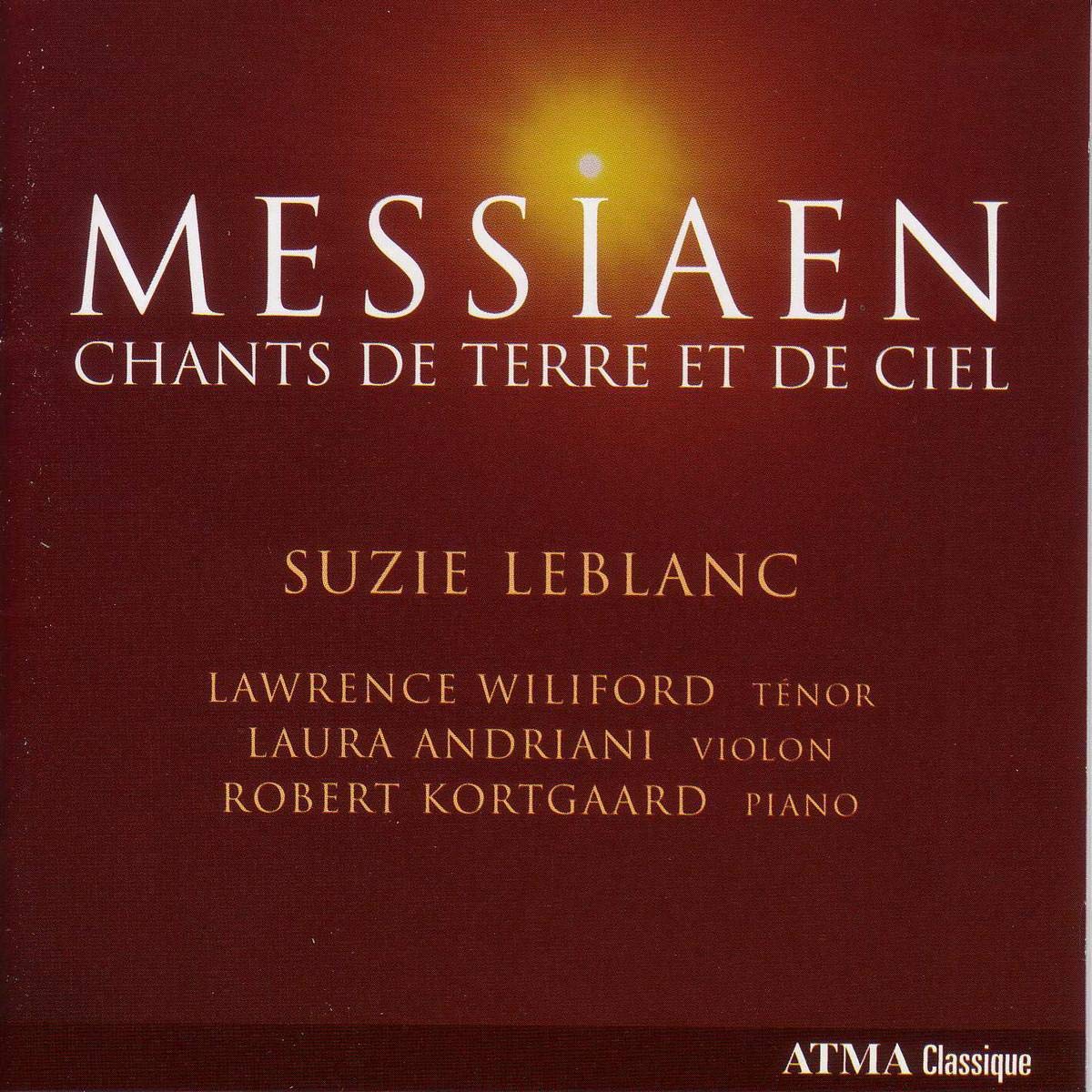
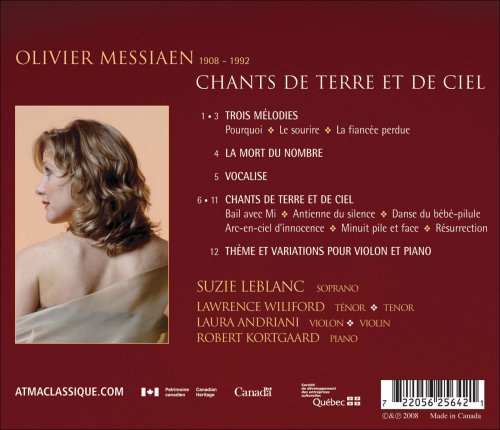
Review This disc is unusual on three counts. First, it presents music by Messiaen that is little known and rarely recorded. Second, all this music dates from his earliest period, the 1930s. And third, we are given performances not by a defective vocalist who is a "specialist" in modern music, but rather by a highly gifted and well-respected Baroque specialist. Indeed, except for the evidently smaller size of her voice and an occasional flutter of vibrato, Suzie LeBlanc sounds a great deal like the young Victoria de los Angeles. Her tone is, for the most part, pure and round, perfectly centered, and projected with the same emotional détaché in terms of interpretation. This, of course, always works well in French vocal music, whose aesthetic is an objective rather than a subjective reading of text (or, at least, it was until the arrival of Gérard Souzay and Régine Crespin on the international scene). Those unfamiliar with these works are in for a shock. This music is far more melodic and regular in pulse than Messiaen's later works, even though the melodies are strophic and generally lie within an octave range (with the exception of the quite difficult Chants de terre et de ciel). I was not terribly pleased with the producer's decision to give the Vocalise-étude to violinist Andriani, excellent though she is. Who wants to hear the Rachmaninoff Vocalise played by a fiddle? Same thing. You can reassign it if the piece is well known, but since the composer wrote it for a soprano and a soprano was available, I'd like to hear her, please. The most fascinating work on this CD, for me, is La mort du nombre, a nine-minute cantata for soprano, tenor, violin, and piano. More than any piece I've heard by Messiaen, it owes a heavy musical debt to Debussy and, in some respects, Wagner, particularly in the final piece where the soprano and violin ascend to a sort of "trembling ecstasy." Here, LeBlanc's performance is indeed emotionally involved, and appropriately so. Tenor Lawrence Wiliford, like LeBlanc, has a beautiful timbre and is, in fact, a more intense interpreter. I'd love to hear him sing Pelléas. I wasn't personally enamored of the Chants de terre et de ciel, perhaps because as the beginning of Messiaen's more mystical period the music seemed to me more experimental and less focused. Nevertheless, it was interesting to hear this transitional work in context, realizing that it was a bridge to the Quartet for the End of Time. There's one other recording of Trois melodies, Von Stade and Katz (RCA), but the mezzo's imperfect French mars an otherwise good performance. In La mort du nombre, Françoise Pollet's very French vibrato (Jade 36352) may seem a trifle ripe to American ears, but her performance is quite interesting; Ann Murray is excellent in the recording on Virgin Classics 91179, but tenor Philip Langridge is not the equal of Wiliford here. Of Chants de terre et de ciel, neither of the competing versions are in LeBlanc's class, despite the presence of Messiaen's second wife, pianist Yvonne Loriod, on the massive 10-CD set on Warner Classics. There seems to be, alas, only one other recording of the Vocalise-étude (with Nathalie Manfrino on a DGG 32-CD set), which makes their decision to give this to the violin all the sadder. Nevertheless, this is a disc of high and unusual musical interest, highly recommended. -- Fanfare Archive, Lynn René Bayley, May/June 2009 Helping to mark the centenary of French modernist Olivier Messiaen (1908-1992), French-Canadian soprano Suzie LeBlanc highlights his youthful song cycles, including the swooning, moonlit "Songs of the Earth and Sky" where her intimate phrasing makes it sound as if she's singing just for you. The disc also includes the lyrical "Theme and Variations" for violin and piano, as well as a rarely heard dramatic cantata that shows the influence of Wagner through the prism of Debussy. -- NJ.com, The Star-Ledger, Bradley Bambarger, December 30, 2008The records marking the centenary of French modernist Olivier Messiaen (1908-1992) have been disappointingly thin, being mostly multiple versions of his "Quartet for the End of Time." So, this thoughtfully conceived, beautifully realized recital disc does a great service. Featuring French-Canadian soprano Suzie LeBlanc, the program highlights the songwriting of the young Messiaen, when he was enraptured with his first, short-lived wife and under the spell of Debussy. There is an ecstatic quality to the cycles "Trois Melodies" and "Chants de Terre et de Ciel" (Songs of the Earth and Sky), all swooning lyricism and moonlit atmosphere. These are deeply French, high-art songs, crafted like jewels. But they also have an effortless naturalism, especially with a singer like LeBlanc. The soprano, in her mid-40s, has specialized in Baroque repertoire, but she has also explored the folk tunes of her Acadian heritage. Her tone is silvery, clear and floating (with the barest vibrato), her phrasing intimate like she's singing just for you. These qualities are ideal, as Messiaen's songs are about romantic faith and spiritual love. The piano parts are rich, with Messiaen giving impressionistic harmony a modernist update. The composer's first wife was a violinist, and he wrote several pieces for her, including the ravishingly lyrical "Vocalise" for violin and piano, played lovingly here by Laura Andriani. Also included is the melodious "Theme et Variations" for violin and piano, with Andriani taking it at flowing pace while managing the most poetic close. The rarity here is "La Mort du Nombre," a dramatic mini-cantata for soprano, tenor, violin and piano by the 21-year-old Messiaen that shows the influence of Wagner's love music through the prism of Debussy's "Pelleas et Melisande." Lawrence Wiliford may sound a bit callow next to LeBlanc, but they entwine intensely enough, the piece ending with shimmering, love-struck piano. -- New Jersey Star Ledger, Bradley Bambarger, October 2008
R**N
Excellent
Excellent
Trustpilot
2 weeks ago
2 weeks ago