We remain fully operational. Our teams are working around the clock to ensure your deliveries continue safely.

DOWNLOAD THE APP


Customer Services
Copyright © 2025 Desertcart Holdings Limited
DOWNLOAD THE APP
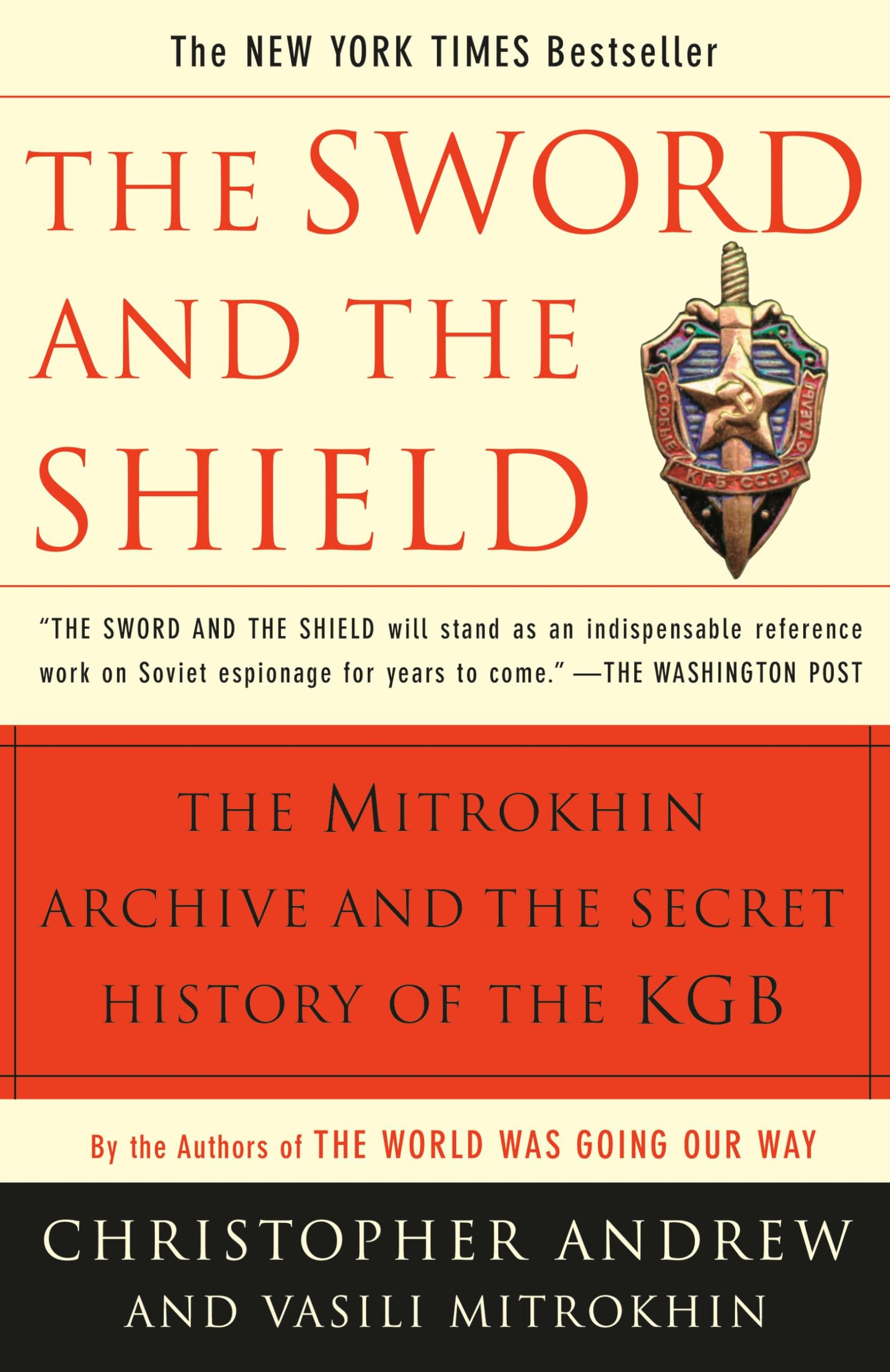
The Sword and the Shield: The Mitrokhin Archive and the Secret History of the KGB [Christopher Andrew, Vasili Mitrokhin] on desertcart.com. *FREE* shipping on qualifying offers. The Sword and the Shield: The Mitrokhin Archive and the Secret History of the KGB Review: Excellent review of the KGB - Excellent and eye-opening. Recommended. Review: A Tour de Force Reveal of the KGB - Christopher Andrew’s The Sword and the Shield provides an in-depth examination of Soviet espionage activities based on the Mitrokhin Archive, a treasure trove of classified KGB documents smuggled out of the USSR by Vasili Mitrokhin, a senior KGB archivist who defected to the West. This book is a seminal work in understanding the inner workings of Soviet intelligence during the Cold War, shedding light on the breadth of KGB operations and the ideological zeal that drove its agents. The title encapsulates the dual role of the KGB as both a "sword" of the Communist Party, actively engaging in espionage, subversion, and covert operations, and a "shield" protecting the Soviet regime from perceived internal and external threats. Through meticulous analysis, Andrew reveals the KGB’s successes and failures, offering a nuanced portrayal of its global reach and influence. The book begins with a historical overview of the KGB, rooted in the Bolshevik Revolution and the establishment of the Cheka, its predecessor. Andrew details the evolution of Soviet intelligence, highlighting how its mission was shaped by the paranoia of leaders like Lenin and Stalin. The KGB became an all-encompassing organization tasked with safeguarding the Soviet state while exporting Communist ideology worldwide. The Soviets were particularly successful in infiltrating the top secret Manhattan project and Los Alamos during development of the atomic bomb. The Soviets had stolen complete working plans for the A bomb even before USA dropped it on Japan. Mitrokhin’s documents expose the KGB's hierarchical structure and the significance of its foreign intelligence wing, the First Chief Directorate, responsible for espionage outside the USSR. Andrew demonstrates how the agency’s ideological fervor often blurred the lines between strategic statecraft and ideological adventurism. One of the book’s central themes is the KGB’s extensive infiltration of Western institutions, including governments, media, academia, and even intelligence agencies. Andrew highlights key cases, such as the Cambridge Five in Britain and Aldrich Ames in the United States, to illustrate how deeply Soviet operatives penetrated Western defenses. These successes were often offset by failures caused by defector revelations, mismanagement, over-reliance on ideological recruits, and just plain bumbling. Despite its ability to gather extensive intelligence, the Soviet agencies all too often failed to analyze and interpret it effectively, due to ideological biases in the agencies and in the state leadership much as Stalin earlier dismissed intelligence reports about Hitler's plans to invade Russia in WWII. Andrew also explores the KGB’s attempts to influence public opinion in Western democracies through active measures, including propaganda campaigns, disinformation, and covert funding of Communist parties and anti-establishment movements. It is eye-opening to realize the extent to which KGB has gone through the years to disseminate misinformation, fabrications and lies in attempting to discredit dissidents, western politicians, western values, capitalism and the United States. In fact, I suspect that many of the negative reviews of this book emanated from the FSB, the successor to the KBG. A substantial portion of The Sword and the Shield focuses on the KGB’s activities in the developing world. During the Cold War, the USSR sought to expand its influence in Africa, Asia, and Latin America by supporting revolutionary movements, propping up friendly regimes, and undermining Western allies. The book provides detailed accounts of Soviet involvement in hotspots such as Angola, Afghanistan, and Cuba, revealing both the scale and limitations of KGB operations in these regions. In addition to its foreign exploits, the KGB played a central role in maintaining domestic control within the USSR. Andrew details its campaigns against dissidents, religious groups, and nationalist movements, underscoring the regime’s dependence on surveillance and coercion. The Mitrokhin Archive exposes how the KGB’s pervasive network stifled opposition while creating an atmosphere of fear and mistrust among ordinary citizens. The book concludes by examining the decline of the KGB as the Soviet Union neared collapse. Internal corruption, political infighting, and the inefficacy of its operations in preventing systemic failure eroded the agency's power. Mitrokhin’s defection and the publication of his archive dealt a significant blow to the KGB’s reputation and provided invaluable insights into its methods. Andrew argues that the legacy of the KGB continues to influence Russian politics, particularly under the leadership of former KGB officer Vladimir Putin. The agency's historical impact on the global stage serves as a cautionary tale about the intersection of ideology, state power, and intelligence operations. In The Sword and the Shield, Andrew delivers a masterful synthesis of historical scholarship and espionage history, although there may be too much detail for every casual reader. For example, literally hundreds of spies are identified in the book, and in each case the author provides the various code names and controllers of every individual. By revealing the secrets of one of the most powerful intelligence agencies in history, the book offers a comprehensive perspective on the Cold War’s covert battles and their enduring consequences.
| Best Sellers Rank | #81,306 in Books ( See Top 100 in Books ) #22 in Espionage True Accounts #38 in Russian History (Books) #132 in Political Intelligence |
| Customer Reviews | 4.6 out of 5 stars 482 Reviews |
R**T
Excellent review of the KGB
Excellent and eye-opening. Recommended.
K**8
A Tour de Force Reveal of the KGB
Christopher Andrew’s The Sword and the Shield provides an in-depth examination of Soviet espionage activities based on the Mitrokhin Archive, a treasure trove of classified KGB documents smuggled out of the USSR by Vasili Mitrokhin, a senior KGB archivist who defected to the West. This book is a seminal work in understanding the inner workings of Soviet intelligence during the Cold War, shedding light on the breadth of KGB operations and the ideological zeal that drove its agents. The title encapsulates the dual role of the KGB as both a "sword" of the Communist Party, actively engaging in espionage, subversion, and covert operations, and a "shield" protecting the Soviet regime from perceived internal and external threats. Through meticulous analysis, Andrew reveals the KGB’s successes and failures, offering a nuanced portrayal of its global reach and influence. The book begins with a historical overview of the KGB, rooted in the Bolshevik Revolution and the establishment of the Cheka, its predecessor. Andrew details the evolution of Soviet intelligence, highlighting how its mission was shaped by the paranoia of leaders like Lenin and Stalin. The KGB became an all-encompassing organization tasked with safeguarding the Soviet state while exporting Communist ideology worldwide. The Soviets were particularly successful in infiltrating the top secret Manhattan project and Los Alamos during development of the atomic bomb. The Soviets had stolen complete working plans for the A bomb even before USA dropped it on Japan. Mitrokhin’s documents expose the KGB's hierarchical structure and the significance of its foreign intelligence wing, the First Chief Directorate, responsible for espionage outside the USSR. Andrew demonstrates how the agency’s ideological fervor often blurred the lines between strategic statecraft and ideological adventurism. One of the book’s central themes is the KGB’s extensive infiltration of Western institutions, including governments, media, academia, and even intelligence agencies. Andrew highlights key cases, such as the Cambridge Five in Britain and Aldrich Ames in the United States, to illustrate how deeply Soviet operatives penetrated Western defenses. These successes were often offset by failures caused by defector revelations, mismanagement, over-reliance on ideological recruits, and just plain bumbling. Despite its ability to gather extensive intelligence, the Soviet agencies all too often failed to analyze and interpret it effectively, due to ideological biases in the agencies and in the state leadership much as Stalin earlier dismissed intelligence reports about Hitler's plans to invade Russia in WWII. Andrew also explores the KGB’s attempts to influence public opinion in Western democracies through active measures, including propaganda campaigns, disinformation, and covert funding of Communist parties and anti-establishment movements. It is eye-opening to realize the extent to which KGB has gone through the years to disseminate misinformation, fabrications and lies in attempting to discredit dissidents, western politicians, western values, capitalism and the United States. In fact, I suspect that many of the negative reviews of this book emanated from the FSB, the successor to the KBG. A substantial portion of The Sword and the Shield focuses on the KGB’s activities in the developing world. During the Cold War, the USSR sought to expand its influence in Africa, Asia, and Latin America by supporting revolutionary movements, propping up friendly regimes, and undermining Western allies. The book provides detailed accounts of Soviet involvement in hotspots such as Angola, Afghanistan, and Cuba, revealing both the scale and limitations of KGB operations in these regions. In addition to its foreign exploits, the KGB played a central role in maintaining domestic control within the USSR. Andrew details its campaigns against dissidents, religious groups, and nationalist movements, underscoring the regime’s dependence on surveillance and coercion. The Mitrokhin Archive exposes how the KGB’s pervasive network stifled opposition while creating an atmosphere of fear and mistrust among ordinary citizens. The book concludes by examining the decline of the KGB as the Soviet Union neared collapse. Internal corruption, political infighting, and the inefficacy of its operations in preventing systemic failure eroded the agency's power. Mitrokhin’s defection and the publication of his archive dealt a significant blow to the KGB’s reputation and provided invaluable insights into its methods. Andrew argues that the legacy of the KGB continues to influence Russian politics, particularly under the leadership of former KGB officer Vladimir Putin. The agency's historical impact on the global stage serves as a cautionary tale about the intersection of ideology, state power, and intelligence operations. In The Sword and the Shield, Andrew delivers a masterful synthesis of historical scholarship and espionage history, although there may be too much detail for every casual reader. For example, literally hundreds of spies are identified in the book, and in each case the author provides the various code names and controllers of every individual. By revealing the secrets of one of the most powerful intelligence agencies in history, the book offers a comprehensive perspective on the Cold War’s covert battles and their enduring consequences.
L**D
cumbersome yet all encompassing and essential history of the KGB and its role in the Soviet System
The Sword and The Shield by Christopher Andrew is perhaps the most complete history of an intelligence agency ever written. Having first read the second volume The World was Going Our Way, The KGB and the Battle for the Third World, I resolved to expand my knowledge by reading the acclaimed first volume. There is no getting around the fact the The Sword and the Shield is an extremely tedious and somewhat cumbersome read. The author constantly exposes the reader to hundreds of sources, agents, and operations that are hard to keep straight. The author also expects that the reader will have a high degree of knowledge about the Cold War and the Soviet Union, and for that reason I do not recommend this book to readers unfamiliar with those topics. Because of the tediousness and seriousness of the topic I have only awarded the book 4 stars. That being said, for anyone interested in studying intelligence or the Soviet Union, this book is a must read. The author successfully promotes the claim that the KGB and the Soviet Security Apparatus was much more crucial to the survival and promotion of the Soviet State than recent experts on the Soviet Union have claimed. He does this by tracing the history of the Soviet Intelligence from the Bolshevik revolution until the dissolution of the Soviet State in 1991. Perhaps the most interesting part of the book is the early history of the KGB which is mostly unknown to students of the Cold War. The KGB from the 1920s until the mid 1950s and early 1960s was perhaps the most successful intelligence agency agency of its time. Achieving high level penetrations of government institutions in almost every western country, while at the same time assassinating and terrorizing opponents of the Soviet State both domestic and abroad. The earlier successes of the KGB did much to enhance the reputation of the KGB as the brutal and and brilliant intelligence service that it is often portrayed as in today's popular culture. The TV show The Americans as well as recent movies such as Salt are current examples of the KGB's mythical status in popular culture. Despite the KGB's early successes the author portrays the KGB as much less efficient than the official histories of the KGB and its successor agency, The SVR, would suggest. For all the KGB's success western intelligence agencies, particular the agencies of the United States and Great Britain, had largely leveled the playing field by the 1960s. The KGB collected immense amounts of intelligence, yet often failed to produce objective analysis of the intelligence it collected due to fears of subverting the widely held beliefs and biases of senior party officials. The KGB also spend enormous amount of time and effort countering ideological subversion from dissidents in the Soviet Union, including Jehovah's witnesses, members of the protest movement Solidarity, and prominent intellectuals critical of the Soviet State. The author suggests that the pursuit of individuals who did not prove a serious threat to the Soviet State was a waste of time and resources. Perhaps the most frightening aspect of the book was the ingenious methods soviet intelligence used to convince individuals in positions of power to spy or work for the Soviet Union. Threats of violence, sexual blackmail, harassment, "false flag" operations, and even love from spouses who were KGB officers were used to compromise and convince intelligence targets. In some ways the book could even be considered a manual of how the KGB compromised and recruited intelligence targets. The ruthlessness of KGB blackmail operations reached the point where targets sometimes committed suicide to escape the clutches of the KGB.For anyone interested in the history of the Soviet Union and the methods of the KGB this book is essential to understanding the role and function of the KGB in the Soviet Union.
S**N
His documents revealed torture like in Kharkov when prisoners’ skin was slowly peeled from ...
My first encounter with the KGB (Комитет государственной безопасности, or Committee for State Security) came a few days after we arrived in the Soviet Union. As a naval attaché, whose duty was to collect intelligence about the Soviet armed forces, the Red Fleet in particular, I was the target of surveillance whenever I left the embassy, particularly when we traveled around the USSR in the course of our duties. Although they never did anything to us that was even close to what they were capable of doing, I always had the most sincere respect for this huge organization. I expect everyone has a picture of the KGB, but the book I have just read filled in the picture for me—tremendously. Christopher Andrew wrote this book, based upon huge cases of KGB archives carefully gathered by Vasili Mitrokhin, from 1972 to his retirement in 1984. Mitrokhin was born in Yurasovo, (Ryazanskaya Oblast’) central Russia (140 miles SE of Moscow) in 1922. He began work as a foreign intelligence officer for the MGB (Ministry of State Security) in 1948. The MGB later became the KGB (Committee for State Security). He was actively involved in all the secret activity in an organization answering to the demands of the General Secretary, Josef Stalin. He was ordered to investigate “The Doctors’ Plot” in January, 1953. This “plot” was a manufactured anti-semitic scheme against Zionists. Then, Stalin died in March of 1953, and that began a fight to see who would replace him. Nikita Khrushchev was one of the contenders, and so was Lavrenty Beria, long-term head of the KGB. Mitrokhin was on hand to watch all the manipulation behind the scenes as Beria fell from grace and became “an enemy of the people”, executed in December of 1953. As the years rolled on Mitrokhin traveled outside the USSR enough to learn about the outside world, and to hear what that world was saying about his country. He was also a reader of Russian literature, and admired the Kirov ballet in Leningrad. When he heard about how the KGB sent agents to maim a ballet star who had defected to the west, he was starting to get disillusioned with all that was happening around him. About that time, in 1956, Khrushchev made his famous speech discrediting Stalin and blaming him for the country’s failings. The KGB transferred Mitrokhin from his intelligence collection duties to those of handling the KGB Archives. Mitrokhin then was in position to see every secret, every message that was sent to be filed in the archives. He was able to read the messages and reports all the way back to the days of the Cheka, after the Revolution in 1918. And he was able to read the top secret files of Lenin and all that he did when thousands of Russians were being exterminated. His documents revealed torture like in Kharkov when prisoners’ skin was slowly peeled from their hands to make “gloves”, in Veronezh prisoners were rolled around in barrels studded with nails, in Poltava, priests were impaled, and in Odessa White officers were strapped to boards and fed into a furnace. In Kiev, prisoners had cages with rats in them strapped to their bodies; the cages were heated and the rats ate into the prisoners’ intestines. Mitrokhin’s archives clarify the fact that the terrors attributed to “Stalinism” began with Lenin: The infallible leader, the one-party state, the ubiquitous security service, and the ring of concentration camps and prisons to terrorize opponents. In the years of Lenin and Stalin western countries had little or no intelligence collection organizations, and certainly no “active measures”, but the Soviets always thought they were doing the same things they were. There were always campaigns to discredit and disown various long-term supporters and helpers. The long-running campaign to track down Trotsky and all his supporters, ended with his assassination in Mexico in 1940. Mitrokhin’s picture of Yuri Andropov began when he was Soviet Ambassador to Hungary. Andropov brutally suppressed the 1956 uprising, with hangings and shootings. The Hungarians today remember him as “The Butcher of Budapest”. Andropov went on to become head of the KGB until 1982, when, upon the death of General Secretary Leonid Brezhnev, he took his place. President Vladimir Putin in 2004, on the 90th anniversary of Andropov’s birth, dedicated a new intelligence school to his old boss, Andropov. He also began several scholarships for students wanting to train in the intelligence field in the name of Andropov. Mitrokhin was stationed in East Germany during the “Prague Spring” of 1968, when the Soviets forcefully suppressed an anti-communist uprising in Czechoslovakia, and he saw how brutally the USSR reacted to that, and he read all the plans for further actions, if needed. Bit by bit, he was growing more disillusioned with his country. In 1972, part of the KGB was transferred from the Lubyanka Prison in Dzerzhinsky Square to Yasenovo, southeast of the Kremlin, out beyond the Ring Road. By this time Mitrokhin found himself “a loner”, seeing the plight of dissidents, hearing more foreign news broadcasts, and exposed to the whole secret history of this communist state. Operating from offices in both Lubyanka and Yasenovo, he was able to handle hundreds of thousands of documents, and he began to memorize some and then go home and transcribe them. Then, when he saw that was too slow, he would make notes and crumple them up and throw them in the basket to be destroyed at the end of the day—but he would conceal them in his shoes and take them home. Mitrokhin had a dacha outside of Moscow and he took the documents there and kept them in an old butter churn, which he concealed beneath the floorboards. As time went on, and no one seemed to pay attention, he began to bring out more and more documents. He concealed them all under the floorboards of his dacha. Finally, in 1984, he retired, but he still didn’t know what he was going to do with all these documents. Finally, in 1991, Mitrokhin traveled to Riga, Latvia and went to the American Embassy there, showing some of his documents to CIA officers. They did not believe he was credible and turned him away. He then went to the British Embassy in Riga, and there a young diplomat listened and looked, and began the process of welcoming him to the West. A month later MI6 agents in Moscow retrieved the 25,000 documents Mitrokhin had stashed under the dacha, and shortly later he and his family arrived in Riga, Latvia, en route the United Kingdom and their new home. Over the decades since the Russian Revolution, various writers have detailed the grisly details of the running of the new Soviet Union. Our various intelligence collection services have added to this picture. The documents Mitrokhin provided confirmed suppositions and suspicions in thousands of different cases, they filled many gaps, and as our FBI later said, this was “the most complete and extensive intelligence ever received from any source". The files confirmed what we had known about the leaders of the Soviet Union. Stalin was a brutal, heartless villain who was so suspicious that he would not believe his own intelligence reports. The Soviets went to great efforts to gather spies in the West; bright, well-educated men and women from the best families and best colleges could not wait to be a part of the dream of a Communist state. These men, like the “Cambridge Five” of Kim Philby, Donald Duart Maclean, Guy Burgess, Anthony Blunt and John Cairncross, are all identified with their secret KGB work-names. These men earned positions in His Majesty’s government during World War II, and passed loads of intelligence to their KGB handlers. Much of what they provided was not used, as was crucial intelligence provided the Soviets from other sources, because Stalin would not believe that it was valid. His psychotically suspicious nature insulated him from some of the most valuable intelligence, including the warnings that Hitler was planning to turn on his so-called “ally” in the Molotov-Ribbentrop Pact and attack the USSR. Kim Philby’s story was particularly poignant. After a life as a Soviet spy, stealing secrets from the British and Americans, while posted in various countries for the U.K., he finally defected to the USSR, and turned into a hopeless drunk in Moscow. He recovered from that somewhat to conduct seminars to prepare young Russians for learning to adapt to English society, and finally died in Moscow in 1988, a sad, lonely life. According to these KGB records, an agent could be honest, hard-working and loyal, and if his super paranoid superiors woke up on the wrong side of the bed, he could be stripped of his assignment, sent to prison, or to a camp in Siberia, or simply shot. When people up and down the chain of command were denouncing each other, you might feel the need to denounce someone yourself, pre-emptively. It might save you, or you could get killed anyway. One of the most remarkable pieces in Sword and Shield was the unveiling of Melita Norwood, who at time of publication of this book in 1999, was 87 years old. She had fallen in love with the idea of Communism and the Workers’ Paradise in the 1930s, and became a Soviet spy in 1937. She got a job in a defense plant, and passed secret information to her handlers all during the war and into the Cold War. When she wasn’t spying, she carried signs to “Ban the Bomb”, opposing Trident submarines in the Royal and U.S. Navies, and handed out the Communist “Morning Star” in her neighborhood of Bexleyheath. According to the Mitrokhin archives, half the USSR’s weapons are based upon U.S. designs; the KGB tapped Secretary of State Henry Kissinger’s phone, and they had spies in place in almost all U.S. defense contractor facilities. Salvador Allende of Chile provided political intelligence to the USSR, and reorganized his own intelligence organization along lines suggested by the KGB. KGB financial support probably played a decisive role in Allende’s victory in 1970, according to author Christopher Andrew. As the Cold War began, revelations in the United States showed America that the Soviet Union was on the march to conquer the world. It was a fearsome image as the Soviets threatened to put all of Europe under the communist yoke. Communists were everywhere in France, and the United Kingdom, under Conservative rule all during World War II, suddenly swerved left with a Labour government, and plans to nationalize major industries. America’s firm grasp of military supremacy with the atom bomb was slipping, as spies who had stolen American atomic bomb secrets started to emerge. There was Klaus Fuchs, and Alger Hiss, and then Julius and Ethel Rosenberg. Just at this time, 1950, a little-known Republican Senator from Wisconsin began to make headlines with his call for investigations. Joseph R. McCarthy claimed there were hundreds of communists in the State Department. Americans began to see communists everywhere. In 1951 President Truman said that Sen. McCarthy was the Kremlin’s No. 1 asset in the United States, and according to the authors, that turned out to be true. It took a while for Moscow Center to understand what was happening with the McCarthy Red Scare, but as they did, they began to strengthen their efforts to build up their illegal presence in the U.S. In 1957 Rudolf Abel was caught and convicted of spying for the KGB in America and sentenced to 30 years. However, in 1962 he was freed in a prisoner exchange with the captured U-2 Pilot, Francis Gary Powers, in a dramatic exchange in West Berlin at the Glienecker Bridge. The KGB and their Cuban counterparts supported the Sandinista movement in Nicaragua, blackmailed various western politicians, spread false information regarding the Kennedy assassination, attempted to incriminate E. Howard Hunt with Lee Harvey Oswald, spread rumors that FBI Director J. Edgar Hoover was a homosexual, and attempted to discredit Martin Luther King, Jr. by placing publications portraying him as an “Uncle Tom”, receiving government subsidies. They stirred up racial tension in the U.S. by mailing bogus letters from the Ku Klux Klan, placing an explosive package in “the Negro section of New York (Operation Pandora)” and by spreading conspiracy theories that M.L. King Jr.’s assassination had been planned by the U.S. government. The KGB and their Rumanian counterpart established close ties with PLO leader Yassir Arafat, providing money and secret training for PLO guerrillas. Most arms supplied to the Palestinians were handled through Wadie Haddad of the PFLP, who stayed in a KGB dacha during his visits to Moscow. Haddad and Carlos the Jackal organized the 1975 attack on the OPEC Conference in Vienna, and Haddad organized the highjacking in Entebbe in 1976, as well as several other PLO highjackings. This book illustrated over and over how people in the west have been taken in by the allure of “the dictatorship of the proletariat”, “the Workers’ Paradise”, or the glorious idea of Communism. Some gave up everything to join the cause, even spying for the USSR, and dying for it. The KGB was absolutely essential to the totalitarian nation that was the Soviet Union, to protect it, and to terrorize its citizens and anyone who came too near. Could modern Russia return to the ways of the Soviet Union? Time will tell. -end-
N**E
One of the most important books of our times
Everyone should read this book to be able to navigate in today’s ocean of disinformation.
M**D
Everything you never knew about Soviet intelligence (without the risks)
While western intelligences agencies have been rife with traitors and turncoats only too anxious to publish their stories, the Russians always seemed to keep their secrets well buried far behind the Iron Curtain. While spilling the beans in the west can lead to publishing profits, in Russia it leads to a quick and nasty death. Nevertheless Vasili Mitrokhin risked just that to spend years making secretive notes deep within the library of the Russian intel archives. Many years later the British SIS exfiltrated Mitrokhin along with five filing cabinets of notes (the American CIA was first offer but strangely said no). With Christopher Andrew, the former KGB officer wrote the first of this incredible Russian intel service history from those notes. It is all here from the early days of the Cheka under Lenin, to the Stalin era to the modern day - a long awaited and revealing look into the actions and the mindset of the Russian and Soviet spymasters. Wow! Were these guys paranoid! The belief that you are constantly under attack breeds a very capable, determined and ruthless intelligence service. Amazingly, its efforts overt he decades since the revolution were aimed as much at the Soviet population as the real and imagined enemies abroad. There are many shocking revelations in this great read - surprising many did not make headlines in the west when the book was published. It can be heavy (detailed) reading, but for the spy enthusiast to the student of world espionage the book is a must read and must have.
R**N
Better as a reference book
The whole issue with this book is one of readability. It is stuffed full of names, places and dates but the way the actual events are portrayed makes it a challenge for the reader to parse it all. In other words, the book is about many inherently exciting events presented in the most unexciting manner possible. It's the difference between saying something happened and describing how it happened. Because of this, the book serves better as a reference work (look things up when you need to) as opposed to a non-fiction book describing the events in the archives. While the material is good, it is simply not a book that is enjoyable to read.
C**Y
Extremely well written
I believe the author is English and the writing is concise and understandable, for all the complexities of the history of Russian/Soviet espionage. It all hangs together and gives an excellent background to Russia, and to modern mentality of the leaders of Russia today, and the long range deep problem of Russian espionage to the rest of the world. Excellent history and a must to read this for Russian experts I presume.
Trustpilot
2 weeks ago
3 weeks ago