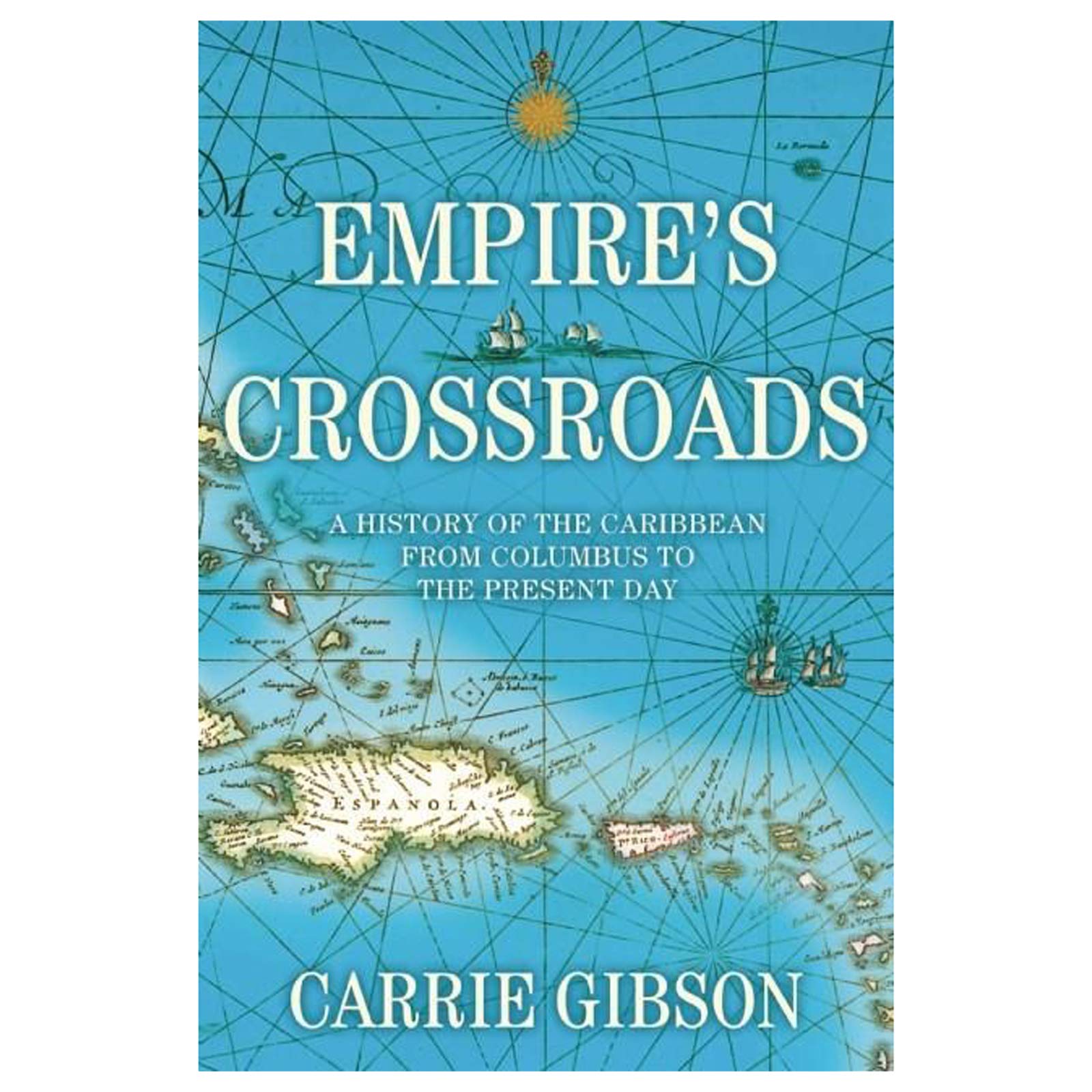
Empire's Crossroads: A History of the Caribbean from Columbus to the Present Day [Gibson, Carrie] on desertcart.com. *FREE* shipping on qualifying offers. Empire's Crossroads: A History of the Caribbean from Columbus to the Present Day Review: No Sugar Coating in this Superb History of the Caribbean - As Carrie Gibson notes in the conclusion to her superb history of the Caribbean, "it is much easier to imagine a West Indies without history." The prevailing view of Americans and Europeans of the Caribbean is one seen through the eyes of tourism - a paradise of exquisite beaches and rum drinks with little umbrellas. But as Ms. Gibson so aptly demonstrates, the Caribbean is not a mere footnote of history: it has been a geographic vortex of superpower entanglement and a crossroad of globalism for over half a millennium. Ms. Gibson creates a lively narrative supercharged with facts, but none offered gratuitously. I knew I was in for a treat as the introduction began with an anecdote about a decapitated statute still standing in a park in Fort-de-France, Martinique. We learn that the statute was of Napoleon Buonaparte's first wife, who was born on the island. Many islanders believed that it was she who convinced Napoleon to reinstate slavery on this island eight years after its abolition. The book is replete with such wonderful stories of human interest and intrigue. Ms. Gibson's history is not one written in a vacuum, but is a comprehensive worldview of nations that meddled in and forged the complex fabric of the West Indies. After covering what little is know about the native inhabitants, who were all but obliterated by Europeans, her narrative takes full swing with the struggles of the European powers. The relative might of these powers ebbed and flowed like the tides, with the flux of fortunes reflected in the changing control of various islands and coastal regions in the West Indies. A generation of explorers beginning in the late fifteenth century, aided by new sailing technologies, advances in astronomy, and, imperatively, royal and private investment, set forth on a westward quest for gold, exotic spices, and other riches that eventually led them to the Caribbean. The fascinating twists and turns of geography, climate, and history, including the influx of many peoples, all so well documented by Ms. Gibson, set off a chain of events that Henry the Navigator could never have imagined. The history of the Caribbean is marred by violence and shameful disregard for human dignity. Ms. Gibson spares us no detail. But the details force the reader to acknowledge the horrific reality that marked the struggles of slaves, indentured servants, and others who have been exploited by those in search of fortune. Perhaps the greatest irony of Caribbean history is that the quixotic search for riches eventually gave way to the harvesting of sugar cane. This "useless by-product of a breed of grass," as Ms Gibson calls it, became the virtual gold of the Caribbean. It is fascinating to discover the roster of notables throughout history who left their fingerprints on the Caribbean. From Queen Elizabeth to Oliver Cromwell; Louis XIV to Napoleon, and the latter's nemesis in the fight for Haitian independence, Toussaint Louverture, their stories are varied and fascinating. Virtually every US president left his mark on the region, starting with George Washington who fought for the British in Barbados. As Ms. Gibson sardonically remarks, British generals probably wished the future first US President would have died of the smallpox he contracted in Barbados instead of developing immunity to the disease that may have spared his life during the fight for American independence. Perhaps missing from Ms. Gibson's discussion of great historic individuals with connections to the islands is Alexander Hamilton. Born in Nevis and raised in the Caribbean, he would go on to become the primary architect of the American financial system. He was indisputably one of the most influential world figures ever born in the West Indies, and therefore, I believe would have been worthy of mention. We learn about the intertwined relations of the Caribbean, the American British colonies, and England, and how clandestine commerce with the islands weighed heavily in the outcome of events leading to American independence. The relationship between the Caribbean and the fledgling Republic altered drastically over time as US influence in the region and the world grew exponentially. Armed with the Monroe Doctrine, the pretext of defending American national interests, and supposedly, the islanders right to freedom from foreign interference, was a thin disguise for what the US wanted: geographic positioning, the exploitation of natural and human resources, and trade policies that favored American interests. In other words, the prize of dominance in the region had changed little from the days of European hegemony. Imperialism in the West Indies takes an interesting twist in the twenty-first century. Trade wars that once centered around mercantilism and piracy primarily involving the age-old commodities of sugar and rum more recently have triggered WTO actions, as private and public entities fight in international courts for lucrative shares of these and other commodity markets, particularly bananas. Of even more recent interest, Ms. Gibson discusses the posturing of the United States and China in the West Indies. On this development she notes, "As the axis of global power begins to tilt to the east, The Caribbean islands still find themselves in a strategic position." The islands share common themes, such as slavery, disease, corruption and natural disasters, but Ms. Gibson describes meticulously the individual trajectories that the islands and Caribbean coastal regions followed, giving each a distinctive history. Not surprisingly, the circumstances and prosperity of islands vary significantly today. From what Ms. Gibson calls the relative egalitarianism, albeit impoverished circumstances, of Cuba, to the extreme poverty of Haiti with its man-made buffer zone for cruise ships, she covers the uniqueness of history and culture that lead to the present day individuality of the territories and countries of the West Indies. Ms. Gibson deals extensively with the histories of Cuba, the Dominican Republic, Haiti and Jamaica. But many other islands, even the small and seemingly insignificant, warrant her mention, rendering her perspective particularly comprehensive. Thus we learn of the heyday of gangsters and nightclubs in Havana, and of the slave uprisings and brutal reprisals in Hispaniola, but we also discover the story of the violent volcanic eruptions that rocked the tiny island of Saint Vincent in the Lesser Antilles. The scope of this book is breathtaking: Ms. Gibson does not seem to miss a single beat. From the voyages of Christopher Columbus to the modern sounds of reggae, she covers the array of culture, peoples, and events, both natural and man-made, that have molded the texture of this region. She captures admirably how the tides of fortune vacillated as wars, disease, natural calamities, and money continually changed the balance of power in the region and on individual islands. Most who visit the West Indies may have little interest in knowing anything about the region other than where to find the most exquisite beaches and best hotels. But I believe everyone who enjoys the natural beauty and man-made comforts of this region would be well served to learn more about the complex culture, people, geography, and history of the region. Perhaps Caribbean cruise ships should consider leaving a copy of Ms. Gibson's masterful history in every cabin. Even a mere perusal of this book could be a significant eye-opener for the less informed into the broader vistas of the West Indies. Review: Brief historical information to the Caribbean - This book provides a brief history of most of the area in the Carib. Which is what I was looking for. Towards the end, history gives way to facts and figures and some opinion - not as interesting, but still worth the read. Overall, I learned a few things about the area I hadn't known before.
| Best Sellers Rank | #424,275 in Books ( See Top 100 in Books ) #31 in Haiti Caribbean & West Indies History #94 in Expeditions & Discoveries World History (Books) #1,008 in Native American History (Books) |
| Customer Reviews | 4.3 4.3 out of 5 stars (283) |
| Dimensions | 5.9 x 1.3 x 8.9 inches |
| Edition | Reprint |
| ISBN-10 | 0802124313 |
| ISBN-13 | 978-0802124319 |
| Item Weight | 1.18 pounds |
| Language | English |
| Print length | 480 pages |
| Publication date | November 10, 2015 |
| Publisher | Grove Press |
M**J
No Sugar Coating in this Superb History of the Caribbean
As Carrie Gibson notes in the conclusion to her superb history of the Caribbean, "it is much easier to imagine a West Indies without history." The prevailing view of Americans and Europeans of the Caribbean is one seen through the eyes of tourism - a paradise of exquisite beaches and rum drinks with little umbrellas. But as Ms. Gibson so aptly demonstrates, the Caribbean is not a mere footnote of history: it has been a geographic vortex of superpower entanglement and a crossroad of globalism for over half a millennium. Ms. Gibson creates a lively narrative supercharged with facts, but none offered gratuitously. I knew I was in for a treat as the introduction began with an anecdote about a decapitated statute still standing in a park in Fort-de-France, Martinique. We learn that the statute was of Napoleon Buonaparte's first wife, who was born on the island. Many islanders believed that it was she who convinced Napoleon to reinstate slavery on this island eight years after its abolition. The book is replete with such wonderful stories of human interest and intrigue. Ms. Gibson's history is not one written in a vacuum, but is a comprehensive worldview of nations that meddled in and forged the complex fabric of the West Indies. After covering what little is know about the native inhabitants, who were all but obliterated by Europeans, her narrative takes full swing with the struggles of the European powers. The relative might of these powers ebbed and flowed like the tides, with the flux of fortunes reflected in the changing control of various islands and coastal regions in the West Indies. A generation of explorers beginning in the late fifteenth century, aided by new sailing technologies, advances in astronomy, and, imperatively, royal and private investment, set forth on a westward quest for gold, exotic spices, and other riches that eventually led them to the Caribbean. The fascinating twists and turns of geography, climate, and history, including the influx of many peoples, all so well documented by Ms. Gibson, set off a chain of events that Henry the Navigator could never have imagined. The history of the Caribbean is marred by violence and shameful disregard for human dignity. Ms. Gibson spares us no detail. But the details force the reader to acknowledge the horrific reality that marked the struggles of slaves, indentured servants, and others who have been exploited by those in search of fortune. Perhaps the greatest irony of Caribbean history is that the quixotic search for riches eventually gave way to the harvesting of sugar cane. This "useless by-product of a breed of grass," as Ms Gibson calls it, became the virtual gold of the Caribbean. It is fascinating to discover the roster of notables throughout history who left their fingerprints on the Caribbean. From Queen Elizabeth to Oliver Cromwell; Louis XIV to Napoleon, and the latter's nemesis in the fight for Haitian independence, Toussaint Louverture, their stories are varied and fascinating. Virtually every US president left his mark on the region, starting with George Washington who fought for the British in Barbados. As Ms. Gibson sardonically remarks, British generals probably wished the future first US President would have died of the smallpox he contracted in Barbados instead of developing immunity to the disease that may have spared his life during the fight for American independence. Perhaps missing from Ms. Gibson's discussion of great historic individuals with connections to the islands is Alexander Hamilton. Born in Nevis and raised in the Caribbean, he would go on to become the primary architect of the American financial system. He was indisputably one of the most influential world figures ever born in the West Indies, and therefore, I believe would have been worthy of mention. We learn about the intertwined relations of the Caribbean, the American British colonies, and England, and how clandestine commerce with the islands weighed heavily in the outcome of events leading to American independence. The relationship between the Caribbean and the fledgling Republic altered drastically over time as US influence in the region and the world grew exponentially. Armed with the Monroe Doctrine, the pretext of defending American national interests, and supposedly, the islanders right to freedom from foreign interference, was a thin disguise for what the US wanted: geographic positioning, the exploitation of natural and human resources, and trade policies that favored American interests. In other words, the prize of dominance in the region had changed little from the days of European hegemony. Imperialism in the West Indies takes an interesting twist in the twenty-first century. Trade wars that once centered around mercantilism and piracy primarily involving the age-old commodities of sugar and rum more recently have triggered WTO actions, as private and public entities fight in international courts for lucrative shares of these and other commodity markets, particularly bananas. Of even more recent interest, Ms. Gibson discusses the posturing of the United States and China in the West Indies. On this development she notes, "As the axis of global power begins to tilt to the east, The Caribbean islands still find themselves in a strategic position." The islands share common themes, such as slavery, disease, corruption and natural disasters, but Ms. Gibson describes meticulously the individual trajectories that the islands and Caribbean coastal regions followed, giving each a distinctive history. Not surprisingly, the circumstances and prosperity of islands vary significantly today. From what Ms. Gibson calls the relative egalitarianism, albeit impoverished circumstances, of Cuba, to the extreme poverty of Haiti with its man-made buffer zone for cruise ships, she covers the uniqueness of history and culture that lead to the present day individuality of the territories and countries of the West Indies. Ms. Gibson deals extensively with the histories of Cuba, the Dominican Republic, Haiti and Jamaica. But many other islands, even the small and seemingly insignificant, warrant her mention, rendering her perspective particularly comprehensive. Thus we learn of the heyday of gangsters and nightclubs in Havana, and of the slave uprisings and brutal reprisals in Hispaniola, but we also discover the story of the violent volcanic eruptions that rocked the tiny island of Saint Vincent in the Lesser Antilles. The scope of this book is breathtaking: Ms. Gibson does not seem to miss a single beat. From the voyages of Christopher Columbus to the modern sounds of reggae, she covers the array of culture, peoples, and events, both natural and man-made, that have molded the texture of this region. She captures admirably how the tides of fortune vacillated as wars, disease, natural calamities, and money continually changed the balance of power in the region and on individual islands. Most who visit the West Indies may have little interest in knowing anything about the region other than where to find the most exquisite beaches and best hotels. But I believe everyone who enjoys the natural beauty and man-made comforts of this region would be well served to learn more about the complex culture, people, geography, and history of the region. Perhaps Caribbean cruise ships should consider leaving a copy of Ms. Gibson's masterful history in every cabin. Even a mere perusal of this book could be a significant eye-opener for the less informed into the broader vistas of the West Indies.
K**N
Brief historical information to the Caribbean
This book provides a brief history of most of the area in the Carib. Which is what I was looking for. Towards the end, history gives way to facts and figures and some opinion - not as interesting, but still worth the read. Overall, I learned a few things about the area I hadn't known before.
R**A
An Interesting Overview of Caribbean History.
While Gibson’s book would have been well served by a pre-publication, proofreader - typos abound - it is a well researched work. Its exhaustive treatment of slavery, and slave trading in the Spanish, French, English, Portuguese, and Dutch colonies particularly, is thorough and very educational.
S**E
What an amazing read!
I started the book before my voyage on the German sail training ship Roald Amundsen in California. I started the voyage in Martinique with ports in Dominica, Guadeloupe, British Virgin Islands and on to cross to Bermuda. Last year I did the crossing to the Azores. With the history I gained from this read and the distinctive mode of travel, I have anew appreciation of the role colonizers have, and continue to exploit this region of the world. (Photos: our ship, and a bruise ship in Roseau, Dominica.)
D**T
PROOFREADING NEEDED.
An interesting and well written history of the Carribean. However the proofreading of the kindle edition is abysmal. Almost every page has an error of some kind. Words are run together, punctuation is incorrect, etc. The quality of the writing deserves a better presentation on the page.
A**P
Mixed Feelings
I have mixed feelings about the book. I bought this book to read about Caribbean history before visiting some of the islands. I was hoping for a sense of what brought the islands to where they are today and what underlies their culture. Unfortunately, the book was not well-suited for that purpose. The Good: On the one hand, I absolutely commend the author for her knowledge of the topic and her research. The book is amazingly well researched and the author's knowledge of the topic is impressive. If you are looking for a vast collection of facts about the different islands, then this book will serve you well. The Bad: On the other hand, the book lacks a usable narrative format to make the information presented useful. It comes across a bit like someone listing everything they know rather than someone telling the story of the islands -- it is very linear. For example, the book outlines the names of leaders and how the demographics of the islands changed (skipping from island to island), but it presents little in the way of what life was like, how the islands functioned politically or culturally, or any of the usual colorful events that make history so interesting. There are also fascinating tantalizing moments, but the book doesn't exploit them. For example, it mentions the Founding Fathers of America visiting the islands and getting their gunpowder through the islands, but the book doesn't address this on a personal level nor does it explain how this might have affected the history of the two regions. This is too bad because I suspect this author has the knowledge to tell a much deeper, richer story than that normally presented in history courses. Again this is not a bad book. It is very informative and quite an impressive feat. But it is a difficult read which may not provide what you are looking for if you are hoping for insight rather than facts.
D**W
A Very Complete History
I was this book in preparation for a cruise in the western Caribbean. When the cruise was cancelled because of the COVID-19 pandemic, I kept reading because I was already hooked. The author details the history of the European powers showing up and grabbing possession of the islands and Central America. These lands were taken, traded, fought over, settled, filled with African slaves, and dragged along in th history of those European powers until the United States joined th fray. Gibson doesn't sugar coat anything in this account. I learned a lot and will someday visit these places with more awareness than the average tourist.
Trustpilot
2 months ago
2 weeks ago