Desert Online General Trading LLC
Dubai, United Arab Emirates
Desert Online General Trading LLC
Dubai, United Arab Emirates

The Safari Companion: A Guide to Watching African Mammals


A**D
Beyond the touristy safari
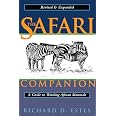
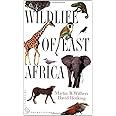
Taking pictures of the Big 5 is great fun on a safari. However, too many safari-goers simply take pictures without understanding the animals they're observing. A lot of guidebooks give you information on how to identify a species, but don't really tell you much about the animals themselves (and unfortunately most guides and drivers aren't much help either). Richard Estes' The Safari Companion: A Guide to Watching African Mammals Including Hoofed Mammals, Carnivores, and Primates is a great remedy to this. Estes treats the major African mammals with the detail of a graduate biology textbook, explaining their evolutionary history, diet, and behavior. Each chapter follows a set, easy-to-follow pattern with key information. They also include a pictorial guide to each animal's behaviors (with images of how, for example, hyenas behave when they're submissive).While other guidebooks might cover the information on elephants and giraffes, Estes' passion is antelopes and it shows in this book. Many other guidebooks and safari guides consider antelopes the "junk" game animals, but Estes shows that they are a fascinating and successful group of animals. I learned to appreciate Thompsons Gazelles and Oryx a whole lot more after reading this book. In fact, the section on antelopes alone is worth the price of the book.Estes' book is heavy - as befitting a book so packed with information - so you should probably take a smaller, more traditional wildlife checklist on your safari (I recommend Wildlife of East Africa (Princeton Illustrated Checklists), which I used in Uganda and Kenya). However, Estes' book is necessary if you want to go beyond simply a photography expedition and actually learn about African mammals.
B**E
Worth it's weight!
Just returned from two weeks of safari in Tanzania. We took only three books with us. Two field guides and a novel. Based on others reviews I chose the full colour photo guide by Withers and this one; the Estes. This guide is worth it's weight. It's not small. There is no way it's content could be edited down. It's all important. When you see an Eland bull lower it's horns the Estes explains why. When you see a group of elephants and they are all male the Estes tells you why. My ten year old was so glad to learn so much about her favorite monkeys.(the Black Faced Vervet!)The explanations and observations really enriched our animal viewing encounters. Small black and white line drawings. No photographs. Easy to read and understand the symbols and charts. Very much like a text book but, much more interesting. Wishes for future edition would be the inclusion of the social behavior of the Ostrich as they are such a large and obvious member of the Savannah.
A**L
Loads of Information
Five star for a professional, about a 3 for a casual reader!. Black and white beautiful "hand drawn" or sketched pictures of animals. It is very very well done, but basically more information than I needed to know. I really wasn't interested in an very detailed descriptiond about elephants mating, but interested about their warning signals, etc. etc. It is really more for someone leading a Safari or a professional guide. Too heavy to take on Safari, but interesting before and after!.
S**E
Figures hard to use in Kindle edition
Pros: Lots of detailed information about interpreting animal behavior with figures. Much more info that provided by other commercial travel series books with pictures.Cons: This didn't work as well as I thought it would on Kindle because the figures were small and it was a pain to magnify and try to move around. I bought it for Kindle because I wanted to save space in our safari packing.The main reason I didn't end up using this book was that we found another that was so much more captivating and useful. In our pre-trip reading, we found Cythnia Moss' "Portraits in the Wild" (Portraits in the Wild: Animal Behavior in East Africa)based on her 20+ years experience (when the book was last revised) researching elephants and observing other wildlife in a Kenyan Park just across the border from the Serengeti. This book is so well written. It is an interesting and enjoyable read (my spouse and I both read it before we went and at times were trying to beat the other to the book on a weekend afternoon). But more importantly, to me, she shows a gift for describing how the research is acquired in the field and she tells why she has selected to highlight some researcher's work over others. She also describes for which species there is little research (and the challenges) and highlights the importance of studying behavior in the wild (versus zoos). Reading this book, you gain a deep appreciation for the wildlife included in the book. There are also strong themes and interesting data points for those interested in evolution, impact of environment on development of social behavior. I became so interested that I would tell my work colleagues about all the fascinating facts until they groaned "no more about elephants!" But then, they were forwarding me articles they found elsewhere and I think the books' content was somewhat infectious. I also read about elephant family histories on her website and watched a couple of PBS documentaries that feature her work with elephants (google: Echo PBS). Also since this book was published a while ago, you can get used hardback copies for ~$2 on Amazon marketplace.
Trustpilot
2 days ago
3 days ago