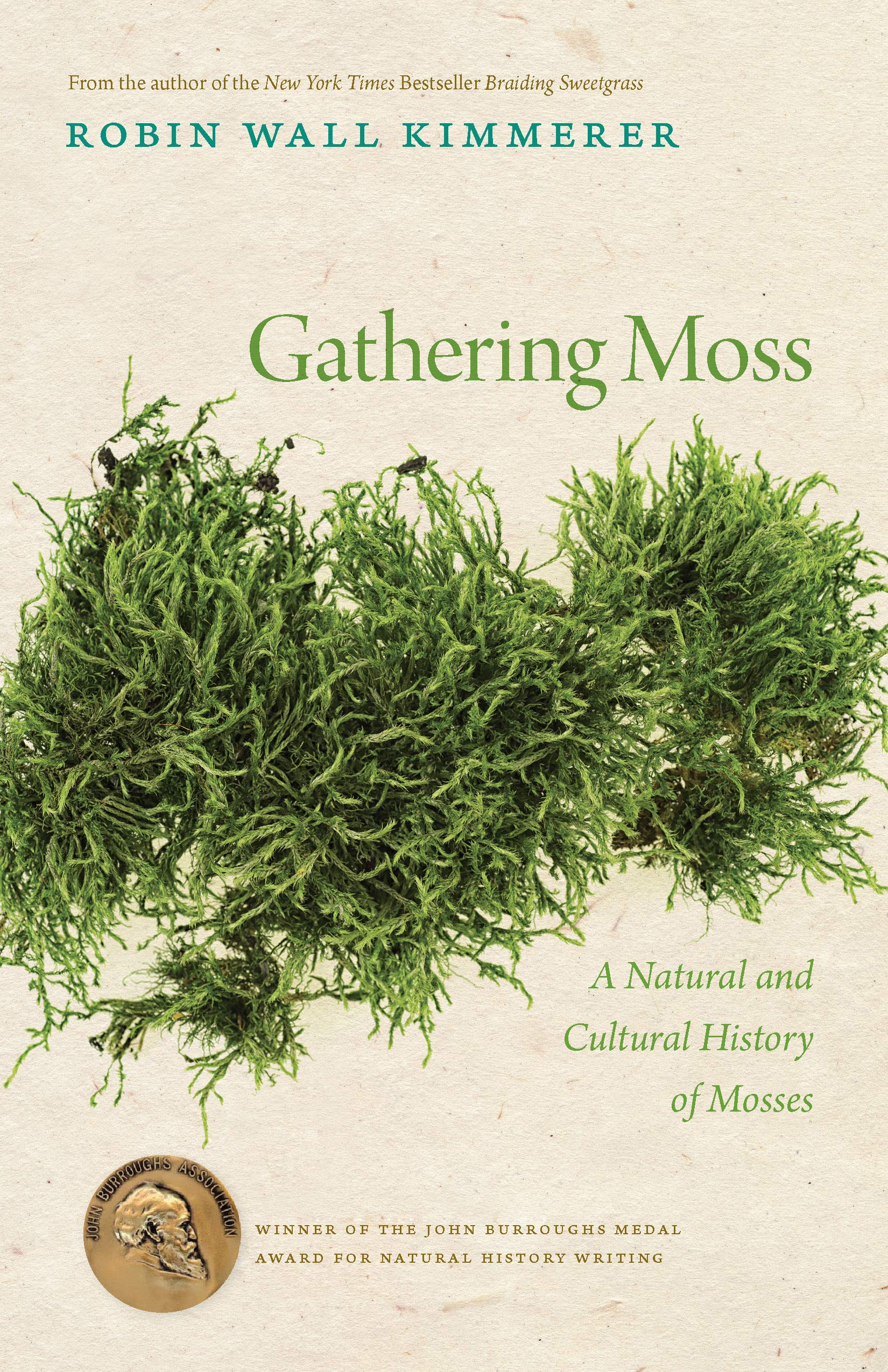
Buy Gathering Moss: A Natural and Cultural History of Mosses on desertcart.com ✓ FREE SHIPPING on qualified orders Review: Beautiful prose, beautiful message - Robin's love for nature is impossible to miss. As a Native American she has a connection to Mother Earth that most white people lack. A couple times when she mentioned a species evolving I had to smile. I guess you can't get to PhD level without being indoctrinated to the white scientific view of the world to some degree. But surely in her heart she knows that each of these beautiful plants was created as were all the animals and humans. Her experiences during her research were fascinating. Canoeing through rivers embraced by steep canyon walls, a research center accessible only by boat where she would spend summers with her daughters, a consulting job at some anonymous wealthy owner's estate who was trying to coerce nature to his will, thinking money alone was enough. As an integrated whole, this book is like a guided meditation. It's about so much more than the science of bryophytes. The title has as many layers as the book itself. Like the cliche, "A rolling stone gathers no moss," it beckons you to slow down and look closer at the world around you. This book is a masterpiece. Think of it as a walk through the woods on a spring day, not to be rushed, expectations open, or you'll miss its magic. It's encouraging to see how popular her books are, that people are seeking a world that those obsessed with power and greed have tried so hard to hide. Review: Highly recommended, thoughtful read - I love pretty much anything this author writes. Braiding Sweetgrass is a must read and this book, Gathering Moss, is beautiful, thoughtful, and gentle. I find this focus on nature to be enlightening and calming.
| Best Sellers Rank | #9,887 in Books ( See Top 100 in Books ) #4 in Botany (Books) #6 in Ecology (Books) #12 in Natural History (Books) |
| Customer Reviews | 4.8 4.8 out of 5 stars (2,313) |
| Dimensions | 5.9 x 0.6 x 8.9 inches |
| Edition | unknown |
| ISBN-10 | 0870714996 |
| ISBN-13 | 978-0870714993 |
| Item Weight | 2.31 pounds |
| Language | English |
| Print length | 168 pages |
| Publication date | March 1, 2003 |
| Publisher | Oregon State University Press |
5**T
Beautiful prose, beautiful message
Robin's love for nature is impossible to miss. As a Native American she has a connection to Mother Earth that most white people lack. A couple times when she mentioned a species evolving I had to smile. I guess you can't get to PhD level without being indoctrinated to the white scientific view of the world to some degree. But surely in her heart she knows that each of these beautiful plants was created as were all the animals and humans. Her experiences during her research were fascinating. Canoeing through rivers embraced by steep canyon walls, a research center accessible only by boat where she would spend summers with her daughters, a consulting job at some anonymous wealthy owner's estate who was trying to coerce nature to his will, thinking money alone was enough. As an integrated whole, this book is like a guided meditation. It's about so much more than the science of bryophytes. The title has as many layers as the book itself. Like the cliche, "A rolling stone gathers no moss," it beckons you to slow down and look closer at the world around you. This book is a masterpiece. Think of it as a walk through the woods on a spring day, not to be rushed, expectations open, or you'll miss its magic. It's encouraging to see how popular her books are, that people are seeking a world that those obsessed with power and greed have tried so hard to hide.
R**E
Highly recommended, thoughtful read
I love pretty much anything this author writes. Braiding Sweetgrass is a must read and this book, Gathering Moss, is beautiful, thoughtful, and gentle. I find this focus on nature to be enlightening and calming.
M**I
tells more than ecosystem
Meeting with good books makes me feel as happy as can be. I learned the name of Robin Wall Kimmerer in the book review of the Japanese Newspaper, in which they introduced a recently published Japanese version of Gathering Moss. Her essays sometimes sound like a maxim of a philosopher, and in other times like a serious warning from an ecologist. Before everything else, she is a naive botanical scientist. She wrote about her excitement when she found evidence about chipmunks' playing important role in diffusing moss. We can understand her delight without any doubt. She says we cannot understand things until we know them by using all of our four aspect; mind, body, emotion and spirit. We only need attentiveness to understand things. Further she points out finding the words is another step in learning to see. Knowing things' name is the first step in regaining our connection with them. Losing their names is a step in losing respect to them, on the contrary. Mosses are living fossils, inhabitant on surfaces, the amphibians of the plant world, master of their chosen environments, as many as 22,000 species. They lack flowers, fruits, seeds and even roots. Most mosses are immune to death by drying. Desiccation is simply a temporary interruption in life for them. Mosses produce a whole menu of specialized asexual multiplication, their spores are capable of becoming males or females. When the colony gets crowded, moss change its gender from female to male. The intermediate disturbance hypothesis is also applied to mosses. When disturbance occurs at an interval between the extremes diversity of species is highest. This book tells us not only ecosystem of mosses but also our lives. In the traditional society, we used mosses as a gift from the Creators in various daily lives, which is abandoned completely as the civilization developed. However, she says, every being has a particular role. Important role of education is to discover those gift and learn to well use of them. Mosses and lichens are both very sensitive to air pollution. They are like the canaries in the mine. There are some people who hate mosses. They try every efforts to kick them out from their well-kept gardens. On the other hand there are others who enjoy raising mosses. She shows some concern about the risk of destruction for arbitrariness. Destructed nature would never come back to the original state they had been. She claims a thing becomes an object by the very act of owning, no longer itself. Owning diminishes the innate sovereignty of a thing, while enriching the possessor and reducing the possessed. Her last words is moving. We are existing by a myriad of synchronicity to our place and time. Our sane response to this gift would be to glitter in reply, as she says.
♫**♫
Wonderful
I finished Robin Wall Kimmerer's Gathering Moss recently. She's best known for Braiding Sweetgrass. Gathering Moss, written years earlier, is a really good discussion of mosses in the context of western science, natural history, and a bit of indigenous culture. I can't recommend it to everybody, only to those who have at least some interest in mosses. If, like me, you do have an interest, then I highly recommend it. Very well written.
N**E
Learn some interesting facts about moss
This was an interesting and easy read. Some good scientific facts and some cultural history. I thought it would include more about the cultural history but I don't know what that would be. I enjoyed the book well enough to give it to friends. People don't know anything about moss, in general, so it's a worthwhile book.
A**R
Moss is BOSS
SIX STARS out of five. First, moss is BOSS. Glowing cave moss. Moss as "anal plugs for hibernating bears." Mosses and banana slug races (for research!). Sexual asymmetry in mosses. Moss that ONLY grows on whitetail deer dropping in the swamp. City mosses, which can spread their spores around the globe (including Antarctica) via the jet stream. Moss as a forest for waterbears. Moss is the star, but the book includes other colorful characters, like a multimillionaire obsessed with moss and botanists who stash beer in swamp mosses for next summer. Second, if you like this author's more well-known work, Braiding Sweetgrass, you'll probably like Gathering Moss as well. Both are in the same style, seamlessly blending scientific writing, personal anecdotes, and native wisdom. I actually like this one much better for some reason, probably because the author is herself a moss scientist, so this book contained a lot more vignettes about her own field experiences studying moss, providing a window into the sort of research a field botanist does. Listened to this (read fantastically by the author) over a period of a couple weeks while driving. My 5yo listened to the whole thing and was equally engrossed, such was the approachable nature of her writing. HIGHLY recommended!!!
T**U
I have read many books on farming and plants but never did I think that so much could be said about something as small as moss. Beautifully written in a story both relateable and touching. Slowly grows on you and at the end I could barely put it down.
R**Y
An incredible book with information I would have never thought of, and told in a way that you learn so much. It increased my love for moss, and a grew my understanding of how they work. The author is incredibly knowledgable, passionate, and obviously the expert. Will definitely read it again as it was one of the best books I have read.
R**.
Robin Wall Kimmerer ablamiz icin ne yazsak az. Bu kitabi bir baskasina hediye olarak almistim. Braiding Sweetgrass da bir sahaser, donup donup okuyorum. Dogamiza bakis acisi, betimlemeleri, bir anne olarak dunyayi algilama sekli gidip yanaklarini mincirasim geliyor. Keske benim buyukannem olsaydin Robincigim ♡
G**S
This book doesn't disappoint in its intentions to unite the biodiversity of mosses with the poetic wonder they evoke. Kimmerer never strays far from personal perspective and in-depth knowledge of her cultural roots which makes for a very refreshing style on how to learn about the seemingly unappreciated contribution these plants make to our environment.
F**R
Vale tu tiempo!
Trustpilot
3 weeks ago
2 weeks ago