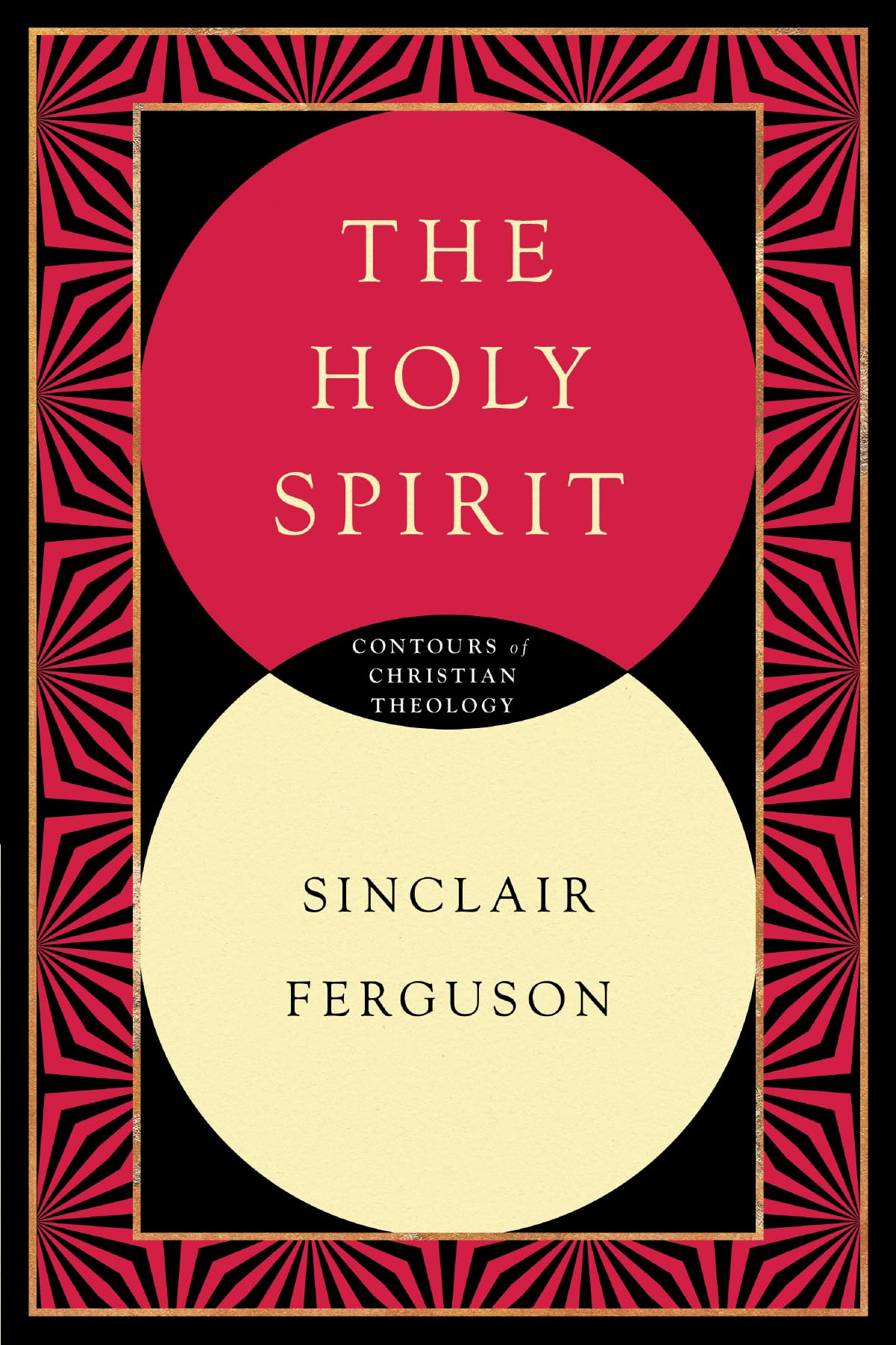
The Holy Spirit (Contours of Christian Theology) [Ferguson, Sinclair B.] on desertcart.com. *FREE* shipping on qualifying offers. The Holy Spirit (Contours of Christian Theology) Review: Compelling Reformed Picture of the Holy Spirit - There are certain realities and truths in Scripture that are often ignored in both the pulpit and private studies among Christians. These realities and truths are usually controversial and mysterious. In fact, the reason these difficult doctrines are controversial or include controversial elements is because of the mystery that so often clouds understanding. Doctrines in this category include, predestination, divine sovereignty and human responsibility, and the person of the Holy Spirit. I have heard the Nicene Creed paraphrased in these terms: “We believe in God the Father…and we believe in Jesus Christ His Son, but we are not so sure about the Holy Spirit.” Sinclair Ferguson set out to buffer this tendency in the lives of so many Christians and churches in his theology of the Holy Spirit. While the Holy Spirit finds much attention in Pentecostal or Charismatic theologies, the person and work of the Holy Spirit is often ignored, glossed over, and neglected in Reformed theology. However, Ferguson provides a masterful work that resounds in harmonious sound in response to the deafening silence typically given to the third Person of the Trinity. Ferguson does not just crowd our bookshelves with more white noise on a topic that even to this day continues to rise in popularity. His work provides understanding to a doctrine that is so often misunderstood. Ferguson, a noted scholar, provides a unique resource in The Holy Spirit. He provides us with a scholarly work that is both readable and full of thoughtful exegesis written from a distinctively thorough Reformed position. Summary Sinclair Ferguson succinctly and ambitiously states his purpose in writing a theology of the Holy Spirit. He states his purpose as follows: “the focus…is to trace the revelation of the Spirit’s identity and work in a biblio-theological and redemptive-historical manner” (12). Ferguson sets out to provide us with a theology of the Holy Spirit and to increase understanding into His person and work by working doing biblical theology from a redemptive-historical frame. Ferguson’s superb exegetical abilities are on full display as a result. Rather than tracing the theology of the Holy Spirit historically, although he references many Reformed thinkers throughout this work as he forewarns his “indebtedness to [them]” (12), Ferguson relies primarily on the inerrant canon of the Old and New Testaments, taking them at “face value” and as the “only reliable foundation on which to build a theology of the Holy Spirit” (13). From the outset of this book, it is made clear by the author that in the chapters to follow, there will be heavy reliance on the Word of God to develop a correct and edifying theology of the Holy Spirit. In a manner of confident humility, Sinclair Ferguson exposes and explains in detailed terms both the Spirit’s identity and work. In chapters 1-4, Ferguson outlines and describes the identity of the Spirit in the Old Testament (chapter 1), the life of Christ (chapter 2), and in the coming of the Spirit at Pentecost (chapters 3 and 4). The work of the Spirit in the outworking of redemption is discussed in chapters 5-8. In this section of the book, the author unfolds themes such as the Spirit’s work in uniting believers to Christ (chapter 5), regeneration (chapter 6), sanctification (chapter 7), and communion with Christ (chapter 8). Chapters 9 and 10 describe the corporate aspect of the Spirit’s work by outlining baptism and the Lord’s Supper (chapter 9), as well as giving attention to spiritual gifts (chapter 10). Ferguson closes his theology of the Holy Spirit by defining His work in the world at large and finishing up with an appropriate eschatological focus on the Spirit’s role in final resurrection and the new creation (chapter 11). Evaluation Ferguson gives attention to points that are vital to a theology of the Holy Spirit. He argues for the deity of the Spirit by highlighting his work in creation and “re-creation” (redemption). He points out the Spirit’s role in creation and the connection found in paradigmatic events like the Exodus (19). While his argument for the “distinct divine hypostasis” of the Spirit is rooted in Genesis 1:2, he also finds the redemptive-historical significance of the Spirit’s unique and godly role in creation as being paradigmatic of further biblical actions of the Spirit (21). Therefore, faithful to his goal, Ferguson traces not only along the lines of biblical theology, but also within the framework of a redemptive-historical paradigm to argue for the deity of the Spirit in Trinitarian light. The heart of this book, especially in its first half, is the relationship between Christ and the Spirit. Ferguson argues that the Spirit is most fully revealed in the incarnation, life, ministry, death, resurrection, and ascension of Christ. In fact, Ferguson makes the case that the doctrine of union with Christ is a work of the Spirit accomplished through regeneration and all who have the Spirit living in them have the Spirit of Christ living in them. His section on pp. 103ff concerning an exposition of union with Christ is remarkable. He grounds the salvation of the Christian in the “salvation” of Christ. The benefits of justification, adoption, sanctification, and glorification belong to the Christian as a work of the Spirit in uniting the Christian to Christ who was delivered and redeemed from death by the power of the Holy Spirit” (104). This highly Christological fervor is present throughout the book, which greatly accompanies and accents the redemptive-historical and biblical-theological flow of the book. Instead of understanding the Spirit in charismatic actions and “outpourings”, the Spirit is being presented Christologically. In order to understand the Spirit, Christ must be understood. Thus, the application of the work of Christ is beautifully exposited in chapters 5-7, particularly in chapter 5, with a concentration on ordo salutis. Here again, Ferguson is faithful to the oneness and plurality of the Trinity. Ferguson also spends time in chapter 10 interacting with Wayne Grudem’s position concerning prophecy. In light of a cessationist position, Ferguson respectfully and convincingly disagrees with Grudem’s position of lower and higher levels of prophecy. In chapter 10, he expresses his concern that Grudem’s position is lacking much biblical foundation hence his opposition to his position. Bias? The heavily Reformed nature of Ferguson’s personal theology is felt throughout and if it does cloud his vision at all, it does not affect the reliability of the work as a whole. This is not a comprehensive historical theology of the Holy Spirit (as stated in the Preface, p. 12) and therefore must be treated for what it is; a tracing of biblical-theological and redemptive-historical evidence of the person and work of the Spirit from a distinctively Reformed position. With this in mind, Ferguson’s Reformed position does not hinder this particular work, but greatly enables it and in fact gives it tremendous reliability for all wanting to study Reformed thinking on the Holy Spirit. One Downfall The only downfall that I experienced in this work on the Holy Spirit was its seemingly brief handling of the gifts of the Spirit. While handling the more pressing issues of baptism, the Lord’s Supper, prophecy, and tongues, Ferguson seems to give little attention to the other corporate dimensions of the Spirit’s work, namely in other spiritual gifts. I was so engaged in his arguments on the other gifts that he left me wanting more. However, this slight “blemish” does nothing to the overall worth of the book. Conclusion In closing, The Holy Spirit, is a dramatically relevant book rich in faithful exegesis and rooted in biblical theology, which is set upon a redemptive-historical rock bed foundation. This is a God-glorifying book that gives an accurate and compelling picture of the Holy Spirit from a heavily Reformed and biblical perspective. Review: Who is the Holy Spirit - Who is the Holy Spirit? What is his role in the Christian's life right now? These are some of the questions being asked by normal Christians today. It seems, if one takes a general glance at the theology of conservative churches, that the doctrine of Pneumatology is, if even thought about, rarely understood. Factors for this ignorance can be theorized all the way from abuse over the accentuation of the Holy Spirit (thus making people error on the dismissal of the doctrine) to the general ignorance of doctrine. Sinclair Ferguson confronts both in, "The Holy Spirit" and takes an in-depth look into what the Bible has to say about the doctrine. He comes to the work in a biblico-theological and redemptive-historical analysis of the doctrine. Thus, while historical views of the doctrine are not out rightly discussed, historical teachings do influence the author's views. And the views in the book look at the Spirit in three main frameworks: His person, His role in the church, and his role in salvation. Looking back into the Old Testament the Spirit was active but not fully revealed. The initiation of His revelation waited until the revelation of the Son who in-turn promised the coming of the Paraclete. After the ascension of the Son the Spirit was poured out upon the church to signify that the eschatological day has dawned in the world. Yet, with the dawning comes incompleteness since the final day has not been consummated with Christ's return. So the Spirit works during this waiting time. He unites us, the believers, to Christ and thus all the blessings of Christ and the salvation He won are counted as ours and from this union we are recreated into the image of the one we are in union with. Yet, we are not saved to be individuals, we are saved into a new community of people who, along with each other, are being recreated in Christ's image--the church. The Holy Spirit works are symbolized and his presence draws near by and in the sacraments. And He works into each believer gifts to work as a unified body. With so little written about the Holy Spirit in the contemporary church a sound, biblical study into the subject is welcomed and needed. On one end there is the perceived absence of contemporary scholarly study on the Doctrine. Then there has been the abuse of the Holy Spirit found in Pentecostal circles. Thus, no knowledge plus abuse will always drive people away. If people cannot understand the need for a sound Pneumatology then they will most likely drop the doctrine so as to not be associated with the abusers. So what the church needs is a reason to, once again, understand the Holy Spirit. Sinclair Ferguson has written a remarkable book on the Holy Spirit. It seemed like every chapter gave new insights into who the Spirit is and what He does. Ferguson built his arguments with both an exegetical and historical-redemptive tracing. It was a very enjoyable to see the Holy Spirit in the whole picture of the Biblical story of redemption. Starting with the Old Testament, we see how the Spirit works in the different ways that He is termed. And this revelation cumulates in His role in the New Covenant. Where systematic Theology is essential to proper theological study, biblical theology is just as needed. To have the Holy Spirit displayed in this way was delightful and enlightening. Such a take brings much light to the present charismatic debates. If we just take exegetical studies on the Greek words found in Acts and Corinthians we can only go so far. But if we look at the role of the Holy Spirit through the full scope of the Cannon we can come to a better understanding. Was the Holy Spirit's role in giving people different tongues to allow individual Christians to have a special experience or was there a broader purpose to be filled? Should each Christian experience his or her own personal Pentecost? If we look at the story line of the Bible what is happening at Pentecost is a redemptive-historical event which, Publicly marks the transition from the old to the new covenant, and signifies the commencement of the `now' of the day of salvation (2 Cor. 6:2). It is the threshold of the last days, and inaugurates the new era in which the eschatological life of the future invades the present evil age in a proleptic manner. Thus, from the New Testament's stand point, the `fulfillment [or "end", ta tele] of the ages has dawned' (lit.) on those who, through the gift of the Spirit, are `in Christ'" (57-58). Thus, Pentecost and the miracles done there should not been seen as gifts for all of time, but specific miracles given to manifest the coming of a new covenant. Not only is there a strong historical-redemptive tracing of the Holy Spirit but there is also a good systematic study of him as well. Biblical theology is not complete unless there is a systematic study of the components that make up the story line. Or else you are going to have a story with no understandable parts. And a good example of Ferguson doing this systematic study of the Holy Spirit is his role in the believer's salvation. The Holy Spirit's work is not only about the inauguration of the new covenant but the in workings of the salvation in the believer's life. Ferguson rightly centralizes the role of the Holy Spirit in the believer's salvation as uniting the believer to Christ. So when united to Christ by the Spirit, "the blessings of salvation become ours through the Spirit, exclusively, immediately, simultaneously, and eschatologically in Christ" (102, Author's Emphasis). Thus we share in all the redemptive benefits that Christ accomplished; "those who are united to the risen Christ share in his justification, adoption, sanctification and glorification" (106, Author's Emphasis). Not only are all the benefits of Christ ours because of this union but also our change in our present existence. We are no longer in Adam, under the bondage of sin. But now, we are "in Christ" and walk by the Spirit. And the Spirit unites Christ to our humanity where He is presently transforming us into the image of God. Thus, the whole of the believer's salvation should be understood as the Spirit's work of uniting us to Christ and the outworks of that reality. What the church needed was a thoroughly Biblical exposure of the person of the Holy Spirit. She got one in this book. Ferguson did a wonderful job in tracing the person of the Spirit through the story line of the Bible. An understanding of the Spirit is essential in our ecclesiology, soteriology, and overall theology. Obviously, no one work can adequately cover every aspect of the Holy Spirit in-depth. For an overview work though, Ferguson has given an excellent presentation of the Spirit for us to begin to grasp who and what the Spirit is and does.





| Best Sellers Rank | #60,273 in Books ( See Top 100 in Books ) #42 in Christian Pneumatology #93 in Christian Systematic Theology (Books) |
| Customer Reviews | 4.8 out of 5 stars 230 Reviews |
M**T
Compelling Reformed Picture of the Holy Spirit
There are certain realities and truths in Scripture that are often ignored in both the pulpit and private studies among Christians. These realities and truths are usually controversial and mysterious. In fact, the reason these difficult doctrines are controversial or include controversial elements is because of the mystery that so often clouds understanding. Doctrines in this category include, predestination, divine sovereignty and human responsibility, and the person of the Holy Spirit. I have heard the Nicene Creed paraphrased in these terms: “We believe in God the Father…and we believe in Jesus Christ His Son, but we are not so sure about the Holy Spirit.” Sinclair Ferguson set out to buffer this tendency in the lives of so many Christians and churches in his theology of the Holy Spirit. While the Holy Spirit finds much attention in Pentecostal or Charismatic theologies, the person and work of the Holy Spirit is often ignored, glossed over, and neglected in Reformed theology. However, Ferguson provides a masterful work that resounds in harmonious sound in response to the deafening silence typically given to the third Person of the Trinity. Ferguson does not just crowd our bookshelves with more white noise on a topic that even to this day continues to rise in popularity. His work provides understanding to a doctrine that is so often misunderstood. Ferguson, a noted scholar, provides a unique resource in The Holy Spirit. He provides us with a scholarly work that is both readable and full of thoughtful exegesis written from a distinctively thorough Reformed position. Summary Sinclair Ferguson succinctly and ambitiously states his purpose in writing a theology of the Holy Spirit. He states his purpose as follows: “the focus…is to trace the revelation of the Spirit’s identity and work in a biblio-theological and redemptive-historical manner” (12). Ferguson sets out to provide us with a theology of the Holy Spirit and to increase understanding into His person and work by working doing biblical theology from a redemptive-historical frame. Ferguson’s superb exegetical abilities are on full display as a result. Rather than tracing the theology of the Holy Spirit historically, although he references many Reformed thinkers throughout this work as he forewarns his “indebtedness to [them]” (12), Ferguson relies primarily on the inerrant canon of the Old and New Testaments, taking them at “face value” and as the “only reliable foundation on which to build a theology of the Holy Spirit” (13). From the outset of this book, it is made clear by the author that in the chapters to follow, there will be heavy reliance on the Word of God to develop a correct and edifying theology of the Holy Spirit. In a manner of confident humility, Sinclair Ferguson exposes and explains in detailed terms both the Spirit’s identity and work. In chapters 1-4, Ferguson outlines and describes the identity of the Spirit in the Old Testament (chapter 1), the life of Christ (chapter 2), and in the coming of the Spirit at Pentecost (chapters 3 and 4). The work of the Spirit in the outworking of redemption is discussed in chapters 5-8. In this section of the book, the author unfolds themes such as the Spirit’s work in uniting believers to Christ (chapter 5), regeneration (chapter 6), sanctification (chapter 7), and communion with Christ (chapter 8). Chapters 9 and 10 describe the corporate aspect of the Spirit’s work by outlining baptism and the Lord’s Supper (chapter 9), as well as giving attention to spiritual gifts (chapter 10). Ferguson closes his theology of the Holy Spirit by defining His work in the world at large and finishing up with an appropriate eschatological focus on the Spirit’s role in final resurrection and the new creation (chapter 11). Evaluation Ferguson gives attention to points that are vital to a theology of the Holy Spirit. He argues for the deity of the Spirit by highlighting his work in creation and “re-creation” (redemption). He points out the Spirit’s role in creation and the connection found in paradigmatic events like the Exodus (19). While his argument for the “distinct divine hypostasis” of the Spirit is rooted in Genesis 1:2, he also finds the redemptive-historical significance of the Spirit’s unique and godly role in creation as being paradigmatic of further biblical actions of the Spirit (21). Therefore, faithful to his goal, Ferguson traces not only along the lines of biblical theology, but also within the framework of a redemptive-historical paradigm to argue for the deity of the Spirit in Trinitarian light. The heart of this book, especially in its first half, is the relationship between Christ and the Spirit. Ferguson argues that the Spirit is most fully revealed in the incarnation, life, ministry, death, resurrection, and ascension of Christ. In fact, Ferguson makes the case that the doctrine of union with Christ is a work of the Spirit accomplished through regeneration and all who have the Spirit living in them have the Spirit of Christ living in them. His section on pp. 103ff concerning an exposition of union with Christ is remarkable. He grounds the salvation of the Christian in the “salvation” of Christ. The benefits of justification, adoption, sanctification, and glorification belong to the Christian as a work of the Spirit in uniting the Christian to Christ who was delivered and redeemed from death by the power of the Holy Spirit” (104). This highly Christological fervor is present throughout the book, which greatly accompanies and accents the redemptive-historical and biblical-theological flow of the book. Instead of understanding the Spirit in charismatic actions and “outpourings”, the Spirit is being presented Christologically. In order to understand the Spirit, Christ must be understood. Thus, the application of the work of Christ is beautifully exposited in chapters 5-7, particularly in chapter 5, with a concentration on ordo salutis. Here again, Ferguson is faithful to the oneness and plurality of the Trinity. Ferguson also spends time in chapter 10 interacting with Wayne Grudem’s position concerning prophecy. In light of a cessationist position, Ferguson respectfully and convincingly disagrees with Grudem’s position of lower and higher levels of prophecy. In chapter 10, he expresses his concern that Grudem’s position is lacking much biblical foundation hence his opposition to his position. Bias? The heavily Reformed nature of Ferguson’s personal theology is felt throughout and if it does cloud his vision at all, it does not affect the reliability of the work as a whole. This is not a comprehensive historical theology of the Holy Spirit (as stated in the Preface, p. 12) and therefore must be treated for what it is; a tracing of biblical-theological and redemptive-historical evidence of the person and work of the Spirit from a distinctively Reformed position. With this in mind, Ferguson’s Reformed position does not hinder this particular work, but greatly enables it and in fact gives it tremendous reliability for all wanting to study Reformed thinking on the Holy Spirit. One Downfall The only downfall that I experienced in this work on the Holy Spirit was its seemingly brief handling of the gifts of the Spirit. While handling the more pressing issues of baptism, the Lord’s Supper, prophecy, and tongues, Ferguson seems to give little attention to the other corporate dimensions of the Spirit’s work, namely in other spiritual gifts. I was so engaged in his arguments on the other gifts that he left me wanting more. However, this slight “blemish” does nothing to the overall worth of the book. Conclusion In closing, The Holy Spirit, is a dramatically relevant book rich in faithful exegesis and rooted in biblical theology, which is set upon a redemptive-historical rock bed foundation. This is a God-glorifying book that gives an accurate and compelling picture of the Holy Spirit from a heavily Reformed and biblical perspective.
D**T
Who is the Holy Spirit
Who is the Holy Spirit? What is his role in the Christian's life right now? These are some of the questions being asked by normal Christians today. It seems, if one takes a general glance at the theology of conservative churches, that the doctrine of Pneumatology is, if even thought about, rarely understood. Factors for this ignorance can be theorized all the way from abuse over the accentuation of the Holy Spirit (thus making people error on the dismissal of the doctrine) to the general ignorance of doctrine. Sinclair Ferguson confronts both in, "The Holy Spirit" and takes an in-depth look into what the Bible has to say about the doctrine. He comes to the work in a biblico-theological and redemptive-historical analysis of the doctrine. Thus, while historical views of the doctrine are not out rightly discussed, historical teachings do influence the author's views. And the views in the book look at the Spirit in three main frameworks: His person, His role in the church, and his role in salvation. Looking back into the Old Testament the Spirit was active but not fully revealed. The initiation of His revelation waited until the revelation of the Son who in-turn promised the coming of the Paraclete. After the ascension of the Son the Spirit was poured out upon the church to signify that the eschatological day has dawned in the world. Yet, with the dawning comes incompleteness since the final day has not been consummated with Christ's return. So the Spirit works during this waiting time. He unites us, the believers, to Christ and thus all the blessings of Christ and the salvation He won are counted as ours and from this union we are recreated into the image of the one we are in union with. Yet, we are not saved to be individuals, we are saved into a new community of people who, along with each other, are being recreated in Christ's image--the church. The Holy Spirit works are symbolized and his presence draws near by and in the sacraments. And He works into each believer gifts to work as a unified body. With so little written about the Holy Spirit in the contemporary church a sound, biblical study into the subject is welcomed and needed. On one end there is the perceived absence of contemporary scholarly study on the Doctrine. Then there has been the abuse of the Holy Spirit found in Pentecostal circles. Thus, no knowledge plus abuse will always drive people away. If people cannot understand the need for a sound Pneumatology then they will most likely drop the doctrine so as to not be associated with the abusers. So what the church needs is a reason to, once again, understand the Holy Spirit. Sinclair Ferguson has written a remarkable book on the Holy Spirit. It seemed like every chapter gave new insights into who the Spirit is and what He does. Ferguson built his arguments with both an exegetical and historical-redemptive tracing. It was a very enjoyable to see the Holy Spirit in the whole picture of the Biblical story of redemption. Starting with the Old Testament, we see how the Spirit works in the different ways that He is termed. And this revelation cumulates in His role in the New Covenant. Where systematic Theology is essential to proper theological study, biblical theology is just as needed. To have the Holy Spirit displayed in this way was delightful and enlightening. Such a take brings much light to the present charismatic debates. If we just take exegetical studies on the Greek words found in Acts and Corinthians we can only go so far. But if we look at the role of the Holy Spirit through the full scope of the Cannon we can come to a better understanding. Was the Holy Spirit's role in giving people different tongues to allow individual Christians to have a special experience or was there a broader purpose to be filled? Should each Christian experience his or her own personal Pentecost? If we look at the story line of the Bible what is happening at Pentecost is a redemptive-historical event which, Publicly marks the transition from the old to the new covenant, and signifies the commencement of the `now' of the day of salvation (2 Cor. 6:2). It is the threshold of the last days, and inaugurates the new era in which the eschatological life of the future invades the present evil age in a proleptic manner. Thus, from the New Testament's stand point, the `fulfillment [or "end", ta tele] of the ages has dawned' (lit.) on those who, through the gift of the Spirit, are `in Christ'" (57-58). Thus, Pentecost and the miracles done there should not been seen as gifts for all of time, but specific miracles given to manifest the coming of a new covenant. Not only is there a strong historical-redemptive tracing of the Holy Spirit but there is also a good systematic study of him as well. Biblical theology is not complete unless there is a systematic study of the components that make up the story line. Or else you are going to have a story with no understandable parts. And a good example of Ferguson doing this systematic study of the Holy Spirit is his role in the believer's salvation. The Holy Spirit's work is not only about the inauguration of the new covenant but the in workings of the salvation in the believer's life. Ferguson rightly centralizes the role of the Holy Spirit in the believer's salvation as uniting the believer to Christ. So when united to Christ by the Spirit, "the blessings of salvation become ours through the Spirit, exclusively, immediately, simultaneously, and eschatologically in Christ" (102, Author's Emphasis). Thus we share in all the redemptive benefits that Christ accomplished; "those who are united to the risen Christ share in his justification, adoption, sanctification and glorification" (106, Author's Emphasis). Not only are all the benefits of Christ ours because of this union but also our change in our present existence. We are no longer in Adam, under the bondage of sin. But now, we are "in Christ" and walk by the Spirit. And the Spirit unites Christ to our humanity where He is presently transforming us into the image of God. Thus, the whole of the believer's salvation should be understood as the Spirit's work of uniting us to Christ and the outworks of that reality. What the church needed was a thoroughly Biblical exposure of the person of the Holy Spirit. She got one in this book. Ferguson did a wonderful job in tracing the person of the Spirit through the story line of the Bible. An understanding of the Spirit is essential in our ecclesiology, soteriology, and overall theology. Obviously, no one work can adequately cover every aspect of the Holy Spirit in-depth. For an overview work though, Ferguson has given an excellent presentation of the Spirit for us to begin to grasp who and what the Spirit is and does.
B**S
A Rich and Sumptuous Theological Feast
Sinclair Ferguson's biblical-theological treatment on the Holy Spirit is a rich and sumptuous theological feast for any serious-minded believer who wants to know more about the so-called "shy member of the Trinity." In eleven meaty chapters, Ferguson gives a comprehensive, if not exhaustive, biblical overview of the person and work of the Holy Spirit, all along the way drawing on historical theology and charitably interacting with perspectives different from his own. Chapter one, "The Spirit and His Story" surveys the Old Testament's more shadowy teaching on the Holy Spirit with a careful biblical-theological approach. "The Spirit of Christ" (chapter two) is an exceptionally rich chapter on the ministry of the Holy Spirit in the life of Jesus. Christ is seen as the quintessential "Man of the Spirit." Because his entire life was lived in the Spirit's power (Ferguson starts with his conception and moves through the various aspects of Jesus' life all the way to exaltation), Jesus is now the "Lord of the Spirit" (2 Cor. 3:18) - the One who sends the Spirit to his church to reproduce the "human holiness" of which he (Jesus) is the pattern. This moves into the next two chapters, which focus on "The Gift of the Spirit" and "Pentecost Today?", exploring the outpouring of the Spirit at Pentecost and its significance in redemptive history and for believers today. "The Spirit of Order" (chapter five) discusses the ordo salutis (order of salvation) and how the Spirit applies the redemptive work of Christ to the individual believer. This is an excellent chapter which focuses on union with Christ as the central motif for understanding how the Spirit applies salvation in our lives. Throughout both this chapter and the entire book, Ferguson writes with a solid understanding of the inaugurated eschatology of the New Testament, allowing the "already/not yet" tension to inform his treatment of the various aspects of the ordo salutis (i.e. justification, regeneration, adoption, sanctification, glorification). "Spiritus Recreator" (chapter six) discusses the Spirit's role in the new creation, while the next chapter, "The Spirit of Holiness," explores his role in sanctification. These were two of the most helpful chapters in the book for me personally. Ferguson maintains the Christ-centeredness with which he began the book as he shows how the Spirit reproduces the image of Christ in believers through his definitive act and progressive work of sanctification. Also very edifying is chapter eight, "The Communion of the Spirit," which deals with the personal ministry of the Spirit in the life of the believer as seal, firstfruits, and earnest/guarantee. Chapters nine and ten talk about "The Spirit and the Body" and "The Gifts of the Spirit," the former discussing the role of the sacraments under the Spirit in the life of the church and the latter addressing the issue of spiritual gifts - with Ferguson taking a firm, though gentle, cessationist position. His critiques of Wayne Grudem deserve careful reflection from all who hold a continuationist perspective. The final chapter, "The Cosmic Spirit" discusses the Spirit's work in what we might call common grace and points us forward to the eschatological fulfillment of the Spirit's work in the world. I thoroughly enjoyed this book and learned much from it. Ferguson's articulation of a Reformed view of the Holy Spirit is intelligent and persuasive. Theologians, biblical scholars, pastors, and serious layreaders would all benefit from this book.
J**Y
Helped me know my Bible better
Haven’t finished just yet, but really good thus far. I better understand the emphasis of the Holy Spirit in the context of the gospel and redemptive history. I mostly appreciate his sound approach to the baptism of the Holy Spirit and speaking on the interpretations charismatics today who take Pentecost and the Spirit-baptism to be these strange experiences today.
N**L
Excellent Work on the Holy Spirit!!
This is a well written work regarding the Person and Deity of the Holy Spirit. He’s not simply a ‘force’; rather He is the third member of the Trinity.
M**M
Helpful and Comprehensive
I’ve been thinking through the work of the Holy Spirit and a distinction Martyn Lloyd-Jones makes in his Romans Commentary (Volume 8) between the Spirit baptizing us into Christ and Christ baptizing us the the Spirit. What I most appreciated was Ferguson’s biblical theological approach to the Holy Spirit. Most helpful. Ferguson, or better yet Scripture from which Ferguson taught, did help me work through the above question that caused me to pick up the book. The reason I give the book 4 rather than 5 stars is due to the chapter on The Gifts of the Spirit. Sometimes it seems that Reformed scholars especially can over-engage other Reformed and non-Reformed scholars in intramural disagreements such as Ferguson does extensively with Wayne Grudem in two-stage prophecy or in notes when Ferguson defends Richard Gaffin against criticism from D.A. Carson on continuation and cessation. Other than excursus like these examples, I found the book comrehensive and helpful.
A**N
Excellent Work for the Layperson or Pastor
Ferguson's volume is especially helpful for the new Christian, layperson, or seasoned pastor. He wades through the current issues dominating the discussion of the Holy Spirit with a deft hand and Scriptural support. Instead of muddying the waters further, he clarifies the arguments with charity and still comes down with definitive stances. The Strengths of this volume are: 1) Biblical Theology - He writes with biblical trajectories and themes in mind, always showing how the Old and New Testament are working together to support the work of God in the Cross of Christ. He portrays a robust Biblical Theology of the Holy Spirit from beginning to end. 2) Pastorally Sensitive - Ferguson writes with a pastor's heart. There were many times when I was moved to prayer when reading this book because of the devotional and pastoral tone in which he writes. 3) Contemporary Significance - Ferguson addresses some of the most pressing issues (i.e. speaking in tongues, miracles, etc.) with charitable respect while showing how Scripture speaks to these issues today. Though this volume isn't perfect, there is little to dislike about it. There were a few places where he spent too much time making his point, but other than that I found it to be a great read -- one I'll go back to time and time again.
S**.
Great book
I have found this book to be very instructive and will need to read it again as there is more there than I can take in on the first reading. Highly recommend!
Trustpilot
2 weeks ago
3 weeks ago