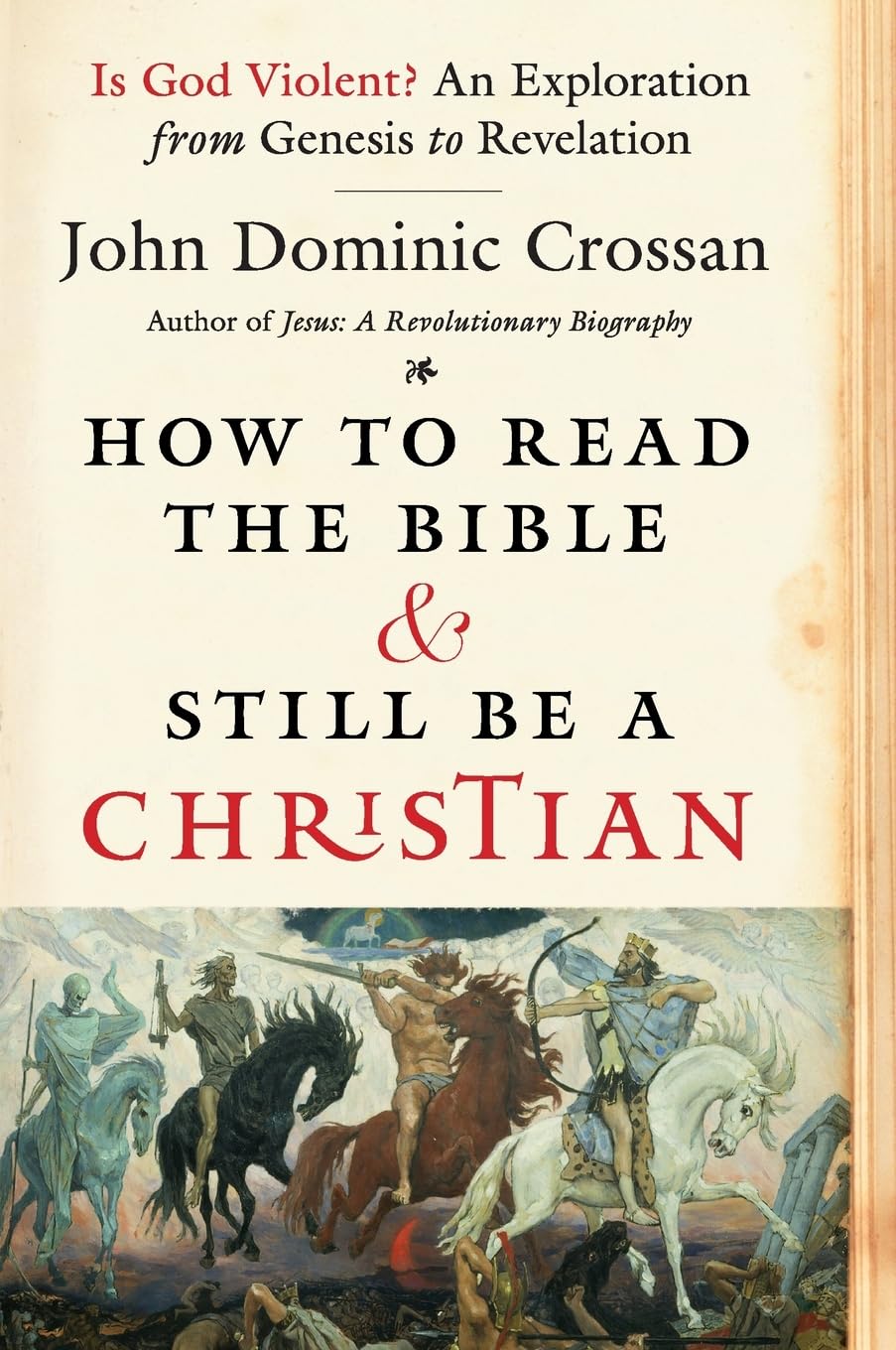
How to Read the Bible and Still Be a Christian: Is God Violent? An Exploration from Genesis to Revelation [Crossan, John Dominic] on desertcart.com. *FREE* shipping on qualifying offers. How to Read the Bible and Still Be a Christian: Is God Violent? An Exploration from Genesis to Revelation Review: Making Sense of the Covenant God and Violence and Justice in the Bible - Crossan performs his expected thorough and clear, readable analysis of the streams of thought that seem to portray two different portraits of God in the collection of documents over several centuries that now constitute what we call the Bible. Crossan's book was originally published in 1989 and may be available only from used book vendors. I bought it through desertcart. God's Violence vs God's Justice The author focuses on the problem of God's violence and conflicts in different portraits of God perceived in the Old Testament texts. I expect this book will be helpful especially to those who have given up on trying to make sense of the Bible in terms of our understanding of the Bible's deep fairness and justice themes of the Bible. Crossan addresses the problem of character that troubles so many readers by exploring the portrayals of God in regard to violence in the biblical testimony. He examines the writings in light of the eras in which each was written and the prevailing historical and political situation and the major empires of the region used as models for the CVovenant metaphor of Israel with Yahweh. Central to this is the ancient concept of Covenant found among all the ancient peoples of Anatolia and Mesopotamia. Two Imperial Characters He provides a very enlightening description of the differences between the the character of the Hittite and the later Assyrian empires as reflected in their Covenants with the rulers and peoples they conquered or related to as conquered peoples or vassals. The Hittites were known for their benevolent character and fairness in relationship to conquered or vassal rulers, while the Assyrians were known for violent and cruel repression and domination. This throws great light on how we see the covenant model reflecting these two different formats of relationship in portrayals of the Israelite tribes' relationship to their God. His outline of key differences between the political, economic and cultural character of two great Empires and how these are reflected in their covenants is very enlightening. The different character of these two empires and the more violent and repressive character of the Assyrians clarifies greatly the differences we see between different portrayals in biblical writings of Yahweh and his relationship to his people Israel. Covenant Character The Covenant metaphor is a powerful, central concept in the Old Testament writings. The two different Covenant models at the various times can explain much of the dissonance we modern readers see and feel when the Covenant metaphor is used to portray God as the ruling suzerain and Israel as the vassal relating to the covenanted descendants of Jacob. We find in the later developments in proclamations by the high prophets, God's character was a core value in their call back to faithfulness to the Covenant with Yahweh. He explores how later empires, including the Roman Empire at the time of Christ, may be helpful in understanding the themes and images in the book of Revelation, with all its violence. Crossan writes not only as a skilled and able scholar and clear-headed writer, but as a devoted believer and lover of the biblical texts. Crossan's incisive overview of the biblical texts places those texts in their historical and cultural context, bringing them to life. Cultural Character These texts have a historical and cultural character in whose terms they speak. Discernment will enable us to make responsible application to our very different place in history and the unique worldview context in which we live and think. Crossan brings the Covenant and Gospel message to life that makes sense across cultures. This title will be especially appreciated by readers unfamiliar with the broader history of that region and that ancient time reflected in the biblical texts. Review: Will the Real Jesus Stand Up - I bought "How to Read the Bible and Still Be a Christian" because of the intriguing title and the author, John Dominic Crossan. I have read other books of his and some as co-author with Marcus J. Borg, whom I highly respect. This book was not a disappointment in the slightest. Crossan introduces God as two persons. One is the God we find in the Hebrew Bible, where He is often a judgmental, punishing God, and in the book of Revelation, the warrior who leads a mob of heavenly beings in destruction of the earth. The other is the God of the New Testament who, as Jesus, preached and lived the admonition that we should turn the other cheek and love our enemies. Crossan asks, who is the true Messiah? This is a critical question for those of us who are puzzled by this dual description of God. I am not clergy, nor am I a biblical scholar, but I am a prolific reader of books on theology intended for the general public, including the Bible and commentaries. Such reading brings me to a position fairly congruent with Crossan, that the book of Revelation is virtually all metaphorical, figurative language. Revelation was not intended as, nor is it, a literal description of the nature of Jesus. If one wants to know the historical Jesus, one can do no better than to read the Gospels of Matthew, Mark and Luke with particular attention to the Sermon on the Mount (Matt. 5 and 6) and the story of Jesus in Gethsemane (Matt 26: 49-56). In these couple references and others one finds the loving, forgiving, nonviolent Jesus whose life was the very demonstration of what he taught. The thoughtful reader will find this book a stimulating exercise in deciphering the question as to who is God and you can draw your own conclusion. Ernest G. Barr
| Best Sellers Rank | #244,306 in Books ( See Top 100 in Books ) #400 in History of Religions #777 in History of Christianity (Books) #1,045 in Christian Church History (Books) |
| Customer Reviews | 4.4 4.4 out of 5 stars (374) |
| Dimensions | 0.7 x 5.3 x 7.9 inches |
| Edition | Reprint |
| ISBN-10 | 0062203614 |
| ISBN-13 | 978-0062203618 |
| Item Weight | 10.4 ounces |
| Language | English |
| Print length | 272 pages |
| Publication date | July 26, 2016 |
| Publisher | HarperOne |
O**S
Making Sense of the Covenant God and Violence and Justice in the Bible
Crossan performs his expected thorough and clear, readable analysis of the streams of thought that seem to portray two different portraits of God in the collection of documents over several centuries that now constitute what we call the Bible. Crossan's book was originally published in 1989 and may be available only from used book vendors. I bought it through Amazon. God's Violence vs God's Justice The author focuses on the problem of God's violence and conflicts in different portraits of God perceived in the Old Testament texts. I expect this book will be helpful especially to those who have given up on trying to make sense of the Bible in terms of our understanding of the Bible's deep fairness and justice themes of the Bible. Crossan addresses the problem of character that troubles so many readers by exploring the portrayals of God in regard to violence in the biblical testimony. He examines the writings in light of the eras in which each was written and the prevailing historical and political situation and the major empires of the region used as models for the CVovenant metaphor of Israel with Yahweh. Central to this is the ancient concept of Covenant found among all the ancient peoples of Anatolia and Mesopotamia. Two Imperial Characters He provides a very enlightening description of the differences between the the character of the Hittite and the later Assyrian empires as reflected in their Covenants with the rulers and peoples they conquered or related to as conquered peoples or vassals. The Hittites were known for their benevolent character and fairness in relationship to conquered or vassal rulers, while the Assyrians were known for violent and cruel repression and domination. This throws great light on how we see the covenant model reflecting these two different formats of relationship in portrayals of the Israelite tribes' relationship to their God. His outline of key differences between the political, economic and cultural character of two great Empires and how these are reflected in their covenants is very enlightening. The different character of these two empires and the more violent and repressive character of the Assyrians clarifies greatly the differences we see between different portrayals in biblical writings of Yahweh and his relationship to his people Israel. Covenant Character The Covenant metaphor is a powerful, central concept in the Old Testament writings. The two different Covenant models at the various times can explain much of the dissonance we modern readers see and feel when the Covenant metaphor is used to portray God as the ruling suzerain and Israel as the vassal relating to the covenanted descendants of Jacob. We find in the later developments in proclamations by the high prophets, God's character was a core value in their call back to faithfulness to the Covenant with Yahweh. He explores how later empires, including the Roman Empire at the time of Christ, may be helpful in understanding the themes and images in the book of Revelation, with all its violence. Crossan writes not only as a skilled and able scholar and clear-headed writer, but as a devoted believer and lover of the biblical texts. Crossan's incisive overview of the biblical texts places those texts in their historical and cultural context, bringing them to life. Cultural Character These texts have a historical and cultural character in whose terms they speak. Discernment will enable us to make responsible application to our very different place in history and the unique worldview context in which we live and think. Crossan brings the Covenant and Gospel message to life that makes sense across cultures. This title will be especially appreciated by readers unfamiliar with the broader history of that region and that ancient time reflected in the biblical texts.
E**R
Will the Real Jesus Stand Up
I bought "How to Read the Bible and Still Be a Christian" because of the intriguing title and the author, John Dominic Crossan. I have read other books of his and some as co-author with Marcus J. Borg, whom I highly respect. This book was not a disappointment in the slightest. Crossan introduces God as two persons. One is the God we find in the Hebrew Bible, where He is often a judgmental, punishing God, and in the book of Revelation, the warrior who leads a mob of heavenly beings in destruction of the earth. The other is the God of the New Testament who, as Jesus, preached and lived the admonition that we should turn the other cheek and love our enemies. Crossan asks, who is the true Messiah? This is a critical question for those of us who are puzzled by this dual description of God. I am not clergy, nor am I a biblical scholar, but I am a prolific reader of books on theology intended for the general public, including the Bible and commentaries. Such reading brings me to a position fairly congruent with Crossan, that the book of Revelation is virtually all metaphorical, figurative language. Revelation was not intended as, nor is it, a literal description of the nature of Jesus. If one wants to know the historical Jesus, one can do no better than to read the Gospels of Matthew, Mark and Luke with particular attention to the Sermon on the Mount (Matt. 5 and 6) and the story of Jesus in Gethsemane (Matt 26: 49-56). In these couple references and others one finds the loving, forgiving, nonviolent Jesus whose life was the very demonstration of what he taught. The thoughtful reader will find this book a stimulating exercise in deciphering the question as to who is God and you can draw your own conclusion. Ernest G. Barr
G**Y
Very informative book
Very good book. I purchased it for a "Bible Study" I was in and really wasn't able to use it as much as I thought I would. It was very informative but written for college and above education and not too applicable for a short study with people from all walks of life. A lot of the information just went over their heads.
M**K
A fascinating read which starts with all of the enthusiasm and interest that you would associate with a novel but combines this with extremely useful insights and references that normally only come with a serious text book.
D**S
It was up to my expectation
A**S
Another very good perspective on how the Bible was created and gradually changed over the years. Easy to read and understand.
D**Y
Once again Crossan helped me to think about the Christian faith in a good and positive way.
R**E
Superb study. Lucid, engaging, impressive with an intellectual sense of inevitability.
Trustpilot
2 months ago
3 weeks ago