Some deliveries may take a little longer than usual due to regional shipping conditions.

DOWNLOAD THE APP


Customer Services
Copyright © 2025 Desertcart Holdings Limited
DOWNLOAD THE APP

⚡ Fix, create, and innovate with conductive confidence!
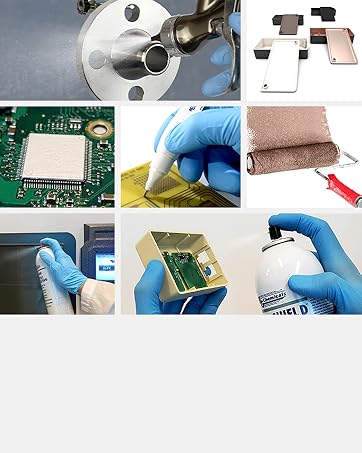
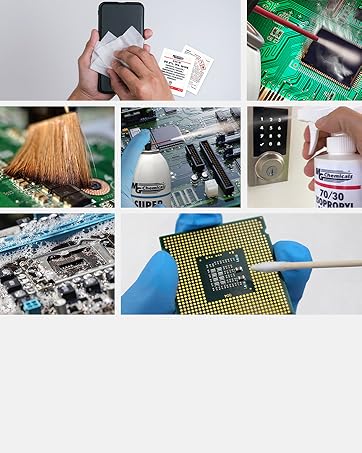
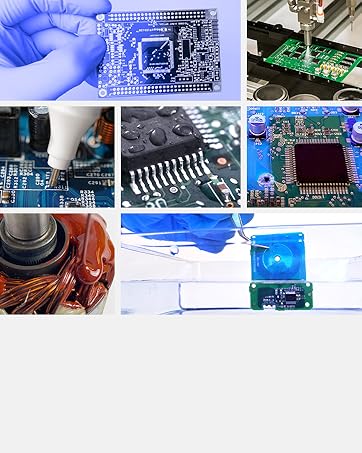
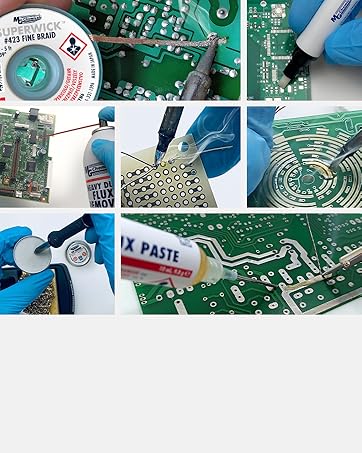
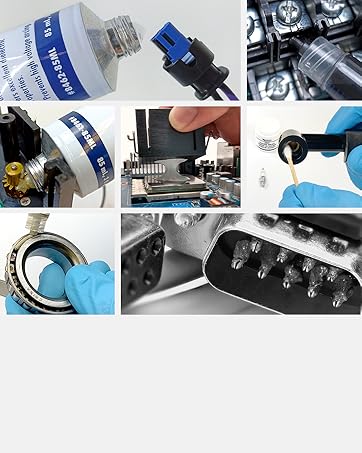
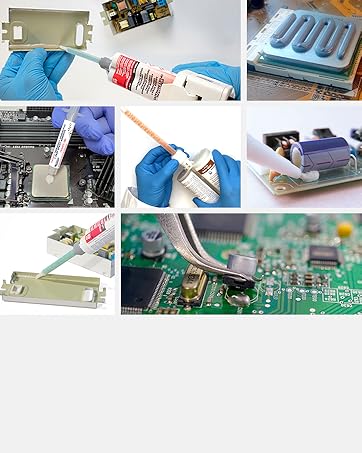
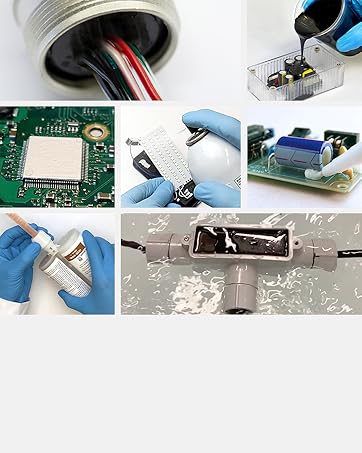
The MG Chemicals 838AR-P Total Ground Carbon Conductive Pen delivers fast-drying, corrosion-resistant conductive traces with a low volume resistivity of 0.46 ohms·cm. Its valve tip and soft tube design allow precise flow control, making it ideal for repairing or prototyping on a wide range of substrates including plastics, metals, ceramics, and 3D printing materials. Perfect for professionals and makers seeking a reliable, cost-effective solution to restore or create electrical connections.
| ASIN | B01LZX06PL |
| Best Sellers Rank | #138,253 in Industrial & Scientific ( See Top 100 in Industrial & Scientific ) #69 in Electrically Conductive Adhesives |
| Date First Available | September 24, 2016 |
| Item Weight | 0.387 ounces |
| Item model number | 838AR-P |
| Manufacturer | MG Chemicals |
| Product Dimensions | 3 x 1 x 8 inches |
L**K
Fixed my control panel keypad
I'm very glad this product exists. Saved me hundreds of dollars! The material flows pretty well once you get the hang of it. It's similar to a paint pen, but with nickel in solvent. Let it dry! It wont conduct until the metal settles and the solvent dries. It was fun to use a multimeter and watch the resistance drop as the fluid cured. I used this to repair a laminated keypad ribbon cable in a microwave that somehow got a melty trace. I also used it to repair the damage I did trying to fix the problem before i knew this product existed. It will now and forever be a part of my electronics kit. Perfect for membrane trace repair! Adhesion is good on plastic. The output width is about 2mm. It's a fluid but not super runny, especially after the solvent flashes off. Build up a couple of coats for best conduction. It takes a minute to get used to dispensing the material. The pen uses a plunger valve tip that has to be pushed against the surface before flow will start. You control the flow with how hard the tube is squeezed. Wiping the tip after every lift-up makes things go smoother.
M**S
The product works, but the delivery mechanism is hard to use.
The product itself absolutely works. Based on my experience, I suspect anybody who claims otherwise had a technique issue. Because the pen itself is a pain in the butt to use, produces a relatively thick line, and has every bit of the problem with rollerball pens that use thick inks. Add the necessity to press the bulb to get the ink to flow at all and it's not a recipe for ease of use. I took a point off for that, but the product self is working for my use case (repairing the traces on a flex ribbon cable for a 35-year old IBM Model M keyboard) so four stars for that. If you have a steady hand with a fine detail brush and can get a pot of the ink that might be a better way to go. Or perhaps a sacrificial dip pen.
D**F
It works if you persevere.
The first pen that arrived had mechanical problems that made it useless. I am giving a 5 star rating because of MG Chemicals excellent customer service. On my complaint, they sent me another pen forthwith. I used it to draw a missing trace on a PCB. It won't be as pretty as a manufactured trace but it will do the job. It can be a challenge to get the ink to flow but eventually it will. My PCB is saved thanks to MG Chemicals.
R**R
Terrible product, practically unusable.
Although the ink is conductive and fairly low resistance, it flows terribly. This comes down to two factors. The thickness of the ink, and the design of the pen. There are literally children's products that work better than this. In fact you could do better with an alcohol ink that you buy at a craft/hobby store. The ink probably won't be quite as low resistance, but at least you can write with it. The lines are way too thick, the ink is goopy, and flows terribly. And using this for any kind of circuit testing or prototyping on paper is laughable.
L**.
Works great for repairing keyboard membranes
I've been using these to repair the plastic membrane sheets of my IBM and Unicomp Model M mechanical keyboards for several years and have gone through at least three so far. The silver pens are expensive, but I read somewhere that it's best to keep using the same metals throughout, so I buy those. They're not the most intuitive to use, so you should make sure to try it out on a piece of scrap paper or something you're not afraid to ruin to get the hang of it. Always make sure to give it a good shake first (like a paint marker) and squeeze the body while laying the ink down. And if you mess up, even after it dries, it's easy to scrape away with something like a screwdriver or an exacto knife, at least on smooth plastic. My picture is of some traces I repaired on a Model M membrane. I accidentally scraped them off while cleaning away a nasty stain and fixed it using this pen.
C**6
Blew UP!
Pen worked great for its intended purpose, but when I pulled top off it exploded, the tip had some think glue-like substance and when the top cap came off it pulled the tip out of pen, which leaves a 1.4-inch hole. SO it sprayed the insides all over me. HOW, well the top does take some effort to pull off, which makes a slight jerk when it does come off. I have ruined a shirt and jeans and lost almost all the contents, let alone left spots on my carpet. But what was left worked well. Not sure what the glue-like substance was, very much like rubber cement. The product works, but watch out taking top off.
P**9
Worked Perfectly for My Needs - Repaired Carbon Traces in Game System
I was working on a Turbo Express system with non-functional buttons. The capacitor on the controller board had leaked and dissolved the carbon traces for the buttons, so I purchased this carbon ink to see if I could use it for a more 'authentic' repair rather than jumping the traces or replacing the board in its entirety. After practicing drawing a bit on some regular paper, I cleaned the traces thoroughly, took a bit extra off the damaged sections and contact points and carefully applied the carbon ink. Most went on pretty easily (follow the instructions, they are helpful) however there were a couple spots where I flowed a bit too much and had to clean / reapply. Overall, it took maybe 15~20 minutes to read the instructions, practice a bit and perform the repair / get it how I wanted it (this being my first time using conductive ink, so next time it shouldn't take as long). My repair is barely noticeable! Most importantly... I let it dry for 10 minutes and tested everything out, and all buttons worked perfectly! This stuff is a God send. Follow the instructions and it really isn't difficult to properly apply... Make sure you thoroughly clean any surfaces you plan to write on, and remove a bit extra from damaged sections and contact points of existing traces, squeeze the pen firmly but not excessively while applying pressure to the ball point and use deliberate motion... Great product!
S**.
Very useful. It is just like a correction pen. But when I used it, soon the tip got blocked and no more ink was flowing. So I had to cut open the body and use a small stick to scoop the ink and paint. However, ink is good, dries fast, sticks well on plastic surface. I ordered it to repair keypad of an old spectrometer. We saved around 1-2,00,000 rupees.
S**S
Used it to successfully repair several ZX81 ribbon cables. The dispenser tip may be fine for the silver and carbon versions of this product, but the silver version it doesn't work very well, hard to control how much is dispensed. So....after shaking vigorously, just remove the cap by turning it CLOCKWISE (backwards from the normal unscrewing action), then use a toothpick to get whatever amount you need, and dab it onto whatever you're repairing. Don't leave the cap off long, as it can dry out.
R**.
Easy to apply and conductive. It's not metal conductive since it presents tents to hundredths of ohms resistance but gets a small repair done
C**N
No es para cualquiera, pero debes de saber cómo aplicar el producto , para realizar trabajos es muy bueno , perfecta conductividad y muy bueno porque lo ocupo para trabajar las membranas de los hornos de microondas y ninguno tuvo falla ... Todo muy bien ,comprare otro 👍
S**K
Kann das produkt nicht guten herzens weiterempfehlen. Ist zwar conductive, aber das ist ein gaphit bleistift auch. Auf 1cm strichlänge hat man schon 120k ohm widerstand, bissl weiter gehts in den mega ohm bereich. Der widerstand is so gross, das man nichtmal bei 2mm linie einen ton aus dem multimeter bekommt wenn man auf durchgang testet..kann nur widerstand messen. Mag vielleicht bei nem kratzer auf ner pcb leiterbahn helfen um zu überbrücken..mehr aber auch nicht. Bei dem preis gibt es bessere möglichkeiten ein pcb zu fixen.
Trustpilot
2 weeks ago
3 days ago