
DOWNLOAD THE APP


Customer Services
Copyright © 2025 Desertcart Holdings Limited
DOWNLOAD THE APP

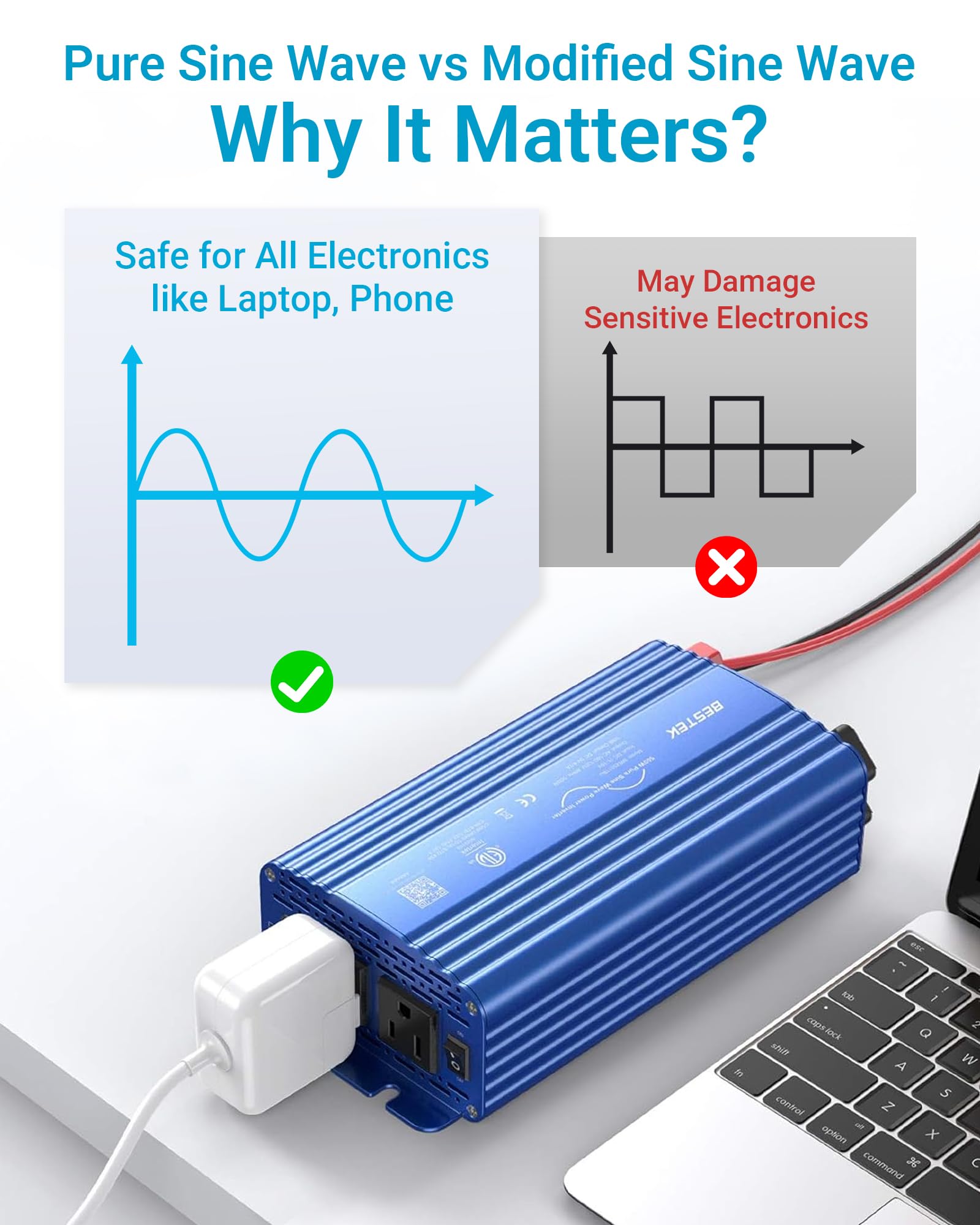

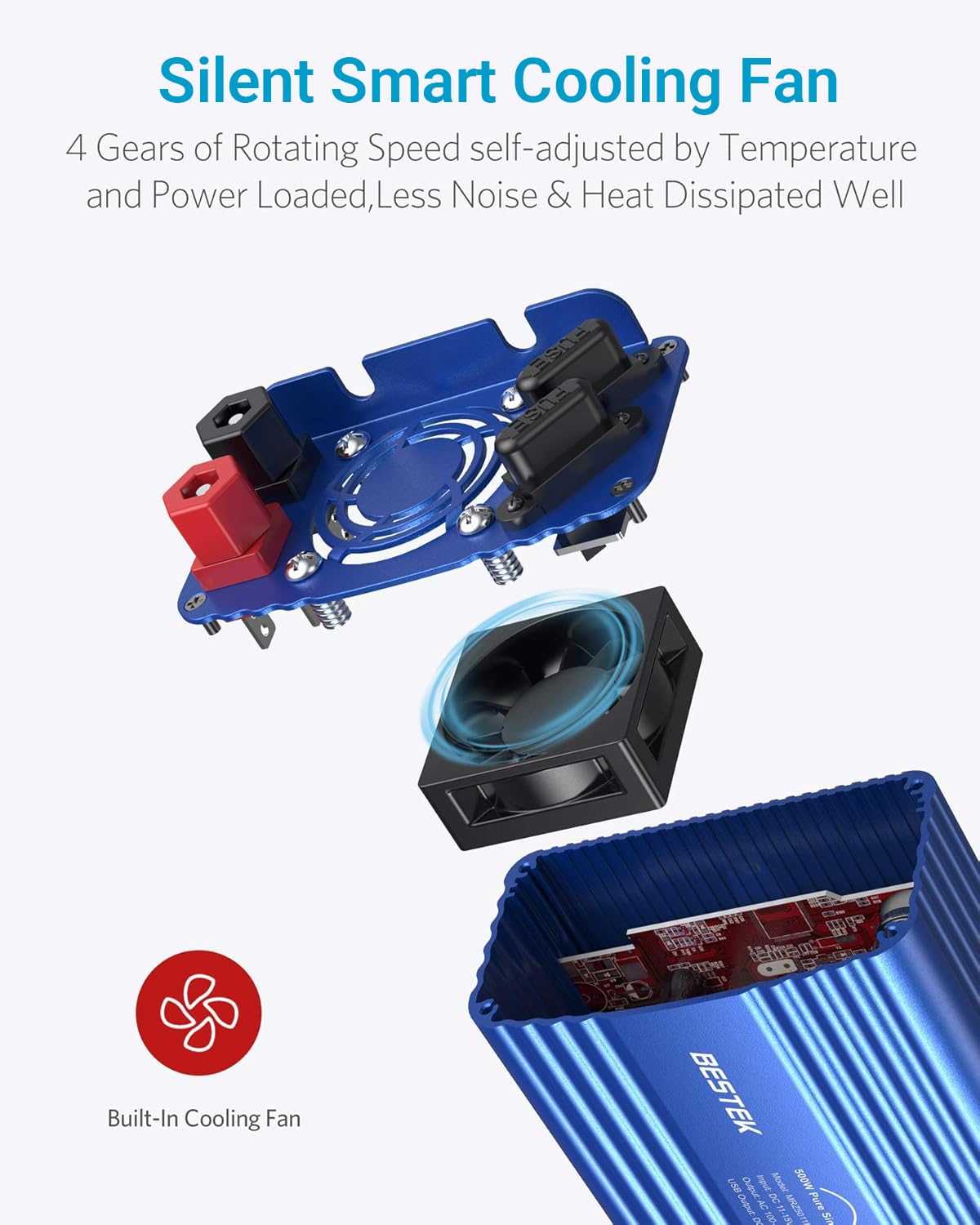
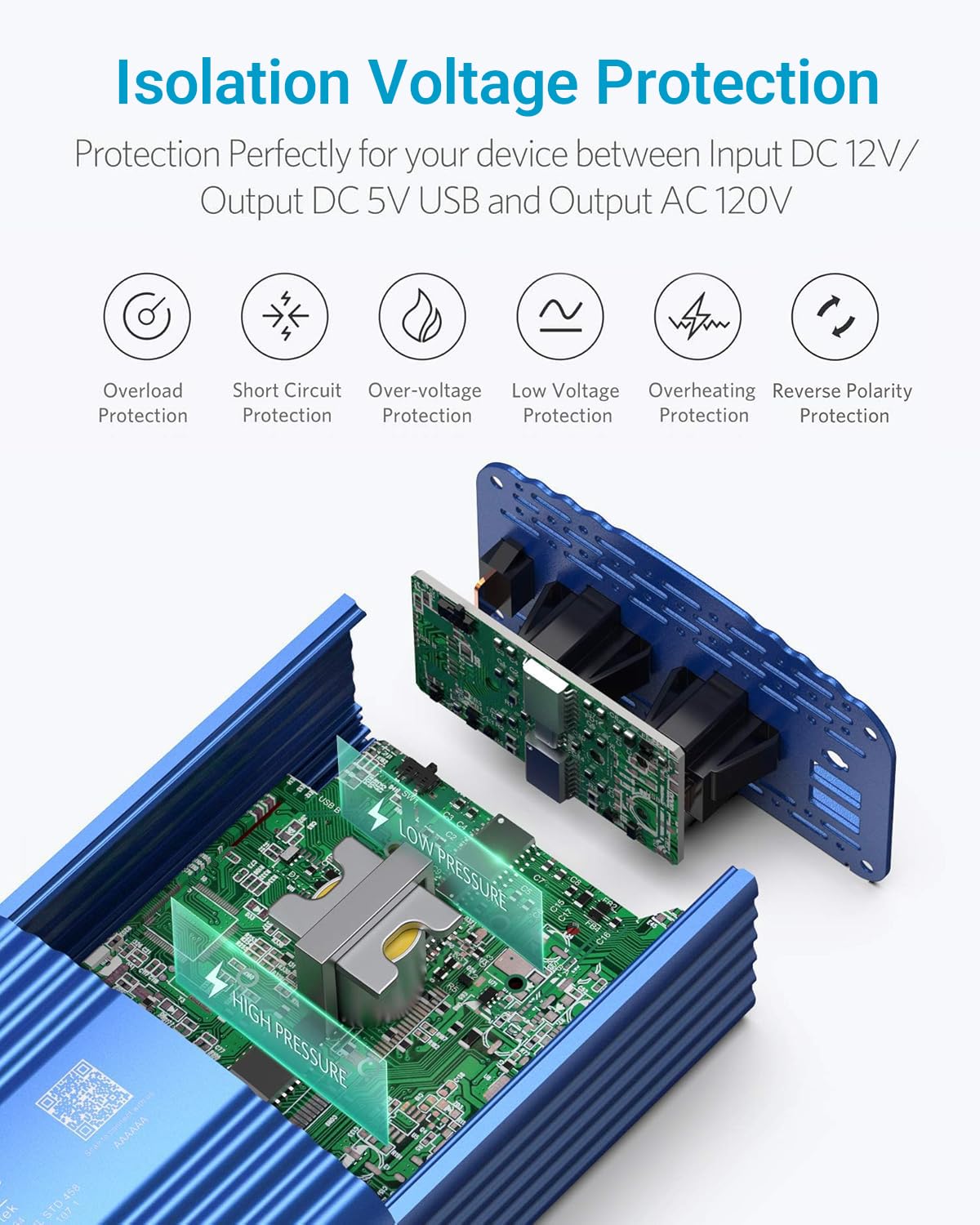
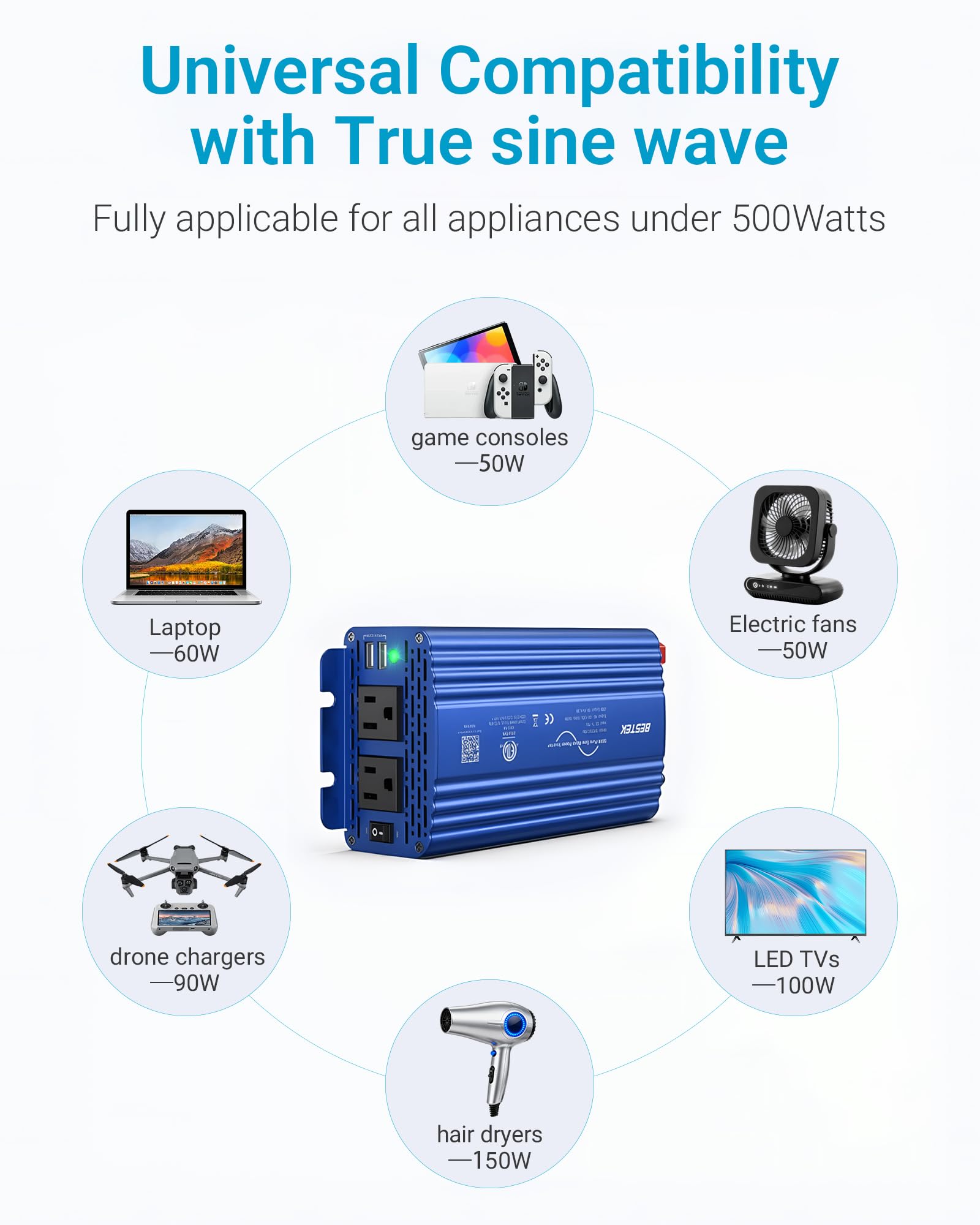

🔋 Power your on-the-go lifestyle with flawless, reliable energy anywhere!
The BESTEK 500W Pure Sine Wave Power Inverter converts your car’s 12V DC into clean 110V AC power, ideal for sensitive electronics and off-grid use. Featuring 2 AC outlets and 2 USB ports with smart charging, it ensures safe, efficient power delivery with advanced thermal management and multiple safety protections. Compact and ETL listed, it’s perfect for professionals who demand reliable power on the move.


| ASIN | B086SCMVF9 |
| Item model number | MRZ5011BU-BL |
| Manufacturer | BESTEK |
| Product Dimensions | 22.1 x 10.92 x 6.1 cm; 997.9 g |
P**C
ok
J**N
Took it camping to inflate a large mattress and it worked perfectly. No hesitation and the motor ran at full speed with no extra humming or noises you'd get on a modified sine wave inverter. There's a photo attached hooked up to the car battery to do this job. This load is about 190 watts, with whatever spike that happens when the motor starts up. When it first arrived, I tested it with an oscilloscope because I was skeptical of the "pure sine wave" claim on an inverter at this price point. There's two photos attached- the one that looks perfect is this inverter running an LED 110v lamp. The one that looks a little rough around the peaks/valleys is from a 4000W inverter meant to run a house off the grid (costs several thousand dollars)- but it's running an air conditioner, refrigerator, and all the other junk people plug in at home. Still, it goes to show that this little inverter makes a really nice sine wave. This is good because many types of electrical devices don't function well (or they make weird humming noises) with a poorly shaped sine wave (or a square wave like the cheaper ones make). Other tests I tried: - Charging my Macbook worked fine with normal power plug - Connected it to a 50 watt power source to see what it does under overload. When you try to draw more power than your source can supply, it resets until you turn it off and on again then it happily tries again. This is nice because if you run it from a weak battery it won't sit there trying to make 110v and failing miserably, possibly damaging whatever you're trying to run. - Used USB port to charge the Macbook as it can accept power from a normal USB source (obviously it'll charge a lot slower because there's less power available, but still it gets some juice). Worked fine. - Charged a phone from USB, worked fine I read the bad reviews before I bought this inverter. Some of the bad reviews maybe they got a defective unit, but others are almost certainly from improper use (especially the blown fuse ones). Some things to watch out for: - The cigarette lighter or power port on your car will NOT supply 500 watts, I guarantee it unless you've got an electric car or something and even then probably not. My truck has a 20 amp fuse on that circuit and the car in the photo attached has a 15 amp fuse. At 12 volts, that means they can supply 240/180 watts respectively. And that's at the point the fuse blows, not the point you can safely draw power- the car port says "125 watts max" when its fuse blows at 180. So the people mad because this inverter "doesn't work in my car" or "blew a fuse in my car" were simply trying to draw more power from the inverter than the fuse in their car would allow. - Note in the photo above that I connected directly to the battery. If I had plugged this into the 15 amp power port inside the car with the cigarette lighter adapter, it most likely would have blown the fuse. - The power adapter on my laptop says 140 watts, so even plugging that into the inverter using the car's power port *might* blow the fuse if there's a spike on startup. You REALLY need to look at what you're plugging into this thing if you're using it inside the car and see how many watts it uses- then pad that for safety and because the inverter is not 100% efficient at converting DC watts from your battery to AC watts that it outputs. - Like any electronic device, solder joints can break if you drop it so be careful with it. Treat it like a laptop or something else you don't want broken. Broken solder joints will result in intermittent failure or complete failure. Maybe keep it in the box when you're not using it. Things I haven't tried: - drawing a 500W load to see if it really is 500W. I can only verify it supplies about 200W well. - checking how much power it draws when off with no load, or on with no load. I'd like to get around to this because would be nice to know if it needs to be unplugged when not in use.
R**Y
It works well, however I wish the fan didn't run when nothing is plugged in. However you can turn the unit off to stop the fan. I bought this for my CPAP machine, which uses 150 watts. I doubt that is enough to generate much heat in the unit so I wish the fan would be off. Even at the fans lowest speed it is very audible and may interfere with sleep. This is for my RV so I may put the unit in the storage compartment and wire in a 110v outlet through the wall to the bedroom.
K**K
Nice inverter gets job done
S**G
This little inverter is perfect for running a laptop, printer, game console or other small device in a vehicle. It will charge all my Milwaukee and DeWalt tool batteries using the fastest chargers. Unfortunately, I needed it to run my solar powered gate opener. It ran the opener fine, but the standby, or "no load" draw was over 7 watts. Times 24 hours, that means it will use about 180 watts per day if I never open my gate. My solar panel makes about that, so this inverter simply wont work for me. There are other inverters that will open my gate (square wave, 300 watt) that draw only 48 watt hours per day.
Trustpilot
1 month ago
1 week ago