We remain fully operational. Our teams are working around the clock to ensure your deliveries continue safely.

DOWNLOAD THE APP


Customer Services
Copyright © 2025 Desertcart Holdings Limited
DOWNLOAD THE APP
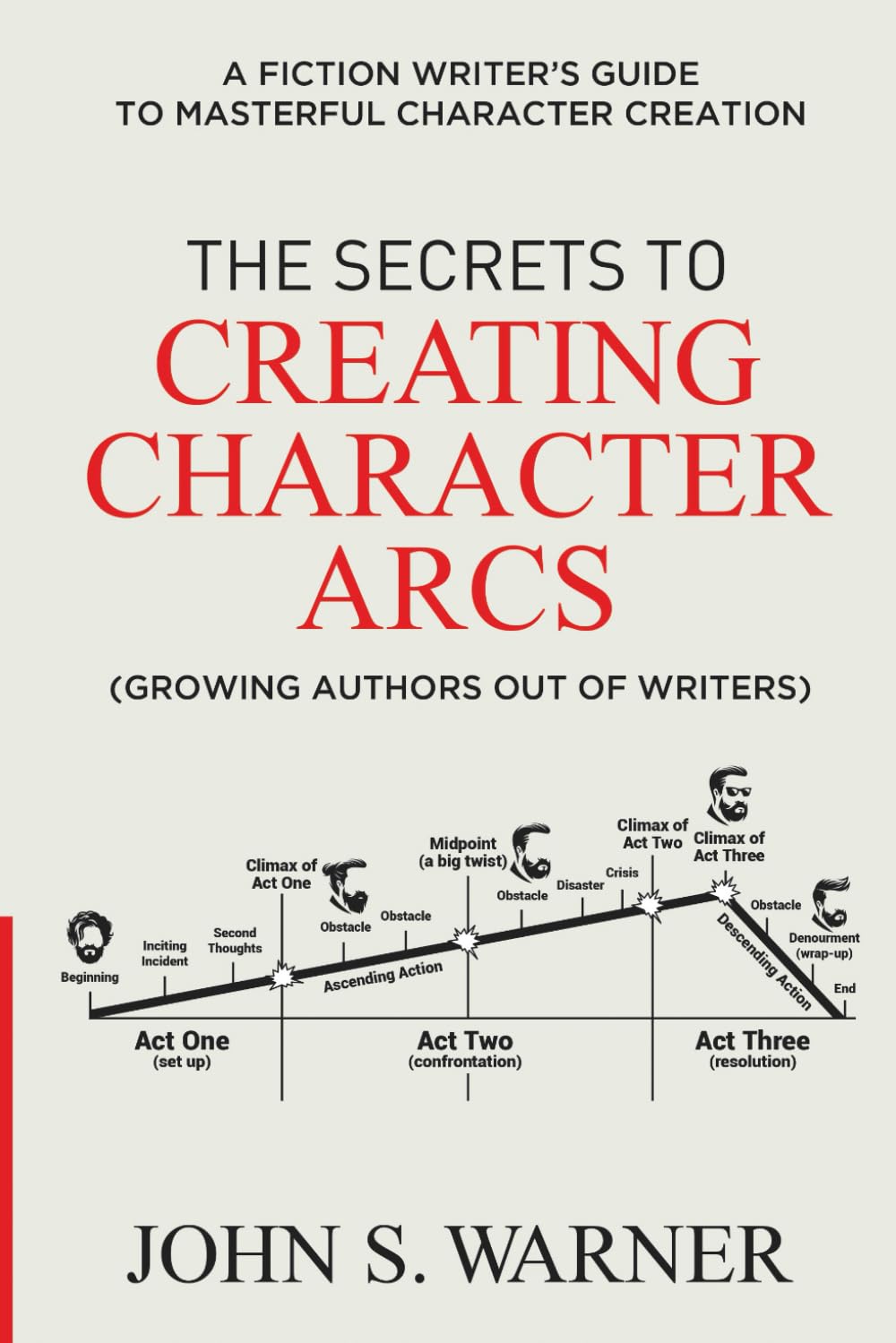
The Secrets to Creating Character Arcs: A Fiction Writer's Guide to Masterful Character Creation [Warner, John S., Warner, John S.] on desertcart.com. *FREE* shipping on qualifying offers. The Secrets to Creating Character Arcs: A Fiction Writer's Guide to Masterful Character Creation Review: A Great Book on Structure! - This book is chock full of great information on structure! Whether it’s plot structure, character arcs, or story arcs you need, this book is for you! This book also contains great advice about the different types of characters and how to write them realistically and effectively! I really enjoyed this book and highly recommend it to the seasoned veteran writer as well as novice writers! This book is all you need to write great stories! Review: Warner Builds Characters - The art of writing is lot like the practice of prayer. Like prayer, many people either mimic prior practice or they ramble with little discernable structure. Yet, even for those that adopt a formal structure, like an ACTS (adoration, confession, thanksgiving, supplication) prayer or the form of a letter, prayer reflects our theology. Reflecting on that theology can go along ways towards developing a more polished prayer life. And so it is with writing. Introduction In the introduction to The Secrets to Creating Character Arcs, John S. Warner writes: “The book is designed as a guide for all the writers who have great potential but lac the confidence to write an interesting, engaging story that can keep the readers glued to the pages.” (11) While Warner outlines the components of a complete guide to fiction writing, he concentrates on the specific challenge of crafting interesting characters. He observes: “A great character is born when the reader starts to relate the character’s actions to their past emotional struggles.” (22) This connection between the plot and the emotional life of the characters is what makes great writing out of the reach of so many authors. Background and Organization John S. Warner is a self-published author in the Oxfordshire, United Kingdom with minimal online presence. He writes in ten chapters: 1. The Holy Trinity 2. Plotting It Out 3. Sculpting the Structure 4. Characters, Not Caricature 5. Building Your Character 6. Your Character Journey 7. Combining the Lot 8. Supporting Characters 9. Dos and Don’ts of Character Creation 10. Taking Your Story to the Next Level (v-vii) These chapters are preceded by an introduction and followed by a conclusion and references. The Holy Trinity Warner describes plot, structure, and characters as the Holy Trinity of writing (13). He writes that: “A plot is a sequence of events that happens in a story.” (15) Plot serves to “inspire different emotional responses in the readers.” (17) He sees suspense, anticipation, surprise, and empathy as elements in evoking an emotional response (17-18). For structure, Warner writes: “In literature, the structure is nothing more than a pattern that keeps you story organized and engaging for the reader.” (18) The basic structure is beginning, middle, and end, the traditional three-act play (19). I cited Warner’s definition of a character above. He sees characters as either flat or round, with round characters being central to the plot (20). Great characters have internal conflict, as well as external conflict (21). Five Must-Have Characters Warner sees five characters as the pillars of every great story: protagonist, antagonist, mentor, sidekick, and skeptic (80). The protagonist is the hero or heroine whose voice often carries the plot and is relatable (80). Warner writes: “Provide the protagonist with both good and bad qualities, but make sure that their good qualities surpass the bad ones.” (21). Warner sees four protagonist types: The hero, the underdog, Mr. average, and the dark soul (94-95) The protagonist is someone with a goal whose flaws stymie its achievement, keeping it out of reach until the flaw is overcome with the story evolving out of a rise in the stake should the flaw be ignored (96-97. The antagonist is: “A character [who] is moving against the protagonist and not with them.” (81-82) The antagonist is not necessarily a villain and should have some redeeming quality. This character should be well-rounded and their motivate for opposing the protagonist should be justified (82). Warner sees the antagonist as ideally someone being self-righteous, a worthy opponent, known to the protagonist, with a dark past, and who can in some way be charming (89-90). A sidekick is: “Most often the protagonist’s sibling, cousin, friend, or colleague…a loyal companion of your protagonist throughout the story.” (83). The sidekick enables the reader to view the protagonist through a different lens, displaying vulnerabilities. A skeptic is like a sidekick only not nearly so supportive (84). Story versus Character Arcs The story and character arcs are related, but separate trajectories that distinguish between the external and internal struggles. Warner writes: “While the plot is a series of events that together build your story, the character arc is a series of events that build your character.” (106) Character arcs add emotional weight, depth, and a foundation for the story arc (109). Warner sees three types of character arcs: Change, growth, and fall. A change arc shows an underdog achieving important goals beyond themselves. A growth arc involves more personal growth. A fall arc shows a character who self-destructs (107-108). At the heart of character arcs is a lie that the character tells themselves. The sequence of events shows how they come to accept the truth. Warner gives the example of a person who believes that they are unworthy of being loved and comes to realize that that is not true (113). A fall arc evolves from the characters unwillingness to give up the lie or to accept the truth (114). Static characters may already know and accept the truth, but struggle with the temptations posed by various lies (115-116). Assessment John S. Warner’s The Secrets to Creating Character Arcs provides a foundation for understanding and developing multidimensional, fiction characters, interesting and instructive to most fiction writers. Warner places his discussion of character development squarely in the context of constructing the plot and story structure, making it easy for writers in their formative process to move a few steps closer to their creative potential. Warner’s easy-going writing style can be disarming, but it contributes to its accessibility. Fiction writers should buy and read this book.


| Best Sellers Rank | #90,107 in Books ( See Top 100 in Books ) #29 in Authorship Reference #88 in Fiction Writing Reference (Books) #133 in Writing Skill Reference (Books) |
| Customer Reviews | 4.5 out of 5 stars 329 Reviews |
T**R
A Great Book on Structure!
This book is chock full of great information on structure! Whether it’s plot structure, character arcs, or story arcs you need, this book is for you! This book also contains great advice about the different types of characters and how to write them realistically and effectively! I really enjoyed this book and highly recommend it to the seasoned veteran writer as well as novice writers! This book is all you need to write great stories!
S**ﻦ
Warner Builds Characters
The art of writing is lot like the practice of prayer. Like prayer, many people either mimic prior practice or they ramble with little discernable structure. Yet, even for those that adopt a formal structure, like an ACTS (adoration, confession, thanksgiving, supplication) prayer or the form of a letter, prayer reflects our theology. Reflecting on that theology can go along ways towards developing a more polished prayer life. And so it is with writing. Introduction In the introduction to The Secrets to Creating Character Arcs, John S. Warner writes: “The book is designed as a guide for all the writers who have great potential but lac the confidence to write an interesting, engaging story that can keep the readers glued to the pages.” (11) While Warner outlines the components of a complete guide to fiction writing, he concentrates on the specific challenge of crafting interesting characters. He observes: “A great character is born when the reader starts to relate the character’s actions to their past emotional struggles.” (22) This connection between the plot and the emotional life of the characters is what makes great writing out of the reach of so many authors. Background and Organization John S. Warner is a self-published author in the Oxfordshire, United Kingdom with minimal online presence. He writes in ten chapters: 1. The Holy Trinity 2. Plotting It Out 3. Sculpting the Structure 4. Characters, Not Caricature 5. Building Your Character 6. Your Character Journey 7. Combining the Lot 8. Supporting Characters 9. Dos and Don’ts of Character Creation 10. Taking Your Story to the Next Level (v-vii) These chapters are preceded by an introduction and followed by a conclusion and references. The Holy Trinity Warner describes plot, structure, and characters as the Holy Trinity of writing (13). He writes that: “A plot is a sequence of events that happens in a story.” (15) Plot serves to “inspire different emotional responses in the readers.” (17) He sees suspense, anticipation, surprise, and empathy as elements in evoking an emotional response (17-18). For structure, Warner writes: “In literature, the structure is nothing more than a pattern that keeps you story organized and engaging for the reader.” (18) The basic structure is beginning, middle, and end, the traditional three-act play (19). I cited Warner’s definition of a character above. He sees characters as either flat or round, with round characters being central to the plot (20). Great characters have internal conflict, as well as external conflict (21). Five Must-Have Characters Warner sees five characters as the pillars of every great story: protagonist, antagonist, mentor, sidekick, and skeptic (80). The protagonist is the hero or heroine whose voice often carries the plot and is relatable (80). Warner writes: “Provide the protagonist with both good and bad qualities, but make sure that their good qualities surpass the bad ones.” (21). Warner sees four protagonist types: The hero, the underdog, Mr. average, and the dark soul (94-95) The protagonist is someone with a goal whose flaws stymie its achievement, keeping it out of reach until the flaw is overcome with the story evolving out of a rise in the stake should the flaw be ignored (96-97. The antagonist is: “A character [who] is moving against the protagonist and not with them.” (81-82) The antagonist is not necessarily a villain and should have some redeeming quality. This character should be well-rounded and their motivate for opposing the protagonist should be justified (82). Warner sees the antagonist as ideally someone being self-righteous, a worthy opponent, known to the protagonist, with a dark past, and who can in some way be charming (89-90). A sidekick is: “Most often the protagonist’s sibling, cousin, friend, or colleague…a loyal companion of your protagonist throughout the story.” (83). The sidekick enables the reader to view the protagonist through a different lens, displaying vulnerabilities. A skeptic is like a sidekick only not nearly so supportive (84). Story versus Character Arcs The story and character arcs are related, but separate trajectories that distinguish between the external and internal struggles. Warner writes: “While the plot is a series of events that together build your story, the character arc is a series of events that build your character.” (106) Character arcs add emotional weight, depth, and a foundation for the story arc (109). Warner sees three types of character arcs: Change, growth, and fall. A change arc shows an underdog achieving important goals beyond themselves. A growth arc involves more personal growth. A fall arc shows a character who self-destructs (107-108). At the heart of character arcs is a lie that the character tells themselves. The sequence of events shows how they come to accept the truth. Warner gives the example of a person who believes that they are unworthy of being loved and comes to realize that that is not true (113). A fall arc evolves from the characters unwillingness to give up the lie or to accept the truth (114). Static characters may already know and accept the truth, but struggle with the temptations posed by various lies (115-116). Assessment John S. Warner’s The Secrets to Creating Character Arcs provides a foundation for understanding and developing multidimensional, fiction characters, interesting and instructive to most fiction writers. Warner places his discussion of character development squarely in the context of constructing the plot and story structure, making it easy for writers in their formative process to move a few steps closer to their creative potential. Warner’s easy-going writing style can be disarming, but it contributes to its accessibility. Fiction writers should buy and read this book.
S**T
Tons of Great Advice!
I'm a linear writer and reader. I like my ducks in a row. Sometimes the material is interesting enough and requires that I venture out of my comfort zone. This is that sort of resource book. "The Secrets to Creating Character Arcs" doesn't actually talk about character arcs until pg 105. It goes to great lengths about story and structure and characters and the importance of creating great characters. It also summarizes the different types of plots and story arcs before talking about the types of characters and must-have qualities. Bonus! Great tips on writing faster are also included along with a wonderful reference list. The book is loaded with much more than creating a character arc. Maybe it just needed a different title. I'm happy I bought it.
N**.
Helpful approach
I am a newer writer still searching for a process I can sustain and found this book helpful. The topics are detailed enough and few enough to not feel overwhelming. The exercises enabled me to read, review and then experiment with what I just learned. If you're in a similar spot in your writing adventure as me I'd have no reservations recommending this book.
D**M
How to successfully create your character arc
John Warner has created a tool that belongs in every writer's toolbox. As writers, we sometimes develop tunnel-vision. We become engrossed in the plot and story to the extent that we sometimes assume the reader knows what we are thinking until we read our own work and discover how shallow we have made our character(s). We then struggle to make them alive. John's book helps to remove the pain and struggle from our work by giving us in-depth analysis and suggestions for building our characters from the ground up. He also reminds us of the basics of writing which we are prone to forget in our practice of story creation. I think you will find this to be a very helpful implement that deserves a permanent place on your writing desk.
S**L
Easy-to-read and inspiring!
This book was one of the most helpful craft books I've read so far! If guidance on character building in your stories is what you need, then you need this! It really helped me understand the nuances of character arcs and helped me learn more about the craft of writing in general! I will be reading and referencing this again as I continue to plow through writing my novel.
J**H
Short, Sweet, and to the Point - Great for New Authors
I was given the opportunity to read John S. Warner's book The Secrets to Creating Character Arcs: A Fiction Writer's Guide to Masterful Character Creation (Growing Authors Out of Writers). I want to thank the author/publisher for the opportunity to listen to and review this book. However, the follow review is not influenced by their generosity. As a published author, I've listed to a lot of craft books. As a general whole, this book really doesn't provide anything new to the actual conversation of writing craft. I also found this book less about creating character acrs than it was a general book about writing. If you're looking for a book that's a deep dive into character and character arcs, this is not going to enhance your skills set. If you are an advanced novelist who has read a ton of craft books, this book is probably not for you either. So, you may be wondering why I rated it high based on my previous paragraph. Here's why. I think the book is a short, sweet book that gets to the basics of narrative form and how to craft a story. I wish I had read this book years ago when I was first starting out as a novelist because it would have saved me a lot of time. So, is this book for advanced writers? Not at all. Would I recommend this book for someone just starting out as a writer? Most definitely.
B**H
I held my story up to the front cover, fell right into the graph. Knew I had to have.
It was exactly what I needed, I could see that even before I bought the book. Oh, my, goodness, all the confusion was gone. When I got the book, I was thrilled, filled in all the little places and I know what I need to work on and improved. This book I will keep on my shelf. Thank you so much, came right when I needed it.
Trustpilot
3 weeks ago
3 weeks ago