We remain fully operational. Our teams are working around the clock to ensure your deliveries continue safely.

DOWNLOAD THE APP


Customer Services
Copyright © 2025 Desertcart Holdings Limited
DOWNLOAD THE APP
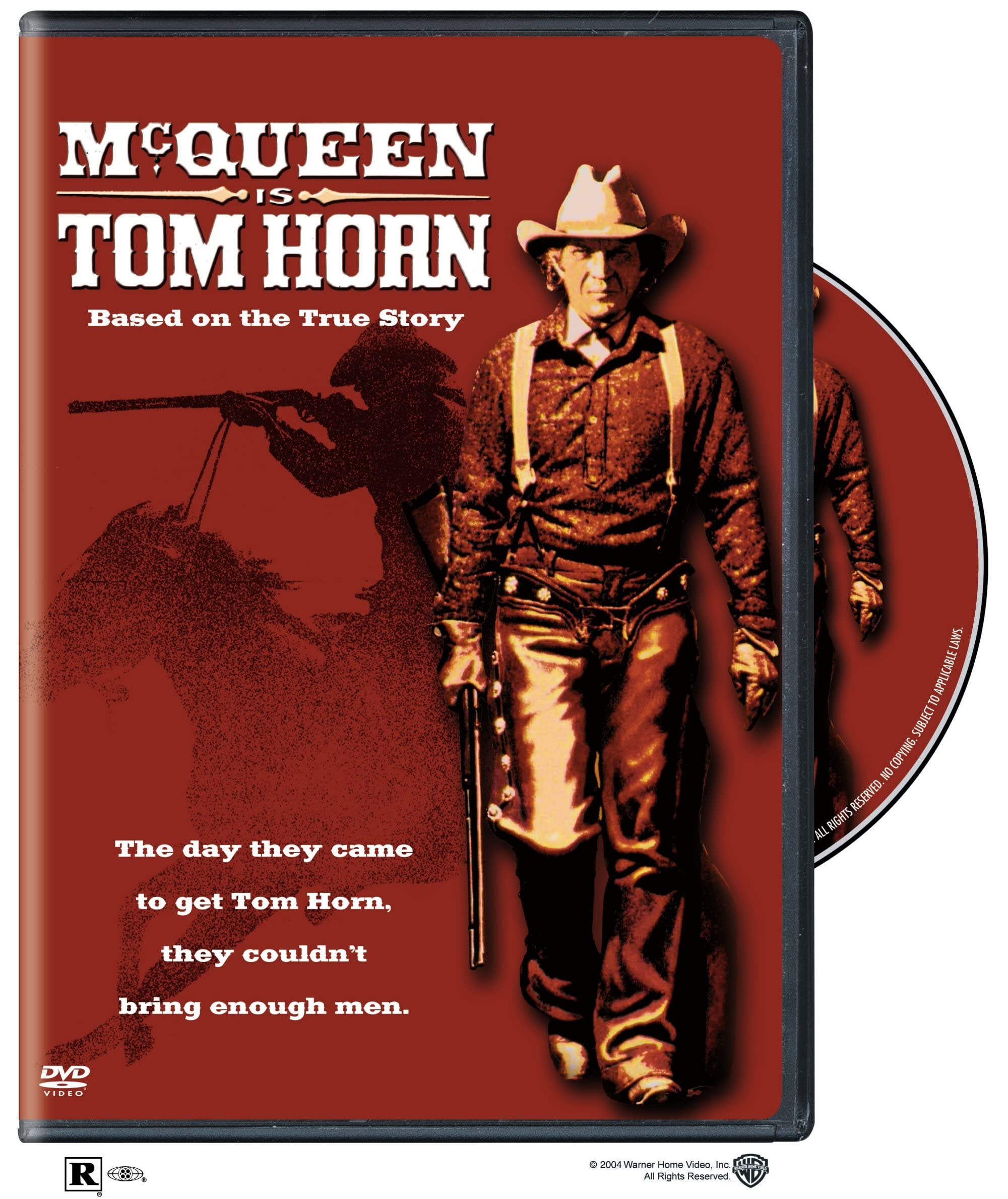
Tom Horn (DVD)Steve McQueen stars as a legendary American as wild and untamed as the Old West. He charged with Teddy Roosevelt up San Juan Hill. Became famous for capturing the legendary Apache chief Geronimo. And before his 44th birthday, was killed by the man who employed him to stop cattle rustlers in Wyoming--because he was too good, and too lethal, at his job. He was Tom Horn.]]> Review: One of McQueen's best movies: based on a true story and well ... - One of McQueen's best movies: based on a true story and well researched in all detail. The epic conflict resulting from changing times. McQueen nailed the life of Tom Horn and Horn's last chapter. Horn was a less well known icon of the wild southwest who played a key role in closing the chapter on the wild southwest. Horn's life was that of an adventurer who's sole and demeanor was forged in wild and lawlessness of the last of the 1800s. The turn of the century was embracing civilization made safe to survive by the considerable efforts of the likes of Tom Horn. Tom lived his fascinating and often violent life having to be self-reliant and having to take matters into his own hands as simply a matter of survival - as there was nobody else to turn to. It came to define him. Many of the more genteel norms of a civilized world were now coming of age: well depicted in the movie, but were never exactly part of the crucible in which Tom's entire life was forged. And, there we have the conflict. And with the backdrop of changing realities durning the turn of the century, one of Wyoming's cattleman's associations dilemmas was the demise of Tom Horn. The association was desperate to solve the (becoming rampant) cattle rustling problem that was taking the profit out of their cattle business. Being impatient for resolution, they didn't have the patience for being immersed in the legal remedies being ushered in by civilization and the new norms of the 20 century and their desire to 'fit in' and be part of that. So, for a time the Association was willing to accept the 'no questions asked" solutions forged in the self-reliance of those (like Horn) in the past, They were willing to look the other way; to accept that aspect that defined Tom Horn and his reputation. And for a time things went well. Maybe too well! Regardless of Toms' methods and the fact the rustling stopped, when it became obvious their association was near to be exposed as Tom's employer, it appears Tom was double crossed. Although the seeds of betrayal were clearly sewn at the inception of Tom's taking on the position of Cattle Detective, Tom took the word of the Association's spokesman (Coble) for granted. (It was more common in Tom's time for a man's honor to depend on his word and to defend and stand by it, It defined him. Anything less and his reputation descend to that of being one of the despicable rabble.) Tom believed Coble's word was true; that the Association would be stand behind him "100%". Apparently not, and Tom paid for his mistake with his life. Besides the movie, Steve McQueen was an avid connoisseur of the weapons used in the wild west. He obviously researched Tom Horn's choice of weapons, specifically the 45-60 Winchester depicted well in the movie. (By "depicted well" I'm sure anyone that has shot a lever action in 45-60 or 45-70 in real life can attest to McQueen's accurate portrayal of shooting a cannon like that Winchester Horn carried.) Review: Perfect - Bought as a gift for my dad. He loves watching and rewatching this.
| ASIN | B0008ENHUS |
| Actors | Billy "Green" Bush, Linda Evans, Richard Farnsworth, Slim Pickens, Steve McQueen |
| Aspect Ratio | 2.40:1 |
| Best Sellers Rank | #8,771 in Movies & TV ( See Top 100 in Movies & TV ) #122 in Westerns (Movies & TV) #1,160 in Drama DVDs |
| Customer Reviews | 4.6 4.6 out of 5 stars (2,035) |
| Director | William Wiard |
| Dubbed: | French |
| Is Discontinued By Manufacturer | No |
| Item model number | 2232770 |
| Language | English (Dolby Digital 1.0), French (Dolby Digital 1.0), Unqualified |
| MPAA rating | R (Restricted) |
| Media Format | Closed-captioned, Color, Dubbed, Multiple Formats, NTSC, Subtitled, Widescreen |
| Number of discs | 1 |
| Producers | Fred Weintraub, Steve McQueen |
| Product Dimensions | 7.5 x 0.7 x 5.4 inches; 1.6 ounces |
| Release date | May 31, 2005 |
| Run time | 1 hour and 38 minutes |
| Studio | WarnerBrothers |
| Subtitles: | English, French, Spanish |
| Writers | Bud Shrake, Thomas McGuane |
P**N
One of McQueen's best movies: based on a true story and well ...
One of McQueen's best movies: based on a true story and well researched in all detail. The epic conflict resulting from changing times. McQueen nailed the life of Tom Horn and Horn's last chapter. Horn was a less well known icon of the wild southwest who played a key role in closing the chapter on the wild southwest. Horn's life was that of an adventurer who's sole and demeanor was forged in wild and lawlessness of the last of the 1800s. The turn of the century was embracing civilization made safe to survive by the considerable efforts of the likes of Tom Horn. Tom lived his fascinating and often violent life having to be self-reliant and having to take matters into his own hands as simply a matter of survival - as there was nobody else to turn to. It came to define him. Many of the more genteel norms of a civilized world were now coming of age: well depicted in the movie, but were never exactly part of the crucible in which Tom's entire life was forged. And, there we have the conflict. And with the backdrop of changing realities durning the turn of the century, one of Wyoming's cattleman's associations dilemmas was the demise of Tom Horn. The association was desperate to solve the (becoming rampant) cattle rustling problem that was taking the profit out of their cattle business. Being impatient for resolution, they didn't have the patience for being immersed in the legal remedies being ushered in by civilization and the new norms of the 20 century and their desire to 'fit in' and be part of that. So, for a time the Association was willing to accept the 'no questions asked" solutions forged in the self-reliance of those (like Horn) in the past, They were willing to look the other way; to accept that aspect that defined Tom Horn and his reputation. And for a time things went well. Maybe too well! Regardless of Toms' methods and the fact the rustling stopped, when it became obvious their association was near to be exposed as Tom's employer, it appears Tom was double crossed. Although the seeds of betrayal were clearly sewn at the inception of Tom's taking on the position of Cattle Detective, Tom took the word of the Association's spokesman (Coble) for granted. (It was more common in Tom's time for a man's honor to depend on his word and to defend and stand by it, It defined him. Anything less and his reputation descend to that of being one of the despicable rabble.) Tom believed Coble's word was true; that the Association would be stand behind him "100%". Apparently not, and Tom paid for his mistake with his life. Besides the movie, Steve McQueen was an avid connoisseur of the weapons used in the wild west. He obviously researched Tom Horn's choice of weapons, specifically the 45-60 Winchester depicted well in the movie. (By "depicted well" I'm sure anyone that has shot a lever action in 45-60 or 45-70 in real life can attest to McQueen's accurate portrayal of shooting a cannon like that Winchester Horn carried.)
J**Z
Perfect
Bought as a gift for my dad. He loves watching and rewatching this.
D**.
Undiscovered Mini- Masterpiece!
I remember when this film opened in San Francisco in 1980, it got mediocre reviews from the local papers and didn't last long at the theaters. I, unfortunately did not see it at the time, and only caught it on a Prime Channel. During the opening credits I was surprised to see the great American Writer of the West, Thomas McGuane, listed as one of the two listed as the films' screenwriters. This, friends is a BIG plus. The words that come out of these characters mouths ring true, you can believe in what they're saying and doing onscreen. The cinematography is beyond compare here, lensed by the late great John Alonzo, ('Chinatown'). The lighting both daytime and evening scenes are beautifully lit, and some magnificent scenic backdrops here. The cast includes Linda Evans and Richard Farnsworth in wonderful characterisations here. But the star is Steve McQueen playing the real-life character of Tom Horn. He slips into this role as if it were made for him, nothing 'showy', just outstanding acting that seems effortless, but you know he put his all into the role. I've had my favorite films of McQueens: 'The Sand Pebbles', 'Bullitt', and 'Papillion' now I'm adding 'Tom Horn' to the list. If I get just ONE of you who read this review, see the film and appreciate it...I'll be a happy man.
W**N
Reality Western
Classic Western
B**Y
it’s a true story
Loved the movie
J**R
Great movie
I saw this ions ago after watching The Carpet Baggers at the movies. I'm a Steve McQueen fan. Enjoy the movie but sad at the end.
W**.
Good Watch
Not particularly historically accurate, but an excellent movie non the less.
N**R
Masterful
Tom Horn was a bad man, but the underlying moral of 'Tom Horn' is as much about the way the American West was eventually overrun by the interests of white businessmen as it is about his character. IMHO, this one of the best westerns out there. Sensitive, but not moralizing and illuminating of the dynamics of a period of profound transition in place and culture. McQueen is amazing in this - and it's sad to think it was his second to last film. The body of work he might have produced had cancer not taken him from us is painful to ponder.
L**E
Conforme à la description ( français et original sous-titrés.
T**Y
Diese Worte Tom Horns (Steve McQueen) an seine Geliebte, die Lehrerin Gwendolyn Kimmel (Linda Evans), die von großen Abenteuern träumt, zeigen, daß der beste Nährboden von Legenden nicht so sehr die vermeintliche Perfektion ihres Gegenstands, sondern vielmehr die Unzufriedenheit mit der Gegenwart ist. In diesem Sinne ist der Spätwestern „Tom Horn“ aus dem Jahre 1980 schon ein besonderer Vertreter der Untergattung des elegischen Westerns, stimmt er doch einen Abgesang auf etwas an, das er nicht im gleichen Atemzug durchgängig als bewahrenswert kennzeichnet. „Tom Horn“ schien ein Herzensprojekt Steve McQueens gewesen zu sein, denn der Schauspieler setzte sich engagiert für die Produktion dieses Filmes ein, auf den er sich durch intensive Beschäftigung mit dem Leben des realen Tom Horn vorbereitet hatte. Auch an der Abfassung des Drehbuchs nahm er regen – und kritischen – Anteil, und eine seiner Entscheidungen bestand darin, Abraham Polonsky, der seinem Script eine stark revisionistische Stoßrichtung unterlegte und die Behandlung der Indianer durch die US-Armee mit beißender Kritik kommentierte, feuern zu lassen. Dies führte übrigens auch dazu, daß der ursprünglich vorgesehene Regisseur Don Siegel empört über diese Einmischung seitens des Hauptdarstellers seinen Hut nahm, bevor überhaupt nur ein Meter Film abgedreht war. Nachdem zwei weitere Regisseure noch vor bzw. kurz nach den Dreharbeiten verschlissen waren, wollte McQueen selbst die Regie für den Film übernehmen, wurde aber durch die Bestimmungen der Directors Guild of America daran gehindert, so daß kurzerhand William Wiard in den Regiestuhl gesetzt wurde – ein Mann, der bis zu diesem Zeitpunkt ausschließlich für das Fernsehen gearbeitet hatte und in dessen Filmographie „Tom Horn“ denn auch der einzige Kinofilm bleiben sollte. Anders als der alte Hase Don Siegel nahm der Neuling Wiard die Einmischungen McQueens in die Inszenierung des Filmes widerspruchslos hin. Hatte sich Polonsky noch auf die Zeit Tom Horns als Scout der Armee und seine Rolle bei der Ergreifung Geronimos konzentriert, so ließ das neue Drehbuch diese Episoden aus Horns Leben außen vor und erzählte statt dessen von dem traurigen Ende der Westernlegende: Nachdem sich Horn anno 1901 in Wyoming von einer Gruppe Rancher um den Züchter John C. Coble (Richard Farnsworth) hat anwerben lassen, um sich um eine Horde von Viehdieben zu kümmern – wobei man ihm vielsagend die Wahl seiner Mittel und die Auslegung des Verbes „kümmern“ selbst überläßt –, geht der Kopfgeldjäger mit der ihm eigenen Gewissenlosigkeit ans Werk. Zwar leert sich die Prärie von den verhaßten Viehdieben, doch Horns Brutalität beunruhigt die meisten der Züchter, und so beschließen sie, ohne das Wissen Cobles, Horn eine Falle zu stellen, wobei sie sich der Hilfe des Marshals Joe Belle (Billy Green Bush) bedienen. Durch eine Intrige Belles wird Horn kurzerhand der Mord an einem Kind in die Schuhe geschoben, und man macht dem ehemaligen Scout schließlich den Prozeß. „Tom Horn“ läßt uns einerseits Mitgefühl mit dem Protagonisten empfinden, und zwar, indem er ihn als einen der letzten Vertreter eines aussterbenden Menschenschlages zeigt – freiheitsliebend und unabhängig, gradlinig und auch mit der Fähigkeit zu feinem Humor und Selbstironie ausgestattet. So läßt ihn die Romanze, die er mit der Lehrerin Gwendolin beginnt, als nachdenklichen Menschen erscheinen, der genau um die Schattenseiten des Mythos, für den er steht, weiß, und gleichzeitig zehrt er von diesem Mythos, wenn Männer wie der Sheriff Creedmore (Slim Pickens) und seine Deputys recht eigentlich lieber sähen, daß Horn von der Anklage des Mordes freigesprochen wird. In einer rührenden Geste gewährt der Sheriff seinem Gefangenen beispielsweise auch eine Zelle mit direktem Ausblick auf die Berge, von denen er doch weiß, daß Horn sie so gern mag. Andererseits wird aber auch deutlich, daß Horn keineswegs einer der edlen Westernhelden ist, die nach Ansicht John Waynes die amerikanische Wildnis bevölkert haben, denn er geht gegen seine Gegner mit äußerster Rücksichtslosigkeit und Brutalität vor. Einem seiner Widersacher schießt er mit seiner Winchester in den Rücken, nachdem dieser schwerverletzt vor ihm auf die Straße gefallen ist; einem anderen zerschlägt er mit seinem Gewehrkolben den Schädel – wieder und wieder haut er zu –, so daß das Blut des Getöteten schließlich das Gesicht Gwens bespritzt; einem weiteren, der Horns geliebtes Pferd getötet hat, jagt er, nachdem er ihn zur Strecke gebracht hat, haßerfüllt eine Kugel um die andere in den Leib. Selbst einem Deputy, der ihn anständig behandelt hat, gegenüber hat er wenig Skrupel und schlägt dessen Schädel mehrere Male gegen die Gitterstäbe, um ihn außer Gefecht zu setzen. Wir sehen also, wenn Horn von der Dreckigkeit des alten Westens spricht, dann verkörpert er selbst zu einem gerüttelt Maß genau diese Dreckigkeit und macht es uns schwer, ihn ausschließlich als Opfer der Umstände zu sehen. Ein solches ist er aber in gewissem Maße durchaus auch, denn wie der typische, strahlende Westernheld – ein Shane – oder seine ambivalentere Variante – die Helden in „The Magnificent Seven“ (1960) – ist er aus der Zeit gefallen und bereitet mit seinem Wirken ironischerweise einer Gesellschaft den Weg, in der für ihn kein Platz mehr ist. Im Falle Horns offenbart sich dies freilich in ungleich zynischerer Weise als in vielen anderen Western, denn hier kommt der Held von vornherein als skrupelloser Kopfgeldjäger daher, der gegen Bezahlung die Interessen einer Handvoll Kapitalisten gegen eine Handvoll Strauchdiebe verteidigt, die – anders als ihre Gegner – nicht das gesellschaftliche System auf ihrer Seite haben. In dem Moment, in dem Horns Handlungsweise seinen Auftraggebern unangenehm wird, entledigen sie sich seiner, indem sie sich einer anderen Westernlegende, des Marshals Belle, bedienen, der sich freilich als gewiefter Opportunist geschickter mit den gewandelten Umständen zu arrangieren vermochte. Ironischerweise eint diese beiden Westernlegenden aber eines – nämlich daß sie beide das Angebot hatten (Belle hatte es denn auch angenommen), in Buffalo Bills berühmter Wildwestshow mitzutingeln, in der die Legenden des Westens in zähmender Manege gegen Geld den Gaffern der Ostküste präsentiert werden. Alles, was vom Leben in der Wildnis übrigblieb, wird nun in ein Zirkuszelt gezwängt, und jemand wie Belle fühlt sich allenfalls dadurch bestätigt, daß der mythlet-monger Buffalo Bill ihm mehr Geld als Tom Horn geboten hat. In solchen Momenten taucht sie dann doch ungeschminkt auf, die Wehmut des elegischen Westerns. Auch die Art und Weise, wie in „Tom Horn“ Schnitte gesetzt werden, unterstreicht den Effekt von Desorientierung, der für den aus der Zeit gefallenen Tom Horn kennzeichnend ist: So kommt es zu Asynchronität zwischen Bild und Ton, manche Schnitte werden von einem sekundenlang zu sehenden schwarzen Bild getrennt, und Szenen, die sich ein anderer Western nicht hätte entgehen lassen (etwa eine Schlägerei, auf die mit typischem Spannungsbogen hingearbeitet wurde), werden von der Kamera nicht gezeigt. Ein letztes lobendes Wort verdienen auf jeden Fall die schauspielerischen Leistungen, allen voran die von Steve McQueen, der in dieser Rolle zeigt, daß er nicht nur coole Helden, sondern auch in sich gebrochene Männer spielen kann. Wieviel von ihm selbst letztlich in gerade dieser Rolle steckt, ist eine Frage, über die man nur mutmaßen kann. Einen Teil seiner Tragik bekommt dieser Part sicherlich auch durch den Umstand, daß McQueen zu diesem Zeitpunkt schon unter Atemnot und Schmerzen, den Symptomen seiner Krebserkrankung, litt, was man dem Darsteller in einigen physisch belastenden Szenen durchaus ansieht. Neben McQueen stechen außerdem Richard Farnsworth und Slim Pickens, diesmal in einer leicht melancholischen Rolle, hervor. Rezensiert wurde der Film auf Grundlage der polnischen DVD, die den Film in den Sprachen Englisch, Deutsch und Spanisch – sowie mit ausblendbaren Untertiteln in einer Reihe von Sprachen – bietet. Bild- und Tonqualität sind ausgesprochen gut, und dem Film liegt ein ausführliches Booklet bei, allerdings in polnischer Sprache, die mir leider unverständlich ist.
A**I
ANOTHER SUPERB FILM BY THE KING OF COOL.
E**A
Título no muy conocido en la filmografía de McQueen, y que yo siempre he apreciado con interes. A la espera de una mejor edición en Bluray.
M**L
Très bon film recommandé pour les passionnés de western américain avec un john Wayne au top de sa carrière 👍
Trustpilot
2 weeks ago
2 weeks ago