
🌟 Vintage Vibes, Modern Convenience!
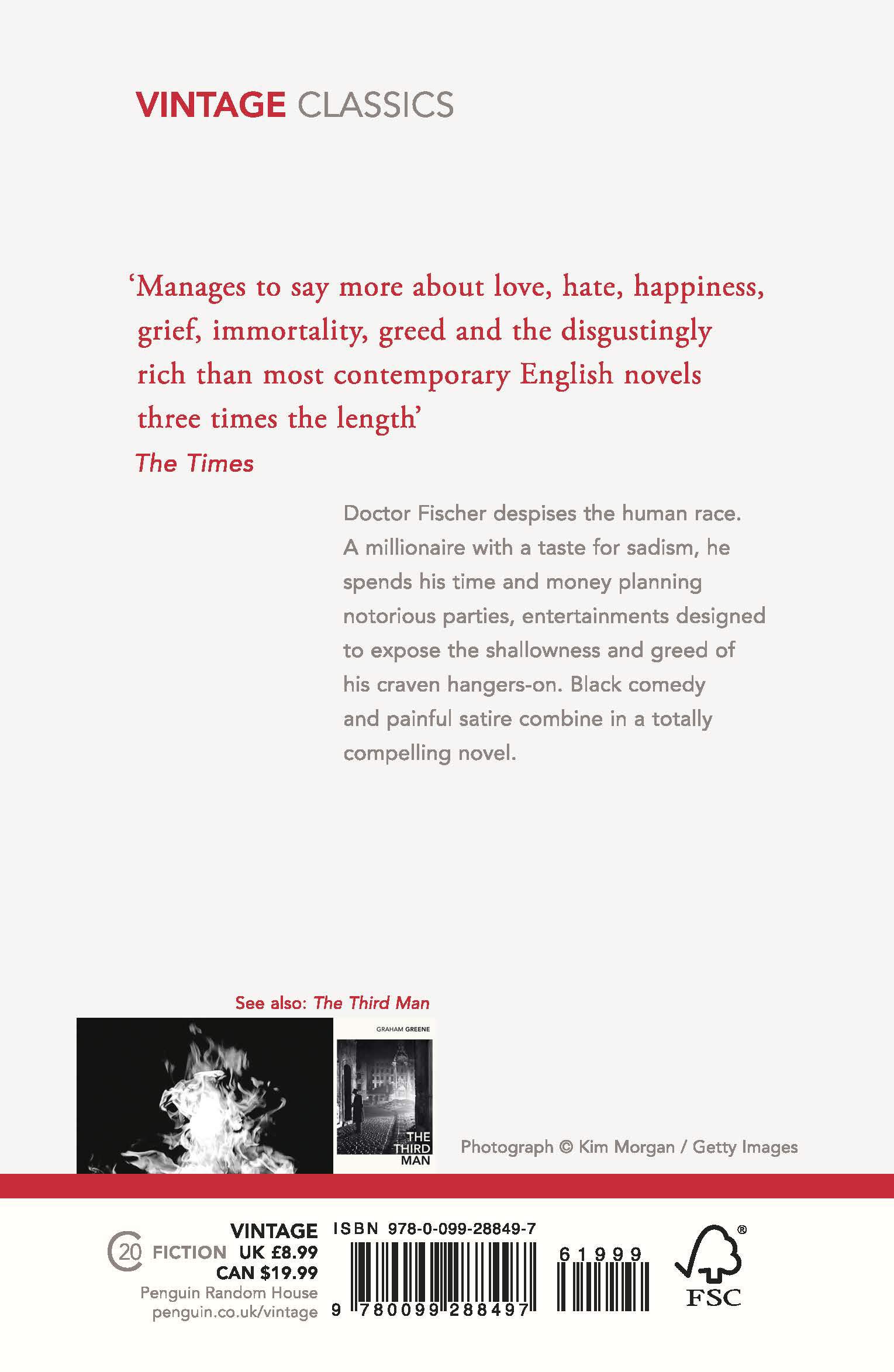
Dr Fischer of Geneva offers a curated selection of vintage classics in NewMint condition, ensuring that each piece is not only stylish but also delivered with the utmost care. With same-day dispatch for orders placed before noon and a hassle-free return policy, you can shop confidently and effortlessly.


M**E
Four Stars
great
P**A
Beautifully Crafted
Perhaps a departure from much of Greene's gentle and perceptive style, this book is an intense study of the human condition and the devils we all, from time to time, have to face. Utterly compelling, as one would expect from the maestro, the melancholy shared between us readers and the characters is both intimate and sad. This novel is an essential read for those wishing to reinvigorate themselves after a diet of current 'pap'.
B**H
Not a jolly book.
I'm afraid that I haven't finished this book yet. It doesn't look like it is going to have a jolly ending. Dr Fischer isn't a nice chap.
B**W
A fable on the amorality of greed - compelling, entertaining, moving
While this novella is deeply moral, it's also entertaining yet also deeply poignant, and never preachy in tone or sanctimonious.It tells the embittered, disillusioned, disheartened viewpoint of Mr Jones, the man who falls deeply in love with the enigmatic, sad but wonderful Anna-Luise, the only daughter of Doctor Fischer, a multi-millionaire, megalomaniac and entirely monstrous fellow.The story has an easy, graceful style - as to be expected of Greene - and the tone of a fable on greed, and questions of integrity and submission.The opening line immediately draws you into what you know will be a compelling tale: "I think that I used to detest Doctor Fischer more than any other man I have known just as I loved his daughter more than any other woman."It's a joy to read, and every single one of the characters is drawn so wonderfully well and succinctly. One of Greene's last works of fiction - published in 1980, he wrote only a few more thereafter - it reminded me of something Picasso apparently said once in an interview on French TV, when he was in his eighties: the interviewer asked him to draw something - anything - but quickly, without thought. A moment later, Picasso returns the piece of paper, with a wonderful little abstract line drawing. The interviewer looks admiringly, and then asks Picasso does he feel guilty that something he drew in mere moments could sell instantly for a large sum of money. The artist replies simply, and immediately: not at all, what looks to you like mere seconds, has taken me over 800 years to do. How true.As any devoted fan of Greene's oeuvre will tell you, this is a quirky work of his, unlike any other fiction he wrote. Its singularity is comparable to The Ordeal of Gilbert Pinfold: A Conversation Piece (Penguin Modern Classics Fiction) in Evelyn Waugh's suite of novels. It also rewards you far in excess of the little time it takes to read. Highly recommended.
D**0
Compelling story beautifully told
Graham Greene tells the story of the manipulative egotist Dr Fischer and his rich but greedy, needy "friends". This book is elegantly crafted and easy to read. Definitely recommended.
A**R
An excellent story
An excellent story - and the BBC James Mason adaptation is also very good although sadly not available anywhere.
W**C
Classic Greene; poignant and beautifully observed.
A clever tale, Greene combines pathos and comedy to paint a portrait of lives shattered by loss and money and the corrupting power of both.
C**H
at love, and end tragically
Of the books I've read, this is as close as I've seen Greene come to emulating the enormous tragedy at the heart of Hemingway's "A Farewell to Arms." Both books are about the same length - Greene's might be a little shorter - and about vastly different things, but both look at human corruption, at love, and end tragically.Greene's is the lesser of the two, without a doubt, though it isn't without its own highlights. The tale of Dr Fischer is morally ambiguous. He hosts parties where he expects his guests to humiliate themselves, with a fabulously expensive gift their reward if they do. One guest, the narrator, who works as a translator in a chocolate factory, refuses to lower himself as others do so quickly; it is ironic - or morally the heart of the story - that the narrator needs the money, and the others do not.
Trustpilot
2 months ago
3 weeks ago
2 days ago
2 weeks ago