📖 Unlock the profound truths that everyone’s quietly obsessed with.
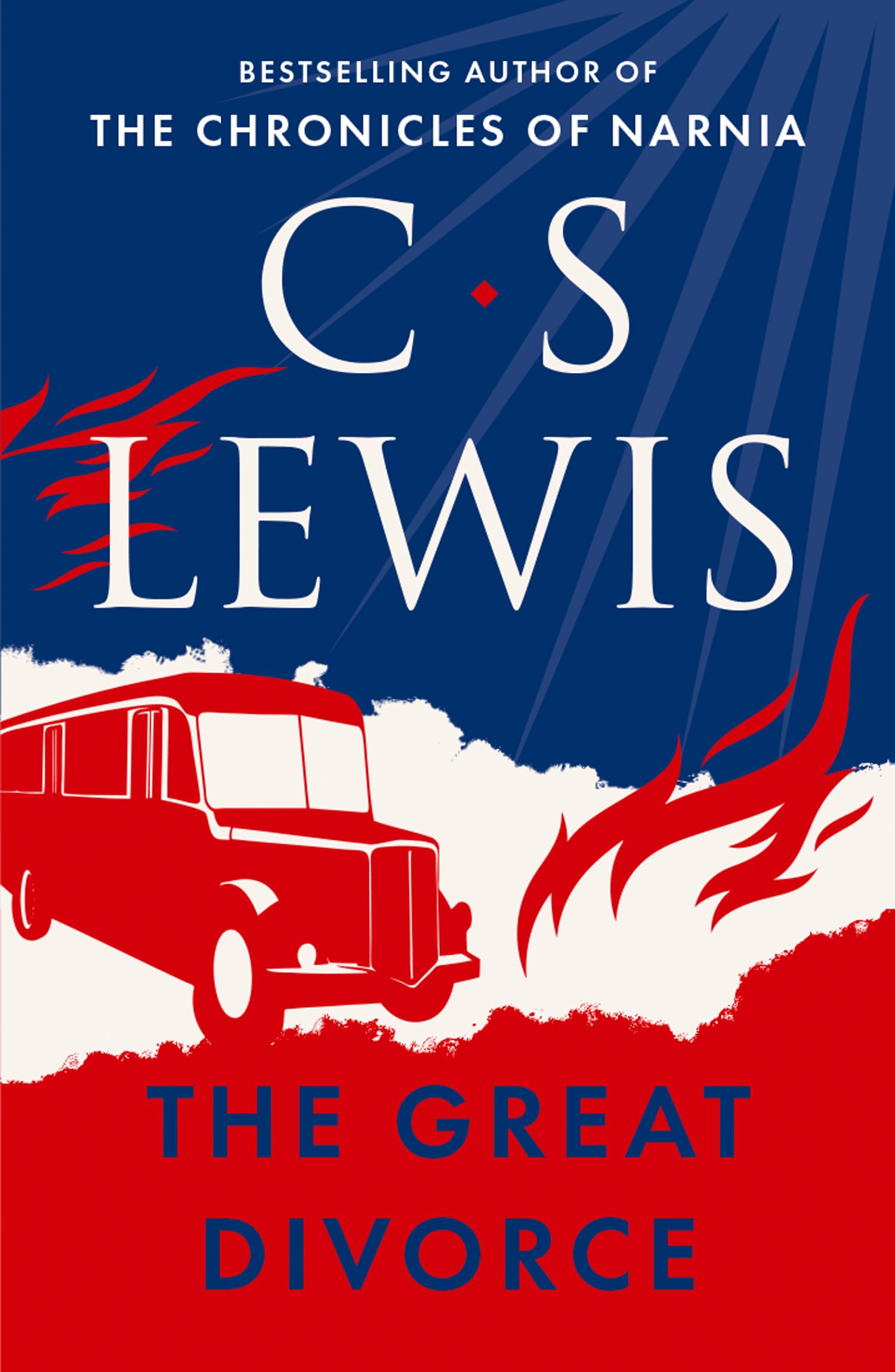
The Great Divorce by C.S. Lewis is a critically acclaimed Christian fiction classic, ranked in the top 30 of its genre categories and boasting a 4.6-star rating from over 10,700 readers. This thought-provoking book offers timeless insights into human nature and spirituality, making it a must-read for reflective professionals seeking depth beyond conventional literature.



| Best Sellers Rank | 21,684 in Books ( See Top 100 in Books ) 8 in Christian Literature 26 in Christian Fiction (Books) 30 in Science & Religion |
| Customer Reviews | 4.6 out of 5 stars 10,706 Reviews |
M**L
One of C S Lewis' Greatest Works
Do not underestimate this book, just because it does not deal with Narnia - it is one of his most beautiful and thought-provoking books. I have a paper copy and have read it many times, and have now moved to the Kindle edition, which is much easier to read, physically speaking. There are three small textual errors in the Kindle version of the book. The first is as follows: On page 45 the text reads: The noise, though gigantic, was like giants' laugh-ten like the revelry of a whole college of giants together ... It should read: The noise, though gigantic, was like giants' laughter: like the revelry of a whole college of giants together ... On page 62, the text reads: .. the whole wood trembled and dwindled at the sound. It should read .. the whole wood trembled and dindled at the sound. On page 81, the text reads: ..only to Spit and gibber out in one ecstasy of hatred .. It should read: .. only to spit and gibber out in one ecstasy of hatred .. It is a great book, and other than these three errors, the text is just great, conveying all of Lewis' imaginative greatness. I cannot over-emphasise just how amazing this book is; I personally re-read it about once every couple of months and am always thinking about the truths conveyed in it.
B**Y
Intriguing insights
Intriguing look at human failings and the perils of letting one characteristic dominate our lives. Worth reading twice at least.
A**S
An interesting read for those on the quest for understanding.
This book may be short but it is very meaty. CS Lewis plays with ideas of heaven and hell. It is sometimes a little dated but it well worth thinking about.
M**Y
Exceptional book
Something like the Book of Revelations, something like A Christmas Carol, something like The Pilgrim's Progress, this book is exceptional.
S**A
Profound and thought-provoking allegory
As a great admirer of CS Lewis, it's a surprise that I hadn't read this book before, its title derived from Blake's 'The Marriage of Heaven and Hell'. With its vision of hell as a perpetually grey, miserable city, I should think anyone who suffers from depression will recognise it and consider it worse than any idea of fire and brimstone. CS Lewis's humour, psychological insight, observation of people, and lyrical use of imagery and metaphor can clearly be seen here in this depiction of a bus ride from hell to heaven. I found some of it very uncomfortable reading as the dreary, self-absorbed, monologues of some of the "ghost bus passengers" were painfully recognisable, especially the lady with the "martyr complex". The very thought that people may take these psychological states into the afterlife and choose to remain with them forever seems worse to me than pitchforks and pits of sulphur. CS Lewis's description of the conditions in the foothills of heaven reminded me slightly of his science fiction novels. A profound and very thought-provoking book.
R**A
You won't forget this story
An idea of what hell could be, and what we must do to find our way out of it. A bit scary in some ways but a reminder of what we hope for and of God's mercy. Food for thought, to be sure.
T**E
Consider our eternal destination
It is a novel urging us to consider our afterlife. Where would we go after death? Is it to nothingness? This story assumes after death is not a state of nothingness. We cannot be too pedantic on theology with the novel; perhaps to be precise with theology in this matter cannot make a story? I don’t know. This is why I give it only a 3-star. There is hell and ghosts from there are allowed a bus ride on excursion to the edge of heaven as it were. There ghosts have the encounter with ‘solid beings’, who are really citizens of the heaven coming out to the edge to ‘evangelise’ to ghosts from hell on excursion. It seems to suggest that ghosts (i.e. after their death) can still convert to believe in God and go to heaven. To stay or to go back is the choice confronting them. Should one decide to stay, then ‘hell’ is not hell but ‘purgatory’. Obviously I don’t believe in that. The novel is told in the first person. The story is made up of caricatures of people who give their reasons of not believing. The ‘I’ in the story has more soulful conversations with his ‘teacher’. They debate and analyse the snapshots that they witness. These may be seen as commentaries on what is going on in each case. Every now and again, Lewis hits some memorable truths of our psyche, for example, we persistently prefer something at the price of our misery. Daft, but that is precisely the point, sin is insanity. So what is the Great Divorce? Is it between heaven and hell? Ghosts which have gone to hell cannot enter into heaven. It could also be between holiness and sinfulness, with holiness represented by the substance of things and sinfulness the ghostly existence which has no bearing in the heavenly realm. It is painful for sinfulness to confront holiness – any substance gets undone, disintegrated. I personally find this book a little underwhelming.
S**H
Divorced from reality..?
Having recently read Lewis' powerful but intense The Problem of Pain I chose this next, feeling in need of something a bit less challenging...However this allegorical look at the afterlife blew me away - Lewis was a true visionary, and it is easy to imagine this as a vision given to him by God. Without labouring the point, Lewis suggests that hell is in fact a state of mind, rather than a literal place, but makes the idea all the more plausible - and terrifying - through his account; we see pride, worldliness, stubbornness, bitterness and false humility embodied as people who just can't let go of what they know - despite the awe-inspiring offer of what they can have if they choose to abandon their 'selves' and embrace the creator's eternal gift. Lewis is careful to remind us that he is not attempting to describe heaven and hell, in order that we can have an idea of what to expect after this life, but instead he is reminding the reader that this world is transitory, and that opening our minds to what God has to offer is far better than just sticking with what we know.
Trustpilot
3 weeks ago
2 months ago