
DOWNLOAD THE APP


Customer Services
Copyright © 2025 Desertcart Holdings Limited
DOWNLOAD THE APP


🛡️ Elevate your lens game — protect every pixel with Hoya HD3!
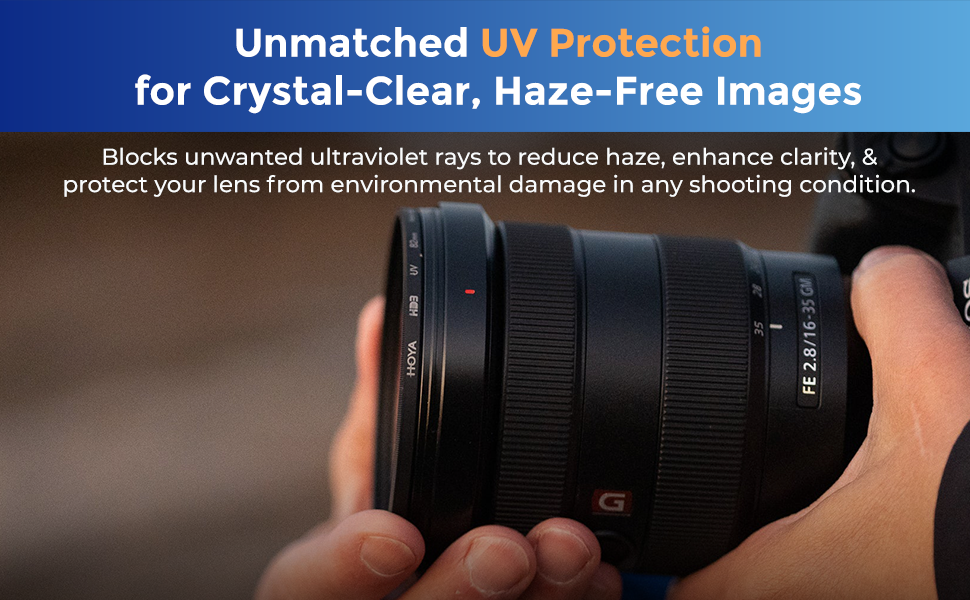
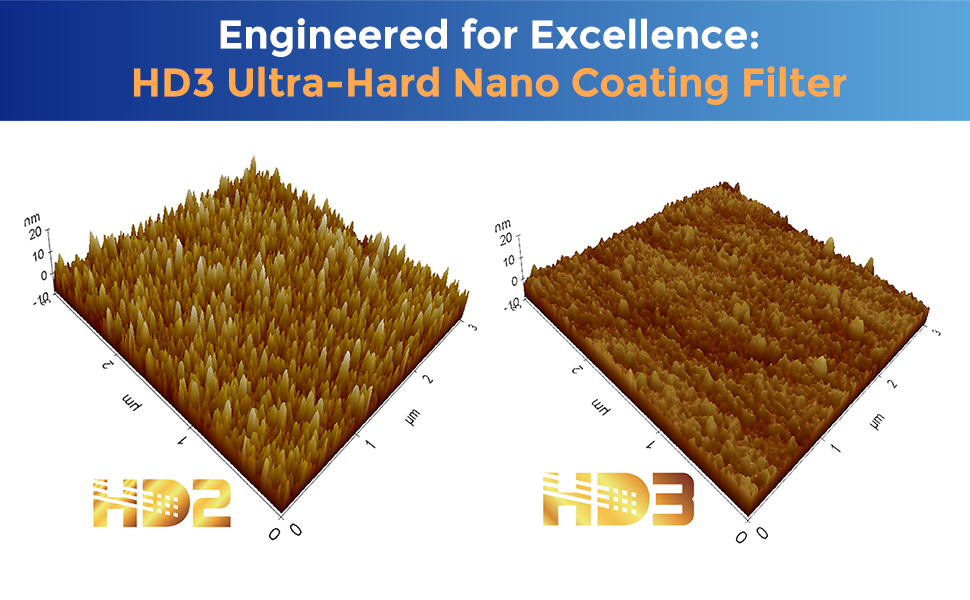
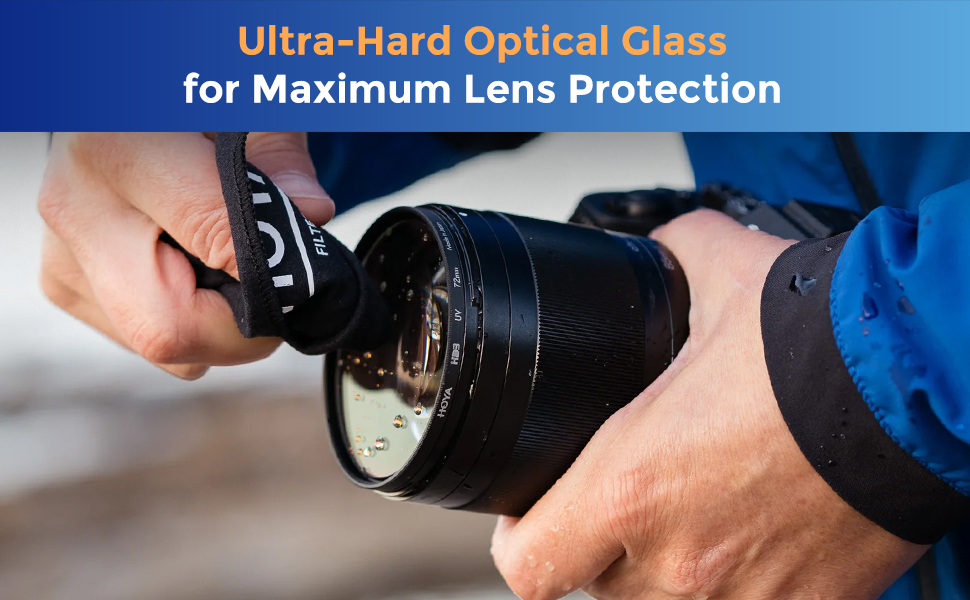
The Hoya HD3 49mm UV Protector Filter features ultra-hard 4x tougher optical glass with patented 32-layer nano coating, offering superior scratch, stain, and water resistance. Re-certified for 100MP+ cameras, it ensures zero loss in image resolution while providing unmatched UV protection. Its lightweight aluminum frame delivers durability and sleekness, making it the ultimate lens safeguard trusted by professional photographers since 1941.







| ASIN | B01435C3PC |
| Best Sellers Rank | #48 in Camera Lens Sky & UV Filters |
| Customer Reviews | 4.5 4.5 out of 5 stars (308) |
| Date First Available | August 18, 2015 |
| Is Discontinued By Manufacturer | No |
| Item Weight | 0.16 ounces |
| Item model number | XHD3-49UV |
| Manufacturer | Hoya |
| Product Dimensions | 0.5 x 3 x 3 inches |
R**R
Costs More But Hoya HD3's Are Worth It
After reading Ken Rockwell's review of the Nikon Zf mirrorless camera and his recommendation to also purchase a Hoya HD3 Professional UV Lens Filter, I purchased both. The Hoya HD3 is a sturdy, well-made lens filter that provides extra protection against finger prints, smudges, moisture and minor scratches. It also seems to stay cleaner than my other lens filters. As a result I've purchased Hoya HD3's for all of the new "Z" lenses that I've bought for my new Zf camera and I'm pleased with all of them. Hoya HD3's cost more than other filters, but they appear to be definitely worth it... especially for $1,000+ Nikkor and Voigtlander lenses I highly recommend Hoya HD3 lens filter for your valuable - and not so valuable - lenses.
M**B
Does What It Should
High quality glass and threads. Used it on an assignment in Everglades with an 18-135mm zoom. No distortion no vignetting.
G**P
The best in glass and class
Made in Japan. Engineered in Japan. It doesn't get any better than that.
D**T
Claims are true
The earlier HD series from Hoya were remarkable. The HD3 more so. I have not tested impact resistance (not unless someone wants to buy me a sample to try😜) but I've have enough experience with a couple of othe HD filters to confirm they resist scratches, fingerprints and dust to a greater degree than an other I've used. If it were just optics Nikon or B+W are just as good. The fingerprint and dust resistance is hard to accept until you have used one of these for a while - stuff just doesn't stick! Modern digital cameras do not need UV filters so completely clear would do just as well. I use these on lenses that are going to be carried about all day without a lens cap. The goal is to prevent contamination of the front lens element. I'm pretty careful so impact protection is a low risk issue -- dust and grime is a bigger concern for me. These filters are not cheap so you want to make a mental evaluation that tractors in the cost of the lens being protected against the cost of the protective filter and the risk of damage.
S**S
Staticky - but a great filter nonetheless
I've taken several "lab" photos with my Nikon D850 and zoomed in on photographed microtext with and without the Hoya HD3 filter. I cant tell a difference. No optical degradation that I could detect zoomed 800% on a 45Mpixel image. Exactly what you want for lens protection! Per the coatings...I dunno. I have several less expensive filters and they never seem to be a static magnet like these are. So while they may harden the glass and provide excellent optical results, they do tend to attract dust more than any other filter I've tried. Is that a deal breaker? No - I have since purchased several more of them. Highly recommended!
K**T
Dust/ Fiber Magnet
From the second I opened the package to put on my camera lens, it seemed to attract dust. I thought for the price, seeing a review about the dust must not have been so accurate. But I find myself not using my expensive lens as much on my camera solely because of this protector filter. No matter how much I clean it with new lens cloths, lens wipes, air, brushes, it just gets more covered in fibers and dust. Had I known I would have just bought one for a fraction of the price. Extremely disappointed that I got a more expensive “higher quality” protector and has just given me more frustration than without it.
J**T
Hoya Professional UV Filter 52 mm vs. B+W Master UV Haze MRC Nano 010M 52 mm
I plan to use two filters at the front end of my Canon binoculars. The Canon optics filter an unspecified amount of UV, but since they concentrate whatever comes into the front lens I take a belt-and-suspenders approach. The two filters I tested are listed in the headline. Both filters are double-threaded and neither noticably blocks visible light. Using a UV meter, I first took a reading of a bright part of the sky, which comes in at 2190 micro-Watt / cm^2. Next I place the filter over the meter, trying to keep it steady. I did this three times for each filter. The Hoya is a bit more expensive, but it blocks 12x as much UV as the B+W filter (55 vs. 660 micro-W/cm^2). So for my purpose the Hoya filter seems much preferable.
C**G
Great protection , wishing it was slimmer
Wish it’s thinner rim but it’s decent.
M**R
Perfect. Expensive but brilliant.
B**D
Product as described. Arrived quickly. Thanks.
D**O
Hoya 62mm HD3 UV Filter. I bought this to protect my new lens, most of my lenses have a filter on them. I always buy good quality filters. They are a little expensive, so, I look on the bright side, if I got my lens scratched, it would cost me a lot more than the price of a good quality filter.
W**G
Good.
B**R
Very protective and means it is safe to stop putting cap on and off camera all the time as that slows you down and you can mislay or lose your cap when out and about; though still use cap for storage.
Trustpilot
1 month ago
5 days ago