We remain fully operational. Our teams are working around the clock to ensure your deliveries continue safely.

DOWNLOAD THE APP


Customer Services
Copyright © 2025 Desertcart Holdings Limited
DOWNLOAD THE APP


🚀 Elevate your workspace with lightning-fast, future-proof WiFi 7 connectivity!
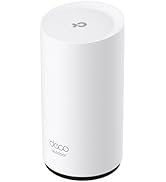
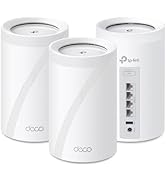
The TP-Link Omada BE11000 is a cutting-edge WiFi 7 tri-band access point delivering up to 5.0 Gbps speeds and equipped with a 10G port for future internet upgrades. It integrates seamlessly with the free Omada cloud platform for centralized remote management, AI optimization, and zero-touch provisioning. Designed for business environments, it supports over 250 concurrent clients with features like seamless roaming, mesh networking, and advanced security. Flexible power options and a 5-year warranty make it a reliable, scalable solution for professional-grade wireless networking.











| ASIN | B0CTL1Y9YR |
| Best Sellers Rank | #37 in Computer Networking Wireless Access Points |
| Brand | TP-Link |
| Color | White |
| Customer Reviews | 4.3 4.3 out of 5 stars (90) |
| Date First Available | February 6, 2024 |
| Item Dimensions LxWxH | 11.2 x 10.2 x 3.6 inches |
| Item Weight | 1.63 pounds |
| Item model number | EAP773 |
| Manufacturer | TP-Link |
| Operating System | RouterOS |
| Product Dimensions | 11.2 x 10.2 x 3.6 inches |
| Series | Omada WiFi 7 Wireless Access Point |
| Wireless Type | 802.11.be, 802.11ac, 802.11ax, 802.11g, 802.11n |
M**K
Excellent Upgrade from my old access point
I had an older TP-Link WiFi 6 device mounted on the ceiling using PoE. After several years (and a nearby lightning strike which also took out the router it was connected to) it failed to power up so I bought the newer model. The BE11000 is a significant improvement. Signal strength is very good, on the 5GHz and 6GHz channels I easily get 1Gbps speeds until I go to the far sides of the house and even there it's usually around 500 to 600Mbps. The 2.4GHz is slower, but all of my IoT devices connect to it and work just fine. I use the standalone web interface to configure it, it works great and is easy to use. I have separate SSIDs for guests and my IoT devices. By the way, I found that the older device, a TP-Link EAP660 HD, works if I plug in the power supply (instead of using PoE), so I now have that in my office area where I don't need to use the PoE.
R**D
Great WiFi 7 Option
The TP-Link Omada WiFi 7 BE11000 Access Point is great. I upgraded from WiFi 5 and the difference is night and day. The speeds are incredibly fast and consistent across all my devices, even when multiple people are streaming or gaming at the same time. Setup through the Omada controller was simple, and integration with the rest of my network was seamless. The build quality feels decent. I’m also impressed with the range one access point easily covers most of my house with strong, stable signal. Highly recommend for anyone who wants top tier speed and reliability.
M**T
It is literally 3x as fast as our current APs
I bought one of these to try out, we have APs that have just been so-so in my opinion in some ways especially for how expensive they are (the WiFi 6 5Ghz band doesn't even have the option for 160Mhz channels on our current ones...really?). For a fraction of the cost the speed is literally 3x as fast as our current APs (see file transfer screenshot). It seems the range is better and there are some options the current ones don't have. These also have 10GB uplinks which is far superior to the 1GB uplinks of the current ones, it makes a big difference and there is a POE injector on Amazon that is capable of 10GB throughput. For some reason I could not get into the AP over web browser, I ended up using the phone app, and be aware you are VERY limited on what you can do with config through the app. You can cover all the basic stuff if that is all you need, but there is a lot you are missing out on. I ended up installing the Omada Windows software, and was still sort of surprised that it will run the APs with no additional hardware or cost if you don't need anything super advanced. The Omada software is reasonably good for the most part, especially for it being a free download, and it will cover a lot of what you need in a lot of environments by itself. You do also have the option to have it sync to a TP-Link cloud account, I haven't got that far with it yet. Update: After getting my hands on a Qualcomm WiFi 7 adapter and the Win 11 24H2 update, the performance boost is significant. The same file transfer in the screenshot I posted (the screenshot was still 3x the transfer speed as the previous AP) is now pushing 150-200mbps, this is faster than the same transfer over a cabled 1GB connection. We chose to purchase 3 more of these instead of the current ones we have to expand coverage due to our satisfaction with these APs.
B**E
Easy to install and very fast speeds.
Easy to install and provides very quick WiFi 7 speed. Very good range and value with no dropouts in my house. Would recommend.
M**E
Does not work well with other than Omada
After having this AP for eight months, it is now disconnecting frequently from the switch and router. If you do not have other Omada network equipment, this is not for you.
M**E
Good
During long operation it DOES feel hot, but i haven't noticed any performance issues, so guess it's engineered to work under those conditions. One user who opened it saw there was no fan, so it's passively cooled. I came from a Ubiquiti ecosystem for managing unifi ap. So i wasn't sure what to expect for Omada. But i'm glad to report it worked quite well. I self host the omada controller via docker container on truenas via jailmaker. Works fine on the latest beta. The mobile app is also handy. You can manage this ap a few ways. Stand alone without any sort of controller, basically it's accessed via a webui in browser and also mobile app; Or cloud (which i'm not a fan of); or via controller (either hardware or self hosted software. i recommend the later). Out of these i recommend the controller because you get access fully to all options/features. 2nd recommandation is stand alone mode if you run a single ap and don't want to have any extra hardware running just to manage the ap. I couldn't test the wifi7. But wifi 6e and 6ghz works good. *update Samsung S24 Ultra now properly supports wifi7 6ghz channel band, 320mhz width. So i ran some tests. 5meters in direct line of sight, i got 1200-2000 Mbps @ 10-15meters with 1-2 walls between the ap and client device, it switches to 5ghz channel band. speeds were 300-350 mbps coverage using a single ap should be able to handle a small 2 story home. But if you are expecting 1000-2000 Mbps using wif7 6ghz, 320mhz, then you need - multiple aps to spread them out in different rooms for direct line of sight (maybe change the rssi to a lower setting to account for using multiple aps). set them in Mesh mode. - have a client device that supports 6ghz 320mhz (my Samsung s24 ultra smartphone does) If you want speeds exceeding 2000 Mbps, the EAP-873 might be able to. But if you want something for 1000-2000 Mbps that doesn't cost as much, then EAP-773 is fine as your entry point into wifi7.
D**D
If you have an Omada controller - either a VM/LXC or hardware device, super easy to adopt and get up and running. It is quite large - the size of a large dinner plate. It isn't small and discrete like some of the Aruba and Ubiquti devices that are out there, but other than that, it's been it's been great. If you just want a stand-alone Wifi 7 AP, you're better off going with a more consumer level product. If you want VLANs, and a powerful device that can support lots of devices, frequencies and SSIDs, then you can't go wrong with it. If I hadn't run the wire to my main floor closet but into the ceiling of my main floor, I'd be getting near gigabit speeds with unobstructed line of site.
Trustpilot
2 weeks ago
1 month ago