
DOWNLOAD THE APP


Customer Services
Copyright © 2025 Desertcart Holdings Limited
DOWNLOAD THE APP
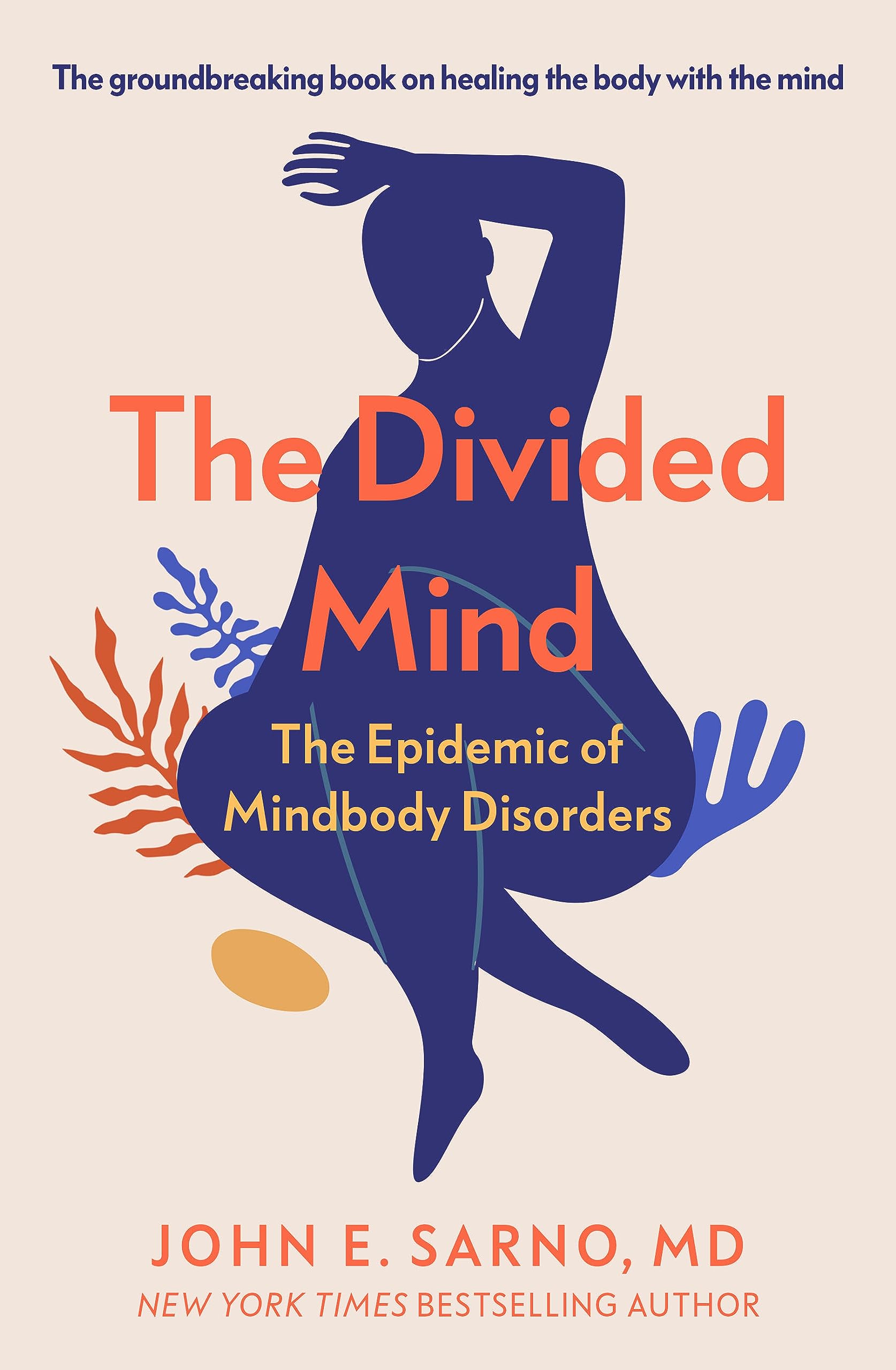
The Divided Mind: The Epidemic of Mindbody Disorders : Sarno, John E.: desertcart.co.uk: Books Review: how you can completely ignore what's in front of your nose - ... some things about life are so obvious it's ridiculous you never realised them before. I had worsening RSI problems for 2 years before reading, studying and 'becoming a follower' of the principles described by Dr. Sarno. I initially read his other book, 'the mindbody prescription' and as an ex-biochemical scientist and lifelong cynic, it took some further research into what Sarno covered in that book before I was convinced what he suggests is valid. This book is much more thorough and interesting to read, even if your knowledge of medical science and pathology doesn't let you believe it. It's an illuminating perspective on the connection between mind and body with contributions from numerous doctors and psychologists that would be a worthwhile read for anyone interested in the mind and the body. Hugely recommended for the empirical research documented therein and illuminating case-studies. I don't bother any more trying to convince other people with mindbody symptoms that they can get better. I just know that now I can use my hands again without pain. :-) Review: the pain epidemic - Please read this book if you suffer from shoulder pain or knee pain or any form of tendonitis. It explains how the mind can create pain in the body (pain which can move around)by starving that area of oxygen and causing pain. It does this as a protective device to stop the person experiencing emotional pain. That is a crude summary but accurate. It gave me the courage to face my own difficult emotions and my physical problems have practically disappeared. Brilliant book.


| Best Sellers Rank | 28,065 in Books ( See Top 100 in Books ) 35 in Health Psychology 192 in Popular Medicine 221 in General Medical Issues Guides |
| Customer reviews | 4.6 4.6 out of 5 stars (1,442) |
| Dimensions | 23.4 x 15.6 x 23.4 cm |
| ISBN-10 | 0715655256 |
| ISBN-13 | 978-0715655252 |
| Item weight | 490 g |
| Language | English |
| Print length | 400 pages |
| Publication date | 18 Jan. 2024 |
| Publisher | Duckworth |
J**P
how you can completely ignore what's in front of your nose
... some things about life are so obvious it's ridiculous you never realised them before. I had worsening RSI problems for 2 years before reading, studying and 'becoming a follower' of the principles described by Dr. Sarno. I initially read his other book, 'the mindbody prescription' and as an ex-biochemical scientist and lifelong cynic, it took some further research into what Sarno covered in that book before I was convinced what he suggests is valid. This book is much more thorough and interesting to read, even if your knowledge of medical science and pathology doesn't let you believe it. It's an illuminating perspective on the connection between mind and body with contributions from numerous doctors and psychologists that would be a worthwhile read for anyone interested in the mind and the body. Hugely recommended for the empirical research documented therein and illuminating case-studies. I don't bother any more trying to convince other people with mindbody symptoms that they can get better. I just know that now I can use my hands again without pain. :-)
L**A
the pain epidemic
Please read this book if you suffer from shoulder pain or knee pain or any form of tendonitis. It explains how the mind can create pain in the body (pain which can move around)by starving that area of oxygen and causing pain. It does this as a protective device to stop the person experiencing emotional pain. That is a crude summary but accurate. It gave me the courage to face my own difficult emotions and my physical problems have practically disappeared. Brilliant book.
C**N
Fascinating concept!
I am a consultant in Occupational Medicine. A large number of the patients I see have subjective health complaints. This means that they have symptoms, but there is no clear underlying pathology to explain these symptoms. Examples include Chronic Fatigue Syndrome, Fibromyalgia Syndrome, and low back pain. Modern medicine uses a scientific approach to try to explain all symptoms, but for vast numbers of patients, this approach simply doesn't provide a reasonable explanation for symptoms. Many patients then feel fobbed off by doctors, who tell them things such as 'there's nothing wrong with you.' Also, there's often the implication that the symptoms are all in the patients' mind. Sarno provides a very interesting way of linking the mind and body, using Freud's theories of psychopathology. The pain is real, and due to oxygen deprivation. But the cause of this change in oxygen supply is the mind. So we have the mind (psyche) producing symptoms in the body (soma), and hence psychosomatic medicine. Since finishing reading this book a couple of weeks ago, I have explained the concept to around 10 patients. What has really surprised me is how readily many of the patients have related to the theory. Now I wait to see if they recover! The approach is not without flaws. Sarno relies on Freud's approach, but then diverges from it. He treats the Freudian approach as fact, when it is only theory. He describes how 5/6ths of the patients he sees are excluded from the treatment, but provides no explanation for this. He also states how much of modern medicine is based on the placebo effect, but fails to recognise that exactly the same effect may explain the results he achieves. And unfortunately the research approach is very weak. (His results are based on a case series, which is about the weakest form of evidence). However, achieving 70% rapid recovery in those who go through the teaching programme is simply spectacular compared to any other interventions I have seen. So I suspect what's needed is much more robust research to confirm his findings. Overall, I am very excited about having read this book. And watching my patients engage with the ideas is really interesting as well. I just hope that my patients see the same rate of recovery as the 1000's of patients Sarno has cared for have seen.
D**N
Brilliant!
Being afflicted with Mental Health issues but no physical pain I didn't think this book was for me. I purchased the book and I was presently surprised. John Sarnos thesis for the book is how the unconscious mind has painful and dangerous emotions which are kept repressed for good reason. The pain is a distraction preventing these emotions from becoming conscious. He also found working with thousands of patients that affective disorders anxiety and depression are also a distractions to the UC emotions from surfacing. The most important emotions that he states are kept repressed are: Rage, Emotional Pain and Sadness. He also states that these emotions can't be accessed and that they permanent residents of the UC. But from personal experience I can say they can explode into consciousness especially under psychotherapy, in particularly, insight based therapy. If you are in therapy, do respect your defenses, and ego strength.
K**R
More evidence for Sarno's analysis
This book is best read after one of the earlier works but the chapters by a range of colleagues all support Dr Sarno's work on "TMS" across a spectrum of medical disciplines. I am more and more convinced that this is a better approach than high tech modern medicine in dealing with chronic conditions including pain syndromes, for which NICE no longer supports the use of opiate medications, as of this year. We are foolish to persist in deluding ourselves that we have the truth in purely biomedical analyses for the modern curses of our population for which society is paying dearly
W**W
Important book about the brain and body connect when it comes to chronic pain and diseases
This is another one of those life changing books that explains in great detail the connection between the brain and body unravelling and explaining the origins of chronic pain and diseases. An important book for anyone who has suffered for a long time or decades with unexplained pain or fibromyalgia or tennis elbow or back pain or pelvic pain etc. Once you understand why there is a reduction in oxygen and blood supply to certain areas of the body and that it is a distraction by your subconscious mind then you can start to take back control of your body and mind (and/or with the help of a therapist and EMDR if need by). Highly recommend.
M**N
brilliant book
John Sarno is a brilliant author and knows his stuff. This is a really interesting book and I feel I have learnt a lot from it. Well worth reading if you are interesting in how the mind works.
J**.
The book gives new insight into reasons of chronic bodily pains the reasons for which largely remains undiagnosed. It explains the trapped emotions, the unconscious mind and it's capabilities to manifest into body aches. Though repetitive, but those who are really keen to explore this territory should must read this. One needs to understand little bit of psychology to get going.
P**W
This was my third book on psychosomatics after I followed the suggestions of other reviewers to first read Dr John Sarno's Healing Back Pain: The Mind-Body Connection (published 1991), which is an excellent introduction to the painful condition known as TMS (tension myositis syndrome). Reading that book dramatically reduced, but did not totally eliminate, my chronic back pain which was, according to an MRI scan, due to a herniated disc. I then followed it up with The Mindbody Workbook (published 1999), by Dr David Schechter, which is a practical manual – a type of psychotherapy in book form, with probing questions to be answered in writing. In the course of working through that book my symptoms gradually disappeared. However after a few months there was a slight re-occurrence of pain, so I bought The Divided Mind. This book is so important, firstly because it shows that Dr Sarno is no longer a lone voice in the wilderness. He wrote the first four chapters, with the remainder by medical colleagues who have also embraced the concept of TMS and other psychosomatic disorders. Their views supplement that of Dr Sarno, clarifying some areas and detailing others not yet covered. Secondly it reflects Dr Sarno's latest thinking. It is also wider in scope, covering various mindbody ailments whereas Healing Back Pain, his major work, was more focused on back pain due to TMS. As with Dr Sarno's other books, this is 'information therapy' – the mere fact of reading it seems to reduce or eliminate the psychosomatically-induced chronic pain of many people. If after a first reading you do not experience a reduction of pain, re-read it, because the information (and there is lots of it) should be allowed to sink in deeply over time until it reaches the subconscious levels of the mind. A quick, superficial reading may not quite do the trick. I am now in my second reading and the pain is totally gone, though I make a point of still reading a few pages daily to ward off any future re-emergence of pain. Yes, it sounds crazy, but it works for me. Dr Sarno deserves a Nobel prize for his pioneering work in the field of mindbody pain. This is such a huge medical breakthrough – I respect conventional Western doctors and their medical training, but they have a big blind spot when it comes to the grey area between body and mind. As a result, many health issues are incorrectly diagnosed, resulting in too many unnecessary, invasive and expensive conventional treatments including surgery, not to mention the myriad of alternative and often bogus treatments available, whereas merely reading a book could have solved the issue. This is why becoming aware of mindbody disorders is essential for everybody. Note that this is not “alternative medicine”; Dr Sarno and his medical co-authors regard mindbody medicine as a valid study field which, for various reasons, has been ignored by most doctors. However, you have to have an open mind and be willing to consider the possibility that the pain, though real and not just a figment of the imagination, is stress-related rather than structural and thus has a psychological base.
I**V
If you have experienced chronic pain, you should absolutely read the books by Dr. Sarno. This is the third book by Dr. John Sarno where he goes deep and wide into what the TMS theory is based on, a large and rich yet forgotten body of research. In the end of the in book one can find the experience of a number of physicians who embraced the TMS theory and significantly improved the health of their patients.
C**E
Hay que tener la mente abierta para leerlo, le da una vuelva muy buena a los problemas psicosomáticos que padece esta sociedad hoy en día, ejemplos y cómo curarlos. Hay que tener la mente muy abierta, sino a operarse y a incharse a pastillas....
V**L
"The Divided Mind" by Dr. John E. Sarno is a groundbreaking book that has completely changed my understanding of health and illness. Dr. Sarno's exploration of psychosomatic disorders is both profound and enlightening, providing a comprehensive look at the interaction between the conscious and unconscious mind. The book skillfully traces the history of psychosomatic medicine and highlights Freud's critical contributions to the field. Dr. Sarno's insights into how repressed emotions contribute to physical symptoms are eye-opening, and his discussion of the mindbody connection is both compelling and accessible. One of the most powerful aspects of this book is the way it empowers readers with knowledge and awareness, which Dr. Sarno suggests has genuine healing power. I found myself experiencing relief from chronic pain simply by understanding the mindbody principles outlined in the book. Overall, "The Divided Mind" is a must-read for anyone interested in the deeper connections between mental and physical health. Dr. Sarno's work is truly transformative and offers hope and healing to those struggling with psychosomatic illnesses.
Trustpilot
2 weeks ago
2 days ago