
🎮 Power up your play and productivity—dock like a pro!
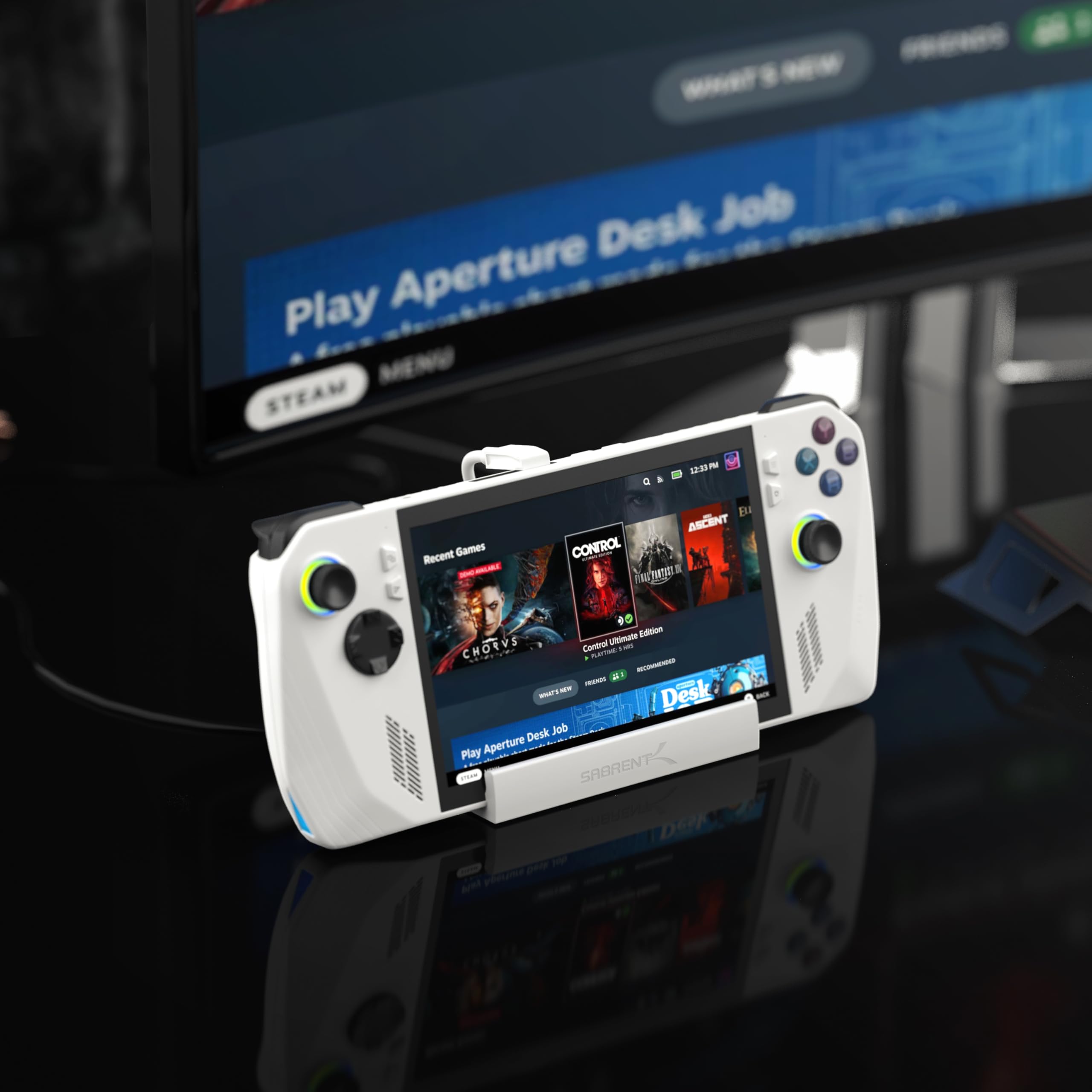
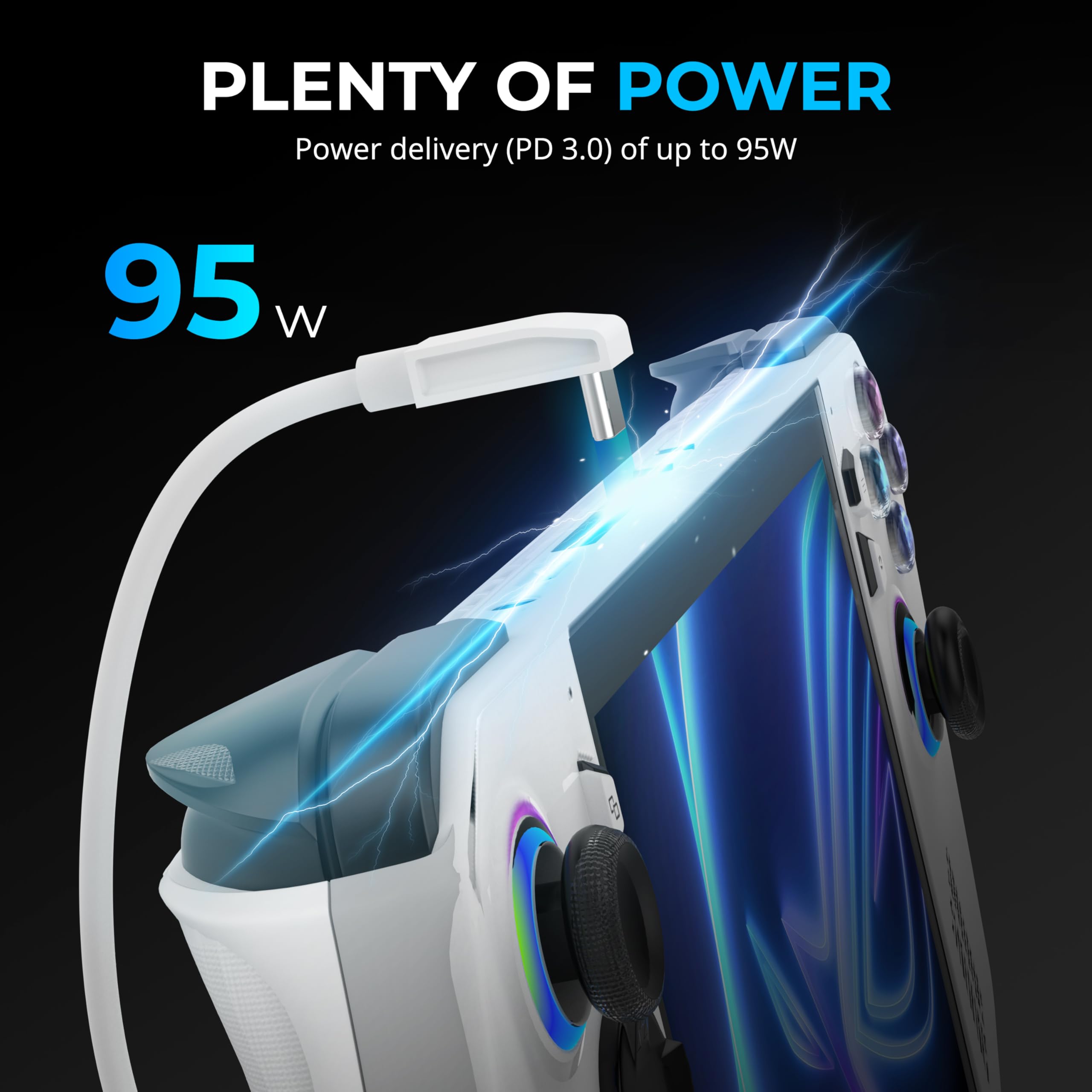
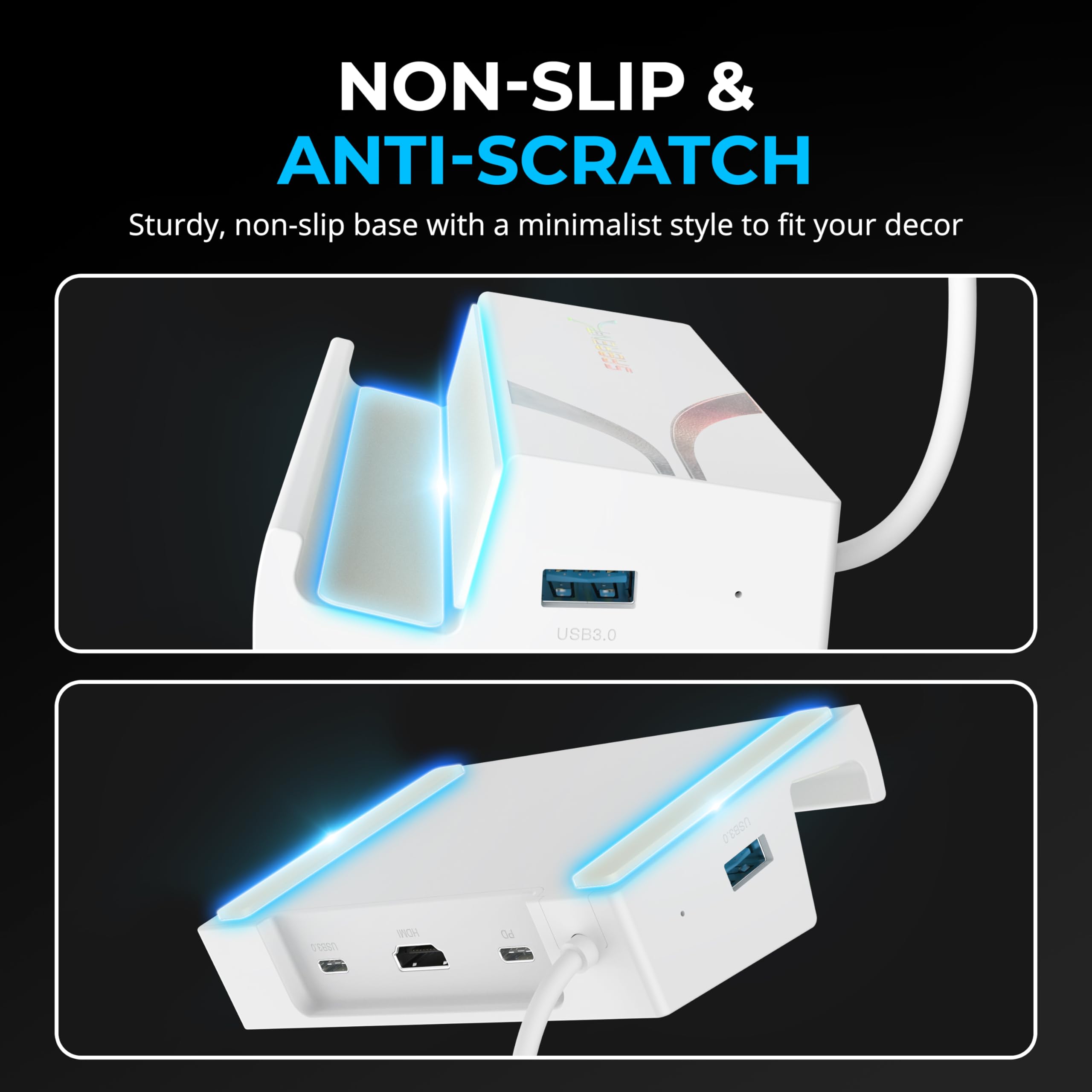
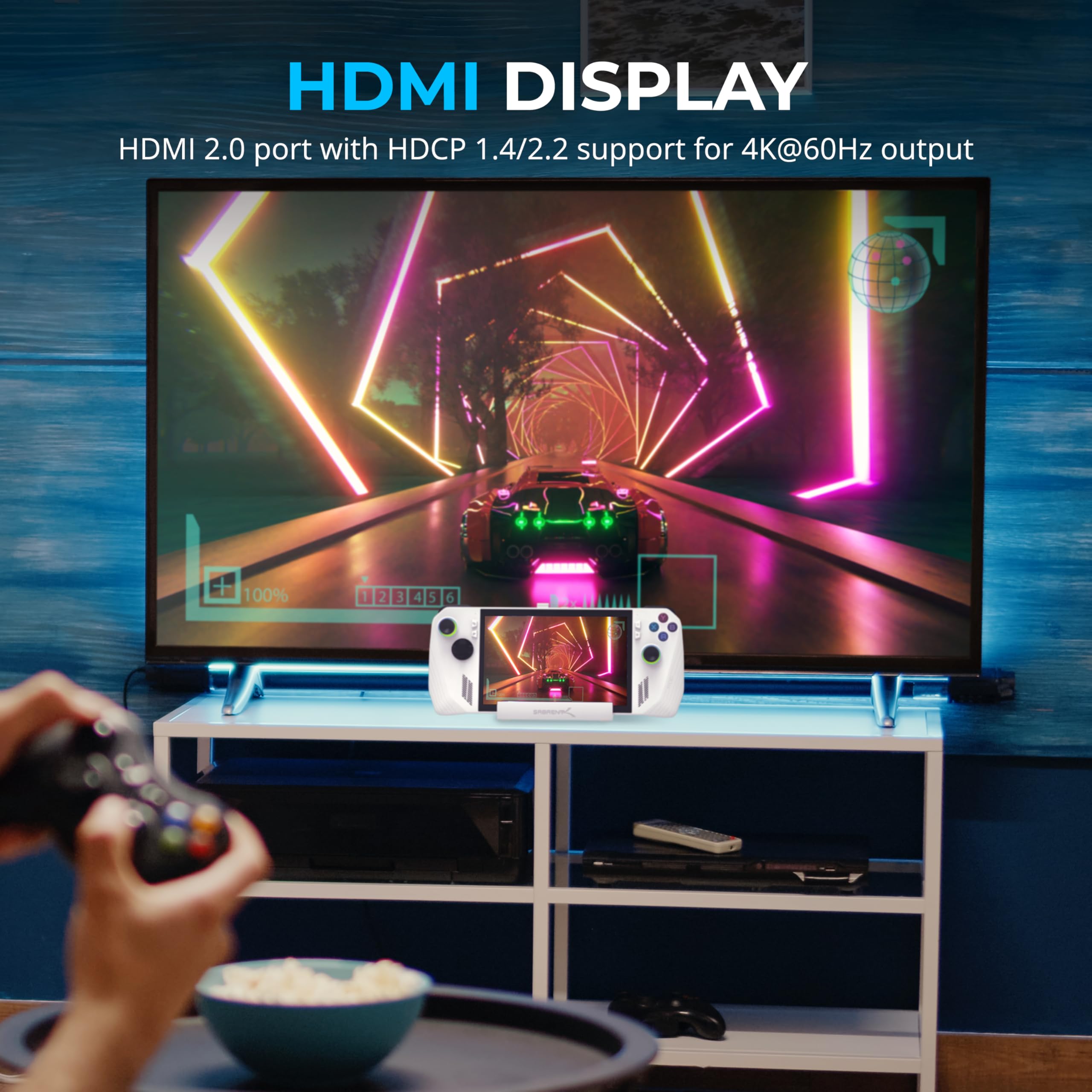
The SABRENT DS-RA6P Docking Station is a compact, high-performance hub designed specifically for the Asus ROG Ally. Featuring 6 USB Type-C and Type-A ports, a 4K@60Hz HDMI output, and robust 95W Power Delivery charging, it seamlessly expands connectivity while maintaining device power and cool operation. Perfect for gamers and professionals seeking a portable, reliable docking solution that elevates both work and play.


| ASIN | B0DPDYFPL7 |
| Best Sellers Rank | #6,812 in Electronics ( See Top 100 in Electronics ) #122 in Laptop Docking Stations |
| Brand | SABRENT |
| Color | White |
| Compatible Devices | Asus ROG Ally |
| Customer Reviews | 4.5 out of 5 stars 5,553 Reviews |
| Hardware Interface | USB Type C |
| Item Dimensions L x W x H | 4.84"L x 3.07"W x 1.17"H |
| Item Height | 1.17 inches |
| Item Weight | 5.28 Ounces |
| Manufacturer | SABRENT |
| Number of Ports | 6 |
| Total Number of HDMI Ports | 1 |
| Total Usb Ports | 5 |
| UPC | 840025267862 |
| Warranty Description | 1 year limited. 2 years with manufacturer registration. |
| Wattage | 95 |
B**B
Great upgrade for the Surface Pro 8
I had read a lot of horror stories about upgrading the M.2 NVMe drive on the Surface Pro 8 (SP8). There were a lot of stories about overheating and BSOD when trying to re-install Windows. When I saw this Sabrent drive advertised on Amazon it specifically said Surface Pro compatible and that it ran cool, so I took a chance on it. I am very pleased with the result. I'll do the TL;DR part up front: I upgraded my 256GB M.2 Drive on my Surface Pro 8 with the 1 TB Sabrent Rocket 2230 NVMe M.2 drive, and the drive runs great at PCIe 4.0 Speeds according to CrystalMark 8. No BSOD and runs under 50 Celsius *EDIT*: Under maximum load, about 35 degrees celcius degrees idle/normal operations *END EDIT* according to CrystalDiskInfo 8. I was able to copy all of my files using Acronis partitioning software you get to use free from Sabrent when you purchase their drive. If you want to know exactly how I copied everything over without ever having to go into the BIOS, keep reading: UPFRONT DISCLAIMER: You will need to purchase three things to do this upgrade if you don't have them already. Two of them you would need anyway if you were to upgrade like Microsoft suggests: #4 Torx screwdriver/bit, thermal compound, and an external NVMe drive enclosure. 1) First I did purchase an external NVMe enclosure to copy the old drive to the new one. You can find them on Amazon for under $30 US. You need to make sure the enclosure can take 2230 size drives. I got one that had USB C to USB C cable and was thunderbolt compatible. Another consideration is that after you swap the NVMe drives you can use the enclosure with your old drive and have another high speed hard drive to back stuff up on, although I found you will need an NVMe thermal pad/heatsink for the old drive or it can overheat. 2) After reading about BSOD NVMe upgrade horror stories on the SP8 it lead me to articles talking about AHCI Link Power Management - HIPM/DIPM. HIPM/DIPM power management is not on by default and you actually have to do a Windows registry edit to make it available. There are some good guides on how to do this via a quick google search. I recommend you enable it and turn the feature on. 3) I had to disable drive encryption before copying files over (it is on by default). You can either disable encryption or get a USB encryption key. I chose to decrypt the drive which will take hours depending on how much data you have on the drive. You can re-encrypt once everything is over to the new drive. THIS NEXT PART IS WHERE MOVING FILES OVER AND GETTING WINDOWS SETEP ON THE NEW DRIVE DIFFERS FROM WHAT MICROSOFT WANTS YOU TO DO. 4) I cannot stress enough the kudos to Sabrent for having their own disk partition software. Acronis, which you can get from Sabrent's website, will copy all of your files over for you verbatim; no reinstalling necessary. Follow the disk cloning prompts, and the best part is it will automatically increase the size of your main windows drive to maximum while keeping your boot partition and recovery partition intact (just make sure you chose the correct cloning prompt). Acronis alone makes it worth it to go with Sabrent. 5) The SP8 comes with a front and back metal sleave for the NVMe drive. YOU WILL NEED a #4 Torx screwdriver bit (very tiny!) to unscrew the drive and screw it back in. The metal casing snaps off (do so gently so as not to bend the casing). I cleaned off the thermal compound the old drive had, put in the Sabrent drive, re-applied some CPU thermal compound I already had, and put the casing back together, then screwed it back into the SP8. A lot of videos show using a thermal pad instead of re-using the Microsoft drive enclosure. I think the drive enclosure helps distribute heat evenly back into the SP8 chassis. I turned the SP8 on and it recognized me with all of my files intact without ever having to go into the BIOS the first time. I have been running normally for almost two weeks and not a single issue. Drive runs cool and fast. Works great and couldn't be happier. I hope this helps you out if you are on the fence!
N**N
It was Easily Usable and Okay.
The ROG ALLY Dock Was Actually a good product to buy, It may not fit for ROG Ally X But It does for the original, it was worth buying the only down side is you must hope you have a tv built for HDMI Gaming or it will lag a bit, Nothing has broke or anything it doesn't overheat the ally or itself, its easily connectable and compatible Its very small and easily portable if you plan on travelling with it just get an rog ally case and charger and mouse and keyboard and just put it in a book bag or something, The Heat level is okay just not much overheating the ROG Ally did feel like the same exact heat level as before it got put onto the dock, it was worth the money to buy over any other dock.
I**R
If upgrading a Surface Pro 8, you need to read this
PCIe Gen 4 drives do have a compatibility issue with Surface Pro 8 and possibly 9 too were it randomly reboots and is very unstable. This drive does work without any issues if you make the following changes before cloning existing drive to it. I get double the speed from my stock drive at 4600MB/s read speeds and battery last around 6 hours (same as my stock) at 120Hz refresh, 50% brightness and using the keyboard at lowest backlight setting and just browsing the web over Wifi 6. Drive temperatures stayed at 41C or below at high load. This is what you need to do before cloning. Step #4 is necessary for stable upgrade without random reboots. 1.) Update Windows 11 to 22H2 2.) Download the latest firmware updates for Surface Pro 8, there are some recent ones. Launch the surface app and verify that you have the latest. These are my versions. SAM: 11.101.139.0 UEFI: 18.102.141.0 3.) Turn off bitlocker so the drive is decrypted, you can turn bitlocker again after you replace the drive. 4.) In control panel, search for an applet called Power Options, it's under the advance power settings when you try to edit the Power plan. Under PCI Express, change PCI Express -> Link Power State Management to Moderate Power Savings, default is maximum power savings, this was what was causing random reboots for me. This is the only change that is needed from the default factory image that ships with Surface Pro 8. 5.) Clone to Sabrent drive using an external USB C enclosure that can house a 2230 ssd (there are several sold here). You can use their free Acronis tool from Sabrent's website. I personally used Macrium Reflect free version to clone as it kept the partitions the same as before, Acronis does merge the partition's which causes issues when trying to do a factory reset or recovery as partition will not be found. 6.) Swap the drives. I did not re-use the metal surface pro ssd enclosure, I instead added .5mm thermal pad directly to the top of the Sabrent Drive, it fits nicely. With 1mm thermal pad, the magnetic door did not close, so .5mm is only choice. Max temperature at high load was 41c. 7.) Boot to your new drive, test to make sure its stable, you can re-enable bitlocker to encrypt drive again. There is an optional setting you can set before or after the clone, which may give you better battery life. There is a hidden power setting in Power Options under Hard disk called AHCI Link Power Management - HIPM/DIPM By default it's already set to HIPM (Host Initiated Power Management), you can set this setting to Lowest for battery to give you deeper sleep states if supported, the drive still wakes up fast regardless of the power state. To enable this setting in Power Options you can add this to the registry. Create a text file in notepad that ends in .reg extension, example "Add_AHCI_Power_Setting.reg" without quotes. Copy and paste registry setting below (line starts with [HKEY....) into the file and save it, double click the file in file explorer to add this setting into your registry (when prompted, click yes). This option will now show up in Power Options under Hard disk. For battery, set to Lowest, for Plugged In, you can set to Active (There is no power management with this option), for faster performance. [HKEY_LOCAL_MACHINE\SYSTEM\CurrentControlSet\Control\Power\PowerSettings\0012ee47-9041-4b5d-9b77-535fba8b1442\0b2d69d7-a2a1-449c-9680-f91c70521c60] "Attributes"=dword:00000002
S**R
Installed into Steam Deck with no headaches
I'm happy with this drive. It came well presented in a copper package and felt like a quality product. I used this to replace the SSD that came with my Steam Deck for more space. Aside from having to open up the Deck, which isn't difficult, this went right in without any fuss. I then used a bootable Linux with Gparted and the dd command to clone the old drive to the new one using a NVME dock. Then, the deck booted right up. I was happy to get the extra SSD space, and it is a little faster than the old one, though I don't really notice in games, as in most even the SD cards it's hard to really notice. As this is a 2230 form factor drive, it is a bit more expensive than 2280 drives as it has to use larger and more expensive flash modules rather than many smaller ones. Still, I felt the value was good.
B**S
2 years later and still flawless
I’ve been using this mini NVMe drive in my Steam Deck for about two years now with zero complaints. It was super easy to install, instantly recognized, and more than doubled my storage space. Load times are fast, performance has stayed consistent, and it’s handled all my games without a hiccup. Definitely one of the best upgrades I’ve made for the Deck.
J**S
Look inside your device before you order the drive.
Even though I received this drive a while ago, it was just this weekend that I was able to install it because it needed an extension for the mounting. So, make sure you look inside your device before you order the drive. So far, it works great. It's faster, even though the replaced drive was a SSD.
K**O
Best non-thunderbolt dock for SD
I used this dock off and on for the last 6 months, with extensive use for a month while I was traveling with my Steamdeck. This Sabrent dock is one of very few docks with 3 full-speed USB-A ports. I specifically needed all 3 because I wanted to use it with all the 2.4GHz wireless peripherals I use on my desktop, namely my ASUS keyboard, Logitech mouse, and EPOS headset, with low-profile USB-A dongles. In addition I used a portable HDMI monitor. They all worked perfectly in tandem, it was like I was using my desktop PC while I was traveling. The USB-C data port was a welcome bonus, which I used for an external drive in desktop mode. I tried the 3 USB-A 3.2 port JSAUX port before this that I thought met my needs. However, when under load the dock got too warm and distorted the wireless signal of my 2.4GHz dongles, resulting in skipped audio from the headphones, missed keystrokes from the keyboard *and* mouse skips, all at the same time, making it pretty unusable. No other dock had as many ports, and *definitely* not at this price point. Only ways this dock could have been more perfect: - A cable design for the main USB-C connection that was easier to tuck/remove/pack into a rectangle without straining the cable elbow - More visible labeling of the PD/USB-C ports, it's easy to get them mixed up if you don't use the dock daily, and annoying trying to shine a light on them to read the labels in black. - The ultimate thing I looked for in docks and failed: A full featured USB-C pass through port instead of just a data port, so I could connect it to a USB-C monitor (like the Steamdeck's own port allows) with charging. This would cut down the types of cables I need to bring when I travelled by 1 (the min-HDMI cable for my monitor which also supports USB-C). Apparently this is only available on thunderbolt docks.
J**.
Not for ALL Surface Pro 8s; even with described tweaks mine won't sleep
I bought this very excited to finally upgrade my Surface Pro 8 to 1tb. I had read all of the reports of issues with the Surface Pro 8 but I was under the impression that as long as you made the tweaks as described, you would be fine. Sadly, for my specific SP8, that is not the case and when I did some more digging online it appears others seem to have issues where some Surface Pro 8 units just refuse to peacefully coexist with this drive. I made the tweaks to Windows, copied over the contents of my current SSD using Macrium Reflect, installed the new drive, and was blown away by how incredibly fast this drive is! It made my Surface FLY like a brand new machine. It was an absolute joy to use, and I had no issues with blue screens or reboots *while using the computer* on either AC or battery. It just flew and I was thrilled. I did notice my battery seemed to be dropping a little faster than usual, and it seemed to warm up the SP8 (although temps reported by the drive were fine, in the 40-50C range). I was going to keep an eye on it, until I discovered a bigger problem... Sadly, the one problem I was unable to solve, was the fact my Surface refused to fully go to sleep, or hibernate, with the Sabrent drive in. Every time I either pushed the power button, or closed the lid, the SP8 would go to sleep, for about 5-10 minutes. Then out of nowhere I'd hear it wake up and reboot itself, without any interaction on my part. The fans would go full blast, and the computer didn't go back to sleep-- so if it was in a bag, it just got hotter and hotter and kept running. And it was a full reboot, so any programs/documents/etc I left up when I put the machine to sleep were gone. I tried every possible combination of the recommended registry tweaks and a few others, and this behavior persisted. I also wiped the drive and reinstalled Windows from scratch (using the Surface Recovery Image, and then letting it fully update back to Windows 11 22H2+latest updates) and had the same problem, so I know it wasn't just an issue with my current Windows installation. If you use your SP8 in a different way, or ALWAYS have it plugged in, and/or ALWAYS do a full shutdown when you're done, you're probably safe. But I need the ability to just put it to sleep and have it reliably wake up where I left it, and sadly I can't do that with this drive. I really, really hope Sabrent and/or Microsoft can get a firmware update or something that can resolve this issue, but for me it was a deal breaker, and I had to take the drive out and put my original, slow, boring OEM drive back. For reference, my SP8 was an early model, bought in late November 2021, so perhaps SP8s built later have a better experience. It sounds fine for SP9s. It's a great drive, it's incredibly fast, but just make sure you're either using a *fully compatible* PC (which definitely doesn't include every Surface Pro 8) or you're ready for the possibility of going a bit nuts troubleshooting. My biggest problem now is now that I've seen how much faster it made my SP8 I'm desperate to find a way to somehow get that level of performance back!!
Trustpilot
5 days ago
1 month ago