We remain fully operational. Our teams are working around the clock to ensure your deliveries continue safely.

DOWNLOAD THE APP


Customer Services
Copyright © 2025 Desertcart Holdings Limited
DOWNLOAD THE APP

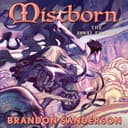
desertcart.com: The Final Empire: Mistborn Book 1 (Audible Audio Edition): Brandon Sanderson, Michael Kramer, Macmillan Audio: Audible Books & Originals Review: “Plots behind plots, plans behind plans. There was always another secret.” - This is a very hyped book and because of that, and of how much I loved Elantris, I was afraid of feeling disappointed. Against most opinions, I still think Elantris is a better book. However, I did enjoy this one very much. “Plots behind plots, plans behind plans. There was always another secret.” Brandon Sanderson created a very interesting world and I was particularly impressed with the magic system. Allomancy and Feruchemy felt very original and will probably stay as one of my favourite magic systems. His writing style is simple but engaging and creates a story that is coherent and feels complete. Mistborn trilogy was written straight through, and it notices. It's refreshing to start reading a fantasy trilogy where you can tell the story has been thought through and will remain consistent. What I loved about the book: - The characters. This book has a lot of strong and interesting characters and I loved all of them. I enjoyed the banter between the group, especially Breeze and Ham but my favourite characters, so far, are Sazed and Marsh and I can’t wait to learn more about them. - I think it is something quite special to have characters whose magic is focused on preserving knowledge to teach future generations. - I liked to read the epigraphs and see its parallelism with bits of the story - How the story slowly builds to reach its climax in the last part. I said it on Elantris and it still applies to this case. I’m very impressed how Sanderson is able to make so many things happen in the story and still tie those ends, completing the book with no cliff-hangers. Mistborn is indeed a trilogy, but you can easily read The Final Empire as a standalone and not commit to the series if you find it is not for you. What I think it could have been done better: - Vin and Elend's connection does not feel very profound/ strong / believable. I hope it develops further in the next book. - Sanderson could have included more female characters in the central group of characters. However, he did include strong female characters in the story and I don’t think it is really fair to complaint on this issue when so many writers still don’t do it. - To some, this book might feel too slow paced as the action is condensed in the end of the book. Not to me however, I do love Sanderlanches. Overall 4.5 stars rounded up to 5. Review: A Brilliant Blend of Rebellion, Magic, and Heart - Brandon Sanderson’s Mistborn is one of those rare fantasy novels that delivers everything. An intricate world, an inventive magic system, and characters you actually care about. The story takes place in the Final Empire, a land ruled by the immortal Lord Ruler, whose thousand-year reign has crushed hope out of the people known as the skaa. When a charismatic thief named Kelsier decides to challenge the impossible, he recruits a crew of rogues and a young girl named Vin, who discovers she has powers that may change everything. What follows is a masterclass in storytelling. Sanderson balances action, world-building, and character development with precision. The unique Allomancy system, where users burn metals to gain specific powers, feels both logical and exhilarating, turning every fight scene into a carefully crafted dance of strategy. But what truly makes Mistborn shine is its heart. Vin’s transformation from mistrustful street thief to confident leader is compelling, and Kelsier’s charisma makes him impossible to ignore. The supporting cast adds humour and humanity, ensuring that even amid rebellion and despair, there’s warmth and camaraderie. Sanderson’s writing is purposeful; every chapter builds the world organically without overwhelming the reader. And when the twists come (and they do), they land with the force of revelation rather than shock for shock’s sake. If you’re a fan of richly imagined fantasy with emotional stakes, intelligent plotting, and a magic system unlike anything else, Mistborn deserves a place on your shelf. ⭐️⭐️⭐️⭐️⭐️ (4.5/5)
S**A
“Plots behind plots, plans behind plans. There was always another secret.”
This is a very hyped book and because of that, and of how much I loved Elantris, I was afraid of feeling disappointed. Against most opinions, I still think Elantris is a better book. However, I did enjoy this one very much. “Plots behind plots, plans behind plans. There was always another secret.” Brandon Sanderson created a very interesting world and I was particularly impressed with the magic system. Allomancy and Feruchemy felt very original and will probably stay as one of my favourite magic systems. His writing style is simple but engaging and creates a story that is coherent and feels complete. Mistborn trilogy was written straight through, and it notices. It's refreshing to start reading a fantasy trilogy where you can tell the story has been thought through and will remain consistent. What I loved about the book: - The characters. This book has a lot of strong and interesting characters and I loved all of them. I enjoyed the banter between the group, especially Breeze and Ham but my favourite characters, so far, are Sazed and Marsh and I can’t wait to learn more about them. - I think it is something quite special to have characters whose magic is focused on preserving knowledge to teach future generations. - I liked to read the epigraphs and see its parallelism with bits of the story - How the story slowly builds to reach its climax in the last part. I said it on Elantris and it still applies to this case. I’m very impressed how Sanderson is able to make so many things happen in the story and still tie those ends, completing the book with no cliff-hangers. Mistborn is indeed a trilogy, but you can easily read The Final Empire as a standalone and not commit to the series if you find it is not for you. What I think it could have been done better: - Vin and Elend's connection does not feel very profound/ strong / believable. I hope it develops further in the next book. - Sanderson could have included more female characters in the central group of characters. However, he did include strong female characters in the story and I don’t think it is really fair to complaint on this issue when so many writers still don’t do it. - To some, this book might feel too slow paced as the action is condensed in the end of the book. Not to me however, I do love Sanderlanches. Overall 4.5 stars rounded up to 5.
T**I
A Brilliant Blend of Rebellion, Magic, and Heart
Brandon Sanderson’s Mistborn is one of those rare fantasy novels that delivers everything. An intricate world, an inventive magic system, and characters you actually care about. The story takes place in the Final Empire, a land ruled by the immortal Lord Ruler, whose thousand-year reign has crushed hope out of the people known as the skaa. When a charismatic thief named Kelsier decides to challenge the impossible, he recruits a crew of rogues and a young girl named Vin, who discovers she has powers that may change everything. What follows is a masterclass in storytelling. Sanderson balances action, world-building, and character development with precision. The unique Allomancy system, where users burn metals to gain specific powers, feels both logical and exhilarating, turning every fight scene into a carefully crafted dance of strategy. But what truly makes Mistborn shine is its heart. Vin’s transformation from mistrustful street thief to confident leader is compelling, and Kelsier’s charisma makes him impossible to ignore. The supporting cast adds humour and humanity, ensuring that even amid rebellion and despair, there’s warmth and camaraderie. Sanderson’s writing is purposeful; every chapter builds the world organically without overwhelming the reader. And when the twists come (and they do), they land with the force of revelation rather than shock for shock’s sake. If you’re a fan of richly imagined fantasy with emotional stakes, intelligent plotting, and a magic system unlike anything else, Mistborn deserves a place on your shelf. ⭐️⭐️⭐️⭐️⭐️ (4.5/5)
B**F
Born Creative...
Mistborn is a rare find. In today's slim pickings among fantasy authors, you are seldom given the kind of story which is truly a feast for the imagination such as the words penned by Brandon Sanderson in The Final Empire. This is a unique book in many ways, and by hearing some of the descriptions of it, you might just get an unfair impression of it. I think you should give it a chance, even if you are concerned you might not like it, just because it is such a memorable read. The best thing about this book is simply the story. This book is really just about the main plot, and this main plot is as interesting as any I have read in a long time. So many books try to focus on character driven plots, or subplots, or multiple threads, and usually the main plot suffers as a result. Not so in this case. This is a simple straight forward plot to follow from beginning to end. It is not without pseudo "flashbacks," loose ends, or plenty of exposition, but it is direct and comes to its own conclusion between the covers. The second thing that impressed me with this book is the magic systemS (plural). While the powers described in this book are quite reminiscent of the powers of a good jedi, the means to that end are quite unique. Not only that, but there are two systems in this book which are in some ways related, but in other ways totally unique. Really, Allomancy and Feruchemistry are some of the most interesting and fresh ideas in magic I have ever read about, and I wont spoil your enjoyment of the book with more description than that. The books suffers some equally unique problems, which I feel are somewhat unique to this author and his style of writing. Some of his dialogue in this books is quite expositional, but there are many passages of instruction, and debriefing which are necessarily thus. This gives the reader the feeling of attending a rather unique lecture at times, rather than reading a book. A favorite of this author is the perspective change. While he spends most of his time in the perspective of one of the two main characters, he abruptly switches a few times, and this feels a little jarring. Also, his writing doesn't really feel like it is from a personal perspective at all, but more of a casual observer. Also, Brandon never jumps to secondary characters for perspective, which would have made the whole experience more interesting. The book does begin with the perspective of a minor nobleman, but thinks better of including other perspectives in the rest of the book, which I feel is mistake, and makes the other characters seem that much more flat. The characters themselves are hardly unique, and might be considered "stock" characters from the fantasy vaults. Their histories give them their unique colorations, but the characters themselves alone and apart from this book would hardly be memorable. It is this marvelous setting and the opportunities it provides which, in turns, lends the characters some opportunities to gain some charisma. I've heard of character driven plots, but I feel this is more plot-driven characters, which really, in all honesty, has some very good merit. The most disturbing thing about this Kindle read is the rather large number of type-o's, including things like periods for commas. Clearly, editing was not a high priority for the publisher, and the quality of the print suffers for it. I really had hard time reading bits of it where words were misspelled or punctuation was absent or incorrect. I only mention this because the word may have had one incorrect letter, and the word was changed to an entirely different word, such as word vs. ward, or cord vs. card, that sort of thing. Overall, I would highly recommend this book, having given my earlier caveats regarding the writing style and the typing errors. I know that this book is worth enjoying despite a few minor obstacles.
D**D
Unique magic system, compelling characters and a twist on tropes - perfect for Fantasy fans.
My favorite entry in both Brandon Sanderson's Mistborn series and his broader Cosmere universe. Mistborn follows an eclectic cast of thieves, revolutionaries, and nobles whose fates the reader will quickly become invested in. Without revealing who they are or what happens, Kelsier, Vin, and Sazed are legendary figures whose struggles against the oppressive Lord Ruler continue to have consequences far beyond their own ash-covered dystopian world of Scadrial. Well-written by Sanderson, with a complete plot that can stand on its own (or draw readers into the sequels and his massive Cosmere universe) and featuring one of Sanderson's unique and cool magic systems, Mistborn is a must-read for any Fantasy fan.
S**G
A philosophical and engaging fantasy trilogy
Mistborn is a trilogy by Brandon Sanderson, and I really enjoyed it. There are several compelling protagonists in each book, plenty of philosophical questions, and an interesting world. The setting is a broken world. Ash rains from the sky, mists shroud the world at night, and a tyrant of a thousand years subjugates some people and controls others. Throw in a group of rebels who can burn metals to use magical powers, and we have our premise! One of the initial problems that I had with the book was that it loaded on the worldbuilding very quickly. In some books, things are fairly similar to the world we live in, and even then there's a detailed (but interesting) description of what makes the world special. In Mistborn, the reader is dropped in to the middle of everything. As such, I felt lost for the first few chapters since I didn't know what parts of the world were broken and what was just a fluke (was the ash just falling from the sky that day? What does it mean to burn a metal?), and I felt overwhelmed when I was learning about the magic (Sanderson talks about all of the magic in a short period of time). However, after the first few chapters, everything is fairly smooth. There is still more world building (special powers, special metals, different types of magic users and magic, why that magic comes, new cataclysms, new societies), but it is paced well since most of the characters are learning about these things over time as well. What makes the book, though, is not the world, but the characters. Each of the characters is passionate, but they're all passionate in different ways. Several characters want to liberate the proletariat in a bloody revolution that kills as many bourgeoisie as possible, but several people want a peaceful revolution. One character champions trust, whereas another is an untrusting recluse. One character is prone to philosophical musings, and another is a religious scholar. Let me focus in on the religion for a moment. The tyrant has quashed most of the world's religions, but their memories live on, and throughout the series, we learn about some new ones. Part of this revolves around the characters -- some are religious adherents, and some have a crisis of faith. This allows the books to explore questions of faith, of logic, and of why bad things happen to good people. Underlying all of that is a set of prophecies that led the tyrant to take power in the first place. Rather than presenting them as a fixed text, the books show many different perspectives on them and how they change over time and depending on who is reading them, providing a nice view of the subjectivity involved with many belief systems. It also made the religious mythology described in the novels more compelling. When I read Genesis, it feels very static and terse. The Mistborn series, on the other hand, is an engaging and dynamic account of why the world is how it is in the book's universe. The book's philosopher also asks a question about epistemology and ethics. He says, "God is the creator of all things, right? He is the force that dictates the laws of the universe, and is therefore the ultimate source of ethics. He is absolute morality." He then goes on to ask if the tyrant, a god for most intents and purposes, could do evil (since he's a tyrant) or not (since he's the ultimate source of ethics). This is a question that I often wonder about progressive religious people. Many of them will overlook certain parts of the Bible (or other religious text) because it conflicts with their notion of morality (eg, condoning slavery or not supporting the rights of women). However, if that religious text is supposed to be the word of God, then what basis would a mere human have of disputing its ethics? If it isn't the word of God, then what basis would that person have identifying with that religion? The second and third books also contain contrasting descriptions of an individual becoming a leader. One person becomes a leader by studying, practicing, and putting themselves into situations where they have to be a leader. Another becomes a leader through force of will and desperation. In both cases, leadership is more about accepting responsibility and trust and having confidence in one's own decisions than it is about any particular title. Underlying these discussions of leadership is a question of human autonomy. Some of the magic users in the book can use magic to manipulate people's emotions. One magic user asks, "is it really that much more 'powerful' than having a charismatic personality or a fine set of teeth?" We, as humans, like to regard ourselves as rational and think of external influences (eg, chemical substances that affect our emotions) as having a small effect, but pretty much every piece of social scientific research shows just how false that assumption is. Some big determiners of success and charisma are how tall you are and how deep your voice is. In addition, some people know just the right words to say to get what they want. That is incompatible with the notion of humans being purely rational. What does it mean, then, to manipulate someone? In addition to discussing autonomy in interpersonal situations, the book goes in to autonomy for a given individual. Every individual has multiple aspects to their personality -- which one is the "real" person? We often talk as if procrastination is a degenerate state of being and the real person is the rational, goal oriented one. We also often talk as if our public face is less real than our private one and like our "practical" and "moral" selves are different. I think that this notion of a divided self is harmful because it allows a person to gain psychological distance from their self, and psychological distancing lets people do unethical things. Throughout the three books, many of the characters go through some crisis of selves. The series also has an interesting discussion of politics, a few nice coming of age stories, and a few nice love stories. Overall, if you found some of the questions I raised interesting or if you just want a well written fantasy novel, check it out!
D**A
★★★★★ A Masterclass in Fantasy Storytelling
Mistborn: The Final Empire is that rare gem of a book that manages to be both intricately plotted and emotionally devastating. Brandon Sanderson has created something truly extraordinary here - a fantasy novel that breaks the mold while delivering everything you could want from the genre. The story follows Vin, a street thief with hidden powers, as she becomes involved in an impossible heist turned revolution. What sets this apart is how Sanderson weaves together multiple elements - a unique magic system based on metals (Allomancy), complex political intrigue, and profound character development - into a seamless whole that keeps you turning pages well into the night. The magic system is brilliantly conceived and executed, with clear rules that allow for creative applications. But what truly elevates this book is the character work. Vin's journey from suspicious survivor to something more is beautifully crafted, feeling both natural and earned. The supporting cast is equally well-developed, each character bringing their own depth to the story. The world-building is exceptional, painting a vivid picture of a dark empire where ash falls from the sky and mists rule the night. Sanderson's prose strikes the perfect balance between descriptive and propulsive, keeping the story moving while still allowing moments of beauty and reflection. The plot twists are masterfully executed - they shock you in the moment but feel inevitable in retrospect, the mark of truly great storytelling. The ending is both satisfying and heart-wrenching, closing this chapter while leaving you desperate for more. This is more than just another fantasy novel - it's a story about trust, hope, and the price of revolution. It will make you think, feel, and quite possibly cry. Absolutely worth every minute spent reading. Highly recommended for fans of complex fantasy, unique magic systems, and stories that stay with you long after you turn the last page.
C**N
An Excellent Novel For Magic Fantasy Enthusiats
A decently well thought out world that dips its toes into a more gritty, perhaps realistic portrayal of nobility politics and slavery without being overbearing and overwhelming in it's cruelty (Brent Weeks, while a great storyteller, comes to mind immediately as a parallel). While the characters remain mostly static and don't undergo much growth (with two clear exceptions), said characters are well nuanced and remain entertaining from cover to cover. The magic system, perhaps one of Mistborn's biggest draws, is very innovative and realized. For someone who's not reading very closely and keeping in the back of their mind the limitations and uses of the magic, it will likely become somewhat confusing as to which metal provides which power, and whether that metal is internal or external. It's explained very quickly in the book, and while there is a a handy chart and compendium in the final pages of the book, I feel the system could have been explained to the ready better if it had been done a little slower. Which leads into perhaps the biggest complain of this book; things seems to move far too quickly to meet the narrative goals. Putting aside things such as timeskips, a lot of the events that occur near the end of the book feel rushed, as though the author realized he couldn't go over a set number of pages and needed to hurry up and finish the book. That's not to say the conclusion is unsatisfying (it does its job reasonably well, and does a very good job of tying up almost everything to the point where this book could stand alone as the only one of its series and be fine), but the last few chapters amp up the pace dramatically from what it was the remainder of the book. Overall, Mistborn is an engaging read that accomplishes something few fantasy novels do; the world feels alive. Characters feel like they've lived (and will continue to live) lives outside of the main events that occur within the plot. It's a difficult thing to properly explain, but the best way I can put it is that I get the strong impression that the main character has done things before the plot kicks off. She's done things to shape who she is, and people might recognize her for that. She was the main character of her life before the plot began. And that is probably the one thing I love about Mistborn the most.
S**V
Mistborn
I heard about Brandon Sanderson a few years ago. The reviews were always praising, especially in terms of world-building and magic systems, and being the nerd that I am, those are pretty attractive to me in fantasy. However, when I started reading Elantris, I just couldn't get into it and gave up a hundred pages through. Then I bought Mistborn (or The Fnal Empire, depending on which edition you read) at JFK airport, and immediately loved it. Reading Brandon Sanderson right now is a little like listening to Muse after the Twilight movies. Sure, he wasn't a nobody before, but he wasn't nearly as famous as he has become in the last two years either. And if you tell anyone you are reading his books now, they'll smirk and say you only do it because of his work on The Wheel of Time. But to me, it was the other way around. I was happy he was the one to finish Robert Jordan's magnum opus because I knew how good he is. If I have to find a niche in the genre to put Brandon Sanderson in, that would be the same place occupied by David Gemmell (may he rest in peace), the one Raimond Feist vacated when he went the way of Salvatore and Brooks - the road of endless tired sequels, one every three months or so... It is the niche of high fantasy, of adventures and magic, and of characters that would be cardboard in the hands of a lesser author, but who in Sanderson's writing have just enough of that little spark that makes us care for them. Mistborn is set in a setting that is rarely explored in fantasy. A long time ago, a great threat loomed over the lands, and a hero rose to defeat it. Many united under his banner, and he was the last hope of the world. He failed. It is now a thousand years later, and the land is covered by ash, spewed endlessly by active volcanoes. When darkness falls, unnatural mists envelop everything, and strange creatures lurk inside them. This is the time of the Final Empire, held in the iron fist of the Lord Ruler - an immortal god-like being that has controlled humanity for a whole millenium. Under his rule there are only two castes - the nobles, descendants of those that once helped the Lord Ruler ascend to power; and the skaa, slaves belonging to nobility, to do with as they please. Rebellions have been few and far between, and all of them end in total bloody suppression. But now a new kind of rebel appears. One with the means and will to end the Final Empire once and for all, by striking at its heart - the Lord Ruler himself. The story centers around the skaa rebellion in Luthadel, capital of the Empire. Even though it is a part of a trilogy, Mistborn is actually self-contained; the next installments in the series broaden the concept, revealing new layers to the world, previously hidden by the Lord Ruler's reign. And as a stand-alone book, it shines. It has everything a high fantasy needs: intrigues, lurking in the dark, amazingly cinematic fighting sequences... and magic. Magic in this world is called Allomancy. An Allomancer is a person who ingests little slivers of metal and then "burns" them in his body, producing a specific effect. There are a number of metals, each working in opposing pairs: one gives you the ability to pull metals, another - to push them; one detects Allomancy, another hides it. This power is extremely rare, and only flows through the blood of some members of nobility, which is the reason for a law that states that any nobleman who takes a skaa lover has to kill her after, to avoid the power being given to the slaves. Of course, this doesn't always happen the way it should, and thus the unlikely cast of characters that shape the events of Mistborn. There are two kinds of Allomancers - those who could burn only one metal are called Mistings. There is, however, an extremely rare number of people, able to burn all metals - the Mistborn. The magic system is so ordered and used with such precision throughout the book, it resembles more a Science Fiction concept than a Fantasy one. Sanderson obsesses over the interactions between different Allomantic talents, and the result is something that you could imagine so vividly, you almost begin to believe it possible. The action scenes involving Allomancy (that is, nearly all of them) are breathtaking, with people flying, Pulling and Pushing objects to amazing effects. The story itself is a classic tale of insurrection from within, as the main character Vin - an orphan girl from the street with the powers of a Mistborn - is turned by the rebellion leader Kelsier - also a Mistborn - into a lady from the minor nobility, who he uses to infiltrate the world of the nobles for the purpose of sowing dissent and mistrust. The characters are more or less black and white, although enough nuances exist to make them come to life. In the end, Mistborn is a greatly satisfying read. It lacks the grand scope of "Hard Fantasy" authors like Martin, Erikson or Bakker, but it does't need them either. Sanderson has written a thrilling adventure filled to the brim with action, intrigue and one of the most wonderfully developed magic systems I've encountered in the genre. I'd recommend it without reservations. 8/10 [...]
Trustpilot
1 month ago
2 weeks ago