
DOWNLOAD THE APP


Customer Support

Desert Online General Trading LLC
Warehouse # 7, 4th Street, Umm Ramool, Dubai, 30183, Dubai
DOWNLOAD THE APP
Customer Support
Desert Online General Trading LLC
Warehouse # 7, 4th Street, Umm Ramool, Dubai, 30183, Dubai
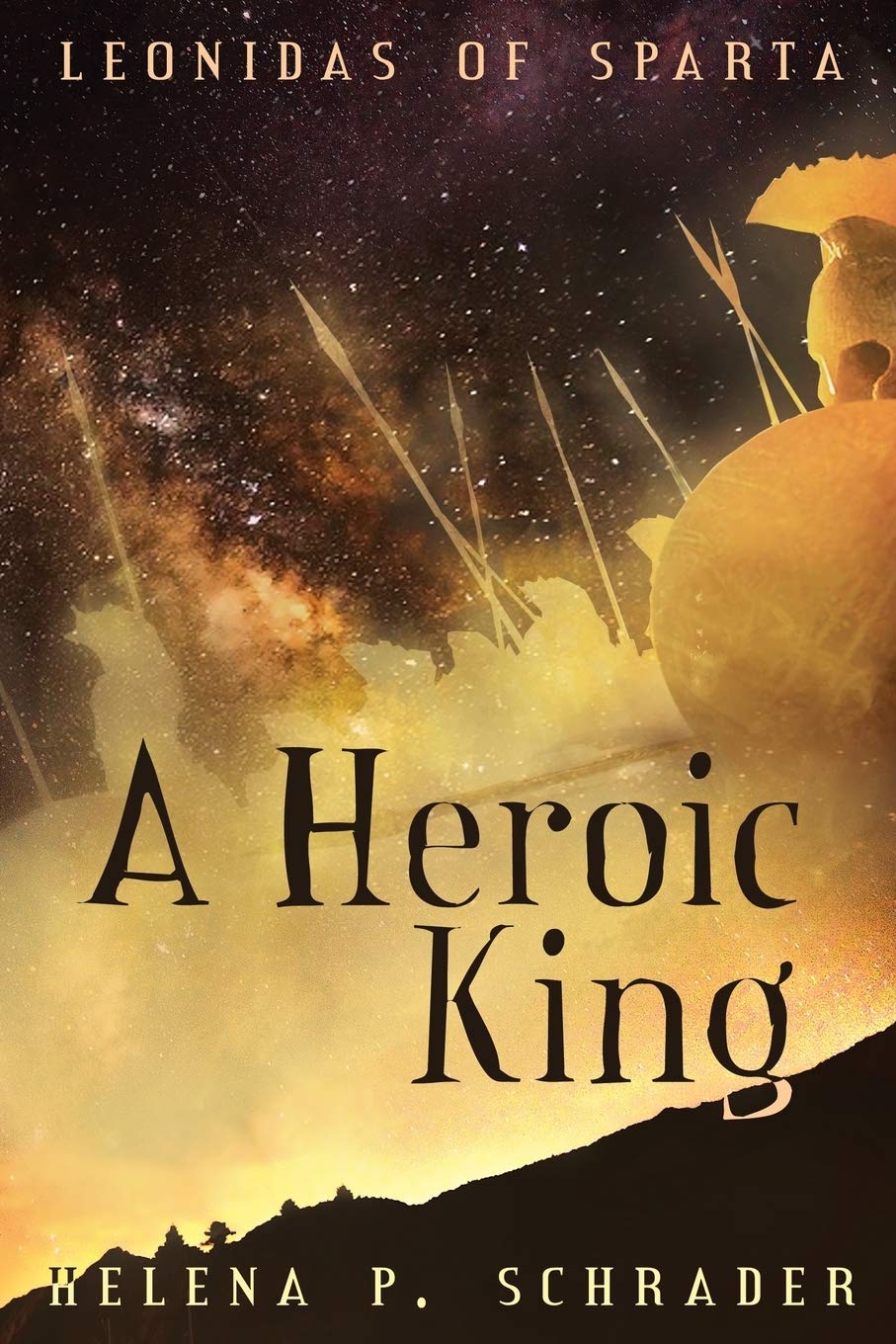
Full description not available
R**N
"Come and Take Them!"
I have been an avid reader of historical fiction for fifty years, and I have never encountered a work as exciting, fascinating, satisfying and well-researched as Helena Shrader’s trilogy about Leonidas of Sparta.In this third book of the series Shrader portrays Leonidas in his mature years, his marriage to his niece Gorgo, his travels to Athens and other places and his rise to become one of the two Kings of Sparta. She recounts the events of the ill-omened Persian embassy to Sparta, in which the Persian ambassadors demand that the Spartan give them earth and water as a sign of submission. The Spartans respond by throwing the Ambassadors in a deep well, telling them that they will find all the earth and water they need there. The Spartans realize that they have offended the gods by this act and a few years later they sent two volunteers to the Persian King Xerxes to expiate the deed with their live. Xerxes rejects the offering, warning that the Spartan debt to him remains unpaid.Xerxes plans a massive invasion of Greece with one million troops. The fate of Western civilization hangs in the balance. The Athenians, under Themistocles, have built a fleet of triremes to counter the Persian fleet, but it is up to King Leonidas, his bodyguard of 300 Spartans, and 6000 allied troops to hold the narrow pass at Thermopylae so that the rest of the Spartans and their allies can mobilize. The prophesy from Delphi states that in the coming conflict Sparta will either mourn one of its Kings, or it will be destroyed.After a day of battle a herald is sent from the Persian King to Leonidas: “The Great King Xerxes, son of Darius, offers to King Leonidas, son of Anaxandridas , of Sparta the following: If he give up this pointless resistance against the forces of Civilization and the true God Ahuramazda, if he takes the hand outstretched in friendship by his most gracious Majesty, the merciful and generous Great King, if he puts his arms in the service of His Magnificence, the Joy of Ahuramazda, joining the invincible multitude of a thousand nations, then Xerxes, King of Kings, will make Leonidas, son of Anaxandridas, Kng of all Greece.”Who would reject an offer like that?Leonidas’ reply: “Tell your master that if he understood honor, he would not lust after what does not belong to him. I, Leonidas of Sparta, would rather die for the freedom of Greece than rule it in subjugation!”The Spartans and their allies successfully held the pass for two days, but a Phocian traitor revealed a goat track to the Persians, over which the Immortals, an elite Persian unit, could cross and attack the Greeks on their unprotected flank. When it became clear that their cause was lost, Leonidas sent the bulk of the allies away, determined to hold the pass long enough to allow them to escape.The Persian King sent another herald: “The Great King offers you your naked lives, if you surrender your arms.”Leonidas replied: “Come and take them!”In the ensuing battle Leonidas and all but one of his remaining men are slain. After Leonidas falls his compatriots try desperately to shield his body, but in the end Xerxes obtains it and mounts Leonidas’ head on a stake.Leonidas’ sacrifice is not in vain, however. It buys the Greeks time and ultimately the Persians are defeated on land by Leonidas’ nephew Pausanias, and at sea by the Athenian Themistocles.Shrader has a gift for making her characters vivid and human, and she is a consummate story-teller. She ranks high in my pantheon of great historical fiction authors.
R**Y
"Who are these Spartans?" An old question is now answered
I approached this finale of Helena Schrader's Leonidas trilogy with some trepidation, as a sampler to see if I'd want to invest in the others (at three volumes and around 1500 pages, no small investment) or if it would prove to be a sad disappointment as so much modern print-on-demand historical fiction has been. I opened the book to random chapters and sections and to my joy and delight, discovered a very fine tale indeed. The first two volumes are now on order and I look forward to reading these in their entirety, displaying them on my shelves, and recommending them to others.The reign of Leonidas and the events of the Persian invasion of Greece in 480 BC form the subject matter and a mix of historical and fictional characters bring this dramatic period to life. Dr. Schrader's prose is pleasingly vigorous and sturdy, her dialogue relaxed, and her background research impeccable. While many liberties are taken to fill in the gaps of what ancient historians and modern scholars tell us about Sparta at this time in order to construct a rounded novel and populate it with suitable characters, nothing feels forced or artificial to me. And as someone who has studied Spartan history and society for decades, I can find very little to nit-pick here (apart from the description of the Thermopylae battlefield in one respect: I do not know where any recorded or geological evidence attests to a "cliff" on the seaward side of the pass); on the contrary, this book encompasses a wealth of detail and accuracy yet in a naturalistic and brisk style that is remarkable. Even the conjectural leaps are carefully considered and presented, and indeed offer much food for thought for even academic historians. Dr. Schrader's website offers a number of essays and discussions on various aspects of Sparta that have obviously informed this book, as have her travels to the locations mentioned and her keen observations of ancient Greek life and thought.Recent years have seen an explosion of interest in Spartan history, often centered around the battle for Thermopylae (which naturally forms the vivid denouement of A Heroic King), with new nonfiction books and documentaries as well as cheesy and dishonest efforts such as the deplorable "300" and the grossly overrated, disturbing, tiresome, and crypto-fascist (in my opinion) Steven Pressfield novel Gates of Fire, which cannot hold a candle to this book. Readers looking for an engaging and informed recreation of life in Sparta at the beginning of the classical era and how this remote city-state came to lead the defense of the West can ask for no better novel.
D**D
Great book!
I thoroughly enjoyed this book just as I did Schrader's two previous books about Leonidas. This is exceptionally well written historical fiction and it is clear Ms. Schrader made great efforts in gathering research for this work. Schrader wrote this book through a historical foundation based on the writings of Heroditus and Plutarch regarding Leonidas and the Battle of Thermopylae. However, she also did a fantastic job of creating a wonderfully vivid Sparta through painstaking research and logical conclusions based on an insightful interpretation and analysis of Greece's history. I have read other works of historical fiction regarding the Battle of Thermopylae and I'll admit I enjoyed the movie 300 for what it was. I like Schrader's depiction of Leonidas best, and given her extensive research, insight, and the thoughtful approach she took to creating the story, I believe her portrayal of King Leonidas to be accurate. If you're a true Spartan at heart, then you will probably enjoy this book. If you want a great story about few standing against many with the fate of democracy and freedom hanging in the balance, then this book will not disappoint. The best part of the story is that it's true.
J**S
Absolutely LOVED this series
Engaging and well-written story that takes historical events and understanding of the time and brings them to life in a fantastic story. I was sad to have it end and almost emotional because I became so attached to the characters. Incredible writing. Highly recommend.
Trustpilot
3 weeks ago
1 month ago