
DOWNLOAD THE APP


Customer Services
Copyright © 2025 Desertcart Holdings Limited
DOWNLOAD THE APP

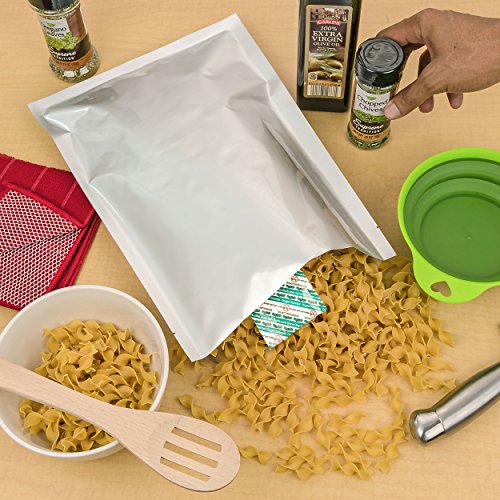

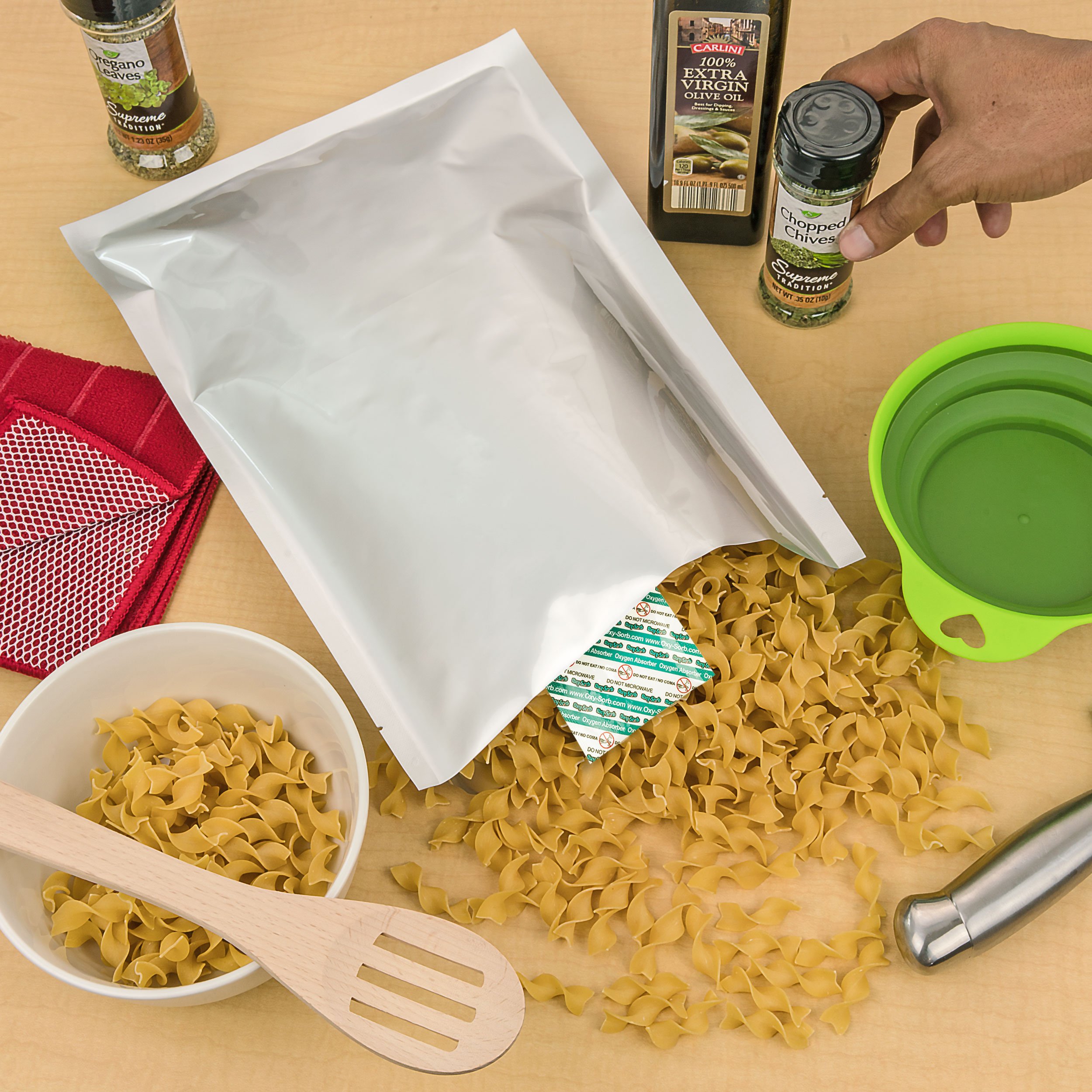
🛡️ Lock in freshness, lock out worry — your ultimate long-term storage solution!
Dry-Packs 60-1 Gallon ShieldPro Mylar Bags come with 60 high-quality 300cc oxygen absorbers, designed for airtight, moisture-proof, and light-resistant long-term storage of dry foods, pharmaceuticals, and electronics. Each durable silver Mylar bag measures 14"x10" and is heat-sealable for secure, reusable protection that prevents spoilage, rust, and contamination. Ideal for professional-grade food preservation and survival prepping.
| ASIN | B003X87CFW |
| Batteries Included? | No |
| Batteries Required? | No |
| Brand | Dry-Packs |
| Closure Type | heat sealable |
| Color | Silver |
| Customer Reviews | 4.6 4.6 out of 5 stars (2,805) |
| Date First Available | July 24, 2010 |
| Included Components | 60 - 1 Gallon Mylar Bags & 60 300CC Oxygen Absorbers |
| Is Discontinued By Manufacturer | No |
| Is Microwaveable | Yes |
| Item Package Quantity | 1 |
| Item Weight | 4.2 pounds |
| Item model number | MB10x14-300CC-60PK-OB |
| Manufacturer | Dry-Packs |
| Material | Mylar |
| Material Type Free | Aluminum |
| Model Name | Oxygen Absorber |
| Number of Items | 120 |
| Number of Pieces | 20 |
| Part Number | MB10x14-300CC-60PK |
| Pattern | 60 Pack Kit |
| Product Dimensions | 14"W x 10"H |
| Reusability | Reusable |
| Shape | Rectangular |
| Size | 60-1-Gallon |
| Special Feature | Durable |
| Special Features | Durable |
| Style | 60 Pack Kit |
| UPC | 744271654431 818947019012 798837901880 |
| Unit Count | 60.0 Count |
| Warranty Description | None. |
I**G
They Suck The Air Out
Excellent quality bags, strong and durable, these mylar bags hold up well when filled with dry food items like pasta, dried beans, rice, and grain. These kinds of dried goods might puncture flimsier bags made of plastic (like the popular "Food Saver" types of bags, which I also use, but mostly for meats, which I vacuum seal and freeze). The oxygen absorbers are also of a high quality and do the job well. The oxygen absorbers actually cause a vacuum effect after they've been put into the bag with the food and sealed tightly. With time, the oxygen absorbers actually reduce the volume of air in the bag (whatever bit of air might have been left over at time of sealing. The next day, if you find a bag or two that don't have the appearance of being tightly vacuum sealed - or if they still have air in them- then it is safe to assume those bags have a faulty seal. The most common source of interference with forming a good seal on the bag is if you have trapped some flour, sugar or grain at the spot where the heat-seal was formed. I can also confirm that the Food Saver vacuum sealer only partially works with these bags. The seal portion works fine but the vacuum will not work. The reason is, if you look at "Food Saver" plastic bags, they have a raised structure designed to allow air to pass out of them under the pressure of the vacuum machine. These mylar bags will not allow air to pass because their surface is not abraided or raised. So, when you slide the mylar into the machine, the rubber lips inside the machine will press the mylar bag shut. The vacuum will run a few seconds, but no air will escape. After those few seconds, the heat sealer will activate and form a nice seal on the mylar. The good news, when using the Food Saver as a sealer is that if you've inserted the oxygen eater packets into the mylar bag before sealing, and if you've manually pushed out most of the air from the sack, then after it is sealed tightly, within 6 to 8 hours, the oxygen eater will do the rest of the work, and the bag will start to crush and collapse inward, somehow getting rid of the rest of the air and forming a nice, finished vacuum sealed look. Again, as mentioned above, this will only fail occasionally if - when you heat sealed the bag- you've trapped a grain of rice or other object in the seal. The seal must be smooth and free of debris in order to be effective. If you trap some food in the seal, and the seal is ruined, you should cut the bag open, pour the contents into a new bag, and drop in a new oxygen eater and start over, being careful this time to prevent food clumps from interrupting your smooth, perfect seal. It takes a little practice if you are a first -time food packer, but usually after the 3rd or 4th attempt you'll get the hang of it just fine. I strongly recommend you get the hand-held sealer for this. It is better than an iron, and better than the Food Saver machine. The Food Saver will do the job, but the band that heats up and makes the seal is rather narrow, sometimes making for an uncertain seal which requires that you wait until the next day to see if the seal was 100% intact. The iron method is a bit imprecise. The hand held sealer can be used instantly, makes a wider heat band- which means a wider heat seal, and of course can conveniently be used to make more than one seal if you need to. Perhaps most importantly, you can actually fill the bags higher if you are using a hand seal. The Food Saver leaves a very large, wasteful "lip" of excess material due to its design, which means you must always reduce the amount of food in each bag, in order to leave that excess flap long enough to slid into the Food Saver slot. The bags arrived very quickly after I ordered them, and everything was intact. I'm very pleased with my order- so much so that I am ordering again. Happy prepping!
B**P
These were the perfect size for when we had gotten several 50 lb ...
These have come in handy when we got a whole lot of 50 lb bags of rice in at one time. We were able to get the rice stored in these 1 gallon bags, with oxygen absorbers and stored in an airtight container, for future use. This way, we do not have to worry about bugs, mice or anything else trying to get into our food and eating it before we do. Mylar bagging has opened our eyes to a whole new world of storing food. We feel 1) it isn't anymore time consuming, 2) it really doesn't take up anymore space, 3) your food stores for a longer period of time and 4) if you have to move it is a lot easier to pack and store. We found this out when we first was introduced to mylar bagging from our friends. They were just retiring from the military and they showed us how they had mylar bagged this food from years ago, how it had been stored in a container and how many times it had been moved, obviously with him being in the military. It was very interesting to see how much food was put in the bags, sealed up and then stored in that air tight container. I looked at that container full of food and thought there is no way that a person could possibly can all of that food in jars and have to move all of the time. I can understand why he and his wife mylar bagged so much of their food and did not can. Just packing and unpacking the jars every time they moved would be enough to make someone want to mylar bag, but me worrying about those jars breaking would have made me ill, thinking about all of the time and money I had put into the canning process. Mylar bagging is a wonderful way of food processing.
W**S
Excellent long term food storage bags!
I am a relatively new prepper and decided to buy Mylar bags to store dried food items in addition to my collection of canned goods. After watching some YouTube videos and reading some articles regarding how Mylar bags work, this combo package of Mylar bags and accompanying oxygen absorbers seemed like a good deal. It seems I made the right choice. I bought 1 gallon sized bags in addition to the 5 gallon sized. I started by filling the 1 gallon bags with about 5lbs of long grain rice as a test. I decided that since I have a vacuum sealer that the best thing for me to do to conserve the oxygen absorbers was to transfer them into a new sealed pouch upon opening them rather than going the mason jar route which would mean they would lose a little extra absorbancy each time I opened it (more oxygen to filter). So after opening the o2 baggie and quickly placing two absorbers into my rice-filled mylar bag, I sealed the remaining o2 absorbers up in a vacuum sealed bag (they come with a visible color-changing oxygen gauge as well which is nice). Side note: For those who do not know, oxygen absorbers work by forcing oxidation, or the process of rusting which consumes oxygen. This works in the same way as those hand warmers you see everywhere in the winter (in places that get cold during the winter). Yes, the o2 absorber gets warm in the bag. Moving back to my experience... Once I sealed all the o2 absorbers up with my vacuum sealer, I then proceeded to close up the 1 gallon mylar bags of rice. I flattened out the top of the bag and pushed out as much air as I could by hand. I turned my iron up as high as it would go and began to iron the bag closed. I quickly realized that I was melting some spots on the bag and turned it down until I found a comfortable setting that would seal the bag without melting it (note, do not use steam!). The second bag sealed flawlessly with my new setting. I repeated this process with the bulk rice I purchased bagging up 25lbs of rice in a 5 gallon mylar bag. I put this bag into a 5 gallon bucket, placed a metal level across the top of the bucket to use as a makeshift ironing board, and ironed about 80% of the large bag shut. I turn added in a large o2 absorber, resealed the absorbers with the same process as the smaller ones and then repeated the process of removing as much air as possible and finishing up the seal on the 5 gallon bag. The larger bag in the bucket was much more challenging to seal and I couldn't get as much air out as I wanted before sealing it up, but it sealed nonetheless. Many people wonder about knowing if the o2 absorber is doing its job. The expectation is that as the o2 is absorbed, the bag will shrink-wrap to the contents. I have found this to be the case depending on how much air you remove before sealing the mylar. The smaller 1 gallon bags resulted in a vacuum-type seal after about a day of sitting because I was able to get most of the air out. I couldn't get the larger bags nearly empty of air by hand, so they haven't vacuum sealed. However one has to understand that the air on Earth is approximately 21% oxygen and the other 79% is primarily nitrogen, because of this, if you have quite a bit of air in the bag when you seal it, you will not notice much decrease in volume of the bag's air even if it removes all of the oxygen. At most, it can only be decreased by 21% so a vacuum seal is not necessarily an indicator of success or failure. You can ensure the bag is sealed by putting pressure on it when the seal cools down and ensuring that it does not "go down" by the air escaping somehow. If you know it is sealed properly but there is quite a bit of air in the bag, you have to put your trust in the oxygen absorbers to do their job without it showing. Unless it is defective, you should be fine. If it isn't, you have no real way of knowing other than feeling for warmth as it absorbs oxygen (I'm not sure if this would even be possible, but it cannot hurt to try). I have now sealed up many 5 gallon buckets of rice, beans, and pasta as I expand my long-term storage supplies, and I can attest to the quality of these bags as long as they are stored so that rodents cannot get to them. I believe my food will be safe in these bags for many years, and I plan on purchasing more when I use these up. These bags are an essential supply for all preppers!
T**F
The bags are thick and strong, and yes, the O2 absorbers come in 3 separate bags so you don't have to blow through all 60 at once... Out of 60 bags, 4 didn't seal properly, and most likely my fault, not the absorbers. All in all, a great buy. Very satisfied.
M**E
I got the 60 pack of 1 gallon bags and I am very satisfied. Oxygen absorbers are packaged by 20 units. First batch of 20 I did, 5 bags did not seem to work. However, I did my second batch of 20 yeasterday and all worked. In retrospect, I realized that the first time around, I did not try to remove as much air as possible before sealing, so it was my problem, not the product! My advice to you, first time user, is to put your food in all 20 bags upfront, then seal 2/3 of the opening (if working with a hair straightener). Then only, you open the oxygen absorber, put them quickly in each bag, and seal away. That way, you have less time with the absorbers out in the open. Keep only an opening that can be closed by 1 lenght of your straightener
S**X
The only problem that I had with this product, is when customs opened a bag ruining every deoxygenator in the bag!
A**R
love these. they are strong and just the right size for most food items
D**U
très bon je suis satisfaite
Trustpilot
3 days ago
5 days ago