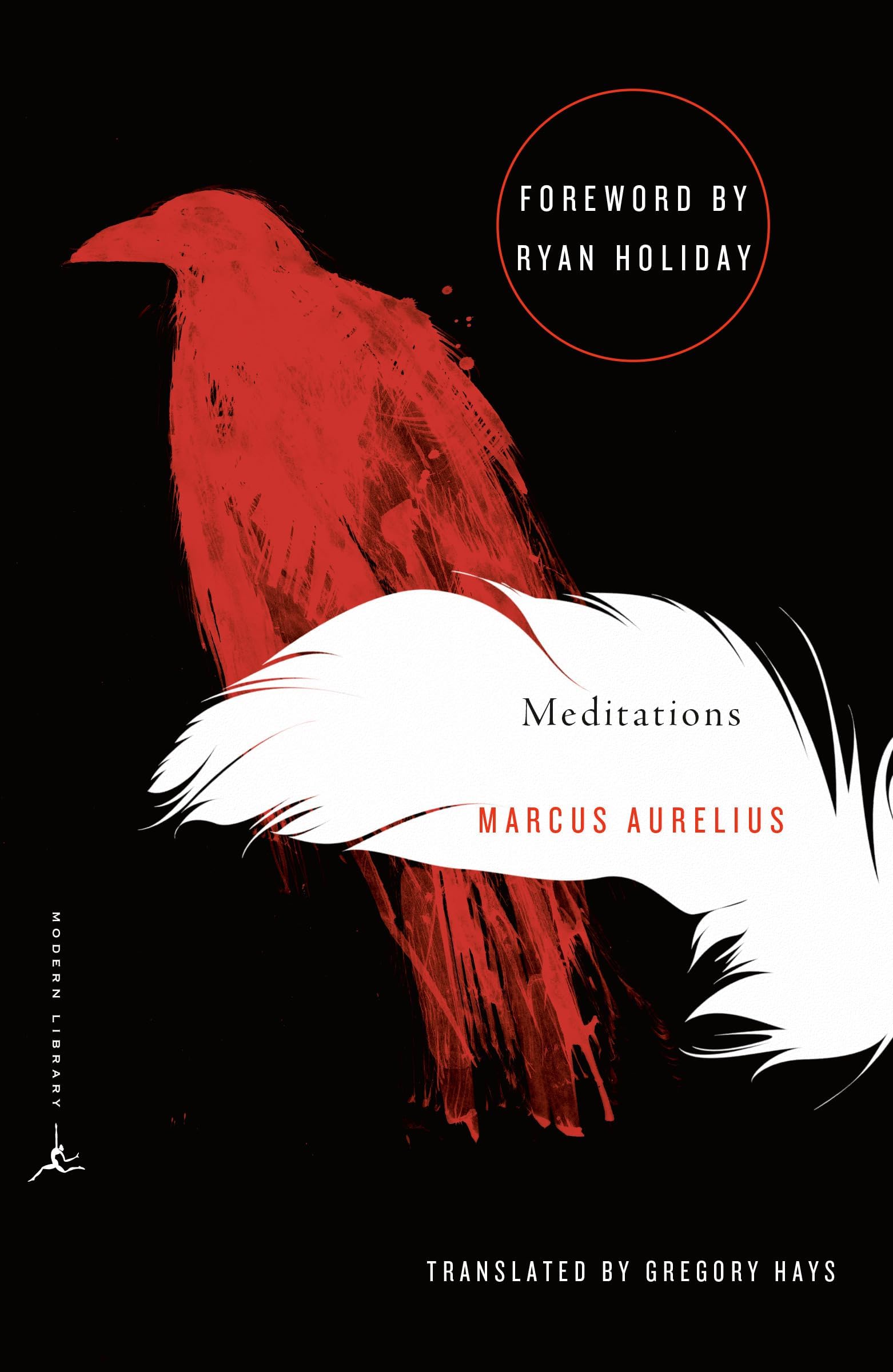
Meditations: A New Translation (Modern Library)
Product ID: 102660291
Desertcart purchases this item on your behalf and handles shipping, customs, and support to New Zealand.
NATIONAL BESTSELLER • Timeless insights into what it takes to lead a meaningful life—still profoundly relevant nearly two thousand years later. Now featuring a brand-new foreword from Ryan Holiday, #1 New York Times bestselling author of The Obstacle Is the Way ! “ Meditations offers a glimpse into [Marcus Aurelius’s] mind, his habits, and his approach to life. . . . I think any reader would find something useful to take away from it.”—James Clear, #1 New York Times bestselling author of Atomic Habits “It is unbelievable to see how the emperor’s words have stood the test of time. . . . Read a page or two anytime you feel like the world is too much.”—Arnold Schwarzenegger, The Wall Street Journal Your ability to control your thoughts—treat it with respect. It’s all that protects your mind from false perceptions—false to your nature, and that of all rational beings. A series of spiritual exercises filled with wisdom, practical guidance, and profound understanding of human behavior, Marcus Aurelius’s Meditations remains one of the greatest works of spiritual and ethical reflection ever written. With bite-size insights and advice on everything from living in the world to coping with adversity and interacting with others, Meditations has become required reading not only for statesmen and philosophers alike, but also for generations of readers who responded to the straightforward intimacy of his style. In Gregory Hays’s translation—the first in nearly four decades—Marcus’s thoughts speak with a new immediacy. In fresh and unencumbered English, Hays vividly conveys the spareness and compression of the original Greek text. Never before have Marcus’s insights been so directly and powerfully presented. With an Introduction that outlines Marcus’s life and career, the essentials of Stoic doctrine, the style and construction of the Meditations, and the work’s ongoing influence, this edition makes it possible to fully rediscover the thoughts of one of the most enlightened and intelligent leaders of any era. Review: Love it - Sometimes desertcart bundles multiple translations under one product listing, so this is the Gregory Hays translation. Overall I give the translation 5/5 just from the perspective of being well-written and free of errors. This is my first reading so I can't speak to "accuracy" per se, but overall the flow of the prose gives me a lot of assurance that it's a faithful translation. This translation comes with a large opening section detailing Marcus Aurelius' life and the geopolitical and social factors surrounding the work, as well as the history we know of how the work survived and was transmitted. This background is great because the Meditations were in part Marcus' personal diary. Many lines were only meant as personal reminders - a sort of philosophical to-do list - and some lines are still such non-sequiturs that scholars can't place them. Overall though, the Meditations is sort of a philosophical play book. Marcus is essentially coaching himself - how to act, what to think about, how to carry yourself. It makes for an incredibly actionable philosophical work. Overall, it's precisely the fact that Meditations was never meant to be read which makes it such good reading! This isn't a thorough treatise trying to explain why stoicism is the best philosophy, it's more of a step-by-step guide for how to live and breathe this philosophy. Famously, this work constantly mentions death. Marcus Aurelius constantly reminded himself that he was mortal, and that he could die at any time. He clearly expresses that this belief helps him act honorably at all moments. If you believe you could die today, Aurelius believed you'd be much more likely to express yourself fully and to avoid saying anything which was dishonest or which would cause you to feel regret later. This doesn't mean he ignored the future - preparing for a good life tomorrow, including diet and exercise, has benefits today as well as tomorrow. Meditations is rarely dry. It's quick, aphoristic "to-do list" style means varied points are given one after another. If you don't get something from one paragraph, the next might still be very important to you. It's similar to Nietzsche in that regard. Unlike Nietzsche however, this book goes strongly against ego. Aurelius doesn't say he is a genius, but that he is a human like any other. Overall this is a fairly unique work in terms of major philosophical books. Because this book wasn't meant to be published, it's one of the most brutally honest and effective works out there, especially because this ethos meshes with stoicism. One stoic principle might be, "write everything down - but write honestly, as though it will never get published". Aurelius accidentally accomplished that in strong fashion, and the philosophical world is all the better for it. Review: Intelligent and enlightening - Worthy of study and reflection, and rereading. This is a modern translation that is clear and makes discernment relatively easy to comprehend and apply.


| Best Sellers Rank | #15,966 in Kindle Store ( See Top 100 in Kindle Store ) #1 in Occult Spiritualism #4 in Greek & Roman Philosophy (Kindle Store) #11 in Ethics & Morality |
P**L
Love it
Sometimes Amazon bundles multiple translations under one product listing, so this is the Gregory Hays translation. Overall I give the translation 5/5 just from the perspective of being well-written and free of errors. This is my first reading so I can't speak to "accuracy" per se, but overall the flow of the prose gives me a lot of assurance that it's a faithful translation. This translation comes with a large opening section detailing Marcus Aurelius' life and the geopolitical and social factors surrounding the work, as well as the history we know of how the work survived and was transmitted. This background is great because the Meditations were in part Marcus' personal diary. Many lines were only meant as personal reminders - a sort of philosophical to-do list - and some lines are still such non-sequiturs that scholars can't place them. Overall though, the Meditations is sort of a philosophical play book. Marcus is essentially coaching himself - how to act, what to think about, how to carry yourself. It makes for an incredibly actionable philosophical work. Overall, it's precisely the fact that Meditations was never meant to be read which makes it such good reading! This isn't a thorough treatise trying to explain why stoicism is the best philosophy, it's more of a step-by-step guide for how to live and breathe this philosophy. Famously, this work constantly mentions death. Marcus Aurelius constantly reminded himself that he was mortal, and that he could die at any time. He clearly expresses that this belief helps him act honorably at all moments. If you believe you could die today, Aurelius believed you'd be much more likely to express yourself fully and to avoid saying anything which was dishonest or which would cause you to feel regret later. This doesn't mean he ignored the future - preparing for a good life tomorrow, including diet and exercise, has benefits today as well as tomorrow. Meditations is rarely dry. It's quick, aphoristic "to-do list" style means varied points are given one after another. If you don't get something from one paragraph, the next might still be very important to you. It's similar to Nietzsche in that regard. Unlike Nietzsche however, this book goes strongly against ego. Aurelius doesn't say he is a genius, but that he is a human like any other. Overall this is a fairly unique work in terms of major philosophical books. Because this book wasn't meant to be published, it's one of the most brutally honest and effective works out there, especially because this ethos meshes with stoicism. One stoic principle might be, "write everything down - but write honestly, as though it will never get published". Aurelius accidentally accomplished that in strong fashion, and the philosophical world is all the better for it.
J**Y
Intelligent and enlightening
Worthy of study and reflection, and rereading. This is a modern translation that is clear and makes discernment relatively easy to comprehend and apply.
B**N
One of the Greatest Works of Stoicism
I finally got around to reading Meditations after owning it for years, drawn by its reputation as a cornerstone of Stoicism. While I can clearly see why it has endured for nearly two thousand years—and why so many people rate it so highly—it didn’t fully land as a 5-star experience for me. The book is not really a “book” at all, but a collection of personal notes, often repetitive, sometimes dull, and lacking the kind of structure or intellectual progression I usually expect from philosophy. That said, there is undeniable value here. Many of the reflections are powerful, especially around control, discipline, impermanence, and how to deal with adversity. But this leads to my main critique: I don’t see Marcus Aurelius as a philosopher in the same sense as Aristotle or Kant. He doesn’t build a system—he reminds himself how to live. He is, in my view, a wise man rather than a philosopher. In the end, Meditations feels less like a coherent philosophy and more like a lifelong practice—something to revisit in small doses rather than read cover to cover. There are great lines and moments of clarity throughout, but also inconsistencies and a strong focus on endurance rather than joy. A valuable read, but not a mind-blowing one.
L**L
A timeless manual for inner strength and clear thinking.
Meditations is a masterclass in mental discipline and personal clarity. This translation makes the ancient wisdom of Marcus Aurelius feel incredibly relevant and practical. What stood out most was his focus on controlling your thoughts, staying grounded in reason, and rising above chaos with calm and purpose. I’d recommend this book to entrepreneurs, leaders, athletes—anyone who wants to build resilience and act with intention. I gave it five stars because it’s more than a book—it’s a mindset upgrade.
D**N
A Soulful Search for a Perspective on our Life
This book provides a very healthy way to perceive life, and everything that happens to us. There are better tools available for living our life that are already within us. We just need to be aware of them and choose to use them, intentionally. The true discovery is that we are all part of nature as it was intended. The more we operate as part of it, and for it, the better off we all will be.
P**D
Modern Translation Done Well
The timeless wisdom of a leader, working on, what we would call, his mental health. He constantly sought spiritual depth, in a polytheistic world. It seems right, next to the Bible and Quran.
J**A
INTERESTING BUT NOT INSPIRING
I'm not sure why this is considered to be so insightful. I found my thoughts wandering quite a bit and, quite frankly, kept looking towards the end of the book and how long it would take me to reach it. There were some meaningful thought/ideas expressed, but not enough, in my opinion, to label it the classic that it is considered to be. Maybe in its day, meaning historically when it was written, and with very limited types of ideas actually being put down on paper, it was relevant, but for me, I didn't find anything here that was earth-shattering or soul awakening.
J**N
Great insight and inspiration.
I have read this book at least 5 times through the past 3 years, and each time I find new inspiration, and I keep on adding highlights of important parts. Without any intention of provoking any religion or religious people, I find that this book deserves a more prominent position than any of the holy books of world religions, which are in many instances quite intolerant - not to say cruel - to people believing in other Gods or practicing different ways of worship, whereas they were essentially supposed to provide inspiration on how to live in harmony with ourselves and our fellow citizens. If everyone practiced the ideas suggested by Marcus Aurelius, the world would be a better place. His key message is to be good and serve humanity. I find that Marcus Aurelius would have been a strong contester among the various historical candidates of people who claim having got a devine call or enlightenment, leading them to impose others to follow their "ways" and ultimately becoming recognised "prophets" and founding fathers of established belief system and moral principles. Although The Meditations were written about 2,000 years ago, the ideas in this book are still relevant and fresh. Readers with some knowledge of zen-Buddhism will see that the pursuit of mindfulness, simplicity, self-containment, positive change and inner as well as outer harmony are all presented in Aurelius' brilliant text. Although Gregory Hayes' translation is often mentioned as the best, I still prefer the one from Penguin books' great ideas series. Hayes' version offers a text in modern English, but the text is so minimalistic that it often comes out as a compilation of brief notes and stray thoughts, whereas the Penguin version has complete and articulate sentences. The language is dated and slightly more complicated than in Hayes' version, but it gives me the impression of reading a very important book written by a great thinker from a different era. Had Hayes made a more fluent text, I would have given this version five stars. All in all, this book deserve a place in every home next to other important masterpieces that we can go back to when our moral standards need a checkup.
P**N
When I read this book felt like someone Massaging my mind! Wow!
Great book, advices are very practical and applicable in your daily life. I cannot believe someone a few thousands years ago wrote these things that today is still applicable and useful. I can say first I started reading this book, I felt someone massaging my mind. Made me so peaceful.
C**.
Really good, succinct and impactful
Really good, succinct and impactful. This version is brilliant to get to the crux of what MA is saying, to the degree I use the flash card tool on the kindle app every day to give me an aphorism boost. Other versions can weigh more towards the academic, literal, translation where meaning can get a little lost in your attempt to understand it. Hay's version keeps the translation true to form, applicable to daily life, without simplifying the text nor losing substance. If anything the brevity of the syntax rings home the profound philosophy more effectively.
E**O
life changing
It is one of the few books that can change how you perceive your life, and lift you through difficult times, really astonishing and healing. I’m surely going to re-read it over and over again. The fact that this piece is so actual after millennials is mind blowing.
K**R
Stepping stone to get into philosophy
This serves as a way of getting people to reflect on their thoughts. This is by no means a philosophy masterpiece, but an excellent example of a person thinking through things deeply. There are important lessons one can learn from this book such as acceptance, tolerance and living a life that is moral (although virtue ethical theory is stressed here, which is understandable considering the time in which this was recorded). Will recommend anyone who has an inclination towards philosophy to read this book.
P**E
Melhor tradução em inglês de um livro atual e fácil de ser compreendido.
Meu primeiro contato com “Meditacões” ocorreu quando li o excelente livro “Trem Noturno para Lisboa” de Pascoal Mercier (ver resenha). Quem já fez cursos de autoajuda ou terapia conhece bem a frase: "Sucesso: Está tudo em sua mente!". Mesmo Shakespeare parece ter sido contagiado pelo pensamento de Marco Aurélio sobre o poder da mente, por exemplo, quando Hamlet declara: "... não há nada bom ou ruim, mas o pensamento torna assim". Mas cuidado. Tal como acontece com a maioria dos trabalhos falados ou escritos torna-se muito fácil perder totalmente o complexo conjunto da filosofia de Marco Aurélio. Esse sujeito assume a vida de forma holística, e não superficial; ele passou muito tempo pensando no universo e o seu lugar nele. Seu conselho para si mesmo não é apenas útil e sábio; é um portal para outra vida, e qualquer um pode lê-lo. Marco Aurélio nos ensina como lidar com grandes questões como morte, relacionamentos, família, sempre mantendo o pé no chão. “Mesmo em um palácio a vida pode ser bem vivida – dizia ele”. Lembro o leitor que ele era o Imperador de Roma, então tinha coisas sérias para fazer em seu trabalho diário; ele não tinha tempo para olhar seu umbigo vazio; ele precisava de uma filosofia que realmente fazia sentido, no presente, para alguém que vive uma vida ativa. Enfim, “Meditações” é um dos poucos livros que tem a capacidade de ajudar tanto homens quanto mulheres, diretamente e imediatamente, a viverem melhor, a suportarem com grande dignidade e perseverança o fardo de serem meramente humanos. Termino com um belo aforismo: “Aristóteles nós estudamos; Marco Aurélio levamos no coração”. Passar bem!
Trustpilot
3 weeks ago
1 day ago