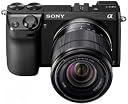
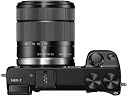
๐ธ Elevate your visual storytelling with Sony NEX-7 โ where pro power meets pocket portability.
The Sony NEX-7 is a mirrorless digital camera featuring a high-resolution 24.3MP APS-C CMOS sensor, a groundbreaking 2359K-dot OLED electronic viewfinder, and rapid 10 fps continuous shooting. Designed for professionals and enthusiasts alike, it offers full manual controls via a unique Tri-Navi dial system, interchangeable lenses, and Full HD 1080p video recording with multiple frame rates. Compact yet powerful, it delivers DSLR-class image quality in a lightweight, pocketable form factor.
| ASIN | B005IKZU8O |
| Age Range Description | Adult |
| Aperture modes | Aperture Priority |
| Aspect Ratio | 3:2 |
| Auto Focus Technology | Continuous, Contrast Detection, Live View, Multi-area, Selective single-point, Single |
| Autofocus Points | 25 |
| Best Sellers Rank | #155,632 in Electronics ( See Top 100 in Electronics ) #433 in Mirrorless Cameras |
| Bit Depth | 8 Bit |
| Brand | Sony |
| Built-In Media | Battery, Instruction Manual |
| Camera Flash | Built-In |
| Camera Lens | 55 Mm |
| Color | Black |
| Compatible Devices | Sony FE, Sony E (NEX) cameras |
| Compatible Flash Memory Type | SD |
| Compatible Mountings | Sony E (NEX), Sony FE |
| Connectivity Technology | HDMI, USB |
| Continuous Shooting | 10 |
| Customer Reviews | 4.2 out of 5 stars 146 Reviews |
| Digital Zoom | 10 x |
| Display Fixture Type | Tilting |
| Display Resolution Maximum | 921,000 |
| Display Type | LCD |
| Effective Still Resolution | 24.3 |
| Expanded ISO Minimum | 100 |
| Exposure Control | Manual |
| File Format | JPEG |
| Flash Memory Bus Interface Type | UHS-I |
| Flash Memory Speed Class | 10 |
| Flash Memory Type | SD/SDHC/SDXC/Memory Stick Pro Duo/ Pro-HG Duo |
| Flash Modes | Auto, On, Off |
| Flash Sync Speed | 1/160 sec |
| Focal Length Description | 18-55 Millimeters |
| Focus Features | Contrast Detection |
| Focus Mode | Continuous-Servo AF (AF-C) |
| Focus Type | Autofocus & Manual |
| Form Factor | Mirrorless |
| Generation | Generation 1 |
| Global Trade Identification Number | 00027242833845 |
| HDMI Type | Type C Mini HDMI |
| Hardware Interface | HDMI |
| Image Capture Type | Stills & Video |
| Image Stabilization | Digital, Optical |
| Image stabilization | Digital, Optical |
| Item Weight | 10.24 ounces |
| JPEG Quality Level | Fine |
| Lens Construction | 9 elements in 8 groups |
| Lens Type | Zoom |
| Manufacturer | Sony |
| Manufacturer Part Number | NEX7K/B |
| Maximum Aperture | 5.6 f_stop |
| Maximum Focal Length | 5.5 centimeters |
| Maximum Image Size | 24.3 mp |
| Maximum Shutter Speed | 1/4000 seconds |
| Metering Methods | Multi, Center-weighted, Spot |
| Minimum Focal Length | 18 millimeters |
| Minimum Shutter Speed | 30 seconds |
| Model Name | Sony NEX-7 |
| Model Number | NEX7K/B |
| Model Series | NEX |
| Optical Zoom | 3 x |
| Photo Filter Size | 49 millimeters |
| Photo Filter Thread Size | 49 millimeters |
| Photo Sensor Resolution | 24.3 mp |
| Photo Sensor Size | APS-C (23.5 x 15.6 mm) |
| Photo Sensor Technology | CMOS |
| Screen Size | 3 inches |
| Sensor Type | CMOS |
| Shooting Modes | Automatic, Manual |
| Skill Level | Professional |
| Special Feature | Lightweight |
| Specific Uses For Product | Photography |
| Supported File Format | JPEG |
| Supported Image Format | JPEG |
| Total Still Resolution | 24.3 mp |
| Total USB 2.0 Ports | 1 |
| Total USB Ports | 1 |
| Total Video Out Ports | 1 |
| UPC | 027242833845 027242839519 |
| Video Output | HDMI |
| Video Resolution | FHD 1080p |
| Viewfinder | Electronic |
| Viewfinder Magnification | 1.09x |
| White Balance Settings | Auto, Cloudy, Custom, Daylight, Flash torch, Fluorescent, Incandescent |
| Wireless Technology | yes |
| Write Speed | 10 fps |
| Zoom | Optical, Digital |
S**R
Love this camera! Also review of differences between NEX 6 and NEX 7 and their kit lenses
I had researched DSLRs and eventually Mirrorless- DSLRs for about a month before deciding on the NEX series. I didnโt see any that had all the features I wanted all in one package besides this. I needed a viewfinder that shows the actual photo, not just a clear glass hole like my old film point and shoot had. Also I needed a flash that was integrated into it. The Sony NEX 6 and 7 had both! I was biting my nails trying to figure out which one to get, so hopefully this review can help someone in my situation. First I bought the NEX-6 because I like the collapsible lens, but it's only 16 MP and also its kit lens (SELP1650) is ONLY electronic, even though you can adjust the ring manually with variable zooming speed and with the W/T single-speed zoom adjustment on the side of the lens body, there is still a delay when zooming and you can hear the motor going when you're shooting video. I did try and used the WiFi ability, but that seems like a gimmick to me. Itโs faster to open the battery door and take out the memory card and stick it into your computer. Also the NEX 7 has a mic input and the NEX 6 doesn't. The NEX 6 has this new Phase-detection circuitry, but I didn't notice it taking pictures faster with better autofocus, and I tried to move the camera to accomplish this. I did try a Sony Alpha A77 and it seemed to autofocus faster than either NEX model. Another irk, you have to press your fingertip a lot deeper into the body of the NEX 6 to make the flash pop up, where the NEX 7 is much easier. Video performance: I couldnโt believe my eyes when I saw the video that was produced! The integrated stereo mic takes really great audio recordings, without clipping unless under extremely loud conditions. I took it to a bunch of concerts and it records more bass (at least down to 80hz by my guess) than I would think it would from โjustโ an integrated mic. For some reason, I have to record at 24p/24i, otherwise the audio track is slightly out of sync of the video, so I have to record at 60p/60i, or fix it in post production. I am using firmware version 1.02. Many users have noted that itโs very easy to accidentally hit record on the NEX 7, and Iโm not exception! I do it all the time. With upgraded firmware, you can disable the record button, but I like it there and donโt mind deleting files now and then. TIP: You can call Sony within the first month of owning a used model and buy a 2(?)-year drops and spills protection! Also they offer extended parts and labor warranty, but not if itโs dropped. THEY TOLD ME ALL Sony cameras (NEW OR USED) from amazon.com have a 12 month warranty, starting when you bought it! You can only get Squaretrade or Geek Squad for spills if you buy the camera new and not used, open box or refurbished. Beware: I clumsily dropped my camera onto the carpet from my lap while changing batteries or memory cards (you have to have the battery door off for both), and the battery door snapped off! Tried to epoxy it, and that worked, until I bumped it again and itโs still off. The battery has a little blue holder inside the compartment and I just keep using it with it broken off. So just close and lock it so that canโt happen to you! NEX 6 vs NEX 7 kit lens comparison: So I decided to upgrade and now I have this NEX 7 with 24 MP! The zoom on the kit lens for NEX 7 is silky-smooth. They both use Sony's proprietary E-Mount system, so you'd have to use an adapter to use your Sony Alpha lenses. I did notice that the collapsible SELP1650, on either the NEX 7 or NEX 6, has a little bit more of a reddish tint to it than the NEX 7's kit lens (SEL1855). The NEX 7's kit lens is an 18-55mm zoom and the NEX 6's kit lens is 16-50; therefore the NEX 7's lens can zoom a little bit farther in, and the NEX 6 can zoom a little bit farther out. I ended up keeping the NEX 6 kit lens and selling the body, because I liked the fact that it can fit in my pocket with the NEX 6 kit lens. The NEX 7 kit lens is 7.10 oz, and the NEX 6 kit lens is 4.30 oz, with the NEX 7โs body with battery and strap weighing 12.95oz. It gets more and more noticeable the longer you shoot, and itโs harder to use the NEX 7 with its kit lens as a point and shoot. I have shot over 3000 photos already and they are pretty good. I took the same exact picture with the same settings, subject, lens and zoom with both the NEX 6 and NEX 7 and I had to zoom ALL THE WAY in to tell a difference, and even then it was VERY tough! This is in JPEGโฆI didnโt think to try the test in RAW and now I donโt have both anymore so I wonโt know. You can see a lot of tests like that at DPREVIEW.COM. They already did that, and with many different cameras, too. I have taken many photos and basically both cameras can take very similar photos, but the NEX 7 is higher end, and you can feel it when you use it. I like the sound of the shutter of the NEX 7 a little better, too. Hope this helps someoneโฆ I didnโt plan on this long of a review but I got on a roll! I will update if needed!
P**H
Never thought I would use my old high quality lenses again
My Nikkor and Minolta/Super Cosina lenses are happy again. A couple of cheap adapters and you can use your old high quality lenses again. This camera is amazing and I have run the gamut or tests. The 16mm and Ultra Wide Converter are really good additions if you want to add to the kit lens for not a lot of money. The kit lens is actually very good and produces nice clear images with very little distortion. Be prepared to read up on advice and study the handbook for this camera. It is loaded with options. can get very complex if you want and has excellent reviews. The Intelligent Auto mode produces very good pictures for beginners or professionals. I have been a photographer for 40 years and obtained my first digital camera only 4 years ago because I wasn't happy with picture quality till then. This technology has finally come of age at an affordable price. Others will disagree but you can get very similar results from this camera as those from a $6-8K DSLR. Read the reviews from many independent professionals who agree. It is so nice to have a high quality camera that is not a huge, pretentious and heavy beast. You will take more pictures with this because it is so light and ready to go with you in a small camera bag. Some complain about the lack of lenses available but the new Sony, Sigma and Zeiss e-mount lenses fill the gap plus all your old lenses that require simple $10-30 adapters although you will be using manual mode. The focusing assist using peaking level is really good for using your old lenses. Buy one of the generic remote commanders for $10 for additional functionality and low light level tripod use. Try the speed priority continuous shooting mode and it will blow you away how fast this can shoot. I'm not sure of the exact time after turning on the camera to photo ready but it is only about a second or two. The build quality is excellent and weight is light enough but not a cheap feeling. The tilt LCD display is bright and the electronic view finder is something you have to see to believe.
J**R
A beautiful piece of hardware, but the ergonomics didn't work for me
The image quality, the build quality, the compact size and the features on this camera were all superb. Unfortunately however, for me the ergonomics of it just didn't work. The biggest issue by far - the deal breaker in fact - was the electronic viewfinder (EVF). I wear glasses, and although the diopter adjustment on the camera allowed me to bring the EVF into focus I could never see all of the display at the same time, even with the camera eyepiece shade removed. Shifting my viewpoint to see the settings or different parts of the display caused other parts to blur or disappear. Also, I don't know if the proximity sensor on the eyepiece had a hard time detecting my glasses, but I had to press them hard against the camera to make the EVF switch on at all. Adding to the woes was the diopter adjuster itself, as its position makes it very awkward to reach and adjust when a pair of glasses is pressed against the EVF. Move your face away just a little and the EVF goes off. That wouldn't be such a big issue if you only adjusted the diopter setting once or twice, but it could get tedious quite quickly if other people used the camera as well. I could have used the rear display instead of the EVF of course, but I find it much easier to use a camera if I don't have to switch my focus back and forth between the close-up back of the camera and a more distant environment. Other reviewers have remarked on how the position of the video button makes it easy to accidentally start a video recording, and I can vouch for that. I also found that I tended to nudge the L and R control dials on top of the camera without realizing it, which when coupled with the video button made the top right corner of the camera back a minefield for wandering fingers and thumbs. I'd probably learn with practice to be more careful, but I think the functionality of the camera would be greatly improved if the action on the L and R dials was slightly stiffer, and if the video button could either be completely disabled in the menus or perhaps require another button to be pushed simultaneously. I wouldn't have been using the video capability of the camera very often anyway, and it would have been nice to take it out of the equation. Other observations. One of the appeals of the NEX-7 was the possibility of using a simple adapter to let me use the lenses from my old Olympus OM-4 camera on it, and in fact when I did that it worked very well. No autofocus of course and I had to stop down the lenses manually, but it was still very satisfying and the image quality on the few shots I took was excellent. Also, I wanted to do a few macro shots of electronic components with the NEX-7, and the lens adapter allowed me to use my old extension tubes and lens reversers with the Olympus lenses to do this as well. One interesting thing I noticed while I was playing around with the Olympus lenses on the NEX-7 was that I preferred the handling of the camera with them versus the kit lens. I liked the look and feel of the NEX-7's kit lens, but when compared with the rubber grip on the Olympus lenses its knurled aluminum finish felt harsh. Also, I don't know if it was the slightly longer length or a slightly smaller diameter on the Olympus lens + adapter, but the camera was much more comfortable to hold with them compared to the kit lens. I didn't hold the grip on the front of the camera as tightly with my fingers, and the back of those fingers didn't rub slightly against the lens barrel as they did with the kit lens. Small details I know, but they made a noticeable difference for me and they suggest that using something other than the kit lens might have unexpected benefits for some people. So, although I found a lot to like about the NEX-7 and I really wanted to keep it, at the end of the day I just couldn't get the EVF to function at an acceptable level for me. People who don't wear glasses - and probably a whole bunch who do as well - won't have that problem, but I suspect I'm not the only person for whom this is an issue. As for the other ergonomic details, well, I could probably have learned to accommodate them if the EVF had worked out.
D**T
Great camera. NEX-6 may be a better option though
I have this camera for almost three years now, and I am still loving it. At the moment of this review, it's sensor is rated in DxOMark at number 23 out of 210 cameras, and that includes Full Frame sensors. It has a score of 81, which is even better than some Full Frame cameras, better than most APS-C DSLRs, and much better than any micro 4/3 camera. You can access almost any function with the tri-navy system. At first you have to take your time to personalize the buttons though, and then learn to use them, but once you get familiarized with them, it is great to have everything at the control of your fingers and without even taking your eye out of the electronic view finder (which is outstanding by the way). When I bought it, it was the best option for a light weight APS-C camera. However, now you have the NEX-6, which I think is a better deal if you do not need the 24 Mpixels the NEX-7 has. So, unless you make huge prints (like mural size prints) or agresively crop your pictures in post-processing, the Nex-6 will be a better deal because of the following reasons: 1. Less megapixels mean smaller files. If you work with RAW format, each file is very big and requires lots of processing capability from your PC. The 16 Pixels files from the NEX-6 should be much more easy to handle. 2. Although the NEX-7 has a relatively fast autofocus, the NEX-6 is much faster because it has hybrid autofocus (phase and contrast detection compared to only contrast detection in NEX-7). 3. The NEX-6 has WiFi and the possibility to install usefull apps, which the NEX-7 doesn't. 4. The NEX-6 kit lens is the tiny and incredibly light weight 16-50mm pancake lens. It does have heavy vigneting and distorsion, but those are automatically corrected in post-processing if you shoot raw, or automatically in-camera if you shoot jpc. So I think the portability the pancake lens gives to the NEX system exceeds by far these easily corrected flaws. 5. With all this in mind, I would be willing to pay the price of the NEX-7 to get a NEX-6, but the best part is that the NEX-6 costs less than the NEX-7. So I think the NEX-6 is a great deal.
H**K
what a nice camera
After waiting to get a small camera with a good size sensor i decided on this little SONY NEX7. It has been almost 2 weeks and it has not disappointed. The camera itself is really well made and possesses many features that are very usable if you really like to take photos instead of just snapshots. The manual features and reaching these features are quite easy to learn(it does take a little while to get used to the menus). The wheels and buttons for the controls are all well placed in my opinion, this camera is quite lightweight, the screen is very bright. The viewfinder is spot on and a major reason with the sensor that i purchased this body. The only reason i give it a 4 star is the kit lens. it is quite a slow lens(aperture). Luckily i have other lenses to use on this great little camera. I really love this little SONY NEX7 and hope to use it for years to come.
D**X
Finally - a digital camera that's as fun to shoot as my Nikkormat!
I've been waiting for someone to make a camera like the NEX 7 for a long time. I purchased a Nikkormat about 45 years ago - and loved it. I was an early adopter of the Canon G series "pro-sumer" cameras and owned a couple of them. Now, with my new NEX 7, I have a camera that's a blend of both of these - and much better. The body of the NEX 7 is only a little larger than my Canon G-11 but feels solid like my Nikkormat. Designed into this little package is a lot of great engineering and extraordinary technology from Sony that work beautifully together. Here's what I like: A large APS-C sensor that produces astounding images with low noise. Well-thought-out controls that let me participate in taking pictures if I want - not just trip the shutter (although I can do that with the Intelligent Auto mode if I want) I really like the organization of the controls and menus on this camera. They are logical and accessible - more so than on my Canon G-11. The tilting LCD panel on the back is terrific. This is one of the features I liked on the Canon - but the implementation on the NEX 7 is so much better! I can shoot from my waist (like an old Rollei) or from the floor to get great pix of my grandkids, or by holding the camera as far above my head as I can reach to get a different perspective. The LCD accommodates all of these shooting modes with a large, bright LCD display. I like being able to use my old Nikkor lenses on this camera manually. With a Photodiox adapter, you can mate almost any legacy lens system to the NEX 7. Although you lose the ability for autofocus and automatically setting an aperture, you can do these tasks manually with ease. The NEX 7 will choose an appropriate shutter speed to provide a good exposure for the aperture you choose - since the NEX 7 previews the composition with the lens stopped down. And finally, here's a digital camera that provides a really usable manual focus capability! Whether you're using an old legacy lens, and focusing manually, or using a modern Sony E-Series lens with auto focusing, you can be the final judge on what's really in focus using a feature called Focus Peaking. Simply toggle on Manual Focus and turn the focus ring on the lens to see objects that are in focus highlighted with a contrast colored border. You can even "zoom in" X6 or X12 with the touch of a button to fine focus on the object of interest. This feature is beautifully implemented in the NEX 7 - and you can use it with the LCD or by looking thru the bright OLED viewfinder. Speaking of viewfinders, the NEX 7 viewfinder is really, really good. I use it a lot. Here's why: Last year I had cataract surgery on both eyes. I didn't realize before this surgery that the new lenses the doctor put in can correct for near-sightedness and astigmatism. So when I got new lenses in my eyes, I was no longer dependent on glasses for distance vision. (I had worn glasses for 50 years!) Whoa - what a great gift! I'm still unable to see really well at close distances because of my age - so I need reading glasses. But that's not a big problem with this camera. Here's why: The NEX 7 assists me in two ways. First - the viewfinder has a diopter adjustment so I can dial in my correction and see clearly through the viewfinder without glasses. Second - the menus for the LCD display have a Large Font option so that I can actually see the information about f-stop, shutter speed, ISO, etc on the LCD without wearing my glasses. This is so exciting! Thank you Sony for thinking of us seniors! There are many other exciting features I could talk about like Sweep Panorama, Dynamic Range Optimization, built-in HDR and shooting at 10 frames per second - but that would spoil the surprise. You need to get your hands on one of these cameras and find out for yourself! One of the very best resources for getting acquainted with the NEX 7 is a series of YouTube videos done by Jon Adams of reflectedpixel.com. Jon is a professional photographer whose excitement about Sony's innovation and the NEX 7 is contagious. Search for reflectedpixel on YouTube and watch Jon demo the NEX 7 in a way that will inspire even a serious doubter. But beware - if you watch, chances are you'll want to buy. I also like Gary Friedman's book "Sony's NEX 7 Mirrorless Camera" - available here on Amazon.com. I like the way Gary explains how to set the camera menus up for easy access to the most important features and the very best results. From the day I purchased my first digital camera - the 3 MP Canon G1 (at a cost of over 1 grand) - I wished for the day when a digital camera would arrive that felt like my Nikkormat in my hands, and took high-resolution pictures like I used to get with Ektachrome, and encouraged me to get involved again in the photo-making process using all of the wonderful benefits of the digital format. For me - that day has arrived with the Sony NEX 7. Update: 10/10/2012 I like carrying my NEX 7 on my belt - not hanging around my neck or in a backpack. I've discovered a couple of small, belt-compatible cases that I recommend. If you are using the NEX 7 with the kit 18-55mm lens, get the Tamrac 3320 case. It fits perfectly with the lens down. For a smaller profile, put on the SEL16F28 wide angle lens and use the Tamrac 5689 case. This is the same case I used to carry my Canon G-11 in - and it works well with the NEX 7 and SEL16F28. In this case, I take off the removable eye cup for the viewfinder. It will work with the eyecup installed, but it's a little too tight.
R**E
NEX-7 is a great option
I've been shooting with my Nikon D2X for several years now. That is a great camera. Prior to my D2X, I was strictly film SLR with and F2 followed by an F5. I recently had the oportunity to shoot with a NEX-F3 will visiting relatives and I was stunned at how well the camera metered and its overall functionality. The pictures I shot with it came out very well at around 16MP. Still, I was reluctant to buy one of the NEX models (how could a camera this size possibly meet my expectations). I did some research and discovered the NEX-7 model. Since I have had a lot of experience with completely manual operations with an SLR and have had the luxury of manipulating and customizing a very nice DSLR, I decided the best fit for me was the NEX-7.. This camera is completely customizible and I am very satisfied with it's capabilities.. So much so that I bought a Nikon lens adaptor (also on Amazon) and will be bringing this on future photo trips. Although it is not replacing my D2X (few cameras focus as fast on moving objects), it is an excellent alternative to carrying a 5 lbs camera. I only wish Sony made an adapter that would allow my Nikon lenses to auto-focus.. hmmm.. Last comment, the NEX-7 can be shot in completely automatic.. However, if I gave it to my girlfriend, she would probably have a difficult time using it because this camera has a ton of bells and whistles.. most of which will get in the way of an unexperienced photographer. For that reason, if you are not that familiar with a high-end DSLR, and unless you absolutely need the viewfinder, I would maybe suggest the NEX-5.. or maybe even the NEX-F3.. I seriously like the photos I took back home with the NEX-F3. There are some trade-offs but you need to do some research to figure out what is best for you in the NEX line. Good luck!!
O**O
Advanced package excellent for the price
SONY's NEX-7 is a "DSLR" unlike any other DSLR: no mirror; electronic viewfinder as well as standard screen, and one that swivels in two directions. The NEX-7 can also deliver high definition video. Although the built-in mic is not ideal for professional recording, the ability to mount an external mic on the hotshot is a great advantage. The camera also has a built-in flash that can swivel for bounce flash. Interchangeable lenses with adapters that allow the use of many lenses - primes as well as zoom, adds to this camera's versatility. The NEX-7 can do so much that its vast number of options nearly becomes a hindrance. Because of this, there is a bit of a learning curve. This has prompted me to settle on the few controls I am most used to, and ignore the rest of the options until I have the time to explore and practice. It goes without saying that with a 24.3 MP sensor the images are outstanding - sharp and nearly noise free even in low light. The noise reduction option when shooting long exposures works quite well. For a small, lightweight, DSLR that is not a real DSLR camera, and for a price much lower than most DSLRs, the SONY NEX-7 is well worth your attention. I would, and have, recommended this camera to friends. I'm very satisfied with my purchase.
A**R
Five Stars
Small package, Big punch.
Trustpilot
2 weeks ago
1 month ago