
Desertcart purchases this item on your behalf and handles shipping, customs, and support to New Zealand.
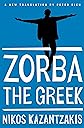
A stunning new translation of the classic book—and basis for the beloved Oscar-winning film—brings the clarity and beauty of Kazantzakis’s language and story alive. First published in 1946, Zorba the Greek , is, on one hand, the story of a Greek working man named Zorba, a passionate lover of life, the unnamed narrator who he accompanies to Crete to work in a lignite mine, and the men and women of the town where they settle. On the other hand it is the story of God and man, The Devil and the Saints; the struggle of men to find their souls and purpose in life and it is about love, courage and faith. Zorba has been acclaimed as one of the truly memorable creations of literature—a character created on a huge scale in the tradition of Falstaff and Sancho Panza. His years have not dimmed the gusto and amazement with which he responds to all life offers him, whether he is working in the mine, confronting mad monks in a mountain monastery, embellishing the tales of his life or making love to avoid sin. Zorba’s life is rich with all the joys and sorrows that living brings and his example awakens in the narrator an understanding of the true meaning of humanity. This is one of the greatest life-affirming novels of our time. Part of the modern literary canon, Zorba the Greek , has achieved widespread international acclaim and recognition. This new edition translated, directly from Kazantzakis’s Greek original, is a more faithful rendition of his original language, ideas, and story, and presents Zorba as the author meant him to be. Review: A Fantastic Book and A Must Read - A fantastic page turner, so well written and entertaining that I didn’t want it to end. Loved every twist and every page! Review: Zorba - A Literary Life Force - Zorba is “The Most Interesting Man in the World” advertising campaign for Dos Equis beer reached back to Zorba for casting. He is a man’s man - muscular, musical, musing (but not too much) and a Lothario curls into a ball and snoozes at a moment’s notice. Rudyard Kipling’s “If” must have been echoing in Kazantzakis’ when creating his title character. Zorba certainly kept his head about him when others were losing theirs. I approached this book from two wildly uninformed angles. The first was from either having seen, or believed I had seen, the Anthony Quinn version of Zorba the Greek in the 1960s movie. A swarthy, swashbuckling Mediterranean was what I remembered. In high school I struggled through another Nikos Kazantzakis novel but remembered it as “great literature”. No matter how I came to it, Zorba is a wonderful, wonderful read with a story and characters which etch themselves into your soul. The narrator sets out on a journey to resurrect a mine on the island of Crete. Early on he picks up a companion- the older and far more experienced Zorba - to help run the mine. Sancho Panza step aside (check the reference). Zorba invades the narrator’s physical and psychological space. In their first meeting Zorba suggests he can work at anything - after all he has arms, legs and a head. Oh, and he can also smell minerals in the earth. And, a good thing since the narrator is headed to Crete to hire a crew to mine lignite. Zorba disrupts the narrator’s obsession with books. The spoken word, not just the written word, allow the writer/narrator to develop. Zorba’s lusts - food, work, sex - are as contagious as they can possibly be. The narrator doesn’t transform to become Zorba, he adapts to become a better, fuller version of himself. Kazantzakis provides plot, characters, and Buddhist ruminations. Indeed, Zorba the Greek was written when existentialism was in full bloom. (The author came in second by one vote in Nobel Prize voting to Albert Camus in 1957). Most existential writing is anxious, verging on desperation and ennui. Zorba the Greek is life - some triumphs, more tragedies with a constant movement forward. Change happens.
| Best Sellers Rank | #20,583 in Books ( See Top 100 in Books ) #29 in World War I Historical Fiction (Books) #31 in Historical World War I Fiction (Books) #95 in Cultural Heritage Fiction |
| Customer Reviews | 4.5 out of 5 stars 1,671 Reviews |
J**N
A Fantastic Book and A Must Read
A fantastic page turner, so well written and entertaining that I didn’t want it to end. Loved every twist and every page!
D**N
Zorba - A Literary Life Force
Zorba is “The Most Interesting Man in the World” advertising campaign for Dos Equis beer reached back to Zorba for casting. He is a man’s man - muscular, musical, musing (but not too much) and a Lothario curls into a ball and snoozes at a moment’s notice. Rudyard Kipling’s “If” must have been echoing in Kazantzakis’ when creating his title character. Zorba certainly kept his head about him when others were losing theirs. I approached this book from two wildly uninformed angles. The first was from either having seen, or believed I had seen, the Anthony Quinn version of Zorba the Greek in the 1960s movie. A swarthy, swashbuckling Mediterranean was what I remembered. In high school I struggled through another Nikos Kazantzakis novel but remembered it as “great literature”. No matter how I came to it, Zorba is a wonderful, wonderful read with a story and characters which etch themselves into your soul. The narrator sets out on a journey to resurrect a mine on the island of Crete. Early on he picks up a companion- the older and far more experienced Zorba - to help run the mine. Sancho Panza step aside (check the reference). Zorba invades the narrator’s physical and psychological space. In their first meeting Zorba suggests he can work at anything - after all he has arms, legs and a head. Oh, and he can also smell minerals in the earth. And, a good thing since the narrator is headed to Crete to hire a crew to mine lignite. Zorba disrupts the narrator’s obsession with books. The spoken word, not just the written word, allow the writer/narrator to develop. Zorba’s lusts - food, work, sex - are as contagious as they can possibly be. The narrator doesn’t transform to become Zorba, he adapts to become a better, fuller version of himself. Kazantzakis provides plot, characters, and Buddhist ruminations. Indeed, Zorba the Greek was written when existentialism was in full bloom. (The author came in second by one vote in Nobel Prize voting to Albert Camus in 1957). Most existential writing is anxious, verging on desperation and ennui. Zorba the Greek is life - some triumphs, more tragedies with a constant movement forward. Change happens.
A**B
Old book/interesting philosophy
I remember seeing the film based on this book, way back in the 60's, black and white, but had not read the book, which is much more philosophical even than the "live now" and LIVE, not just exist, philosophy that Zorba puts forth in the book. It was fun to read, and then I watched the film again...but the book is richer, with good descriptions of a zen-like, live in the moment, free spirit with a good heart and a full soul. I enjoyed the book a lot.
G**Z
It's only life but I like it
In this beautiful novel, who was later turned into an also beautiful film by Elia Kazan with Anthony Quinn, the narrator is a young, wealthy man who is a shy and sedentary intellectual. Eager to experience some action and practical life, he rents a lignite mine in the island of Crete (around 1914). Before boarding the ship, he meets and older man, a strong and experienced guy who convinces the man to hire him as a cook and foreman. Zorba becomes the manager of the mine and the right hand of the young guy. Soon his personality and manners impress him, his opposite. Zorba lives fully in the present: whatever he does, he gives himself completely to the task at hand, thinking of nothing else. Zorba savours everything that comes his way, be it joy or sorrow, he is not afraid of ridicule or embarrassed at expressing his feelings. All this is revealed to us not through theories or explanations, but little by little as Zorba acts. When they arrive to the small town near the mine, they stay for a few days at an inn-brothel run by an old courtesan, who falls head over heels before the constant and melous courting of the old Greek. The (unnamed) young man is shocked: Zorba is capable of taking to bed and old, wrinkled, and teethless woman!. What's more, Zorba is actually capable of having sex at his advanced age! Zorba plays an ancient string instrument and dances in a frenzy frequently. But he's also a hard worker and comes up with an idea for an additional business to which he dedicates much energy and time. After a few days they move to their shared small cabin, and together they go through many adventures, some funny, some sad, and they face moments of joy, uncertainty, sorrow, and even horror. They come to learn from and love each other, and their friendship becomes solid-rock. Zorba is an unforgettable character, a great literary creation. His spirit is contagious and revealing of our own cowardness and pettiness. But he's much more than a simple Dyonisus. Zorba bears the burden of a deep sorrow, and is haunted by all the people he killed in the Balkan Wars. Even so, he understands it is not worth it to live engaged in sad memories, and that is necessary to live to the fullest, as each person defines it. A great novel.
B**1
Great new translation of Zorba the Greek
I had read a previous translation from the 1960s, but this new translation by Peter Bien -- which I've now read twice -- is spectacular and a massive improvement. It really conveys a sense of Crete and its people. As for the novel itself, it is one of the greatest works I've ever read. It is richly spiritual throughout. Unlike in the movie, where Zorba joins forces with a repressed Englishman, in the original novel, it is a brilliant Greek intellectual struggling to throw off his obsession with rationality and with Buddhism who is contrasted with Alexis Zorba. If you care about life-affirming spirit in this tragic world and deep appreciation of what Nietzsche called "the little things of everyday life," then, in spite of Zorba's archaic attitudes towards females, this magnificent work is not to be missed. To read it is to be moved by it and to never forget it.
M**I
yes, it's a classic; no, it ain't that good
I know, I know, I'm supposed to be in awe of this book. It's a classic! And there is a wonderful movie based on it, featuring Anthony Queen as Zorba! Still, it was actually quite a struggle to finish the darn thing. Yes, there are interesting moments here and there. And yes, the main character (as well as the narrator) is somewhat interesting from a literary standpoint. But it is hard to see where the novel goes, or why it goes there. Zorba can be charming, but also pretty darn irritating; sometimes chivalrous and at other times pretty much a bastard. (Oh, was that the point?!) But why should the reader care for him anyway? And let's not even talk about the pitiful character that is the narrator. I hope it isn't a thinly disguised version of the author himself. Read it as cultural background if you are going to Greece (especially Crete) on vacation. But don't expect too much of it.
M**T
Zorba the Greek
Iconic classic, very good.
A**S
One of the best kept secrets in the corpus of world literature
Most people know the name Zorba from the local gyro eatery which they frequent in their neighborhood. And while I'm all for such culinary allusions, it's a shame more people haven't had an encounter with this text because it's one of those novels which have the potential to alter your life and propel you in a new direction. Zorba (the character) is the Greek Walt Whitman. He contains multitudes, and every time he speaks, your soul swells with possibilities. It would be pointless to recount the plot of Zorba the Greek. The plot (as the nameless narrator concedes) is superfluous. It's an excuse for the real marrow of the book: the intense and brilliant conversations between two friends as they wildly speculate on the meaning of life. Much of modern literature is brilliantly insightful but somewhat, well (to quote Nietzsche) "decadent," resigned, as if glutted with the horrors of the 20th century. And while Kazantzakis' novel isn't naive, it somehow recaptures some of the elemental beauty of storytelling which appears lost on much of the Anglo-American tradition (I'm thinking of Joyce, Faulkner, etc): the moment where we stop judging and start listening with greedy ears for new bodies, new souls, new odysseys. On that note, I'll conclude by noting that if you're a fan of the Tennyson poem "Ulysses," then Zorba is its perfect compliment and sequel. Give it a read, and help give this book the renaissance it deserves!
A**I
Life changing
Wow one of the best books ever, it will change your vision towards life. I bought as a gift to my friend, she loved it
B**N
Classic
Unforgettable reading experience!
M**N
swashbuckling good fun
deserves its fame, loved this book. Zorba is the type of man you might meet in a bar and remember your conversation for the rest of your life.
R**A
Livro muito especial que me passou ideias positivas
Esse livro tem no seu personagem central uma pessoa autêntica, estoica que vive a vida de maneira um tanto excêntrica e até rústica. Muito bom pra quem procura uma estória leve, mas não por isso rasa. Tem muita coisa no comportamento do Zorba que poderia deixar a todos nós nos sentindo mais realizados na vida.
G**W
Read in Greece....
Since my first holiday in Greece aged 11 I'd seen & heard Zorba's dance and when after a break of many years I returned to Greece again as an adult I saw lots of references to it in guide/history books about Crete. I bought and watched the movie but always like to read the story as well. This year in Cyprus I bought a hard copy on a whim and it was my go-to reading......and perhaps it was the Retsina talking but it was very thought provoking. Some sections are quite hard going and it did take me some time to get through it as its one of those books you need to read and put down & think about a bit. Thourghly recommended reading in the summer in Greec/Cyprus with a glass of Retsina (or your tipple of choice).
Trustpilot
2 weeks ago
3 days ago