Buy anything from 5,000+ international stores. One checkout price. No surprise fees. Join 2M+ shoppers on Desertcart.
Desertcart purchases this item on your behalf and handles shipping, customs, and support to New Zealand.
🎯 Level up your game visuals without the lag—because your pixels deserve the spotlight.
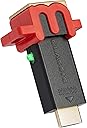
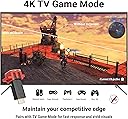
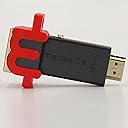
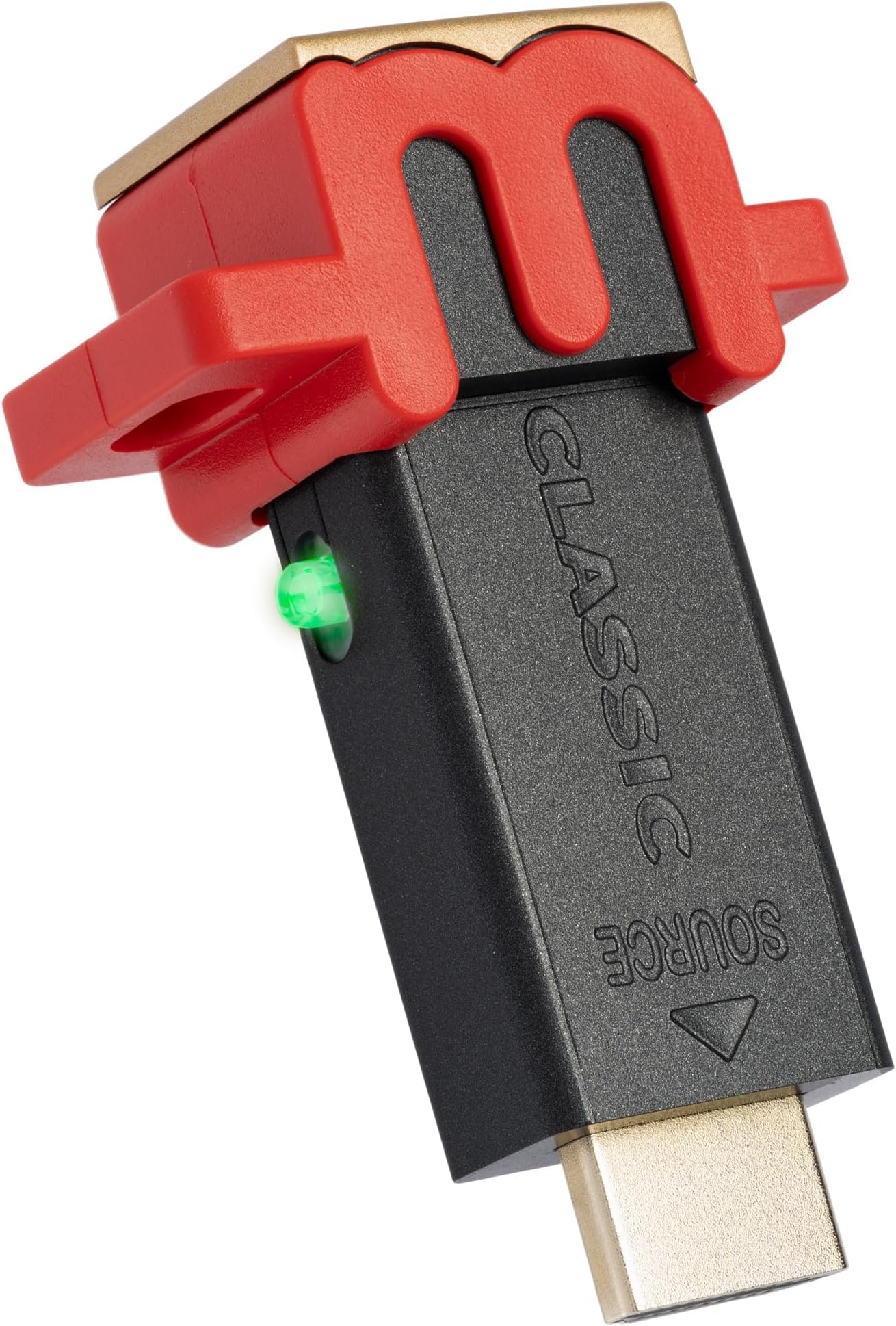
The Marseille mClassic OG is a cutting-edge graphics processor that enhances gaming visuals by upscaling resolutions up to 1440p/60Hz with proprietary anti-aliasing technology. Designed for a wide range of consoles from retro to modern, it restores image quality lost in TV Game Mode without adding input lag. Its plug-and-play design and multiple enhancement modes make it the ultimate accessory for millennial gamers seeking sharper, smoother gameplay across all their devices.


| ASIN | B07X6KDQ98 |
| Best Sellers Rank | #3,098 in Video Games ( See Top 100 in Video Games ) #30 in Nintendo Switch Cables & Adapters |
| Customer Reviews | 4.2 4.2 out of 5 stars (4,085) |
| Date First Available | October 7, 2019 |
| Item Weight | 0.8 ounces |
| Item model number | MC9007-A |
| Manufacturer | Marseille |
| Product Dimensions | 6 x 4.5 x 2 inches; 0.8 ounces |
| Release date | June 11, 2021 |
| Type of item | Accessory |
Z**N
Classic Games AND!
This upscaler is remarkably impressive, I’d go as far as to express, it’s genius. I occasionally utilize it for it’s intended purpose, that is to say, classic video games. The aforementioned look sharper, cleaner and all around sexier. However, where this upscaler really shines exists outside the sphere of gaming. I actually purchased this upscaler for a few purposes; cartoon/anime dvds (because bootleg eBay anime is way cheaper and it only comes on dvd). Standard films on dvd, the live-action cinema stuff, and finally… Homemade AVCHD dvds. For those unfamiliar with that last format, AVCHD dvds are a really neat format that Sony released specifically for it’s camcorders, however, the format has been widely adopted outside of mere camcorder recordings and is utilized by quite a few software services now such as Nero and DVDFAB. Basically, an AVCHD dvd is a completely high definition dvd (full 1080p or 720p as specified). Not to be confused with the crappy HDDVD format that pathetically lost out to blu ray. The file structure of an AVCHD dvd is basically that of a blu ray, and they can only be played on specific (mostly Sony) Blu Ray players. If anyone is interested in the format, just ensure that the Blu Ray players you purchase are absolutely without a doubt compatible with AVCHD dvds, as the vast majority are not. Now, typical Blu Ray movies range from roughly 25gb-50gb at the highest quality. Whereas dvd disks cap out at 8gbs with the dual layers, 4gbs for the single layers. Doing the math, a 4gb AVCHD dvd would be at best ~20% the quality of a lower quality Blu Ray or ~12.5% the quality of a higher quality Blu Ray film. An dual layer 8gb would in turn be ~33% or ~17% in the same respect. None of these numbers sound great in comparison to an actual Blu Ray, however, at the rate of compression AVCHD dvds look as decent as most mkv files. Not terrible, way better than a standard definition dvd, but not amazing either. As for myself, if I’m going to use all my disks, I want everything to be as high quality as possible. Really sick films that I favor, I’ll put on a blank Blu Ray disk. Everything else? The AVCHD dvd format saves me money as dvd disks are cheaper and ups my quality. But naturally, as I was raised a greedy American, I want more. Yes the upscaler, I’m getting to it. Now, after buying 25gb blank Blu Rays and 4gb blank dvds in bulk to burn my digital film collection to hard copies, I wanted the best possible quality. Enter the M-Classic. I was skeptical at first, as it appeared that it was made almost entirely for classic video games but I thought I would give it a shot. There is an alternative upscaler that’s similar but upscales to 4k or some such absurd resolution that I’ll never upgrade to because it’s a complete waste of money. I’m elated to say that the M-Classic vastly exceeded all of my expectations. There aren’t many items that have really earned that 5/5 star rating but this upscaler is certainly one of them, and it’s worth every penny. Anime dvds look fantastic, standard definition live-action films look excellent, and finally my AVCHD dvds look amazing. Nearly as good as a full Blu Ray, and the perfectionist within me is finally content. The bottom line is, whether you want it for classic gaming, standard dvds etc, this upscaler is astounding. A lot of Blu Ray players claim to upscale standard def dvds to 1080p and it’s total crap, buy this and join me in the happy camper category.
T**E
Great Aggressive Graphics Enhancer, but Watch Out for Counterfeits!
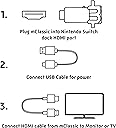
Marseille recently and explicitly stated to me that genuine products with their custom in-house chipset can only be obtained directly from them, even if the fulfiller is Amazon. Long story short: Do NOT Buy if not "Sold by Marseille Inc. and Fulfilled by Amazon" or "Shipped and Sold by Marseille Inc." You'll most likely receive a defective unit with a generic Silicon Valley chipset instead. I had to learn the hard way when I was investing in these. Overall, now that I know how the company operates, I will no longer be buying products by this brand that are "Shipped and Sold by Amazon", or shipped and sold by any other merchant for that matter. They are no longer trustworthy. I was using their products with a PhotoFast 4K Gamer Pro before, but they were counterfeits, and burned ringing artifacts into my upscaler's chipset. Thank goodness for Asurion Complete Protect. Who knows where my 4KGP would be without it? As for this particular product, if you plan to use it with a 4KGP, you will want to use a downscaler with at least 18 GB/s video bandwidth set to downscale 1440p@60Hz to 1080p@60hz, to ensure that no jagged lines appear on the upscaled image, and so that the mClassic uses the 1080p resolution instead of the 1440p. It is crucially important that you use a downscaler and not an EDID emulator, or you will get an aliased image. This does not apply if your product is a genuine mCable. It is also recommended that you should only need one to two Marseille products prior to upscaling to 4K. More than this would be overkill, and may worsen your image. For the best results with mClassic, try this formula: (1) Connect your 1080p consoles to an HDMI Switch using HDMI 2.0(a) or higher rated cables, and then plug the input on the mClassic into the output of the HDMI Switch. If you're only connecting one, plug the mClassic directly into the console. You will need to utilize the included HDMI 15cm extension cable if it's a Nintendo Switch, however. (2) If you desire to add a boost to the effects, buy a second mClassic and use the included extension cable to connect its input to the input of the first mClassic. If not, please skip this step. (3) Connect the input of your 1080p-set downscaler to the output of the last mClassic in the chain by any means necessary. If using an HDMI cable, please make sure it's rated HDMI 2.0(a) or better. (4) Connect the 4KGP input to the output of the downscaler. The extension cable isn't required, but may result in too long of a chain if you do use it. (5) Connect the output of your 4KGP to the rest of your equipment, and so on. (6) Buy a dedicated power source like the Anker PowerPort 4, and use it to supply power to all graphic enhancers connected using the USB cables included with each graphic enhancer. Bottom line, the end result all depends on how you do it. Just be sure to avoid EDID emulators, as they will generate aliasing, like I've mentioned earlier, and you shouldn't run into any problems.
R**T
It works just ok or great depending on the game and input
This little device can make a huge difference or make such a tiny difference you can barely notice it at all, it widely depends on the game you are using it for, I used it for the nintendo switch most of the time. It's important to note you must know what resolution your games are running at to be able to set the system resolution to match the game's resolution, otherwise if you leave the system on 1080p at all times you will get inferior results with lower resolution games. In 1080p games like smash bros or mario kart 8 deluxe I could barely notice any difference, some of the jagged edges were smoothed out but you have to really look for it when you are standing very close you a large screen. The same goes for 2d games like Mighty switch force, Rayman legends or wonderboy and the dragon's trap, those games have good antialiasing already so the Mclassic won't make a huge noticeable difference unless they have low res textures. With 1080p games I can live without the Mclassic but it DOES give games a little bit of a visual improvement that I appreciate. In 720p games the results vary depending on the game, in Runner 3 the game did not look noticeably better at all, in super mario 64 from the 3d all stars collection some jagged edges were smoothed out nicely while others still kind of stood out, with these two games a lot of the jagged edges are still there they are just less sharp than before, it's like someone very lightly sand papered the edges but didn't really smooth out the surface at all. However in Starlink battle for atlas the Mclassic made a huge noticeable difference, the game without it looks extremely blurry, yet the Mclassic clears it up beautifully. It's the same story with Xenoblade Chronicles 2, what was once a very blurry and pixelated looking game now actually looks smooth and clear, in Xenoblade Chronicles definite edition this also happens although to a lesser extent than with 2. With 720p games it is a little bit of a gamble, but I found that in most cases the Mclassic does make a difference, cases like Runner 3 are very rare, most times it will make a blurry game look very smooth. In 480p games I decided to use my Wii U as I have Wii, N64 and some homebrew gamecube games installed, for Wii on the Wii U the Mclassic was ok, pixelation is still noticeable but you definitely notice it is much worse once you go back to the regular picture, with Gamecube games the result is similar to how Wii games look but makes some colors look much more vibrant which is very nice, the absolute best results I have seen from the Mclassic however is with the Wii U virtual console versions of N64 games, it smooths out these games so well, they nearly look like they're in HD, what impressed me the most is in Ocarina of time, your minimap is always very pixelated, but the Mclassic actually smoothes it out, some of the 2d elements in n64 games look great. For 480p games the results are very good most times, but absolutely amazing for n64 games. I think the Mclassic is worth it for a very specific type of person, if you want to play classic 5th gen 3d games on a modern TV this thing will make some of those games look absolutely amazing, making it absolutely worth the price for you. If you want if for your nintendo switch I would say it is still worth it as it makes a big difference in some games, I think it would also work very well for other systems with primarily 720p games like Wii U, ps3 and xbox 360, so I recommend it for those systems, it may also work well for the original VHS player style xbox one, as many games from that system run at 720p from what I can tell. I do not recommend it for use on an original ps4 or ps4 slim, it could make a difference for some games but nothing big enough to justify the 100 dollar price tag, not to mention the Mclassic takes away the ps4's HDR capabilities. If you want to use it for a ps4 Pro or xbox one x I would advise you to not purchase this product as it doesn't do much for 4k games, native 4k and even some checkerboard 4k really does not need any antialiasing, you are good with the system as it is, the clearer colors might be a nice perk but it's nothing compared to HDR which is something the Mclassic does not support. Overall I am very happy with my purchase, it has made some of my switch games look much nicer and my n64 games look nearly HD, under very specific use cases the Mclassic is a very useful tool.
D**Y
AMAZING!!! You'll Never Play Retro Without It!
I struggle to find the right words to start this review, so let me offer one word: AMAZING. Every single console and game showed improvements provided I had system settings correct (ex: Hold B to trigger Progressive Scan mode for GameCube with proper HDMI converter) and I was in 4:3 mode if the game did not have 16:9 mode. I bought this little miracle device to upscale our retro consoles, and our Nintendo Switches. I have tested it out on an LG QLED 4K, TCL QLED 6 Series 4K, and TCL 5 Series 4K with the following consoles with such outstanding results that I refuse to play without it now: - PS2 with Intek component cable + component to HDMI converter, Gran Turismo 4 set to 16:9 and 1080i. Rough edges noticeably smoother, text WAY more readable, overall very smooth for PS2. - Original big Xbox + component cable + component to HDMI converter. Tested out playing NCAA Football, Top Spin, and Halo.HUGE difference on the games that support 480p and yes, even 720p like The Warriors. - GameCube + Carby HDMI converter, every game that will play in 480p/progressive scan mode. Where do I begin? F-Zero GX in 16:9 Progressive Scan is BLISS. Every progressive scan title looks incredible, but some literally rival Wii and even Wii U. Zelda: Twilight Princess looks every bit as sharp on GC as the Wii version here. Soul Calibur 2 looks INCREDIBLE. I own the now $300+ Genuine Nintendo component cable, so I know how good the games could look at the former best that GC could offer. M Classic takes it to another level. - Xbox 360S + stock HDMI. Forza 3 literally never looked smoother. With the Xbox settings on 1080p the M Classic literally tripped the DOLBY VISION notification on my TCL 5 series (but not on the LG QLED) which is pure insanity. - N64 + Hyperkin HDMI cable. Yes, I said N64. I only played Dr. Mario 64, and Perfect Dark (with RAM jumper pack) and while the difference is minimal, there's definitely a difference. It's still polygonal N64, but it does still smooth the jagged edges. - Wii/Wii U + stock HDMI. Again, nothing short of awesome on literally every single game played. Even the retro titles like ExciteBike 64 look insanely smooth, especially for their era. Flagship titles like Mario Kart 8 and Smash Bros. Brawl look every bit as good as Switch counterparts. Nintendo Switch + stock HDMI. There's definitely a noticeable smoothing of edges, but the difference is not as pronounced for Switch when compared to the older legacy consoles. Don't get me wrong - I still won't play Switch without it if possible, but it's not the same "hoooly CRAP!" effect on the older stuff. Ultimately I'd say if you're into "retro" gaming with any consoles that don't do 4K HDR, then the M Classic is NECESSARY. Just be absolutely sure you've got a good HDMI converter for your legacy consoles first. Last Pro Tip: Plug all your consoles into a high quality HDMI splitter, then plug the M Classic into the single out of that splitter. Congrats! You've just multiplied your M Classic across every console! I recently did this after worrying about the repeated unplugging/plugging into every console every time I changed consoles. The splitter hasn't reduced the M Classic's effectiveness!
G**R
Impressive, probably gonna pick up another to connect to a splitter.
So this thing is designed to increase visual detail by interpreting frame data from your devices and adding to it. It also has a free anti-aliasing level given to anything passing through it (smoothing edges that have stair-stepping/jaggies/aliasing). Wow. I tried this thing out on all my 1080p and sub 1080p consoles, it really makes the content look much better on my TVs. The device only forces whatever native output resolution your TV tells it to (a 4k that doesn't natively support 1440p will only tell the device to go to 1080p). My smaller 1360X768 tv forces that instead of taking a 1080p image and downscaling it like it does with a PS4 signal. Your mileage may vary if your monitor or TV can force resolutions. Nonetheless, it's going to be whatever your TV natively supports that is 1440p or below that will be your maximum output. That said, I am very happy with this device. On my Switch, the upscaling of sub 1080p content and even 1080p content looks wonderful with the built in anti-aliasing making things look so much cleaner that I was able to boost the TV's sharpness of the image without getting visual noise (aka much better visual experience). This led to better visual clarity because the image was allowed to be less soft without becoming noisy or aliased. My 360 and PS3 that are hooked up to that smaller TV I mentioned look amazing even with the meagre "pixel boost". Heck even the PSTV I have hooked up to my 4k display looks so much better. Muramasa Rebirth and Killzone Mercenary have never looked this good. This is a good device for hardware of older resolution levels. Your returns diminish with higher resolution devices (I don't think an pass of extra anti-aliasing is worth the money on near 4K resolutions) but the sizeable visual upgrades (especially if you are a multi-console owner still plugging through old libraries) are well worth it. If you can get a low latency splitter, it spreads the love across any devices inputting without the need to buy individually for each device which is a nicety I wasn't expecting. I recommend it but make sure you understand what you are getting out of it and whether your usage scenario makes sense. Edit 09/10/22 - The photos I sent are pretty jumbled up so I am resubmitting them in a order that has the mclassic smoothed one first and the native image second. Keep in mind these are taken on a 4K tv where the image is outputting at 1080p with an anti-aliasing pass. Games with lower native resolution have a more perceivable difference and a 1440p monitor will get better results (have one on the way so I may repost thereafter). I am going to point out areas to look at to see the perceivable smoothness difference or sharper detail for those maybe not seeing the benefit. On BoTW Link: Observe the handle of the weapon over his right shoulder as well his bracer on his right arm where the transition between the pixels on link and the background are smoother. Also the texture detail on his shirt, the sheikah slate and other items has a clearer definition between colors and sharper edges. Super Kirby Clash Mage Kirby: Check out the area where Kirby's head reaches the hat or the lines of the star on the hat. The orb in his staff also has far less issues with the edges stairstepping. Though the textures are minimalist there is cleaner lines again on color changes on the hat or in the staff orb. Smash Bros Link: The Sheikah slate handle is remarkably smoother in image 05 (Mclassic) vs 06 (native). In images 07 and 08 notice how much more "serration" exists on Link's ear in 08 vs the 07 with Mclassic) These are a handful examples on my current setup, may update further. Edit 07/23/2023 Having used this for close to a year. I really appreciate what it does. Partciularly now that I have a 1440p monitor I use, this makes my Switch and Xbox 360 games look much, MUCH smoother with that 1440p upscale and anti-aliasing. I jump between these consoles and my PS5 and Series X and this has made the visual difference feel so much less jarring. 720p on Xbox 360 has been OK but now going back and playing Resident Evil titles for achievements on that console, it feels smooth, clean and very easy on the eyes. Switch gets a more minor upgrade but playing Tears of the Kingdom I have felt less impact from the dynamic resolution compared to friends of mine. What you get out of this requires a lot of understanding of the tech around it. 1080p and lower consoles benefit and if you have a monitor or TV with 1440p it will make an even bigger difference. Still highly recommend!
C**Y
It definitely works, but I have some nitpicks
The mClassic does exactly what it says it will do. I'll just get that out of the way upfront. It helps cleanup the stair-step jaggies on sharp edges that you will more easily see with lower resolution images on bigger displays. In general, the image it produces looks cleaner and higher res. I do have a few nitpicks with the device though. Keep in mind this is coming from the perspective of someone mostly using the mClassic with the Nintendo Switch. If you're a big retro gamer and are using it for any consoles from the N64 to the Wii/360/PS3 era, rest assured that the good far outweighs the bad and it is definitely worth it. Ok, so my little nitpick is that it doesn't just boost the resolution and smooth jagged edges. Doing some comparisons in my Switch screenshot gallery it also slightly boosted contrast. That is not necessarily a bad thing. I mean, better contrast and color is what newer displays with HDR support is all about right? Well the problem is that the mClassic does not magically add HDR so some of this contrast comes from dark colors getting crushed. The clearest examples were in Xenoblade Chronicles and Super Mario Galaxy screenshots I had taken where some dark bluish purple nebulae almost completely disappeared into the black of a starfield with the mClassic. In most cases I feel like the boosted contrast is actually a good thing. Some games, like Breath of the Wild and Smash Bros, feel just a tad washed out to me personally. If you're in an area that is very dark or playing a game that is darker in general though, like Dark Souls for instance, you will lose out on some shadow detail, color, and clarity. My shorter, but perhaps more important, nitpick is that the mClassic causes a small, occasional flicker on our Samsung TV. Reading through some Reddit posts and a few other things it sounds like this is more of a Samsung problem so while I don't blame Marseille for it, you might need to consider your TV brand and see if it plays nice with devices like this. For me it's a little annoyance, but some TV models seem to have more serious issues getting a signal with it. Nitpicks aside though? It works as promised. It isn't perfect but for most use cases it does improve the image and I didn't notice any added lag. Should you buy it? That depends on your use case. If you're big into retro gaming, absolutely! I hardly mentioned retro stuff here because there isn't much need to. Consoles that ran at 480i/p in particular look way better. If you are just getting the mClassic solely for the "Switch Pro" experience though, I wouldn't buy it at $100. Picture improvement is there, but unless you're a hardcore videophile or you sit pretty close to a big display it isn't enough to justify the price. Buy it on sale. I am taking off one star for the performance/value. I took off another for a bad customer experience I'm willing to give the benefit of the doubt because of the crazy holiday period but didn't touch on here.
S**R
A VERSATILE GRAPHICS SOLUTION BUT DON'T BUY IF YOU'RE ONLY USING FOR SWITCH
First off, I'd like to point out two important factors when using this with the Nintendo Switch. I see a lot of complaints about the Switch specifically in the reviews section. 1) You can get 1080P graphics refinement with any tv & hdmi cord. 2) If you want to get the Switch picture to boost to Full 4k your TV has to be 2K & 4K compatible. 2A) You also need an HDMI Cord that supports 4K output. (I personally recommend Rocketfish HDMI Cords) As far as performance, on the Nintendo Switch & PS4, I would rate it a 6/10. It does some nice overall smoothing out of the picture, gets rid of some jaggies & makes everything pop a little bit more. If you can output @ 4K that is the best way to utilize this device on the Switch/PS4 and it will provide a small but welcomed improvements to the Switch/PS4 picture. But DO NOT BUY this if you are only using it for the Switch or PS4, it's not worth it. It's value is in it's versatility & what it does with retro games. The PS4 & Xbox One are pretty much the same as Switch, minimal improvements, but welcomed improvements. It smooths out jaggies & makes everything pop a little more. Like I said, the value in this product is in it's versatility, It's super easy to switch it from console to console and if you retro game this graphics card is a must! Where the M-Classic really shines is on retro consoles. I'm currently using this graphics card on a PS3, Xbox 360, an Original Xbox and I would give the M-Classic a 9/10 when used on these retro consoles. It does some really impressive enhancing and graphics smoothing on the Retro Consoles, it's very noticeable right from the get go. Notes on PS3 & Xbox 360 With the PS3 & Xbox 360 I just plug n play with these two consoles. Important thing to know here is that a lot of games on these two consoles only output @ 720P. So, it's better to go into your menu settings & switch your Output to 720P rather than 1080P & let the M-Classic do it's job from there & upgrade the 720P resolution to 1080P. According to Marseilles, this would be the correct way to maximize the picture. If you do come across a 1080 game, you can simply switch the resolution setting & the M-Classic will do it's part to upgrade the picture. NOTE: You do NOT need to use Retro Mode (Green Light) on the 360 & PS3, regular processing mode (Blue Light) is all that's needed on these. Notes on Original Xbox Any console older than the 360 or PS3 you'll want to use in Retro Mode. The Original Xbox games were mostly in 420P with some being 720P so again you'll want to switch your settings to 420P for games that output @ that resolution & let the M-Classic upgrade the visuals from the games original desired output. Xbox does have 720P & 1080I options, but you never need to select 1080I with the M-Classic, that will only impede it's ability to do what it's supposed to. You only need to select 720 if the game supports that output. SIDENOTE: Experimenting with some other picture resolution techniques, I found that the HD Pound Cable for the Original Xbox works really well in combination with the M-Classic. I've been using this combo on the Original Xbox & it has been very impressive visually. Anyway, that's my review and input on this product. I think it's an awesome if you are an avid gamer & have multiple consoles that could benefit from it's features. It's super easy to use, switching consoles is a breeze so the versatility is amazing. If you're only buying it for one console like the Switch, I would probably say it's not worth 100 dollars just for the Switch benefits. However, if you have a house full of consoles & retro consoles like me, this graphics card is a must have.
T**W
Excellent in very specific use cases! (retro/sixth gen)
I picked this up specifically for use with my GameCube and my Dreamcast. These are the two retro consoles I've invested the most in, and I wanted to be able to play them on my primary television (4K TCL 6 Series). First the bad, this thing should really be able to detect resolution signals sent by consoles and reflect that on the display without me having to know what the console is putting out and manually swap a switch to the appropriate aspect ratio. Specifically with the GameCube this is an issue because it's pretty scattershot the games that support a widescreen resolution and those that are 4:3. This isn't a deal breaker, but seems like a weird thing to put on the user. I'm thankful at least the mClassic handles this with a "retro mode" switch where the mCable just forced everything to 16:9. It's also important to mention that this only works with a progressive scan signal. This really boxes in what this device is good for because if you go too far back, suddenly this thing can't work with what it's getting (sorry PS2), and if you go too far forward you're just not seeing a noticeable improvement. I tried this on my Xbox 360, first with a 360 game and then with an original Xbox game running in backwards compatibility. With both games I saw no noticeable improvement. This was done on a secondary 1080p television, so it's possible have better results on my 4K tv. For me, this is fine, this isn't what I bought this product for, but for the price tag I was hopeful I'd see more benefit than I did on the 360 even in 1080. The real reason I bought this thing was to sharpen older consoles that aren't putting out any sort of modern HD signal. First I tested this with my GameCube. It's worth noting that you'll need some sort of HDMI solution here as these older consoles output with component at best. For the GameCube I have Retro-Bit's Prism HD (which I'd also recommend). I have to say, there's a noticeable jump in sharpness, specifically with its antialiasing. The big thing to note here though, and this is going back to the way this thing only takes a progressive scan signal, most GameCube games do not output progressive scan. You can find a list of the games that do (just Google "progressive scan GameCube games"), but you'll also need a GameCube with the ability to output that signal, so a model with component out or a modded console. In my case, I'd modded my GameCube with a GC Loader, and using Swiss (the software for that mod) you can force any game to output a progressive scan signal. This is all a very complicated way of saying, the audience to get anything out of this device is exceedingly small. With all that done, the new image was great. I noticed specific improvements in games like Zelda Wind Waker and Skies of Arcadia, where the animated art style lent itself well to sharper lines and more saturated colors. It was less noticeable in Need for Speed Hot Pursuit 2, but still a step up. For the Dreamcast, the setup is a bit easier, but still requires an HDMI converter. I went with the Gekko from Beharbros (strong recommendation on that as well). The Dreamcast catalogue actually had a much larger support of progressive scan via its VGA support. With the Gekko, you don't need a specific sku of Dreamcast nor any hardware mods, you can simply plug in the Gekko and the mClassic and you can play pretty much any Dreamcast game (with the exception of the 50 or so that outright do not support VGA) with all the benefits of the mClassic on a modern television. With that setup, I'm seeing Dreamcast games the best I've ever seen them by a fairly wide margin. They're sharp. I could hardly believe I was looking at 480p gameplay. One more thing—with my TCL 6-Series I had a strange issue with screen tearing on GameCube games. I've seen plenty of folks talking about issues like this on various hardware plugged into this make and model of television, and nobody has had a solution. To my disbelief, the mClassic actually fixes this issue between my television and GameCube. I'm assuming the GameCube outputs a framerate that disagrees with my television, and the mClassic is doing something passively to correct this, thus remedying the egregious screen tearing. This is just another weird very specific use for this device that validates its value, on the remote chance it applies to you. That's where I'm left with this thing. For me, it's wonderful. But I've also spent the last year researching and acquiring specific hardware and software to make the best retro console experience for myself. Make sure you know what you're getting before you buy this thing, because if you aren't set up for it, it's an expensive piece of plastic. If you are set up for it, you're going to get the most out of your consoles. Note: If I get some time I might try to get some direct capture of games and upload that to this review.
H**Z
Perfect for your high end tv
If u have those 55” 4K tv … u need to do something to the resolution that the switch can produce during dock… most high end tv can already upscale to 1 step better then what the switch output. But with this it improve 1 more step … so that is the layman way to put it .
V**O
Esperienza con Raspberry pi 4
Ho voluto sperimentare l’accoppiata pi 4 con l’emulazione psp. Parto subito col dire che mostri avranno notato la necessità di impostare una risoluzione 2x nelle impostazioni dell’emulatore PPSSPP per rendere la grafica più accattivante e comunque godibile su schermi da 15 pollici in su. Così facendo però, spesso si hanno cali di frame nelle fasi più frenetiche dei giochi, rendendo frustante il tutto. Ebbene la mia idea era quella di utilizzare l’emulatore con risoluzione 1x accoppiandolo con Mclassic. L’esperimento è riuscito pienamente: Mclassic permette di recuperare quando di perso si avrebbe nel passaggio da una risoluzione 2x ad una 1x…in più si ha un carico minore sulla cpu e gpu del raspberry con azzeramento dei cali di frame di cui parlavo prima. Pienamente soddisfatto. (Consiglio di impostare come risoluzione di uscita dal pi 4 la 480p, ci penserà Mclassic a fare il resto). Analoga prova fatta con l’emulazione dreamcast: anche qui si ha possibilitá di ridurre il carico su raspberry, potendo ridurre la risoluzione in uscita. Risultati di tutto rispetto….chiaramente con effetto uaaaoooo ridotto rispetto a psp ma comunque rispettabilissimo. Mi riservo di fare prove con n64
R**T
A solid graphical upgrade.
I recently bought a PS3 slim to play some older and exclusive games that simply aren't available on other consoles. However after playing for a few minutes I was disgusted at how truly awful the graphics are. I read about the MClassic and watched some YouTube videos so decided to give it a try and I have to say I’m quite Impressed. While playing GTA IV, a roughly 640p native game I noticed an immediate improvement to AA (Anti-Aliasing) and also an overall improvement in the picture detail as the MClassic upscales games from 720p or lower to 1080p. It can upscale to 1440p but my TV isn’t compatible. I seen a slight improvement to draw distance and sharpness but definitely not as much as my Sony TV’s “Reality creation” feature. When both the MClassic and the Sony TV’s super sampling work together you get a truly amazing picture. I recommend if you can run both the MClassic and some of your TV’s picture quality features then you absolutely should, but only if you can run this while in game mode. If your TV doesn’t have any options while in game mode then the MClassic on its own will still do a lot of the heavy lifting and will improve contrast, AA and upscaling, which is ideal. Remember to set your console to match that specific games resolution, so for example if your game runs at 720p, which almost all PS3 games do, then go into the PlayStation display settings and untick the 1080p and 1080i. This is so the PlayStation doesn’t use its own awful upscaling and instead it lets the MClassic do all the work. People online also said to change the option of RGB to limited, but I found no real difference between limited or full however you may see something different on your display. In terms of price it is an expensive product but if you are planning on playing an older console for a considerable amount of time then I would say it’s worth it and also your eyes will really thank you. If you’re simply dipping your toe in with the older consoles and only want to play a single game for a brief time, then maybe this isn’t for you as the enhancements can vary from game to game and you wouldn’t truly get the full benefit from the MClassic. One thing that’s slightly disappointing is the fact you have to power up the device instead of just running it via the HDMI port. This is of course necessary but it does leave a red wire sticking out the front of your console, at least for the PS3 Slim, which only has 2 USB’s on the front. As someone who hates wires sticking out this just isn’t ideal, but for me a worth while trade off for the picture quality it provides. You can put the usb into a compatible plug however I didn’t test this as I don’t have spare slot available. I did however try to put the usb into another console to power it that way and hide the wire but it simply wouldn’t work. The TV displayed a no signal, but when I put the USB back into the PS3 it instantly displayed on screen. Overall a solid improvement that excels in AA and upscaling to make your picture much more detailed and nicer on the eye. The draw distance and sharpness aren’t as impressive as an expensive TV’s super sampling tech, but if you can combine both then you will get a truly beautiful, clear and graphically enhanced image that makes its a joy to go back to older consoles and experience games at their absolute best.
W**M
Didnt work well
I think it needs something called EDID emulator to work and im not sure about that.
J**E
Tested on PS3, works great!
It’s not a miracle AA, but with my tests it work great. I’m using with my PS3 and if you put the video mode on the console to 720p it will upscale to 1080p with AA! In some games it really makes a difference.
Trustpilot
1 month ago
2 weeks ago