We remain fully operational. Our teams are working around the clock to ensure your deliveries continue safely.

DOWNLOAD THE APP


Copyright © 2025 Desertcart Holdings Limited
DOWNLOAD THE APP



Buy anything from 5,000+ international stores. One checkout price. No surprise fees. Join 2M+ shoppers on Desertcart.
Desertcart purchases this item on your behalf and handles shipping, customs, and support to New Zealand.
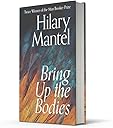
Bring Up the Bodies: The Booker Prize-winning and bestselling sequel to Wolf Hall, now a major TV series (The Wolf Hall Trilogy) : Mantel, Hilary: desertcart.co.uk: Books Review: Even better than Wolf Hall - Bring Up The Bodies is the sequel to Wolf Hall, Hilary Mantel's acclaimed Booker winner about Henry VIII's advisor, Thomas Cromwell. I loved Wolf Hall, to the point where I have to sit on my hands when talking about it in order to stop myself from grabbing people by the shoulders and shaking them in excitement. So could Bring Up The Bodies ever, in my eyes, live up to its predecessor? As it turned out, yes. In fact, I'd go so far as to say it surpasses it. Bring Up The Bodies has a tighter structure and a little more pace than Wolf Hall, and Thomas Cromwell - as he carefully, cleverly, calmly works to engineer the downfall of Anne Boleyn and fulfil the whims of the capricious king, while neatly taking revenge on those who wronged his beloved Cardinal Wolsey - becomes a more intriguing and ambiguous character with every turn of the page. His motives are complex, his relationships fascinating. He can be a genial father figure and a compassionate statesman one moment and coldly vengeful, chillingly pragmatic and almost sociopathic, the next - and yet Cromwell never seems inconsistent or implausible. Adept when it comes to acquiring money, power and influence, Cromwell is also all too aware that his position at the right-hand of King Henry is a precarious one. Many fear him, and rightly so - but as readers, we're privy to his vulnerability, and Bring Up The Bodies is packed with dark foreshadowing to hint at what could be to come in the third planned instalment in Mantel's Cromwell trilogy. "I have everything, you would think," Cromwell tells his nephew. "And yet take Henry away, and I have nothing." Other characters, too, are sketched with exquisite verve. Cromwell's sweet-natured son Gregory, his ward Rafe Sadler, servant Christophe and the imperial ambassador Chapuys are particularly engaging, and the Seymours, bent on making their daughter Jane the King's mistress, are darkly comic as they and Cromwell to make use of a daughter who has previously been 'as much use as a blancmange' but could become a commodity if she is prepared to 'earn her keep'. The wider roles of women in the Tudor court, and the rigid class structure that applies even to torture methods, are also fascinatingly explored throughout. I read this book on my Kindle, which provides a neat little facility for highlighting and noting passages of novels that particularly appeal. Generally, I'll highlight a couple of lines or paragraphs in a book, but when I read Bring Up The Bodies, I had to stop myself from highlighting everything that stood out for me because there was simply too much. There are examples of beautiful prose, of descriptions that balance poetry with precision, of sharp wit and pitch-perfect dialogue on every page; at every turn, I could find something new to praise. I know that there are readers who detest Mantel's style, and I can fully understand why it is not to everyone's taste, but for me, her books are are a writer's masterclass in making perfection seem effortless. It's only July and yet I'm confident in naming Bring Up The Bodies as my book of the year. Can the final book in Mantel's Cromwell trilogy be as good as this, I wonder? It seems too much to ask, but my hopes are high. Review: Total Delight - "Bring Up The Bodies", is - like its prequel ( "Wolf Hal"l ) - a superb piece of writing: original in its approach, gripping, deeply analytical of personality, motive and situation, brilliant and original in its descriptive as well as in its narrative style. Ms. Mantel raises the historical novel to a new level of excellence. Shortly before experiencing this superb brace of biographical exposés, I had read a representative of the genre written by one of its best known and most widely read authors. I was so bored by it that I had almost resolved never to venture into that area again. A chance meeting and a recommendation led to my reading Hilary Mantel, and the difference in quality taught me a lesson I am still enjoying. When "Bring Up The Bodies" ended, I felt genuinely sad. I wanted more. There was one small matter that caused me minor irritation: in "Wolf Hall", in order to create a sense of Thomas Cromwell's pervasiveness, his ubiquity, Ms. Mantel almost always refers to ( or identifies ) him with a personal pronoun rather than with his name. In that way the impression of Cromwell's thoughts and ideas, the thoughts behind the words, is cleverly conveyed. However, there were times when it proved a little confusing and even tiresome. A person ( other than Cromwell ) has just been referred to or quoted, and when the "he" of the next paragraph follows, one naturally assumes that the person now referred to or speaking is the same person....whereas, in fact, we have 'switched' to Cromwell. I questioned one or two other people who had read the book and their reaction was as mine. One had even ceased to read "Wolf Hall" because he found the device too irritating. I found, happily, that after the first few chapters I had adapted to this stylistic eccentricity, though occasionally it still proved a distraction. When I picked up "Bring Up The Bodies", I was prepared for it and thought myself more or less inured to it. To my surprise, it was almost absent! Whenever Cromwell was referred to or quoted, it was now, almost always, "he, Cromwell" or "him Cromwell" or "Cromwell himself", with some other variations. To be honest, this 'clarification' appeared so insistently that it began to feel awkward...affected; and at times it was actually unnecessary. I'm curious to know: were there so many adverse comments about this aspect of the style after "Wolf Hall" that Ms. Mantel decided to adjust it in the sequel? I doubt that. In fact, the revised ( 'corrected'? ) style was so obtrusively altered that I suspect the change ( no doubt accepted by the author - though maybe with reluctance ) was the work of a proof reader or sub-editor. I wonder if anyone can enlighten me. I can think of no other explanation for this change. None of this, however, spoiled my enjoyment of an outstandingly good book and I would recommend it without any serious qualification to any serious reader.
| Best Sellers Rank | 230,283 in Books ( See Top 100 in Books ) 50 in Fictional Historical Biographies 75 in Biographical & Autofiction 81 in Cultural Heritage Fiction |
| Book 2 of 3 | The Wolf Hall Trilogy |
| Customer reviews | 4.5 4.5 out of 5 stars (21,438) |
| Dimensions | 15.9 x 4.7 x 24 cm |
| Edition | 1st |
| ISBN-10 | 0008366764 |
| ISBN-13 | 978-0008366766 |
| Item weight | 1.05 kg |
| Language | English |
| Print length | 432 pages |
| Publication date | 5 Mar. 2020 |
| Publisher | Fourth Estate |
J**D
Even better than Wolf Hall
Bring Up The Bodies is the sequel to Wolf Hall, Hilary Mantel's acclaimed Booker winner about Henry VIII's advisor, Thomas Cromwell. I loved Wolf Hall, to the point where I have to sit on my hands when talking about it in order to stop myself from grabbing people by the shoulders and shaking them in excitement. So could Bring Up The Bodies ever, in my eyes, live up to its predecessor? As it turned out, yes. In fact, I'd go so far as to say it surpasses it. Bring Up The Bodies has a tighter structure and a little more pace than Wolf Hall, and Thomas Cromwell - as he carefully, cleverly, calmly works to engineer the downfall of Anne Boleyn and fulfil the whims of the capricious king, while neatly taking revenge on those who wronged his beloved Cardinal Wolsey - becomes a more intriguing and ambiguous character with every turn of the page. His motives are complex, his relationships fascinating. He can be a genial father figure and a compassionate statesman one moment and coldly vengeful, chillingly pragmatic and almost sociopathic, the next - and yet Cromwell never seems inconsistent or implausible. Adept when it comes to acquiring money, power and influence, Cromwell is also all too aware that his position at the right-hand of King Henry is a precarious one. Many fear him, and rightly so - but as readers, we're privy to his vulnerability, and Bring Up The Bodies is packed with dark foreshadowing to hint at what could be to come in the third planned instalment in Mantel's Cromwell trilogy. "I have everything, you would think," Cromwell tells his nephew. "And yet take Henry away, and I have nothing." Other characters, too, are sketched with exquisite verve. Cromwell's sweet-natured son Gregory, his ward Rafe Sadler, servant Christophe and the imperial ambassador Chapuys are particularly engaging, and the Seymours, bent on making their daughter Jane the King's mistress, are darkly comic as they and Cromwell to make use of a daughter who has previously been 'as much use as a blancmange' but could become a commodity if she is prepared to 'earn her keep'. The wider roles of women in the Tudor court, and the rigid class structure that applies even to torture methods, are also fascinatingly explored throughout. I read this book on my Kindle, which provides a neat little facility for highlighting and noting passages of novels that particularly appeal. Generally, I'll highlight a couple of lines or paragraphs in a book, but when I read Bring Up The Bodies, I had to stop myself from highlighting everything that stood out for me because there was simply too much. There are examples of beautiful prose, of descriptions that balance poetry with precision, of sharp wit and pitch-perfect dialogue on every page; at every turn, I could find something new to praise. I know that there are readers who detest Mantel's style, and I can fully understand why it is not to everyone's taste, but for me, her books are are a writer's masterclass in making perfection seem effortless. It's only July and yet I'm confident in naming Bring Up The Bodies as my book of the year. Can the final book in Mantel's Cromwell trilogy be as good as this, I wonder? It seems too much to ask, but my hopes are high.
N**H
Total Delight
"Bring Up The Bodies", is - like its prequel ( "Wolf Hal"l ) - a superb piece of writing: original in its approach, gripping, deeply analytical of personality, motive and situation, brilliant and original in its descriptive as well as in its narrative style. Ms. Mantel raises the historical novel to a new level of excellence. Shortly before experiencing this superb brace of biographical exposés, I had read a representative of the genre written by one of its best known and most widely read authors. I was so bored by it that I had almost resolved never to venture into that area again. A chance meeting and a recommendation led to my reading Hilary Mantel, and the difference in quality taught me a lesson I am still enjoying. When "Bring Up The Bodies" ended, I felt genuinely sad. I wanted more. There was one small matter that caused me minor irritation: in "Wolf Hall", in order to create a sense of Thomas Cromwell's pervasiveness, his ubiquity, Ms. Mantel almost always refers to ( or identifies ) him with a personal pronoun rather than with his name. In that way the impression of Cromwell's thoughts and ideas, the thoughts behind the words, is cleverly conveyed. However, there were times when it proved a little confusing and even tiresome. A person ( other than Cromwell ) has just been referred to or quoted, and when the "he" of the next paragraph follows, one naturally assumes that the person now referred to or speaking is the same person....whereas, in fact, we have 'switched' to Cromwell. I questioned one or two other people who had read the book and their reaction was as mine. One had even ceased to read "Wolf Hall" because he found the device too irritating. I found, happily, that after the first few chapters I had adapted to this stylistic eccentricity, though occasionally it still proved a distraction. When I picked up "Bring Up The Bodies", I was prepared for it and thought myself more or less inured to it. To my surprise, it was almost absent! Whenever Cromwell was referred to or quoted, it was now, almost always, "he, Cromwell" or "him Cromwell" or "Cromwell himself", with some other variations. To be honest, this 'clarification' appeared so insistently that it began to feel awkward...affected; and at times it was actually unnecessary. I'm curious to know: were there so many adverse comments about this aspect of the style after "Wolf Hall" that Ms. Mantel decided to adjust it in the sequel? I doubt that. In fact, the revised ( 'corrected'? ) style was so obtrusively altered that I suspect the change ( no doubt accepted by the author - though maybe with reluctance ) was the work of a proof reader or sub-editor. I wonder if anyone can enlighten me. I can think of no other explanation for this change. None of this, however, spoiled my enjoyment of an outstandingly good book and I would recommend it without any serious qualification to any serious reader.
F**N
Der zweite Teil der Trilogie über Thomas Cromwell schildert vorwiegend den Untergang von Anne Boleyn, der zweiten Frau von Heinrich VIII. und welche Rolle Cromwell dabei spielte. Der Höhepunkt ist die Beschreibung Hilary Mantels auf 10 Seiten von der Hinrichtung Boleyns - der Scharfrichter kam eigens aus Calais. - Des Weiteren lernt mal viel über wichtige Persönlichkeiten des damaligen Englands und Heinrichs VIII. Bruch mit Rom kennen. Die Hinrichtung von Thomas More spiegelt den Höhepunkt diesen Bruchs wider. - Historischer, epischer Roman at its best!
S**S
I've seldom seen anything similar to the approving furor over Hilary Mantel's WOLF HALL, and if you had told me that a novel about Thomas Cromwell - most famously seen as a sleazy weasel attacking the saintly Thomas More in the movie A MAN FOR ALL SEASONS - could be fascinating and sexy, I would not have believed you. Mantel's writing, however, was utterly perfect as she twisted expectations by showing More as the intolerant, egocentric, venomous 16th-century anti-hero and Cromwell as a man who, in spite of battering, had become generous, loving, wise, reforming, amusing - calculating and vengeful (the vengeful doesn't really pop up until almost the end of WOLF HALL but it's definitely a trail worth following). So where do you go with one of the decade's most approved books, winner of the Man Booker Prize and other prestigious awards, which was so beautifully written that, while waiting for Part 2, many of us read it multiple times just to savor the ironies, the contrasts? You go on, as life does, and do Part 2. BRING UP THE BODIES gives Cromwell an altogether tougher task. Having become rich and elevated by serving Henry VIII in any way he desires, Cromwell now has to metaphorically enter Henry's bed to get rid of an inconvenient woman. Anne Boleyn has failed to give the King what she promised and that, in Tudor England, was fatal. The current Queen, from the first page of the book, has a metaphysical and literal sword hanging over her head. After the most notorious romance in western history, a stitched-up divorce ripping England from Holy Mother Church, all she can provide to the heir-hungry Henry is - another squalling daughter and a series of miscarriages. Just like her predecessor, the sorrowful Katherine of Aragon. So - Cromwell, the ultimate Fixer for his Machiavellian monarch, is going to have to fix this one as well. At what cost? As the book progressed, an image from the first page kept recurring to me - the falcon, stooping to the kill, bloodied and remorseless. Circa regna tonat , indeed. This story has been told and retold, and the same magic that infused Wolf Hall illuminates this catastrophic event with the same surprises, beautiful writing, subtle penetration, and black irony. Somehow, it seems like an entirely new story, one in which you know there will be bodies but still, for a time, it seems like this doom-laden tale could be rewritten, that it will not end in a stage full of corpses. There is magic in Mantel's prose: "Katherine was not without sin, but now her sins are taken off her. They are all heaped upon Anne; the shadow who flits after her, the woman draped in night. The old queen dwells in the radiance of God's presence, her dead infants swaddled at her feet, but Anne dwells in this sinful world below, stewed in her childbed sweat, in her soiled sheet. But her hands and feet are cold and her heart is like a stone." I waited two years for this book and it was worth the wait. If Mantel can sustain this dark, haunted, illuminating, ironic time-travel for a third book, I will be astounded - but perhaps, not surprised.
H**0
Es fantástico, quizá el primero me impresionó más pero este segundo es espectacular también. Los retratos psicológicos y el desarrollo de los acontecimientos estan descritos con una riqueza y precisión que pareces estar en el lugar que la autora describe, percibiendo los estados de ánimo de los personajes, los olores y temperatura de cada secuencia del relato. Hace creer al lector q lo q realmente ocurrió es lo que está leyendo. Recomiendo su lectura y quedo a la espera de la publicación de la tercera entrega de la trilogía.
A**R
A autora conferiu profunda dimensão humana a figuras históricas, que tão frequentemente são retratadas de forma estereotipada. Este livro e Wolf Hall, que o antecedeu, são ambos perfeitos tanto para os que amam história, quanto para quem busca boa literatura.
D**G
This is a worthy successor to Wolf Hall, and in my opinion, a better novel. The first ends with a marriage; the 2nd with an execution. I much prefer executions to marriages. The intrigue surrounding the elevation of Ann Boleyn and the banishment of Katherine of Arragon from the royal bed, is modest stuff compared with the sexual politics that led to the former losing her head, as well as her crown. Hilary Mantel charts her every false step on the way to the block with intense precision, and a densely textured narrative that skillfully combines clarity and an ambiguity that is essential for an author who attempts to make her fiction match the truth of History. No one can be certain of the absence or extent of Ann’s guilt, and in the context of this novel it is not all that important. It is a foil with which to explore many intriguing issues: the rise of a blacksmith’s son to penultimate power in a court dominated by venal aristocrats busy looking over their shoulders as they stab the back of the courtier in front of them; the brutal clash between Church and State in which the former is stripped of its wealth and the latter of its soul; the initiatives and concessions needed to secure England’s peace with Europe, or a position of unassailable strength through strategic alliances, marriage being the most durable form of diplomatic cement; the gluttonous appetites of newly-promoted families for power and position-------indeed the fall of the Boleyn family is such a satisfying outcome that it almost justifies Anne’s demise for that reason alone. Every good novel needs a hero, and in Thomas Cromwell, Mantel has found or created one to suit her purpose admirably. As a devoted husband, now widower; an exemplary father who has lost all but one of his children, and whose own childhood was marred by paternal cruelty and brutality; a loyal disciple of his mentor, Cardinal Wolsey, who displays equal loyalty and concern for the disciples whose mentor he has now become; he stands as a beacon of common decency in a world of deceit. Mantel paints him, in biblical terms, as a “Noah in his Generation”: no big compliment in being the best of a generation so evil, that God decided to eradicate human life from the planet he had created only a short time ago. Actually, it is not quite like that. As with the very best novelists, Mantel creates or recruits characters who mix good and evil in varying proportions into different shades of gray. Thomas’ father Walter is about as monochromatic as she will allow in her cast of thousands, apart from whom there is no other that lacks some likable features. Her writing is scholarly; at times pedantic; at others mellifluous to the point of daring the reader to recite it rather than read it so that its sonority will not go unappreciated; but she is not shy about words, ideas, or actions that 50 years ago would have raised the hackles of the censors. The enormity of the number of characters places a great strain on the reader’s memory, but the task is made easier by a sort of Cast List that precedes the opening of the novel, and also by the fact that we have met most of them before in Wolf Hall. In fact it is pretty senseless to tackle this one prior to the latter, any more than one can start a Play in the 2nd Act. There will after all be a 3rd to follow, that apparently is already written. As in WH, the production standards of this paperback version are very satisfactory: thick paper, clear medium-sized print, and reasonably durable covers. At Amazon’s price, averaging out around 3 cents per page, this is not only great literature: it is also great economics.
Trustpilot
2 weeks ago
1 month ago