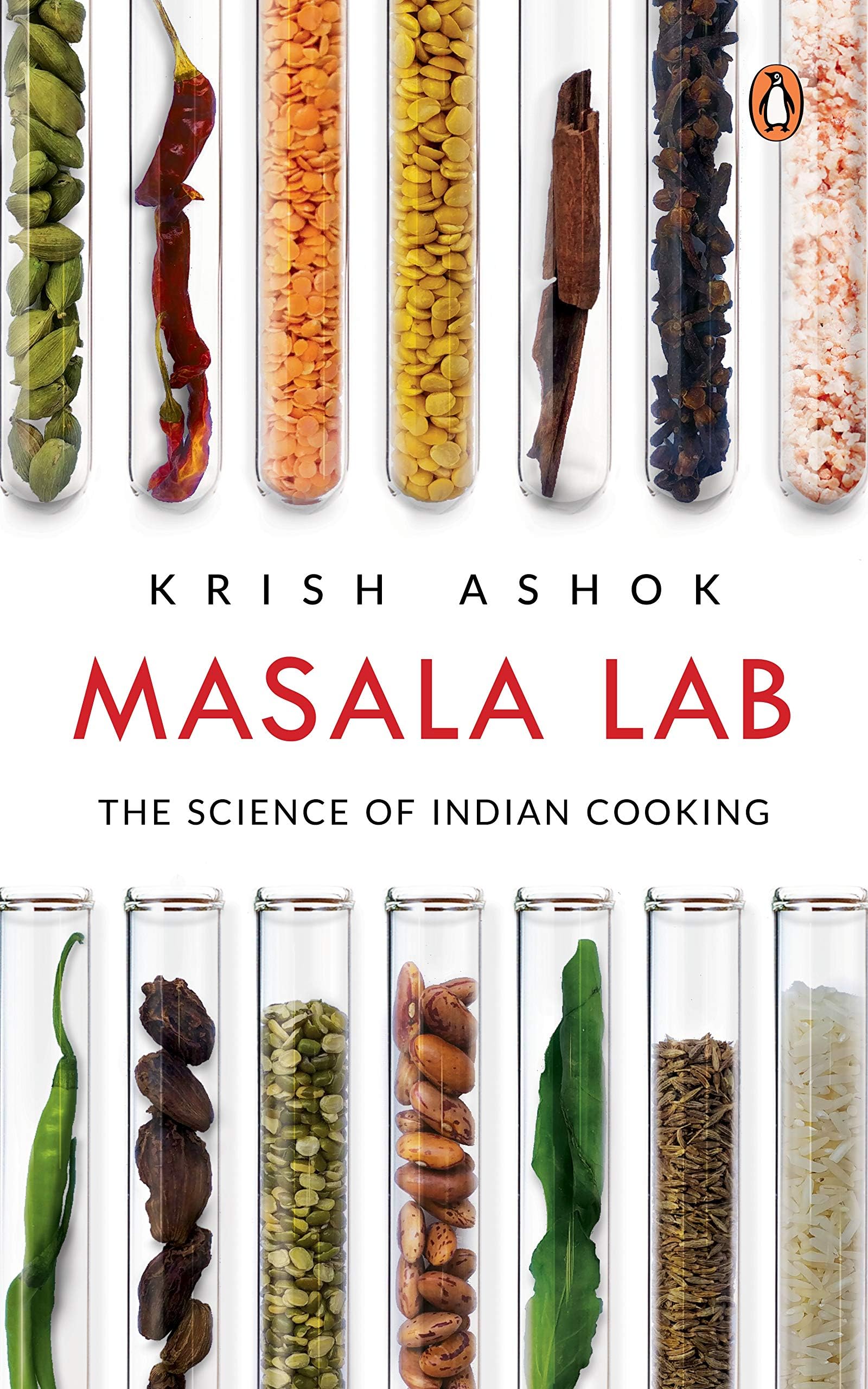
Masala Lab: The Science of Indian Cooking - the bestseller on food, the definitive book for every Indian kitchen, illustrated
Product ID: 240262295
⏳Compact & travel-friendly format
📚Bestseller #1 in Food & Lodging
🔬Science-backed cooking insights
Buy anything from 5,000+ international stores. One checkout price. No surprise fees. Join 2M+ shoppers on Desertcart.
Desertcart purchases this item on your behalf and handles shipping, customs, and support to New Zealand.
🍛 Decode Indian Cooking Like a Pro — Science Meets Spice!
Masala Lab is the definitive illustrated guide blending science and Indian cooking, authored by software engineer Krish Ashok. This bestseller demystifies traditional techniques with chemistry, humor, and practical tips, helping readers optimize cooking times, master perfect biryanis, and bust common kitchen myths. Highly rated and compact, it’s a must-have for food lovers eager to elevate their culinary skills with a scientific edge.


| Best Sellers Rank | #606 in Books ( See Top 100 in Books ) #1 in Food & Lodging #1 in Children's Books on Diet & Nutrition #1 in Chemistry Books |
| Customer Reviews | 4.5 out of 5 stars 3,219 Reviews |
B**E
Thoroughly enjoyed Krish's take on the science behind food
Book Review Finished reading Krish Ashok's sensational book Masala Lab which delves into the Science of Cooking and how it can help us save time, hone our cooking skills, bust some myths and cook that Perfect Biriyani, our most prized invention and the highest ordered item in Indian restaurants. Krish employs a mix of chemistry and equations but also tries to lighten it with his trademark humor and wit and links it with the practicalities of cooking in an Indian kitchen. I was quite relieved to know microwave cooking is perfectly safe and that I can continue to cook rice in a microwave (always wonder why more people dont do it), which is how I have been cooking rice for quite long now. The various chapters in the book deal with the various methods of cooking, why we soak lentils and rice, the wonders of pressure cooking and how to make the perfect idli/dosa batter and even chapatis. I learnt that kneading can actually be done away with when it comes to soft chapatis (wish I knew this years back when I started out!). Why meat requires finesse when it comes to cooking and the ideal temperatures is again something new I learnt as is the importance of BRINING meat, a new revelation. Like this there are several tricks and tips throughout the book. There are illustrative tables of spice combos, diagrams of fleshy onions and dancing molecules and smoking points for oils. Finally Krish introduces us to his algorithm approach to making basic gravies, raitas, rice and even the perfect mouthwatering biriyani. What else can you expect from a guy who is a software engineer and not a chef?! Thoroughly enjoyed the book and while there are no fail proof recipes and neither will you be churning out delicious food just yet, it will surely help you to modify your cooking process for the better and discard some wrong or useless practices. Because as Krish rightly says making the tastiest dish can differ from person to person, house to house, where you sourced your meat or vegetables, the temperature of the city where you are cooking and the temperature when it hits your tongue! I hope Krish will write Part II and cover some more areas: seafood for eg which is not covered much and help answer some more of my queries like why I still struggle to make a decent cup of coffee consistently? But he does answer a lot of viewer queries on his Instagram page which you should definitely follow if you want more food science enlightenment. Apart from the book of course!
P**R
Engaging
Masala Lab by Krish Ashok is an engaging exploration of the intersection between food and science. It unpacks the 'why' and 'how' behind cooking methods, offering insights that might surprise even seasoned cooks. The book encourages journaling your culinary experiments until perfection, making it a curious and methodical guide for those eager to refine their cooking skills. #masalalab #KrishAshok #penguin
A**K
Indian cooking explained. Finally!
If you’ve ever wanted to be a better cook, wondered why food cooks the way it does, and how you can replicate perfectly cooked food every single time without having to refer to an expert, then this book truly is God sent. Contrary to popular belief, cooking is a science, NOT an art, and Masala Lab by Krish Ashok reiterates exactly that. We are at a juncture in time where people who did not grow up cooking would like to get into it, and the age old adage of ‘I learned watching my grandma’ just isn’t a feasible path to developing said skills. An engineer by profession, Krish spends time debunking this whole ‘Indian cooking can’t be learned in a book’ myth that the cooks of old want us to believe, while still graciously acknowledging their undeniable skill at preparing fantastic tasting food. And he does that with science and data aka evidence. He explores the chemical reasons why foods taste the way they do, and how cooking it in specific ways transforms them into flavour. I’ll admit, a lot of it tends to be quite science-y, and I really needed to take a trip down 10th std chemistry’s memory lane to get most of it, and that really might not be everyone’s cup of tea. The good news, though, is that it doesn’t negatively affect your understanding of the rest of the book (or improving your cooking). It doesn’t matter if you don’t get the chemical and molecular science of what makes meat tender, so long as you know how to actionably tenderise it every single time, and in that regards, the actionable intel is there in abundance. Undoubtedly snarky in narration (love it), Krish is conversely kind and open-minded- a trait that’s rare in a genre filled with snobs concerned more with telling you what makes you unworthy and inauthentic. Because Masala Lab is concerned less with authenticity and tradition, but more with just making sure you get tasty, flavourful food- semantics be damned. So if you’re just commencing your journey into cooking, or have been cooking for a while and want to understand it better so you can cook better and more consistently, I can’t recommend this book enough. Sure, it’s focused primarily on Indian cooking (and God knows we needed it), but what sets it apart is its insistence on guidelines and frameworks. It’s not a book full of recipes (even though it does have a quite a few). But rather, it’s teaching you how to fish, so you can catch that damn fish whether you go to a lake, a river or an ocean. Get cooking. Get this book. Your tongue will thank you.
R**E
an excellent read, even you are not a cook!
An excellent book, but even if you are not a cook. It explains scientifically everything of any ingredient, that an Indian Kitchen can find how to layer any ingredient and make dish of your choice. This book gives you that freedom, that independence of knowing what is available as a resource and how to use it optimally and flavour fully.
S**U
A must buy for anyone who eats food
Love this book. Enjoyed it a lot. And it has helped me a lot.
N**B
Great science based cookery book
Its a good read for someone who wants to understand the basic chemistry of cooking, not if you are inspiring to become a Michelin star chef. Having said that, the content is good, well researched and will give a good tweaks to one home cooking methods. Overall, a good read.
D**R
“Title: A Culinary Masterpiece: A Review of ‘Masala Lab’
‘Masala Lab’ is an enthralling read for both food enthusiasts and the casually curious. Penned with a clear passion for food science, it ingeniously bridges the gap between traditional Indian cooking and modern culinary techniques. What sets ‘Masala Lab’ apart from most cookbooks is its unique approach. It doesn’t merely provide recipes; instead, it empowers readers to understand the science behind these recipes, demystifying complex culinary processes. Each page is brimming with knowledge, insightful explanations, and useful tips, allowing readers to elevate their kitchen skills to the next level. The author’s use of accessible language makes the scientific explanations both enjoyable and easy to grasp. The chapters are methodically structured, breaking down the complexities of Indian cooking into easily digestible segments. A particular standout feature is the ‘food lab exercises’ at the end of each chapter, encouraging readers to apply their new-found knowledge. ‘Masala Lab’ celebrates the flavors of Indian cuisine while equipping its readers with a robust scientific foundation. It’s more than just a cookbook—it’s a fascinating culinary journey that brings new depth to the art of Indian cooking. A must-read for those seeking to add some spice to their culinary repertoire.”
J**K
Fine ingredients made into bland khichdi
The author clearly has a passion for food and the science of cooking. And the subject has infinite potential. There are interesting scientific tidbits which he has painstakingly researched. And he makes a genuine attempt, mostly successfully, to relate the science with the reality of Indian cooking. You will definitely learn a thing of two that you will find useful if you are interested in cooking. What really let’s this book down is the style of writing. What could have been a really enjoyable book that appeals to a really wide audience, is marred by forced attempts at humour, especially of the smart-alec variety. I really wish the author had stuck to his narrative and toned down on trying to be humorous. The tone of the book is that of tech-bro condescendingly expounding, during a post-lunch session in office, on a topic that they have more than average, but predominantly Google-sourced, knowledge on. The author, though knowledgeable and articulate, is clearly not a professional writer. If we give him a pass on that, a good editor could still have taken the raw potential here and made this book shine. But they also seem to have been asleep at the whell and haven’t really paid attention to how repetitive the book reads, how dry the science bits run and how jarring the humour is at times. All that i recall now from my reading of the entire book is baking soda and Maillard reaction! I guess that would make the author happy because these seem to be his favourites! There seems to have been no end-to-end, operational readiness review (to borrow a software phrase) for this book.
B**A
👌🏻
A fascinating book that’s definitely worth buying and owning.
P**R
Great book
Somewhat detailed, but really interesting
L**N
Good content, book needs to be bigger
Good content, it’s not a reading book, it’s a studying book so the book needs to be much bigger to be practical, double of the size, to make easier to compare and to see better the many charts provided.
K**K
Great read
The sheer writing style and elegance that Krish Ashok has in conveying food-related topics is fascinating. Great read for evenings after a long work day.
S**N
Informative book
Interesting read , lots of scientific data and facts provided visually
Trustpilot
1 week ago
5 days ago