Yellow Crocus
Product ID: 3929940
Buy anything from 5,000+ international stores. One checkout price. No surprise fees. Join 2M+ shoppers on Desertcart.
Desertcart purchases this item on your behalf and handles shipping, customs, and support to New Zealand.
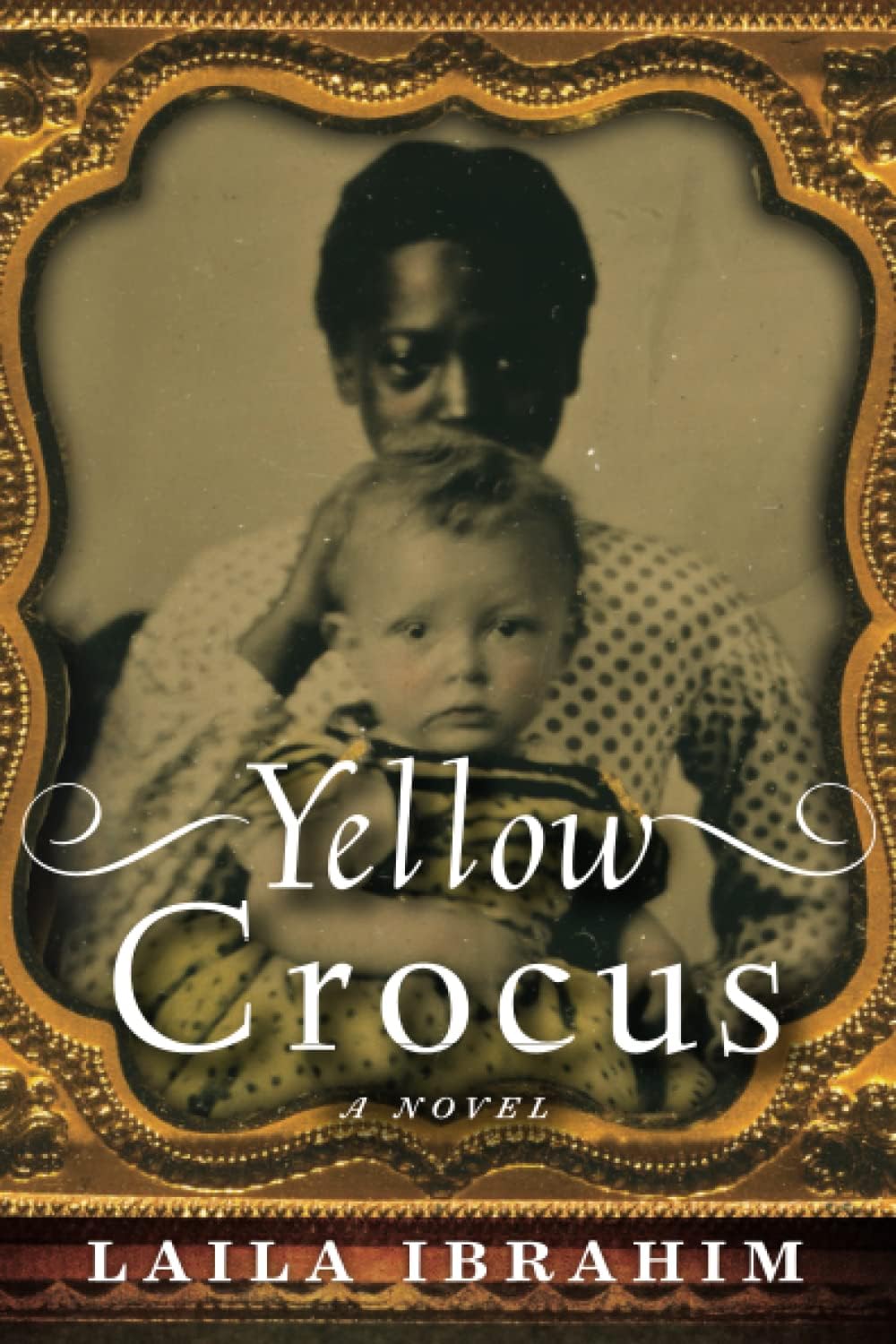
Moments after Lisbeth is born, she’s taken from her mother and handed over to an enslaved wet nurse, Mattie, a young mother separated from her own infant son in order to care for her tiny charge. Thus begins an intense relationship that will shape both of their lives for decades to come. Though Lisbeth leads a life of privilege, she finds nothing but loneliness in the company of her overwhelmed mother and her distant, slave-owning father. As she grows older, Mattie becomes more like family to Lisbeth than her own kin and the girl’s visits to the slaves’ quarters―and their lively and loving community―bring them closer together than ever. But can two women in such disparate circumstances form a bond like theirs without consequence? This deeply moving tale of unlikely love traces the journey of these very different women as each searches for freedom and dignity. Revised edition: This edition of Yellow Crocus includes editorial revisions. Review: Beautiful debut novel! - Goodreads Description- Mattie was never truly mine. That knowledge must have filled me as quickly and surely as the milk from her breasts. Although my family `owned' her, although she occupied the center of my universe, her deepest affections lay elsewhere. So along with the comfort of her came the fear that I would lose her some day. This is our story... So begins Lisbeth Wainwright's compelling tale of coming-of-age in antebellum Virginia. Born to white plantation owners but raised by her enslaved black wet nurse, Mattie, Lisbeth's childhood unfolds on the line between two very different worlds. Growing up under the tender care of Mattie, Lisbeth adopts her surrogate mother's deep-seated faith in God, her love of music and black-eyed peas, and the tradition of hunting for yellow crocuses in the early days of spring. In time, Lisbeth realizes she has freedoms and opportunities that Mattie does not have, though she's confined by the societal expectations placed on women born to privilege. As Lisbeth grows up, she struggles to reconcile her love for her caregiver with her parents' expectations, a task made all the more difficult as she becomes increasingly aware of the ugly realities of the American slavery system. When Lisbeth bears witness to a shockingly brutal act, the final vestiges of her naiveté crumble around her. Lisbeth realizes she must make a choice, one that will require every ounce of the courage she learned from her beloved Mattie. This compelling historical novel is a richly evocative tale of love, loss, and redemption set during one of the most sinister chapters of American history. This book was gripping from the word go. A freebie on Kindle a few weeks ago, I thought this might just be another book following the theme of the popular 'The Help' published a book and a made into a hit movie. What I didn't expect was to be dragged into the story until I couldn't help but keep turning the pages until the end. This wonderful debut novel, Yellow Crocus, follows the story of Mattie, a slave in pre-Civil War Virginia who is taken away from her young baby in order to act as wet nurse to Lisbeth, the daughter of the couple who owns her. Mattie must trust the care of her own newborn to the other field slaves while she spends her time in the Big House raising another woman's child. I was amazed and saddened at the same time that Lisbeth bonded with Mattie, a field hand, than she ever did with her own mother, Anne. Amazed at the irony that these so called "non-humans" were good enough to nurse a white baby from their "negro" breasts and to care for them through childhood and then that same child would grow up to learn the ugly racism of society. I was saddened that Lisbeth never did bond with her real mother and that her real mother was just fine with that. I was shocked during a scene in the book when Lizbeth's mother saw what nursing was and grimaced and stated it was "unseemly" Mattie eventually has another baby and is returned to the fields and not a day goes by that Lisbeth desperately misses her nurse. As Lisbeth grows and learns the ways of being a proper young woman of the South, she realizes that she feels different than most of her friends about the issue of slavery and finds herself troubled by the tug of war between her true feelings and what society deems appropriate. Ultimately this is a story of heartbreak and loss, love and loyalty. Above all, it is a story of slavery. Laila Ibrahim works hard to stay true to the characters she has created without letting it turn into yet another story of a white lady swooping down and fixing the problem of racism (bookstores and movie theatres are already overflowing with that story, told a hundred ways). She has been compared to Kathryn Stockett (The Help) but, frankly, Kathryn Stockett wishes. Laila Ibrahim does not turn her black characters into caricatures and her white characters into heroes. If I do have a criticism, however, it is that she does not go far enough into the grim reality of slavery and racism. She loses her nerve, wishes too much for her characters to all have resolutions that leave the reader feeling comforted and comfortable. However, even now in the 21st century, maybe society still isn't ready to hear or be reminded of our country's terrible past. I don't want to reveal too much, but I do think the story would have been even more powerful than it was if some of the characters, particularly Lisbeth, hadn't turned out to be quite so sympathetic so easily. I am certain that in the late 1800's, Lisbeth's sympathy would be met with much more bitterness than what was told. But either way, I do urge you to decide for yourself and read Yellow Crocus. If this is the first work of Ibrahim, I can only imagine what other wonderful treasures she will provide readers with in her future writings! 5 stars! Review: A debut novel, worth the read - Ms. Ibrahim’s debut novel is a touching story between a plantation owner’s daughter and her enslaved wet nurse. Although the author’s writing is overly-simplistic with her character development lacking at times, she endeared me to her protagonists and their coming of age transitions. What the author lacked writing finesse, she made up for in her endearing passion for her female heroes, leaving the reader cheering on their transcending slavery’s oppression. While this book did not escape criticism, I would definitely recommend it.
| Best Sellers Rank | #14,132 in Books ( See Top 100 in Books ) #43 in Black & African American Historical Fiction (Books) #47 in Southern Fiction #1,445 in Women's Literature & Fiction |
| Customer Reviews | 4.5 out of 5 stars 71,931 Reviews |
G**P
Beautiful debut novel!
Goodreads Description- Mattie was never truly mine. That knowledge must have filled me as quickly and surely as the milk from her breasts. Although my family `owned' her, although she occupied the center of my universe, her deepest affections lay elsewhere. So along with the comfort of her came the fear that I would lose her some day. This is our story... So begins Lisbeth Wainwright's compelling tale of coming-of-age in antebellum Virginia. Born to white plantation owners but raised by her enslaved black wet nurse, Mattie, Lisbeth's childhood unfolds on the line between two very different worlds. Growing up under the tender care of Mattie, Lisbeth adopts her surrogate mother's deep-seated faith in God, her love of music and black-eyed peas, and the tradition of hunting for yellow crocuses in the early days of spring. In time, Lisbeth realizes she has freedoms and opportunities that Mattie does not have, though she's confined by the societal expectations placed on women born to privilege. As Lisbeth grows up, she struggles to reconcile her love for her caregiver with her parents' expectations, a task made all the more difficult as she becomes increasingly aware of the ugly realities of the American slavery system. When Lisbeth bears witness to a shockingly brutal act, the final vestiges of her naiveté crumble around her. Lisbeth realizes she must make a choice, one that will require every ounce of the courage she learned from her beloved Mattie. This compelling historical novel is a richly evocative tale of love, loss, and redemption set during one of the most sinister chapters of American history. This book was gripping from the word go. A freebie on Kindle a few weeks ago, I thought this might just be another book following the theme of the popular 'The Help' published a book and a made into a hit movie. What I didn't expect was to be dragged into the story until I couldn't help but keep turning the pages until the end. This wonderful debut novel, Yellow Crocus, follows the story of Mattie, a slave in pre-Civil War Virginia who is taken away from her young baby in order to act as wet nurse to Lisbeth, the daughter of the couple who owns her. Mattie must trust the care of her own newborn to the other field slaves while she spends her time in the Big House raising another woman's child. I was amazed and saddened at the same time that Lisbeth bonded with Mattie, a field hand, than she ever did with her own mother, Anne. Amazed at the irony that these so called "non-humans" were good enough to nurse a white baby from their "negro" breasts and to care for them through childhood and then that same child would grow up to learn the ugly racism of society. I was saddened that Lisbeth never did bond with her real mother and that her real mother was just fine with that. I was shocked during a scene in the book when Lizbeth's mother saw what nursing was and grimaced and stated it was "unseemly" Mattie eventually has another baby and is returned to the fields and not a day goes by that Lisbeth desperately misses her nurse. As Lisbeth grows and learns the ways of being a proper young woman of the South, she realizes that she feels different than most of her friends about the issue of slavery and finds herself troubled by the tug of war between her true feelings and what society deems appropriate. Ultimately this is a story of heartbreak and loss, love and loyalty. Above all, it is a story of slavery. Laila Ibrahim works hard to stay true to the characters she has created without letting it turn into yet another story of a white lady swooping down and fixing the problem of racism (bookstores and movie theatres are already overflowing with that story, told a hundred ways). She has been compared to Kathryn Stockett (The Help) but, frankly, Kathryn Stockett wishes. Laila Ibrahim does not turn her black characters into caricatures and her white characters into heroes. If I do have a criticism, however, it is that she does not go far enough into the grim reality of slavery and racism. She loses her nerve, wishes too much for her characters to all have resolutions that leave the reader feeling comforted and comfortable. However, even now in the 21st century, maybe society still isn't ready to hear or be reminded of our country's terrible past. I don't want to reveal too much, but I do think the story would have been even more powerful than it was if some of the characters, particularly Lisbeth, hadn't turned out to be quite so sympathetic so easily. I am certain that in the late 1800's, Lisbeth's sympathy would be met with much more bitterness than what was told. But either way, I do urge you to decide for yourself and read Yellow Crocus. If this is the first work of Ibrahim, I can only imagine what other wonderful treasures she will provide readers with in her future writings! 5 stars!
R**S
A debut novel, worth the read
Ms. Ibrahim’s debut novel is a touching story between a plantation owner’s daughter and her enslaved wet nurse. Although the author’s writing is overly-simplistic with her character development lacking at times, she endeared me to her protagonists and their coming of age transitions. What the author lacked writing finesse, she made up for in her endearing passion for her female heroes, leaving the reader cheering on their transcending slavery’s oppression. While this book did not escape criticism, I would definitely recommend it.
C**N
A Must Read...
Yellow Crocus by Laila Ibrahim is a moving novel about the dear relationship between a wet nurse and the child she loves. Laila Ibrahim does a beautiful job of creating a true warmth and compassion for the main character Mattie, and the child she learns to love, Lisabeth (or Miss Elizabeth for a more formal approach). The novel examines the difficult relationship between slaves and their owners during a time when Ohio represented the free state of escape. Mattie, a slave that previously worked the fields, is brought unexpectedly into the house as a wet nurse/nanny when the woman originally hired to do this takes ill and dies. Mattie, of course, is nursing her own infant son and struggles to pull herself away from her flesh and blood to raise a white child that is not her own. But, slowly, the relationship develops and Mattie comes to love Lisabeth as her child. Mattie, painted beautifully as a strong and smart woman that is not formally educated, does understand the nuances of loving a baby. It is not this child's fault she is where she is and this drives Mattie's passion to make sure this little girl is raised right; with love and respect for all people, not only those without a dark color. Lisabeth, the child, is raised in two worlds - Mattie's down in the quarters where she plays on Sundays, and her parents, full of lessons and manners and debutant balls. She is promised to marry, but as she watches the behavior of her brother and the other boys, she begins to find an uncomfortable dynamic between the owners and their slaves, save one boy who isn't like the rest. Meanwhile, Mattie is battling her own wars trying desperately to find her husband and son, that have run away to attempt to be free. Mattie, using the last bit of strength she has, sets off with her small daughter in tow, to find the family she's afraid is lost for good. Lisabeth is devastated to lose the one woman she loved, and trusted. Her influence over Miss Elizabeth is never forgotten, even after she leaves their home, and this compassion surfaces in the girl she raised. Forsaking her family and her status in the community, Lisabeth makes a decision that will bring her relationship with Mattie full circle. Yellow Crocus is a quick read. I could not put the book down and when I absolutely had to, I found myself thinking about it. Not only the story, but truly feeling the depth and emotion of the characters in the novel. The deep south setting is more surreal than painted, and while fried chicken and finger sandwiches dollop the landscape, the beauty of the novel resides within the setting of the characters hearts. If you are a fan of The Help, this is a book you don't want to miss. While the overarching theme of slavery and the plight of white against black is there, the true development happens in the love of mothers and daughters - born or raised. To learn more about Laila Ibrahim, visit her author page on Amazon.
A**S
Wonderful Book!
This book is an amazing tale of a young woman who is a slave on a plantation. Her name is Mattie. The story starts about 3 months after she has had her son, Samuel and progresses all the way to when Samuel is in his twenties. Mattie, due to just having had her son, has milk to feed him. This may seem like a good thing, but this is what changes Mattie's life forever. Because she has milk still in her breasts she is called in to the white owners' house late one night to take over as the wet nurse for the woman of the house when she has her first baby. Mattie is to now live in the house caring for this new baby instead of her own baby. The tale takes the reader through the growing up of the little girl and how she attaches to Mattie in a way that is "not proper" in the South at that time. The little girl, Elizabeth, has deep feelings for Mattie and sees her as a person, not just a slave. She is told her feelings are wrong and to stop them. As Elizabeth grows Mattie is allowed to make visits to the slave lands outside to see her family and friends once a week. This gives Mattie the chance to still see and have a relationship with her son. As Elizabeth gets older and is in school she teaches Samuel the things she is learning in school and teaches Mattie how to writer her name. This is forbidden, but Elizabeth doesn't know any better and is happy to be teaching them. As the book progresses bad things happen and Samuel is sold and Mattie is beside herself. Elizabeth tries to help, but is too young to understand the ways of her family. Eventually Samuel goes missing along with his Father from another plantation. Mattie is taken to be questioned about what she knows of the runaways. Eventually Mattie decides, after having her second baby (a girl), to run too. She knows where her husband and son probably are, they always made plans for if they could run away, where they would go...to Ohio, the free state. When Jordan, Mattie's little girl, is big enough Mattie makes the decision and has the chance to run to freedom. It is a MUCH longer and harder journey than she imagined though. Will Mattie make it to freedom? If she does, will she find her family and be able to keep her daughter alive on the journey? And what about Elizabeth, what will happen to her? Will Elizabeth forget Mattie and just go along with her family's ways about slaves? I can not even begin to describe this book in a way that does it justice. There is so much that happens in this book and so much that makes you think about the way of the South back then (1800s is when this book is set). I was drawn into the setting and fell in love with the gentle, yet brave and strong character of Mattie. I also loved Elizabeth, and how you got to "see" her grow up into a wonderful young woman through the book. I started this book one day and the next day was up until the wee hours of the morning to finish it. It just amazed me and drew me in. I could not put it down. The writing was wonderful, the language just right for the characters. The story just flowed without seam until the end, where you were left feeling satisfied and with a sense of calm, yet wonder. The book depicts the way a slave was made to live and how they were treated. How they yearned for freedom, even if it meant running away and risking being caught again and punished. Yellow Crocus was a wonderfully written book that tugged at my heart strings and made me thankful for change. This book was fiction, but it had a lot of non-fiction base to it I would say. The situations of the characters throughout the book is phenomenal and there is no way, as a reader, you won't get drawn in and have feelings for the characters and what is happening in the plot. 5/5 Stars! AMAZNIG book! **I got this book free from amazon.com**
L**E
Great read. Thankful for all I have.
Finish Time: 3 nights. Maybe I’m making up for lost time, or maybe this book was just that good that I couldn’t put it down 3 nights in a row. Both are probably true, but I’m happy to report I really liked this book. It falls into the historical fiction category taking place on a plantation in Virginia in the mid-1800′s. The story follows Lisbeth Wainwright and her nurse Mattie, a slave pulled away from her family into the “big house” to care for Lisbeth at the moment of her birth. The story follows Lisbeth from her birth into adulthood. You feel as if you are there with her as she deals with family, friends, the help, social standing, her personal conflicts, and ultimately a very difficult decision. It is during a time where slavery is part of life but some are beginning to question it as the North changes their views and slaves are freed. I felt transported back to a time that I can’t even imagine, but was painted a very vivid picture of. I like to think I would be like Lisbeth, as my heart just hurts for Mattie and her family and fellow slaves, and realize what was going on what not right. But what if it was all you knew and an accepted part of life? I am glad for those who stood up for others who could not and thankful to live in a FREE country where all men are truly created equal (didn’t we have the same Declaration of Independence even then?) The story will bring you to tears and melt your heart at the same time. The ending was perfect and I just felt very satisfied. Lisbeth and Mattie are both amazing characters, and I was very impressed to read that this book is this author’s first book. I will keep an eye out for her in the future, but in the meantime – read this book – you won’t be disappointed!
S**L
Unique vision of slavery that breaks all the racial boundaries
I thoroughly enjoyed this book - an excellent up-and-coming writer! To be a black slave woman, torn apart from her own baby in order to be a wet nurse for the plantation's owner, had to be completely heartbreaking, but Mattie cares for this white child Lisabeth that she grows to love. It is hard to believe that nursing your own baby was considered obscene and disgusting for the likes of polite society, but there it is. Ibrahim also does a great job in showing how the owners thought they were doing the slaves an actual favor by protecting and caring for their needs. I am proud of the white girl Lisabeth who grows into a fine young woman, looking for a good man rather than a good husband and eventually becomes an abolitionist in Ohio after her previous fiance was caught having forced "relations" with a slave girl. This opens her eyes from the naive little girl to seeing the complete injustice surrounding her. While I think this event was indeed horrifying, I'm not sure if it would stem her uprooting her life completely in a day, but since this is based on a true story, I would say that she must have been extremely shook up. She courageously chooses to shed her comfortable, well-to-do life with her family for the uncertainty of a new state, new political system, new husband whom she barely knows, and new perspective on the world. The novel is intensely satisfying, and another tale of the injustices slaves suffered from a wholly different perspective. If not for a couple of scenes, I would say this would make for an excellent book for junior high and high schoolers to read (though one scene is probably necessary for the plot). But as an adult, I recommend it highly.
M**O
THE YELLOW CROCUS
THIS ONE KEPT ME AWAKE I don't remember how I was directed to this book, but before I write my review, I want to make it clear that I deliberately did not read any of the other reviews before doing it. I love this book. I love the story. I love the authenticity. I love the way Laila Ibrahim drew me into the lives of the main characters – and even the minor ones. I love reading a well-written book. I tried with my obsessive copy-editing eye to find a typo or two – no luck. I didn’t like feeling tired this morning because I couldn’t put the book down. I picked it up thinking it would lull me back to sleep at 3:00 a.m. No luck. But it was worth it. I don’t know if it’s OK to say the rest of this, but I’m going to plunge in. I felt an affinity with the author and the book as if somehow I was seeing/hearing echoes of myself. Along the way I noticed she had used the same literary device I used in Figs & Pomegranates & Special Cheeses. That is, the total absence of contractions which gave the feel of historical distance. In other places as well I felt a strong resemblance between ‘Lizbeth and Dara (Job’s wife) – strong, feisty women. And when it came to the stress of defying family tradition my anxiety became tangible. Even the ending had a ring of similarity to it. Then I read about the author. Ah-ha! A developmental psychologist. Maybe somehow we are sisters under the skin via that route. Whether or not that personal stuff is accurate, or even called for, the fact is I can recommend this book with unbounded enthusiasm. You’ll understand the slaves of the antebellum South and those who “owned’ them in a warm, personal way. Just plan to read it when you’ll be able to keep going to the end without disturbing your sleep.
R**8
Scarlett is missing
Sometimes a book falls into your lap oddly timed. This one was next in my pile just as the shootings at Mother Emmanuel Church in Charleston took place, and I also realized the setting for the story was not far from where I now live, along the string of plantations on the James River in Virginia, east of Richmond. During the day, on the news, I was hearing discussions about the legacy of race relations here in the south and about the debate over the Confederate battle flag. Perhaps that is why for most of the book it was making me think more about the lives of slaves and their masters, but I doubt it would have been so thought provoking if I had been reading it out of that context. In all honesty, upon reflection, the main character, Elizabeth Wainwright, whom we follow from birth through adulthood, is a bit dreamy, idealistic and flat – there is no real fire in her, until near the end of the book where she suddenly finds a backbone, but by then it feels very out of character. Both of Lisbeth’s parents and her younger brother are one-dimensional, and the plantation slaves are equally lacking in complexity. Only Lisbeth’s black wet nurse and lady’s maid, Mattie, is allowed to dream, aspire, despair and be angry. How Lisbeth’s and Mattie’s lives come together, and eventually separate is believable, but how they reunite as adults comes off as pure fairy tale. Overall, this book is too saccharine and insubstantial for the subject matter.
C**N
My new favorite
It is the kind of book that can convert a Netflix addict to be a book lover instead!!I recomend it and plan to offer it as a gift to my dear friends. It can be compared to Color purple and The help.
T**P
True love,
What a love story Strong Charakters making wise decisions to live a live without lies. Wish everyone I love will read it. Thank you for that lovely novel.
A**E
Bello
Un bel libro, piacevole da leggere ed emozionante. Lo classifico come una "lettura sotto l'ombrellone", ma di qualità.
A**A
Amazing historical fiction novel
This is one of the best historical slavery novels I've read--it tells the heart-wrenching tale of Lisbeth, a young mistress of a plantation who grows up with a former field slave, Mattie, as her attendant. From an early age Lisbeth prefers the company of Mattie to her own mother, and shows empathy for Mattie's situation. Lisbeth grows old enough to understand what is going on. She discovers a shameful family secret and experiences a traumatizing incident before her own marriage. Though circumstances and the years separate these two women, there is always the expectation on the reader's part after Mattie takes a backseat in the narrative of when these two will reunite and under what circumstances (we hope happy but in those times there wasn't much happiness going around). The dialogue is fantastic--instead of cartoonish or exaggerated speech that is common in many of these types of novels for African-American characters. In addition, the historical details were excellent: authentic, but in a way that did not read like a boring textbook. For instance, when I tried to read the Benjamin Janvier novels by Barbara Hambly, I felt like I needed a PhD in Louisiana history and customs just to be able to follow along. That kind of detail is, of course, admirable and shows that the author has done her homework, but when it gets to the point where it interferes with my ability to lose myself in the story, that's where I stop reading, so I'm glad that this book did not have that problem. If you love historical fiction, particularly set in the Southern United States, and you want a story filled with heart and emotion, please pick up this book. I am amazed by how good it was.
K**R
A story for all times.
A beautiful story of a very sad subject that everyone needs to read. The characters are believable and easy to love, especially Matthew who would be a dream in real life.
Trustpilot
4 days ago
5 days ago