
Buy anything from 5,000+ international stores. One checkout price. No surprise fees. Join 2M+ shoppers on Desertcart.
Desertcart purchases this item on your behalf and handles shipping, customs, and support to New Zealand.
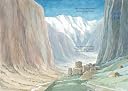
Shuna's Journey [Miyazaki, Hayao, Wit, Alex Dudok de] on desertcart.com. *FREE* shipping on qualifying offers. Shuna's Journey Review: The Master's Lost Opus Finally Finds its Way to the West - Hayao Miyazaki is world-renowned for good reason; his illustrious Studio Ghibli is famous for its exquisitely animated films, many of which explore the tensions between man and the natural world. Sometimes whimsical, sometimes fierce and forceful, his tales have depicted humanity as stewards of peace or purveyors of war, Mother Earth as a generous or hostile force. Can both entities live in harmony? Or is one destined to destroy the other? Miyazaki is also a quick study of the human condition, depicting his leads, usually female, as courageous agents bearing and braving life’s capricious demands. Some of these stories are simple, slice-of-life affairs focusing on family or community. Other tales are sweeping, heavy-handed epics, featuring wars and angry gods and dead civilizations, with mankind often the cause or at least entangled in-between. Shuna’s Journey, interestingly, is none of these things. Not exactly. First, it’s not an animated film or TV series. It’s not even a manga in the vein of Nausicaa of the Valley of the Wind, another classic Miyazaki work. Rather, it’s an emonogatari – an illustrated story that deemphasizes word and manga-style paneling for captions and (often) full-page art. A close American equivalent would be a hand-drawn children’s book or, more explicitly, Neil Gaiman’s Stardust, a graphic novel in which the author combines skeins of text with singular illustrations to convey an engrossing story. Shuna’s Journey pushes the format to its fullest potential. Second, the story is neither epic nor simplistic, but pivots somewhere between the extremes. The eponymous Shuna, the story’s princely avatar, doesn’t leave his quaint homeland to save the world or defeat some terrible evil. Rather, he seeks a special seed—an almost magical grain that promises to forever feed his suffering tribe. And though the young man certainly encounters some danger and excitement on his journey, he spends much of his time simply wandering across landscapes both beautiful and barren, familiar and alien. Here, Miyazaki’s lushly painted pages become the star, filling in the silence of Shuna’s lonely travels with exotic sights and twisted lands that hover between dream and hanging fear. Lastly, the story doesn’t hold to a specific genre. It’s an adventure, maybe, but not a fun, swashbuckling one. It’s almost a piece of heroic introspection, except Shuna is so stoic to his core, little growth or personality is revealed. It’s about the Earth, yes, but humanity is more the victim here, exploited by both his fellow man and a strangely cryptic, unyielding planet. It’s a tale of love…that goes unstated. It’s a mystery without resolution or proper payoff. Ultimately, it’s a paradox that tantalizes as much as it teaches, dangling scant hints and intimations to explain an incomprehensible, even horrific set of circumstances. In fact, the tale is borderline nihilistic—a strange row to hoe for the usually optimistic author. But hope peeks through the book’s final pages, offering its characters, and its readers, a reason to still believe. The story, to its detriment, is also a curiosity, unintentionally serving as a prototypal preview of later Ghibli films, most notably Princess Mononoke. These parallels to later works prove as distracting as they are fascinating, diminishing the potency of the original story. If possible, Shuna deserves to be read first, safe in a vacuum far away from the author’s other masterworks. Again, if possible. Beautiful, ponderous, inexplicable…Shuna’s Journey is Miyazaki’s imagination left to the wind, flowing and unfurling like leaves traveling without destination. Indeed, the story doesn’t conclude so much as it pauses, suggesting a part two that never came. Thus, the story feels more like a fragment dredged from some lost, religious text…incomplete but not insignificant. Some might want more, but readers less concerned with explanations and more willing to be moved and stirred by the images and words contained therein, will find a work primal, timeless... ...and unmistakably Miyazaki. Review: A must for Miyazaki fans - Not a manga in the traditional sense. It's a modern fairy tale with an unusual amount of prose for a comic and beautifully-rendered watercolor illustrations. It's also a fascinating look on how this book is interwoven into the fabric of Miyazaki's films, like Castle in the Sky and Princess Mononoke.


| Best Sellers Rank | #37,938 in Books ( See Top 100 in Books ) #303 in Fantasy Manga (Books) |
| Customer Reviews | 4.8 4.8 out of 5 stars (993) |
| Dimensions | 6.35 x 0.65 x 8.75 inches |
| ISBN-10 | 1250846528 |
| ISBN-13 | 978-1250846525 |
| Item Weight | 1.02 pounds |
| Language | English |
| Print length | 160 pages |
| Publication date | November 1, 2022 |
| Publisher | First Second |
S**Z
The Master's Lost Opus Finally Finds its Way to the West
Hayao Miyazaki is world-renowned for good reason; his illustrious Studio Ghibli is famous for its exquisitely animated films, many of which explore the tensions between man and the natural world. Sometimes whimsical, sometimes fierce and forceful, his tales have depicted humanity as stewards of peace or purveyors of war, Mother Earth as a generous or hostile force. Can both entities live in harmony? Or is one destined to destroy the other? Miyazaki is also a quick study of the human condition, depicting his leads, usually female, as courageous agents bearing and braving life’s capricious demands. Some of these stories are simple, slice-of-life affairs focusing on family or community. Other tales are sweeping, heavy-handed epics, featuring wars and angry gods and dead civilizations, with mankind often the cause or at least entangled in-between. Shuna’s Journey, interestingly, is none of these things. Not exactly. First, it’s not an animated film or TV series. It’s not even a manga in the vein of Nausicaa of the Valley of the Wind, another classic Miyazaki work. Rather, it’s an emonogatari – an illustrated story that deemphasizes word and manga-style paneling for captions and (often) full-page art. A close American equivalent would be a hand-drawn children’s book or, more explicitly, Neil Gaiman’s Stardust, a graphic novel in which the author combines skeins of text with singular illustrations to convey an engrossing story. Shuna’s Journey pushes the format to its fullest potential. Second, the story is neither epic nor simplistic, but pivots somewhere between the extremes. The eponymous Shuna, the story’s princely avatar, doesn’t leave his quaint homeland to save the world or defeat some terrible evil. Rather, he seeks a special seed—an almost magical grain that promises to forever feed his suffering tribe. And though the young man certainly encounters some danger and excitement on his journey, he spends much of his time simply wandering across landscapes both beautiful and barren, familiar and alien. Here, Miyazaki’s lushly painted pages become the star, filling in the silence of Shuna’s lonely travels with exotic sights and twisted lands that hover between dream and hanging fear. Lastly, the story doesn’t hold to a specific genre. It’s an adventure, maybe, but not a fun, swashbuckling one. It’s almost a piece of heroic introspection, except Shuna is so stoic to his core, little growth or personality is revealed. It’s about the Earth, yes, but humanity is more the victim here, exploited by both his fellow man and a strangely cryptic, unyielding planet. It’s a tale of love…that goes unstated. It’s a mystery without resolution or proper payoff. Ultimately, it’s a paradox that tantalizes as much as it teaches, dangling scant hints and intimations to explain an incomprehensible, even horrific set of circumstances. In fact, the tale is borderline nihilistic—a strange row to hoe for the usually optimistic author. But hope peeks through the book’s final pages, offering its characters, and its readers, a reason to still believe. The story, to its detriment, is also a curiosity, unintentionally serving as a prototypal preview of later Ghibli films, most notably Princess Mononoke. These parallels to later works prove as distracting as they are fascinating, diminishing the potency of the original story. If possible, Shuna deserves to be read first, safe in a vacuum far away from the author’s other masterworks. Again, if possible. Beautiful, ponderous, inexplicable…Shuna’s Journey is Miyazaki’s imagination left to the wind, flowing and unfurling like leaves traveling without destination. Indeed, the story doesn’t conclude so much as it pauses, suggesting a part two that never came. Thus, the story feels more like a fragment dredged from some lost, religious text…incomplete but not insignificant. Some might want more, but readers less concerned with explanations and more willing to be moved and stirred by the images and words contained therein, will find a work primal, timeless... ...and unmistakably Miyazaki.
E**K
A must for Miyazaki fans
Not a manga in the traditional sense. It's a modern fairy tale with an unusual amount of prose for a comic and beautifully-rendered watercolor illustrations. It's also a fascinating look on how this book is interwoven into the fabric of Miyazaki's films, like Castle in the Sky and Princess Mononoke.
J**K
A perfect gift for all Stidio Ghibli fans (including yourself.)
The story is beautiful, the illustrations are gorgeous and in color, and the total presentation is perfect. The hard cover is the completion to the whole package. All-in-all, I couldn't be happier. If you are a Studio Ghibli fan, and have a respect for all things Hayao Miyazaki, but don't already have this book, GET IT ASAP!
R**R
Worth it
Very good, great story and art, very happy.
K**!
Wish there was a follow-up
Wonderful, beautiful, and surprisingly adult story—I wish there was a follow-up/part 2.
E**E
Beautiful artwork and storytelling
Heads up for readers who aren't familiar with Japanese graphic novels/manga: your copy isn't misprinted or bound backwards; Japanese comics and graphic novels are read from right-to-left! I love Hayao Miyazaki's work and bought this for a friend who is also a fan. The watercolor artwork is beautiful, and the writing captures all of the elements of Miyazaki's thought-provoking themes, while maintaining the feeling of myth and folktale. Truly on-par with his masterpiece films. Would recommend to fans of Studio Ghibli and anyone who loves quality artwork and storytelling.
P**D
Miyazaki so of course it is beautiful
If a fan is to review anything Miyakazi, the problem is one of POV. Score it against any other book or movies or against any other Miyakazi book or movie. Write to fellow fans, or hope that one can be objective and maybe bring in new fans. Writing about Shuna's Journey Hardcover by Hayao Miyazaki , Translator Alex Dudok de Wit has me with all these questions. The wonderous water color art work of this book are a major pro-such that there are no bases to down star it. It is based on an ancient Tibetan story and perhaps maybe some version of how the rye plant came to be a local staple. So it has credit as a sincere nod to an ancient folk tradition. Still there were parts of the story line that did not seem to flow or entirely hang together. For parents, this is something of an old school story book. The audience may be children, but there is violence and reason for a parent to want to consider just what their child sees and hears before bedtime. Short plot summary. Shuna is a prince from a remote land. His people are starving, their crops failing. He learns of a magic, golden seed that grows a food that will heal his land and save his people. He launches upon a quest in the hopes of finding and returning with the golden seeds. This is a classical quest so we know he should succeed, but there will be tests, trials and magical punishments. He finds love in the form of a highly resourceful girl about to be sold into slavery. This adds dimensions to Shuna’s quest and a lot of violence to the story. Fans of Miyazaki will recognize a number of common themes, elements and even animals and implements. A lone prince on a quest to save his (her) people. An elderly stranger with critical advice. Healing young love. Environmental crises, nature as friend and foe, peaceful giants, warmongering slavers and so forth. Familiar, but not repetitious. The book, almost a Manga, more properly an illustrated novel, is full of action but also ambiguity. Ambiguity, that may have been where I was most challenged. A lot of things needed explaining and no explanations will be offered. The ending, well that is kind of another problem, but that problem may not be entirely the author’s fault. My bottom line, I most enjoyed this as a picture book. I liked the introduction to Tibetan folklore, but the story line left me with questions.
M**K
Ghibli fans it's a must have book for us
M**O
Pouco conhecido fora do círculo de fãs mais ardorosos de Miyazaki, a Jornada de Shuna (シュナの旅 Shuna no Tabi) é uma pequena preciosidade escrita, ilustrada e colorida pelo artista publicada em 1983 pela Tokuma Shoten dentro da sua série Animage Ju Ju Bunko. Ela conta a história de Shuna, um jovem que parte de seu vale para "a terra onde a lua dorme" a procura de sementes de um grão dourado (= trigo?) que pode salvar o seu povo da fome. No geral, trata-se de uma aventura que se encaixa na teoria do monomito (ou mito do herói) de Joseph Campbell, mas que também é considerada uma precursora de outras obras mais conhecidas de Miyazaki como Nausicaa ou Princesa Mononoke já que diversas idéias (como cavalgar num cervo) e elementos visuais como paisagens, pessoas, animais e objetos desses filmes apareceram primeiro em Shuna. De fato, reza a lenda que Miyazaki queria mesmo era fazer um anime de longa metragem dessa história (inspirada num conto popular tibetano), mas ela era muito simples e curta, de modo que no fim — com o apoio da editora Tokuma Shoten — a Jornada de Shuna virou um pequeno livro de 152 páginas. E isso não é uma figura de linguagem porque a edição japonesa é realmente pequena (10 x 15 x 0,7 cm) ao contrário dessa nova edição americana, cujas dimensões seguem um padrão mais de mercado (15,9 x 22,2 x 1,83 cm) assim como sua apresentação que é bastante rica com encadernação em capa dura, lombada costurada e sobrecapa em cores. A única diferença em relação ao original é que o papel usado no interior da nova edição é do tipo fosco, ao contrário do japonês ele é brilhante, o que não faz muita diferença já que Miyazaki costuma colorir seus desenhos com aquarela. Se comparado com sua filmografia, Miyazaki escreveu poucos livros (e menos ainda ilustrados), de modo que Shuna é um belo e raro exemplo de um conto original que não virou anime, mas ajudou a criar outros dois de grande sucesso.
L**R
Beautiful illustrations. Very light on text and so the story isn’t very “deep” (although it does deal with some more “mature” themes like slavery and capitalism!). Buy it for the illustrations not the story (story isn’t bad, just not as good as his films). You can see similar images in Miyaki’s films, in particular Nausicaa, Laptua and the main character and his “deer” is similar to Mononoke. Nicely printed and designed book.
W**Y
A beautiful story, a masterpiece of art.
A**E
Wirklich sehr schönes Buch zwischen Manga und Bilderbuch mit Text. Alles in Farbe und viele Themen Miyazakis sind schon drin. Love it!
Trustpilot
1 week ago
3 weeks ago