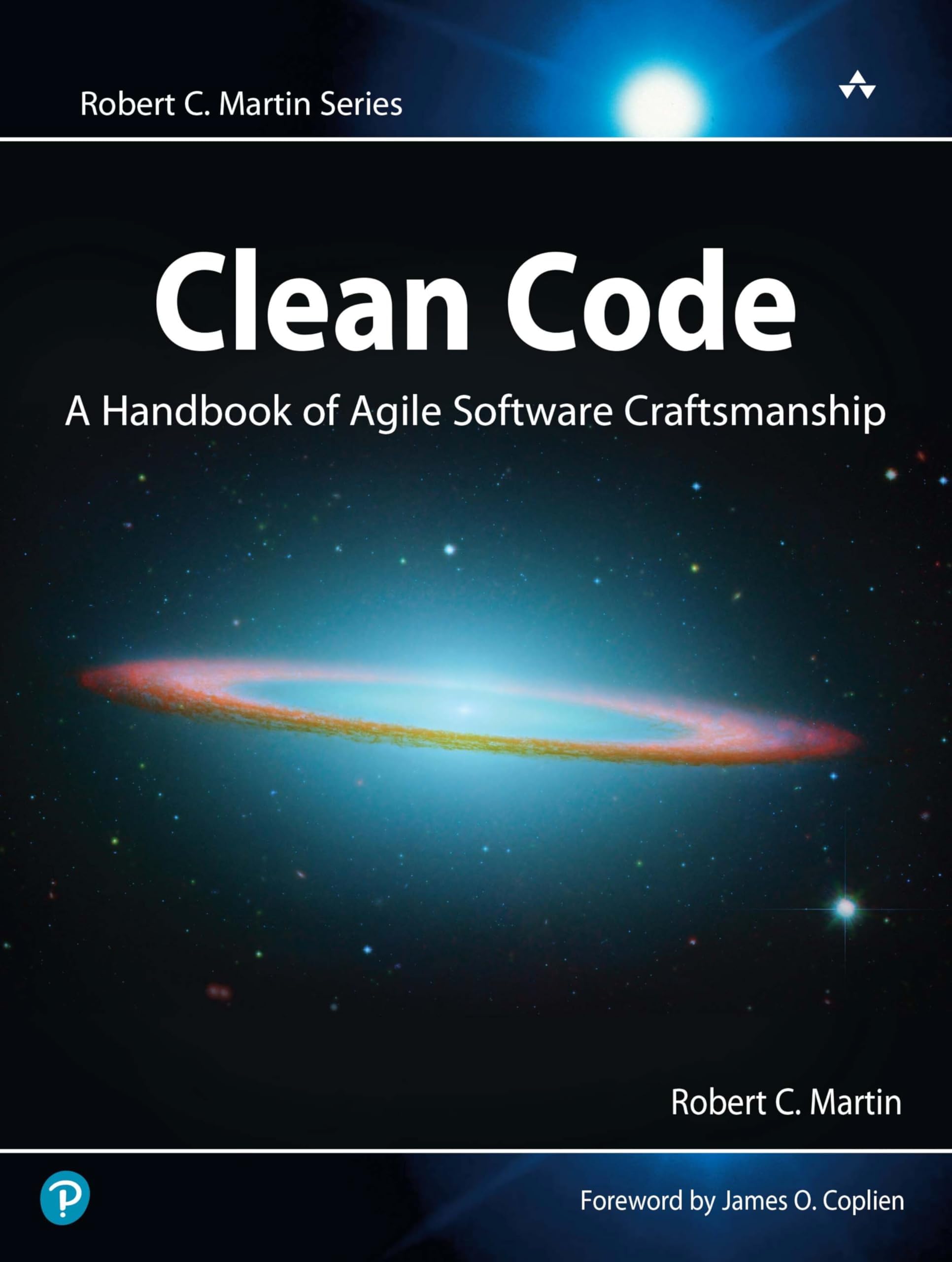
Clean Code: A Handbook of Agile Software Craftsmanship (Robert C. Martin Series)
Product ID: 726483206
Desertcart purchases this item on your behalf and handles shipping, customs, and support to New Zealand.
Even bad code can function. But if code isn’t clean, it can bring a development organization to its knees. Every year, countless hours and significant resources are lost because of poorly written code. But it doesn’t have to be that way. Noted software expert Robert C. Martin presents a revolutionary paradigm with Clean Code: A Handbook of Agile Software Craftsmanship . Martin has teamed up with his colleagues from Object Mentor to distill their best agile practice of cleaning code “on the fly” into a book that will instill within you the values of a software craftsman and make you a better programmer―but only if you work at it. What kind of work will you be doing? You’ll be reading code―lots of code. And you will be challenged to think about what’s right about that code, and what’s wrong with it. More importantly, you will be challenged to reassess your professional values and your commitment to your craft. Clean Code is divided into three parts. The first describes the principles, patterns, and practices of writing clean code. The second part consists of several case studies of increasing complexity. Each case study is an exercise in cleaning up code―of transforming a code base that has some problems into one that is sound and efficient. The third part is the payoff: a single chapter containing a list of heuristics and “smells” gathered while creating the case studies. The result is a knowledge base that describes the way we think when we write, read, and clean code. Readers will come away from this book understanding How to tell the difference between good and bad code How to write good code and how to transform bad code into good code How to create good names, good functions, good objects, and good classes How to format code for maximum readability How to implement complete error handling without obscuring code logic How to unit test and practice test-driven development This book is a must for any developer, software engineer, project manager, team lead, or systems analyst with an interest in producing better code. Review: Great book - Recommended for Clean coding ! Read book & stay away from bugs & mess! Review: プログラマなら一度は。。 - 3年目のプログラマです。 クラスやメソッドのネーミングでいつも悩んでました。 この本にはコードが書いてあって分かりやすかったです。 コメントについてもいつも会社のルールをそのまま守るためにつけるだけでしたが、(意味もなく)この本を読んで、これからどうするべきかが見えてきました。 著者が外人なので、そのまま英語で呼んだほうが誤解なく理解できると思います。(他の本にも一緒ですけど)


| Amazon 売れ筋ランキング | 洋書 - 38,875位 ( 洋書の売れ筋ランキングを見る ) Software Engineering Methodology - 18位 Software Testing - 90位 Software Development - 123位 |
| おすすめ度 | 5つ星のうち4.7 6,621 レビュー |
J**Y
Great book
Recommended for Clean coding ! Read book & stay away from bugs & mess!
E**U
プログラマなら一度は。。
3年目のプログラマです。 クラスやメソッドのネーミングでいつも悩んでました。 この本にはコードが書いてあって分かりやすかったです。 コメントについてもいつも会社のルールをそのまま守るためにつけるだけでしたが、(意味もなく)この本を読んで、これからどうするべきかが見えてきました。 著者が外人なので、そのまま英語で呼んだほうが誤解なく理解できると思います。(他の本にも一緒ですけど)
T**T
great
nice
R**L
Counterfeit product
As others have pointed out, this is a photocopied version straight from China. AVOID!
A**S
Excelente libro sin importar tu nivel de experiencia
Tengo más de 8 años de experiencia como ingeniero en software y a pesar de eso, no puedo dejar de recomendar este libro. Es simplemente demasiado bueno, no sólo en enseñarte reglas que te ayudarán a tener un código más limpio y fácil de extender, sino también para recordarte esos puntos que quizás fuiste dejando atrás con el tiempo, ya sea porque tu empresa no lo exige, porque en algún proyecto la presión no permitió que las cosas se hicieran de la manera correcta o simplemente porque cuando lo viste la primera vez no le prestaste importancia, pero la misma experiencia te enseñó a valorar más esos consejos. No importa cual sea el motivo o tu nivel, no deja de ser un excelente libro que todo ingeniero en software debe leer.
S**M
Does what it says on the tin
Every so often, a book comes along that codifies best practice in a way that manages to illuminate the path from where things are right now, to a better place that we'd rather be -- things like Fowler et al. Refactoring: Improving the Design of Existing Code (Object Technology Series) or the Gang of Four Design patterns : elements of reusable object-oriented software . This is one of those books. And if much of the material is the sort that seems obvious in hindsight -- well, that is the mark of a well written book, to make the concepts that clear. Taking a series of real world examples -- open source projects with significant user bases, including FitNesse and JUnit -- a series of worked examples take us from good, or at least adequate, code, to a form which is better factored, and easier to read, with the steps along the way clearly marked. Yes, even some of Kent Beck's code is put under the microscope, and carefully polished that extra stage or two more. The reader is cautioned that, without working long hours to follow these examples, this will be just another of those feel-good books. I don't quite agree -- spending just a little time to follow the transformations, and then reflecting on one's own outpourings should be enough to make this a feel-bad book. All the sins from obscurely named variables to sprawling functions that gaily mix abstraction levels, we've all done them (especially programming in FORTRAN on minicomputers with slow stacks and a rule of thumb that 1 call ~ 40 loc in terms of performance). The maxim to take from the book is based on Baden-Powell's "Try and leave this world a little better than you found it", and owes to the same school of thought as "whenever you are in the garden, pull at least one weed". The meat of the book is in distinguishing what are the weeds from the intended crop. So read it, understand the examples, and then refer to it often -- like the other titles mentioned, it is a reference work, and should join them as among the most thumbed on your bookshelf.
U**G
must read
.
U**O
Codificar con estilo
Está centrado en el lenguaje Java, pero puede ser útil con otros lenguajes de programación porque se explica bastante bien. El libro pasa por casi todos los aspectos que se puede encontrar durante la codificación de un programa. Indica las situaciones en las que nos encontramos a menudo, y cómo resolverlas teniendo en mente que lo que quedará de nuestro trabajo es el código. Y siempre se vuelve al código, ya sea un mismo u otra persona. La idea principal es que éste debe ser claro, limpio y lo más descriptivo posible, lo que pasa por evitar vicios y soluciones sofisticadas. Vale la pena sin duda, y sirve para darse cuenta que todo lo que nos pasa por la cabeza cuando se codifica, nos pasa a todos, darnos cuenta de ello y decidir lo qué queremos hacer. Si ya tienes unas pautas de estilo bien marcadas, quizás no sea tan provechoso como para un principiante.
G**E
This book is worth it for any programming language.
This is a great book. I have found the concepts informative and helpful. I'm glad I decided to get it. As an aid, I listened to the audio book version while I followed along reading it. This made taking notes a dream. I am now on my way to leveling up my programming skills.
Trustpilot
2 weeks ago
1 day ago